JLR’s Range Rover brand has confirmed a fifth member of its family with the most car-like of the big Range Rovers. Called the GT, it will be available as a BEV (battery electric vehicle) initially, with planned-in powertrain flexibility—and future versions including a full HEV (hybrid-electric vehicle) option later in the lifecycle. Like other electric Range Rovers, it will be the first built on the new EMA (Electrified Modular Architecture) platform, and will be manufactured in Halewood, UK, alongside ICE (internal combustion engine) and hybrid models.
“The Range Rover GT will redefine the grand‑touring segment with the ability to deliver beautiful and engaging GT poise, proportions, and long‑distance refinement while offering capabilities no conventional GT can match,” said Martin Limpert, Global Managing Director of Range Rover. “We have spent the last few years working obsessively on the fundamentals of the GT formula, reinterpreted in a sophisticated, uniquely Range Rover way.
“The result is the most car‑like, yet unmistakably capable, Range Rover ever created, now possible on our electrified EMA architecture—complementing our existing powertrain portfolio to deliver a complete set of options for every customer need. Its blend of effortless EV performance, first‑class long‑haul refinement, and all‑terrain capability is pure Range Rover, while its calming interior previews our vision of a modern grand tourer.”
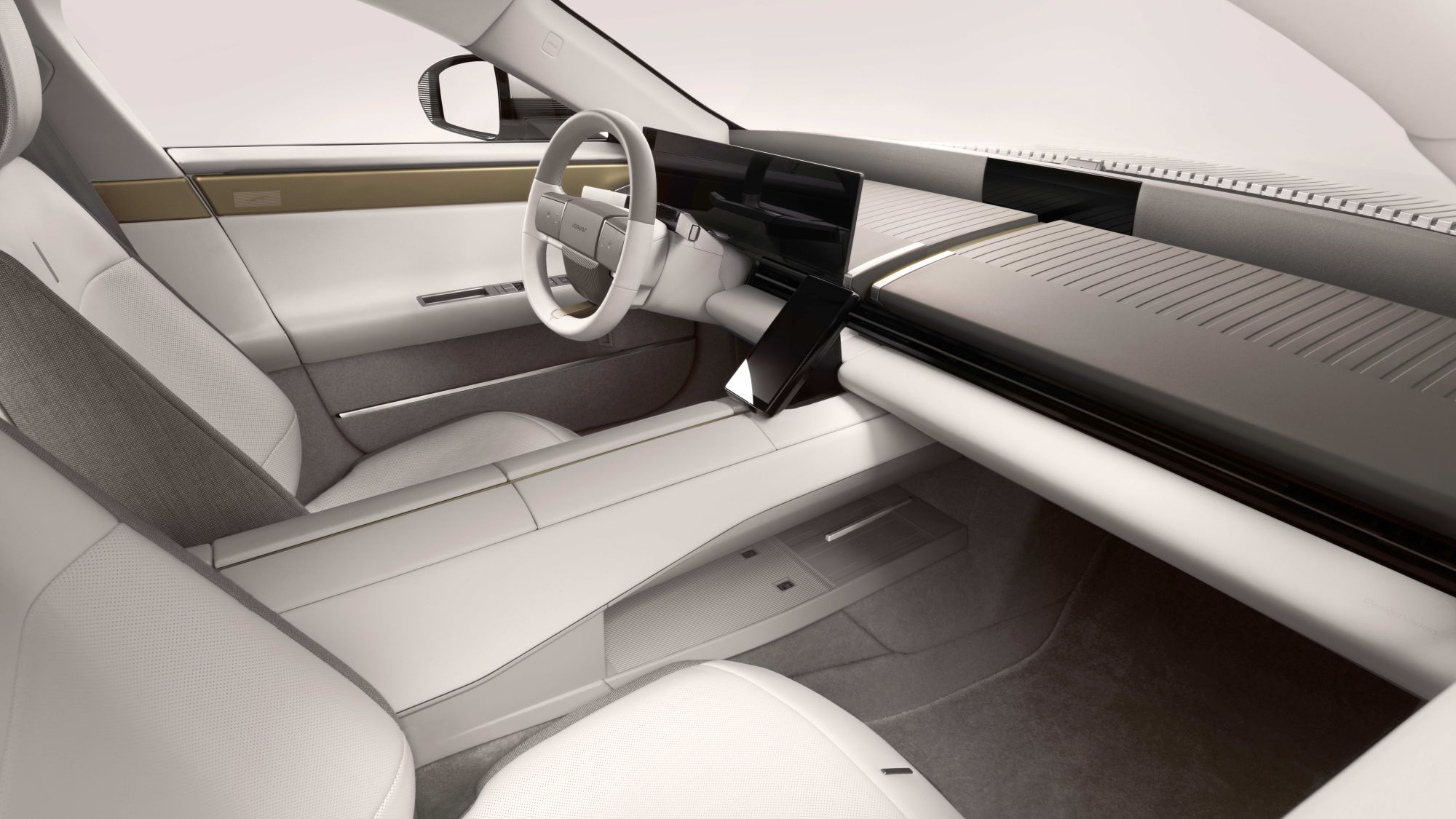
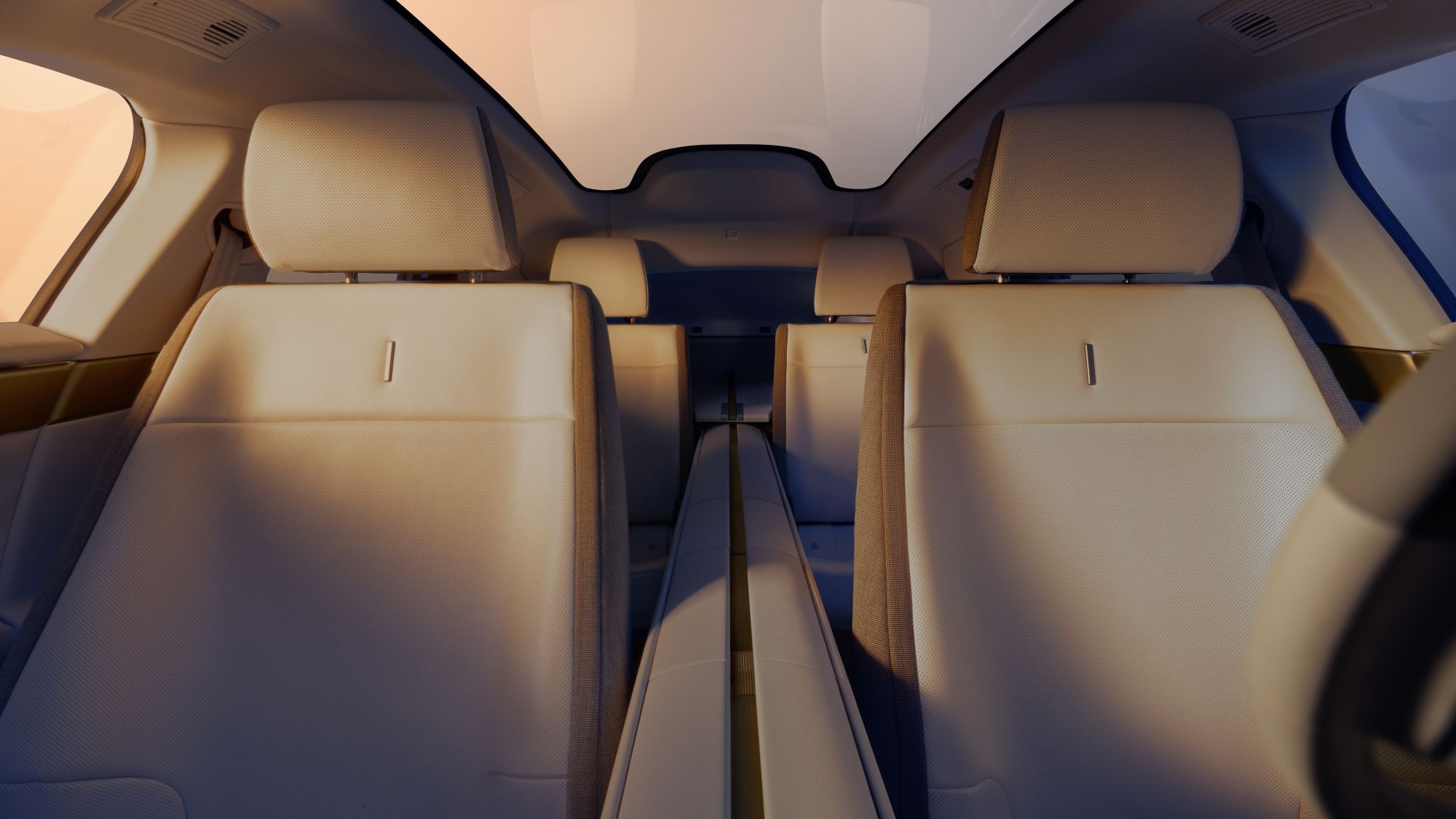
The GT’s interior is designed with similar reductive principles—of “purity, precision, and quiet modernity”—that define its exterior. The brand provided a first glance at the cabin, which it says is “crafted for calm,” with hidden technologies; sophisticated, tactile new materials; and class-leading second-row legroom.
The cabin features technology woven into an interface with the main central screen paired with a driver display in the location just above a traditional instrument cluster. An air vent runs across the width of the cabin, providing a horizontal graphic that is said to be an enduring Range Rover signature.
Part of the interior’s suite of “beautiful” materials is a woven textile that wraps the dashboard and hides the audio speakers. Elements are designed to create a sanctuary of calm, with a focus on reduced visual and acoustic noise and natural conversational access to more vehicle functions.
Prototype vehicles are undergoing final on‑road testing now in a camouflage wrap designed in‑house, inspired by the landscape surrounding Gaydon, the home of Range Rover’s Creative and Engineering teams.
More details about the new GT will follow later this year.
Joining Range Rover Electric & Sport Electric
The first look at the GT was preceded just a week before with confirmation of the brand’s forthcoming second EV with the Range Rover Sport Electric. The new SUV was presented in a private preview event at the Goodwood Festival of Speed in the UK. It follows the long‑anticipated market launch of Range Rover Electric, which was previewed at a series of curated events over the British Summer Season.
“Electric power brings a new edge to Range Rover Sport,” said Limpert. “The preview at Goodwood Festival of Speed is only a glimpse of how this model will redefine performance SUVs again later this year, combining the refinement and immediate performance of electric drive while further elevating the unmistakable character of Range Rover Sport our clients already know and love.”
The addition of pure‑electric propulsion later this year will complete the powertrain line‑up for the Sport, with a plug‑in electric hybrid, mild‑hybrid V8 gasoline, and six‑cylinder gasoline and diesel.
Range Rover says that the Sport will again redefine the luxury electric SUV segment when it arrives later this year. It features the same muscular form as the ICE version but is now driven by a fully electric powertrain to deliver more “effortless” performance. It integrates a suite of advanced technologies that unleash more power and torque, amplified by an advanced new chassis tune and audio sound for a distinctive experience.
Further details of Range Rover Sport Electric will be announced later this year.
The brand is introducing its first electric vehicle built in the UK, the Range Rover Electric, at a curated program of invitation‑only events this summer before it opens the order books later this year. At events this summer, from Sardinia to Wimbledon, potential customers will be able to see firsthand the Range Rover Electric, with electric technology that embraces the marque’s signature smoothness, capability, and refinement.
Designed for those who lead with purpose and discernment, Range Rover Electric remains unmistakably Range Rover in silhouette and presence. Its fully electric power is signaled only by subtle cues—a flush grille and unique wheel center caps—while the cabin offers a new level of serenity where precision and craft meet effortless power delivery and uncompromised capability.
Based on the EMA
For the upcoming Range Rovers, the EMA is planned to provide flexibility via a HEV (hybrid electric vehicle) propulsion offering. The new addition to JLR’s propulsion portfolio offers more choice alongside MHEV, PHEV, and full BEV options.
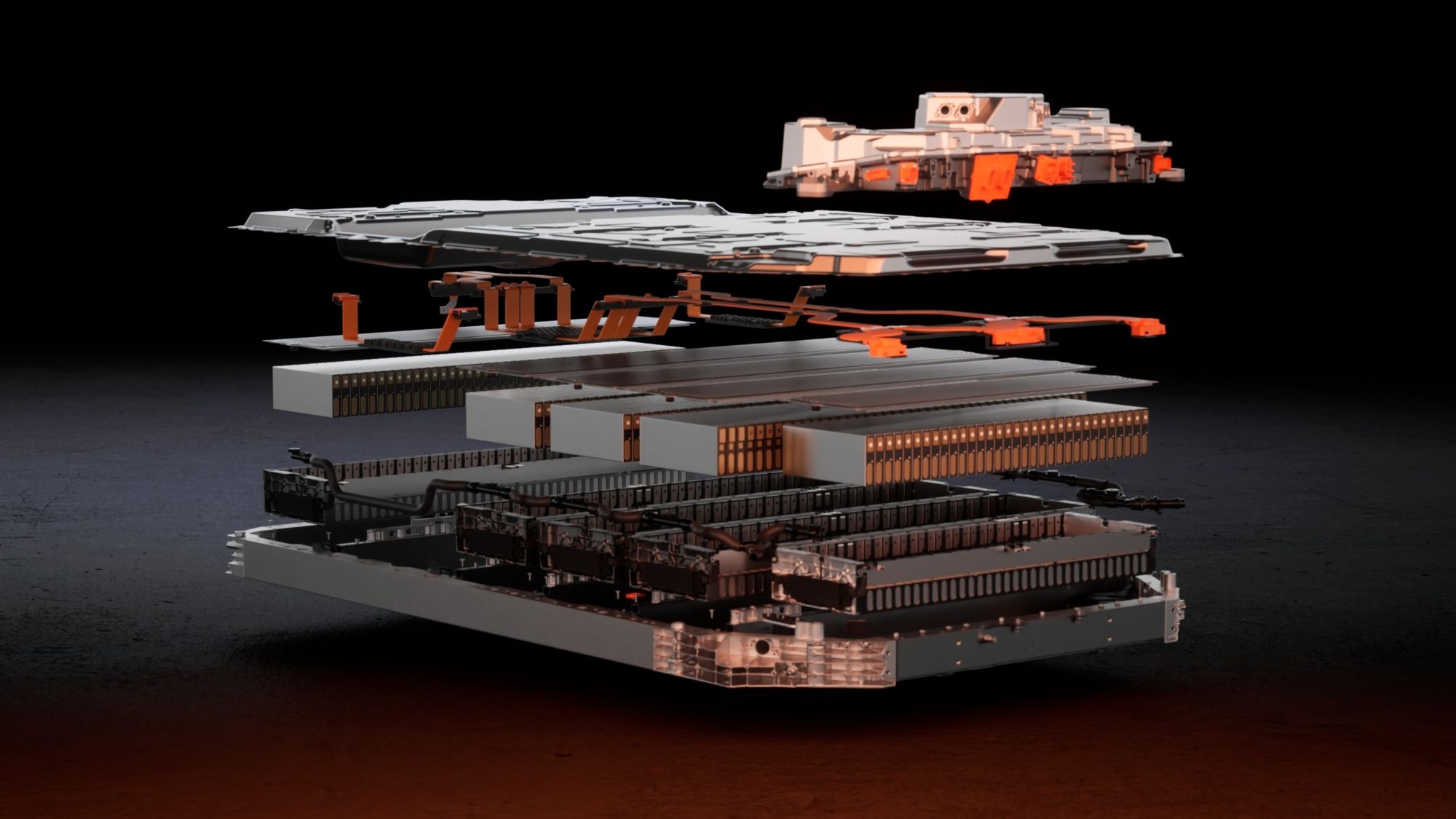
Last year, JLR reported that the 800-V battery for the Range Rover Electric was the first one to be designed and built in‑house. Optimized for energy density, range, and charging times, it features a cell‑to‑pack architecture, high nickel (91%) content, and 118-kW·h capacity from 344 prismatic cells in a double‑stacked layout.
Total powertrain output was confirmed at JLR’s recent investor event at 405 kW and 850 N·m (627 lb·ft). Efficiency is aided by a ThermAssist advanced vehicle thermal management system.
The company says that Range Rover all‑terrain capability and refinement will continue with the electric propulsion by implementing advanced technologies, including single-pedal driving and switchable, twin‑chamber air suspension. In addition to slowing the vehicle and delivering regenerative braking, single-pedal driving is also tuned to work with Terrain Response, bringing the vehicle to a complete stop, engaging Hill Hold, and enabling the driver to move off again without having to touch the brakes at any point.
The switchable twin‑chamber air suspension has been “extensively” developed to manage the body movements from the electric model’s “distinctive” weight distribution.
The Range Rover Electric’s all‑wheel drive technology is said to be capable of handling all surfaces. Thanks to its more precise torque delivery than ICE applications, its IDD (intelligent driveline dynamics) technology can distribute rear torque from 100% to 0% to prevent loss of traction. Working with Integrated Traction Management, stability is maintained by 5-ms torque adjustments and managing slip up to 100 times quicker than an ICE vehicle equivalent.
-

- Range Rover GT camouflaged and on the road.
-

- Range Rover GT camouflaged front side in studio.
-

- Range Rover GT camouflaged rear in studio.
-

- Range Rover GT front passenger area.
-

- Range Rover GT front passenger area closeup.
-

- Range Rover GT rear passenger area.
-

- Range Rover Sport Electric front side at Goodwood.
-

- Range Rover Sport Electric rear side at Goodwood.
-

- Range Rover Sport Electric powertrain at Goodwood.
-

- Range Rover Electric winter testing.