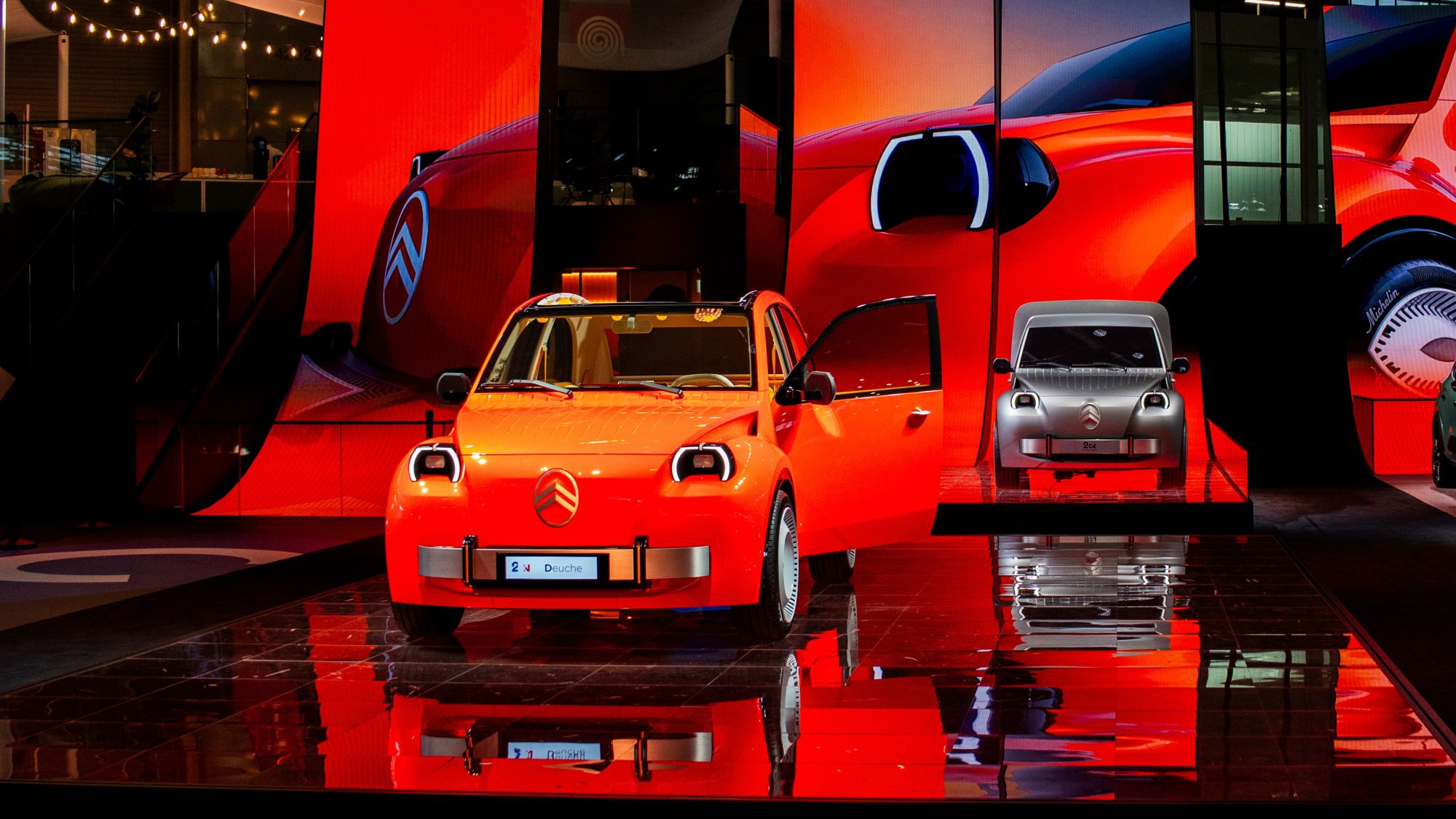
At the 2026 Paris Motor Show, Citroën unveiled the electric 2 CV Concept inspired by the original production 2CV’s spirit of affordability, lightness, practicality, versatility, and distinctive character. As part of its parent company Stellantis’ FaSTLAne 2030 strategic plan, Citroën announced in May that it would launch the new model inspired by the spirit of the 2CV.
The aim is to recreate the icon, but to imagine the small electric car of the future that is practical and desirable. It is meant to preview a model set to join the range in 2028, aimed at a starting price of around €15,000, that will comply with future E-Car regulations.
“Reinventing the 2CV isn’t about replicating a car from the past; it’s about reinventing what made it unique: its simplicity, its accessibility, and the freedom it offered,” said Xavier Chardon, Citroën’s CEO. “With the 2 CV Concept, we’re bringing that spirit into today’s world to make electric mobility simpler, more human, and more desirable. The world has changed. But the idea remains the same: to make life more beautiful with Citroën.”
Unveiled at the 1948 Paris Motor Show, the original 2CV met a set of pragmatic specifications, becoming iconic because of what it made possible: working, traveling, and going almost anywhere. Conceived as early as 1937 under the name TPV (Toute Petite Voiture, or Very Small Car), its brief was based on simple principles: “to carry four people and 50 kg of potatoes, reach 60 km/h, be easy to drive, simple to maintain and economical.”
The idea of the new concept remains the same: redefining a sensible set of specifications that focus on essential needs and eliminate the superfluous to offer greater freedom.
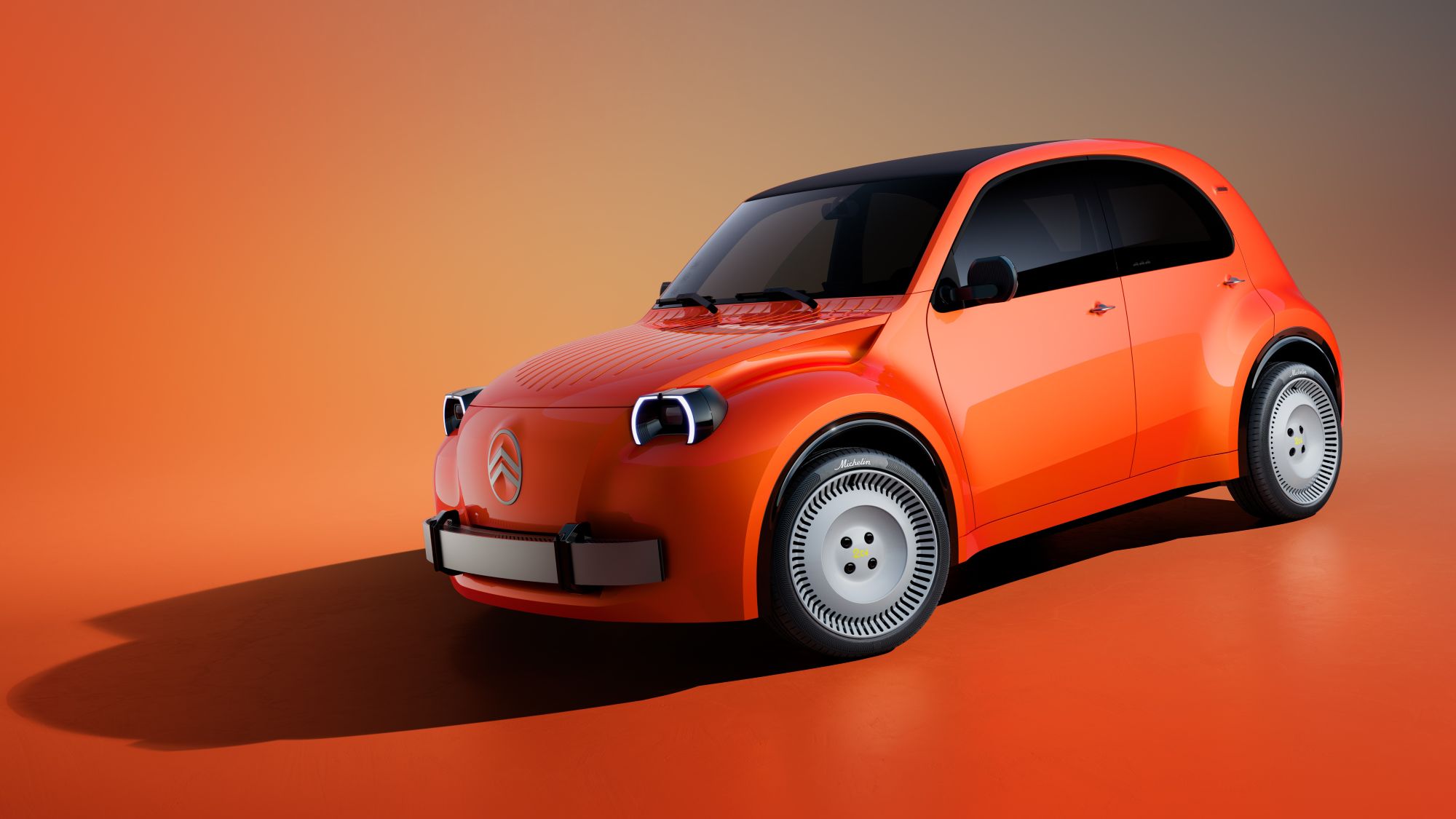
In line with the new European E-Car regulations, the 2 CV Concept is positioned between the Ami and the C3. At 3.76 m (148.0 in), it is shorter than the original 2CV that was 3.85 m (151.6 in) long, to recapture the pleasure and agility of small cars, while making driving and parking easier.
“This is the first time a revival has been shorter than the original version,” said Pierre Leclercq, Citroën Design Director. “The front end had to be desirable without looking like a toy.”
Designers aimed for a “controlled weight” of about 1000 kg (2200 lb) because less mass means a smaller, more cost-effective battery, with a range tailored for everyday use and low running costs. Design choices take into account mass production and ease of repair. This includes flat surfaces, direct air intakes under the windshield, and bumpers that are separated from the bodywork and replaceable independently.
Blending heritage with renewal
The design challenge was to breathe new life into an icon, not by copying it, but by reinventing its design language to ensure it is fully rooted in the present day. It features an instantly recognizable silhouette, with the unique proportions and curves of the 2CV, reinterpreted through tauter lines and generous volumes to convey greater energy.
“The challenge in drawing inspiration from the design of an icon is to express the lines of an existing car with simplicity, while reworking every detail to bring it into its contemporary time,” said Antoine Gaillot-Drevon, Citroën’s Concept Car Manager. “We humanized the design—for example, with the manually roll-up fabric roof—so that people can rediscover their childlike sense of wonder.”
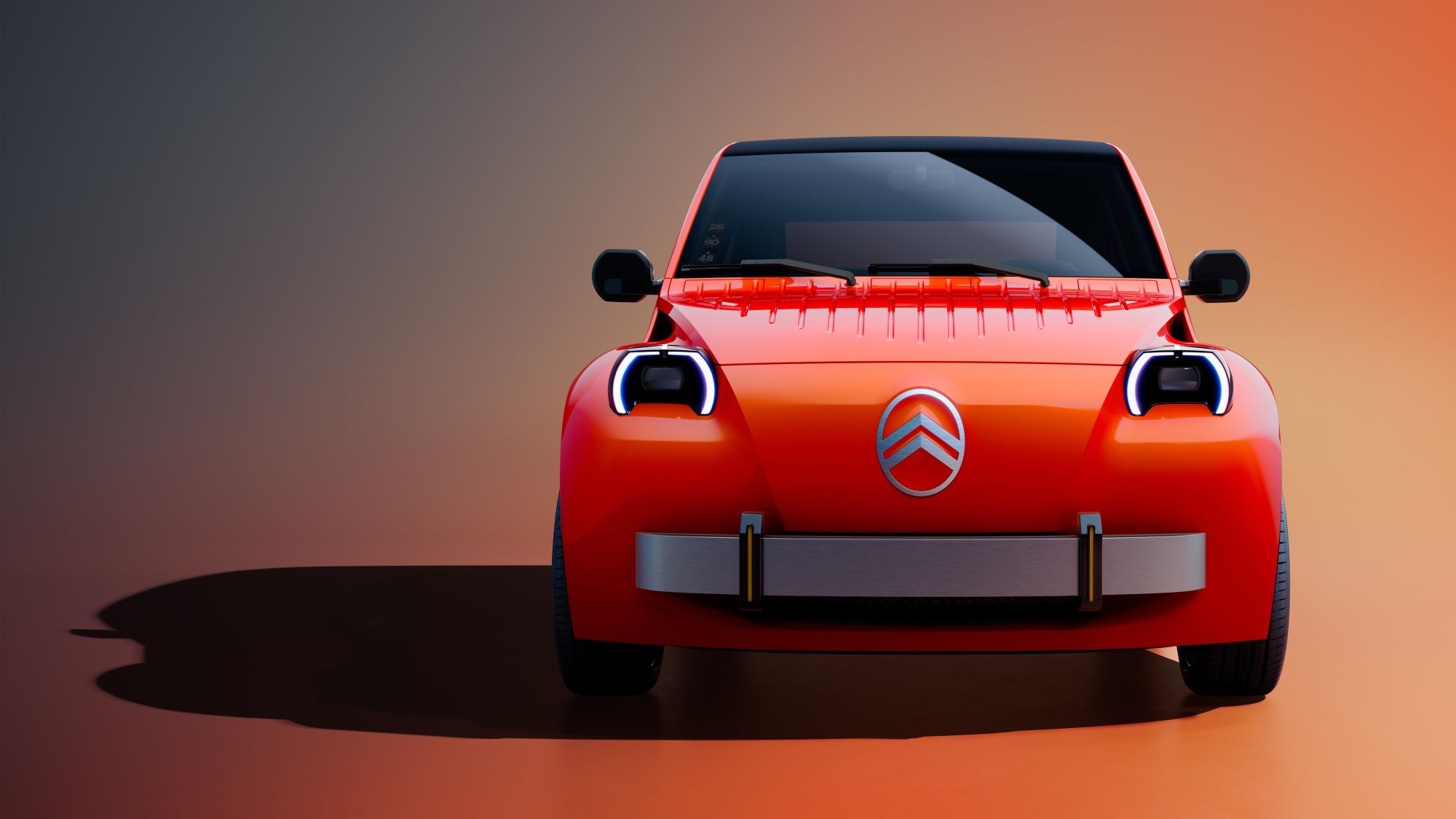
The numbers 48/90/26 inscribed on the concept’s windshield refer to 1948, the year of its launch; 1990, the end of production; and 2026, the unveiling of the concept. The sounds of the horn and the electric motor when starting up echo those of the 2CV.
The exterior’s Infra Red color, derived from an orange base with yellow and red highlights, is meant to “add intensity.” The front has headlamps inspired by the originals set apart from the bodywork, an “expressive” LED signature, a sweeping hood with TPV-inspired creases and integrated side air intakes, and exposed windshield wipers.
The concept’s sides are nearly vertical, with a curved and flowing roof profile, rounded fenders, and taut flanks. Other design highlights are contoured door handles, tapered C-pillar indicators, and 18-in light grey steel wheels accented with yellow “color clips” bearing the 2CV inscription.
Development partner Michelin provided the tires with a Heritage logo and a Citroën chevron pattern. The collaboration included development of a Universal Digital Twin for Tires, a solution requiring no sensor integrated into the tire. By harnessing data already available on board the vehicle, it can assess essential information in real time, including grip, wear, pressure, load, and driving conditions. Using the data, the vehicle can adapt its behavior to its environment to provide greater safety, comfort, and peace of mind. The technology also enables constant monitoring of the tire’s condition and helps anticipate replacement at the most appropriate time.
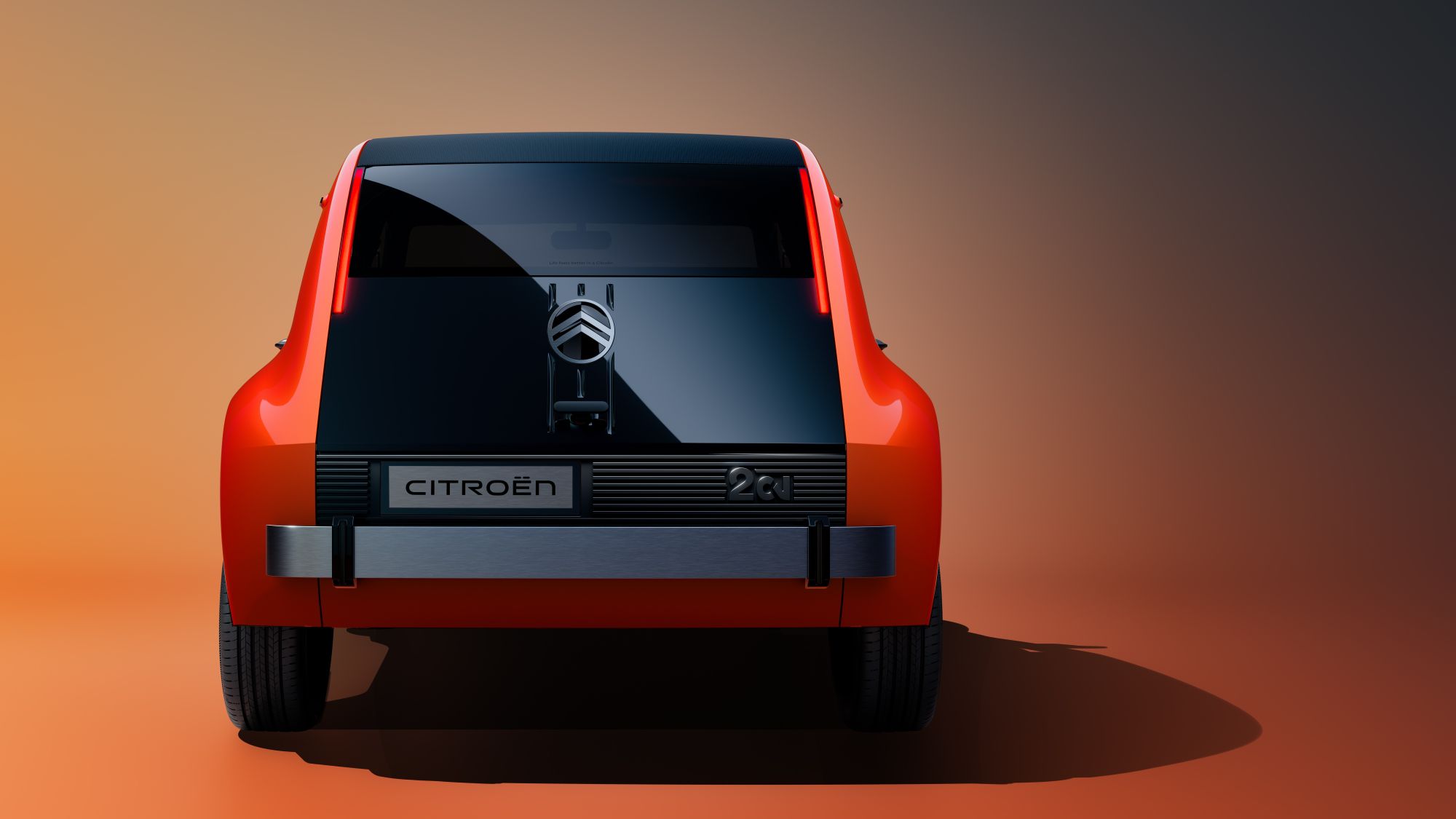
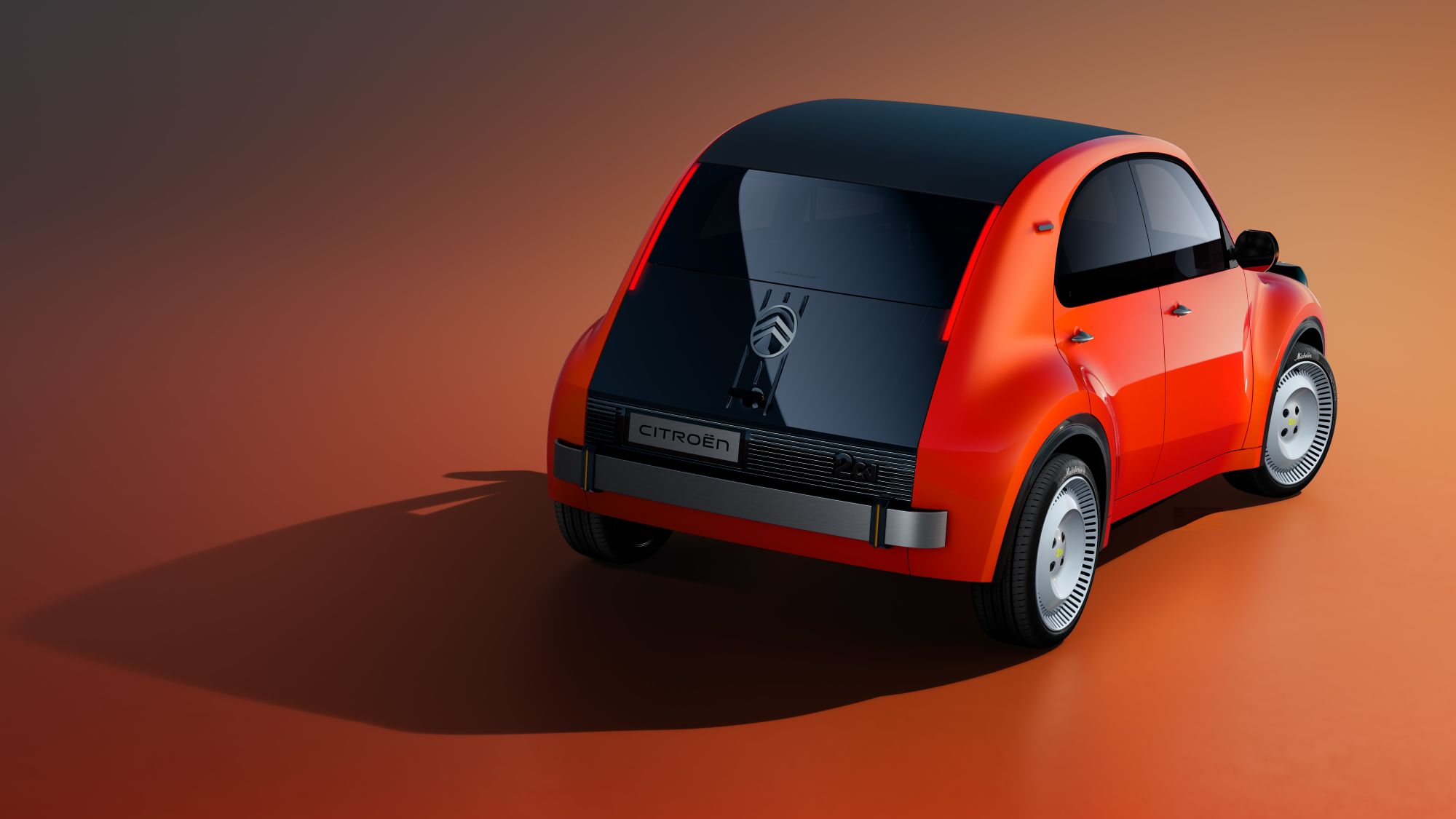
At the rear, the 2 CV Concept features a roofline accentuated by a black tailgate extending down to the bumper, vertical LED lights on the tailgate sides, three vertical tailgate creases, a short overhang, a prominent tailgate handle, and a number plate displaying different countries’ nicknames for the 2CV.
An ‘interior way of life’
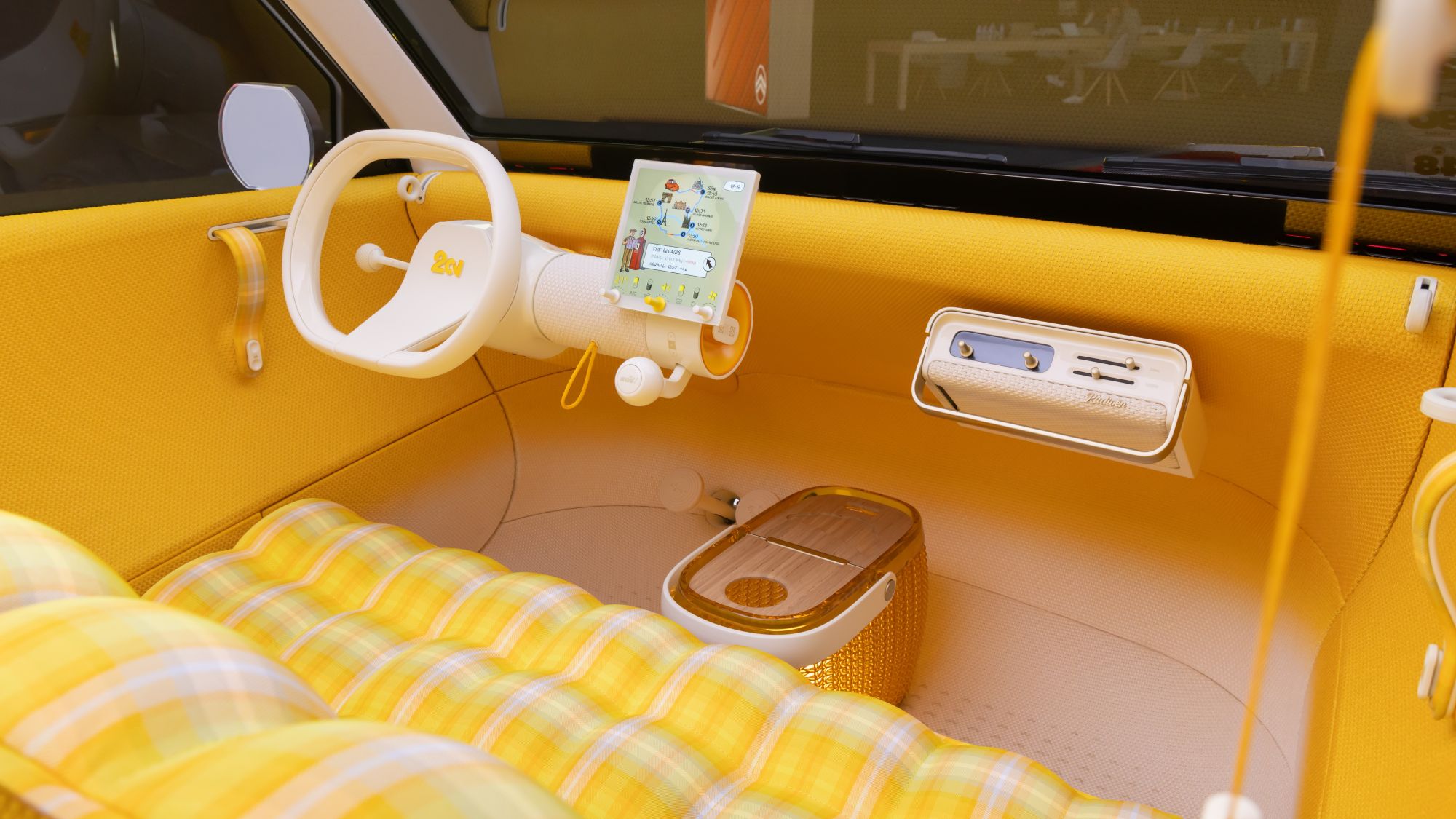
Inside, the concept captures the spirit of the 2CV in a comfortable, bright, warm, and welcoming environment. Key design elements are the lack of a traditional dashboard and recessed door panels, both meant to provide an open feel and maximize room for passengers. Technology is meant to support the user’s needs without being intrusive.
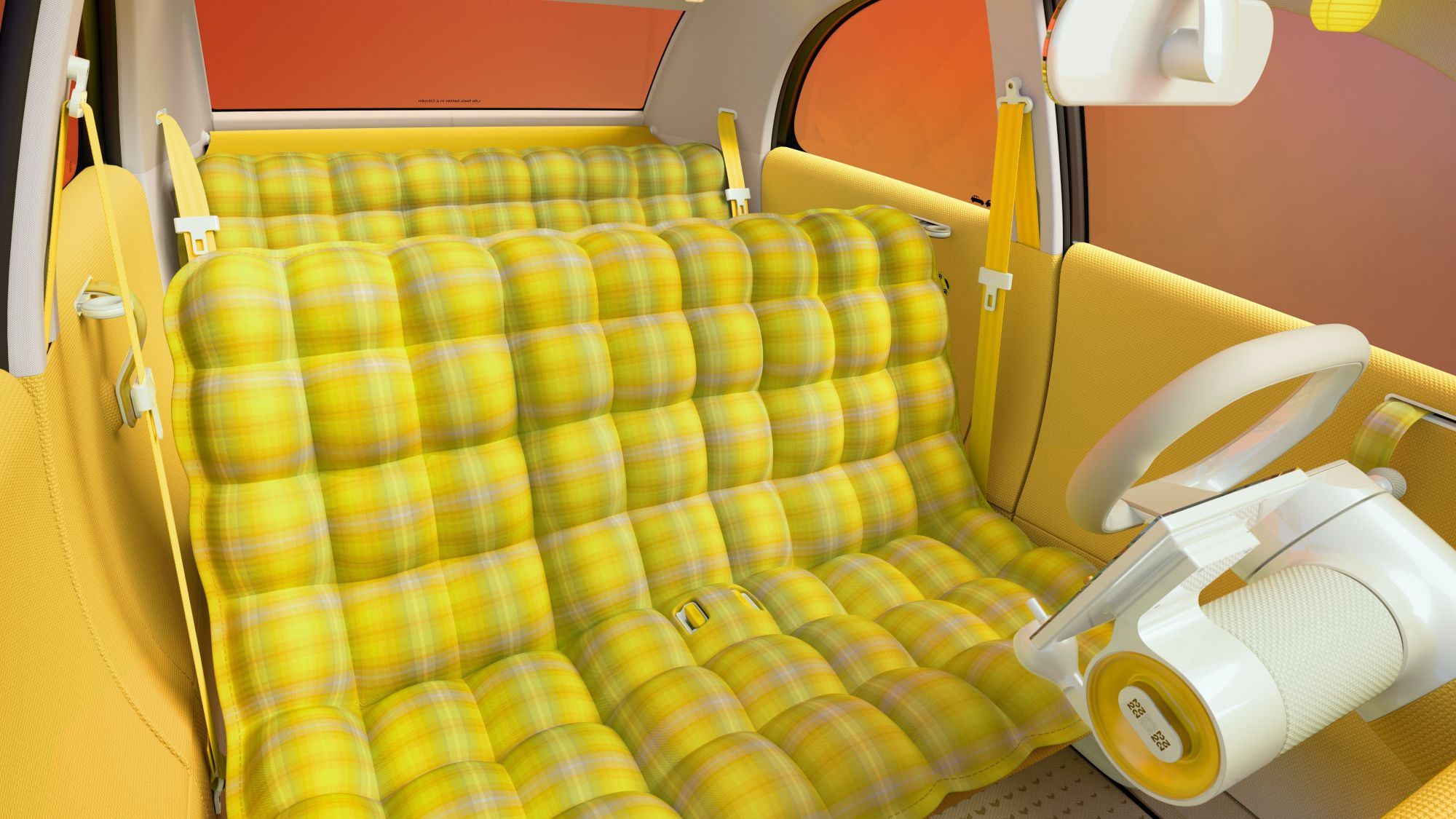
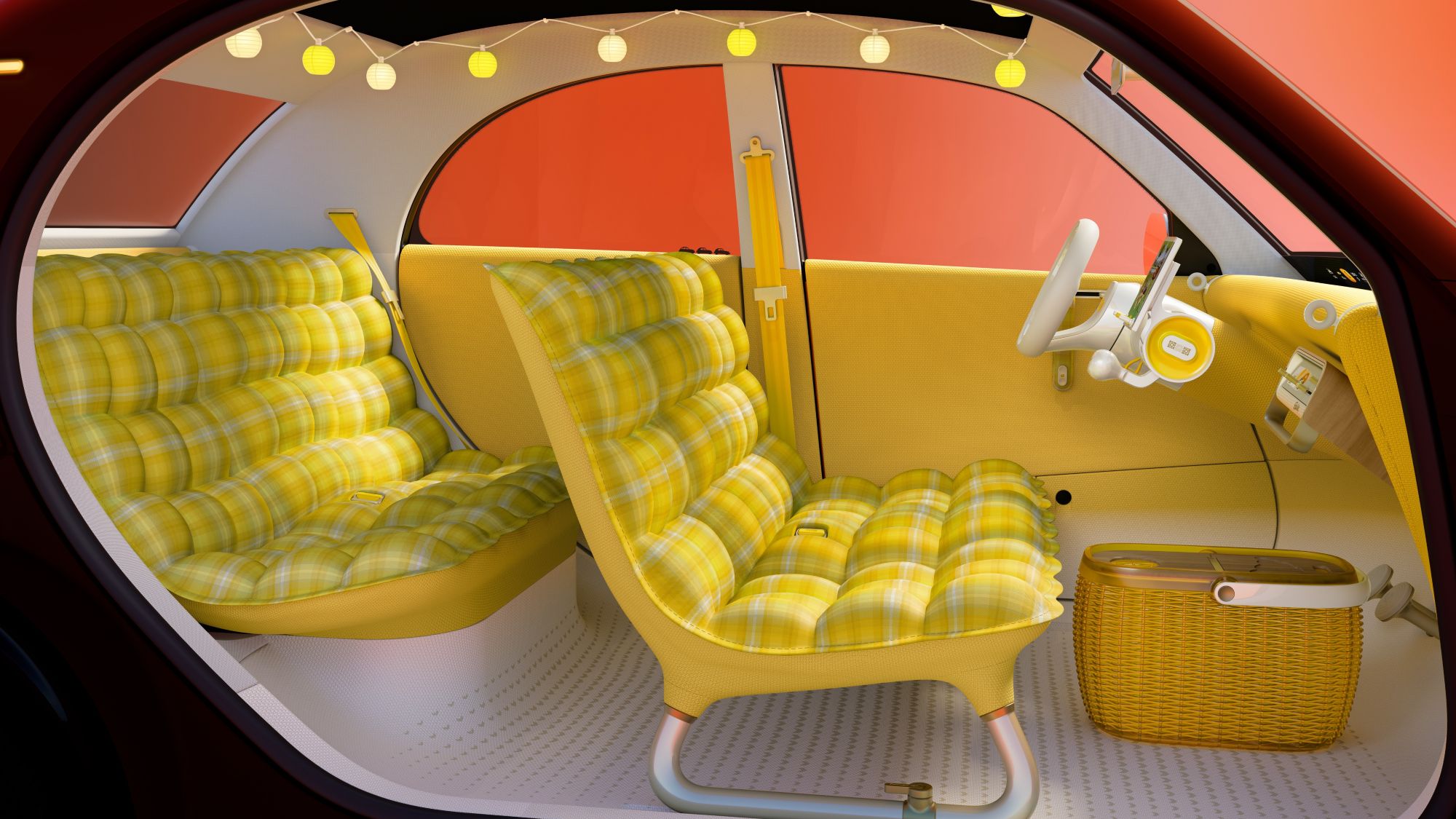
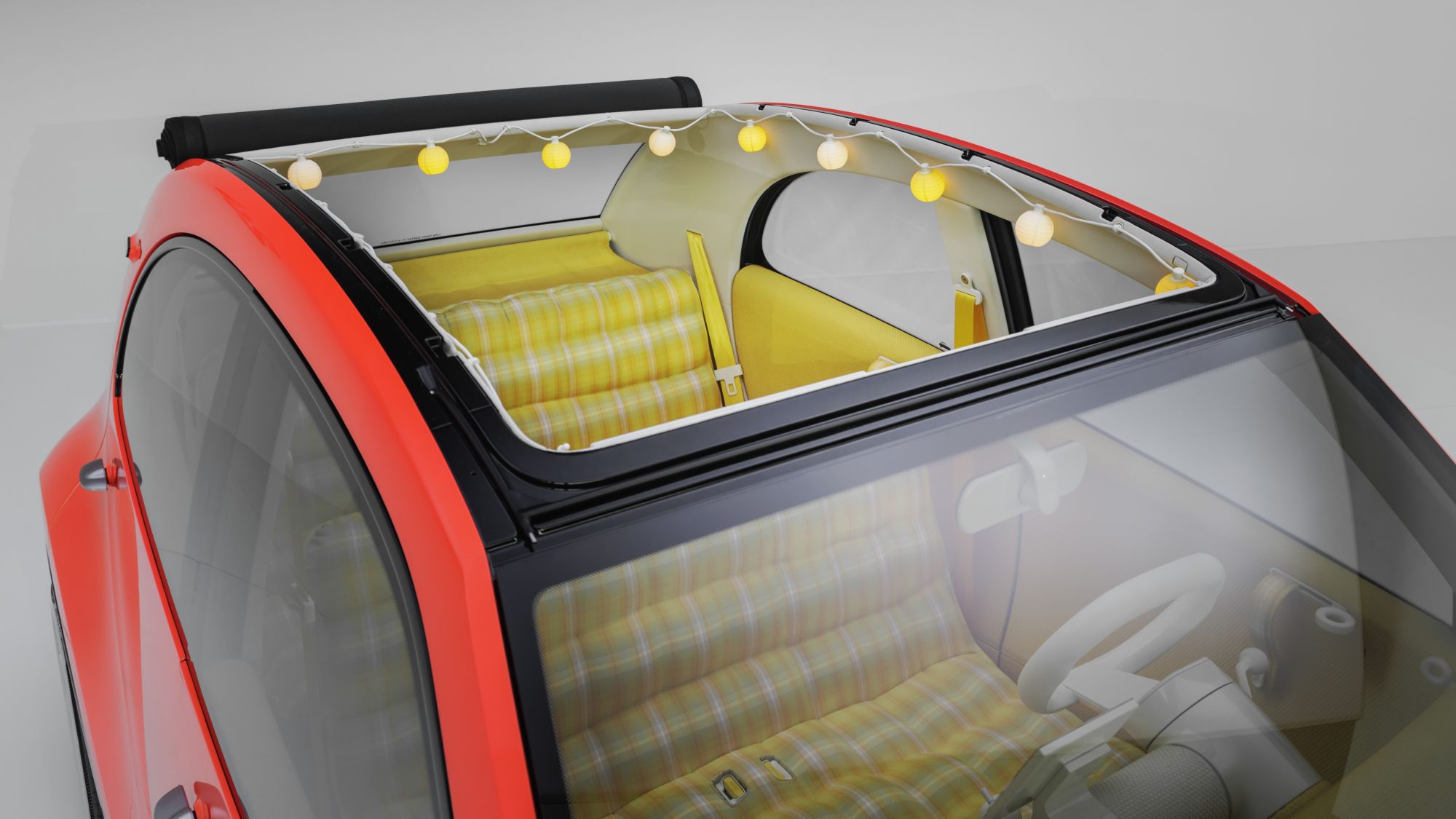
Designers “played with” a palette of bright and warm colors “to convey optimism and vitality.” An iconic 2CV motif has been reimagined in tartan and covers the seats in “zesty shades” of yellow for an energizing interior. The fabric sunroof “brings in light” for a sense of openness. Around it are outdoor-like string lights.
Beige, reminiscent of Bakelite, material is used on the steering wheel, controls, and seat piping. The floor, dashboard replacement, and door panels feature a textured fabric inspired by cane and wicker.
“The 2 CV Concept cabin has room to breathe: the yellow colours and materials bring warmth and light,” said Madeleine Ternisien, a Citroën Color & Material Designer. “We played on the Proustian madeleine effect, with beige touches recalling the Bakelite controls of the 2CV. The woven materials are a nod to caning, a popular French craft tradition.”
In place of the dashboard is a cylinder, to which is attached a single-spoke steering wheel, a single control lever, a paddle-shift gear selector, and an 8-in square “phygital” touchscreen, with graphics drawing on comic-book visuals and featuring the work of Jean-Luc Delvaux, a Belgian comic-book artist and 2CV enthusiast.
The square display is part of a user interface that includes a Citroën Smart Vision display that prioritizes essential information within the driver’s field of vision. The clean head-up display is positioned directly in the driver’s field of vision in a strip below the windshield. Essential information is clearly prioritized, allowing it to be read instantly without distraction or overload. It includes a digital reinterpretation of the rolling-drum speedometer used in Citroën’s classic GS, along with available battery percentage, navigation prompts, selected gear, and weather. The approach is said to significantly reduce mental workload and encourage more relaxed driving.
A detachable “Radioën” (an amalgam of “radio” and “Citroën”) with wood accents on the forward bulkhead doubles as a speaker that can be taken out of the vehicle.
Other interesting interior elements are a removable storage basket, combining wood and bio-based plastic and produced using 3D printing, in place of the center console, and soft straps for door handles. The wide seats feature Citroën Advanced Comfort technology, and the front seat can be pulled out “for a break.”
The pedals feature a tortoise symbol for the brake and a rabbit for the accelerator. Storage compartments, designed to hold eggs, pay homage to the original car’s farm use.
Fourgonnette variant
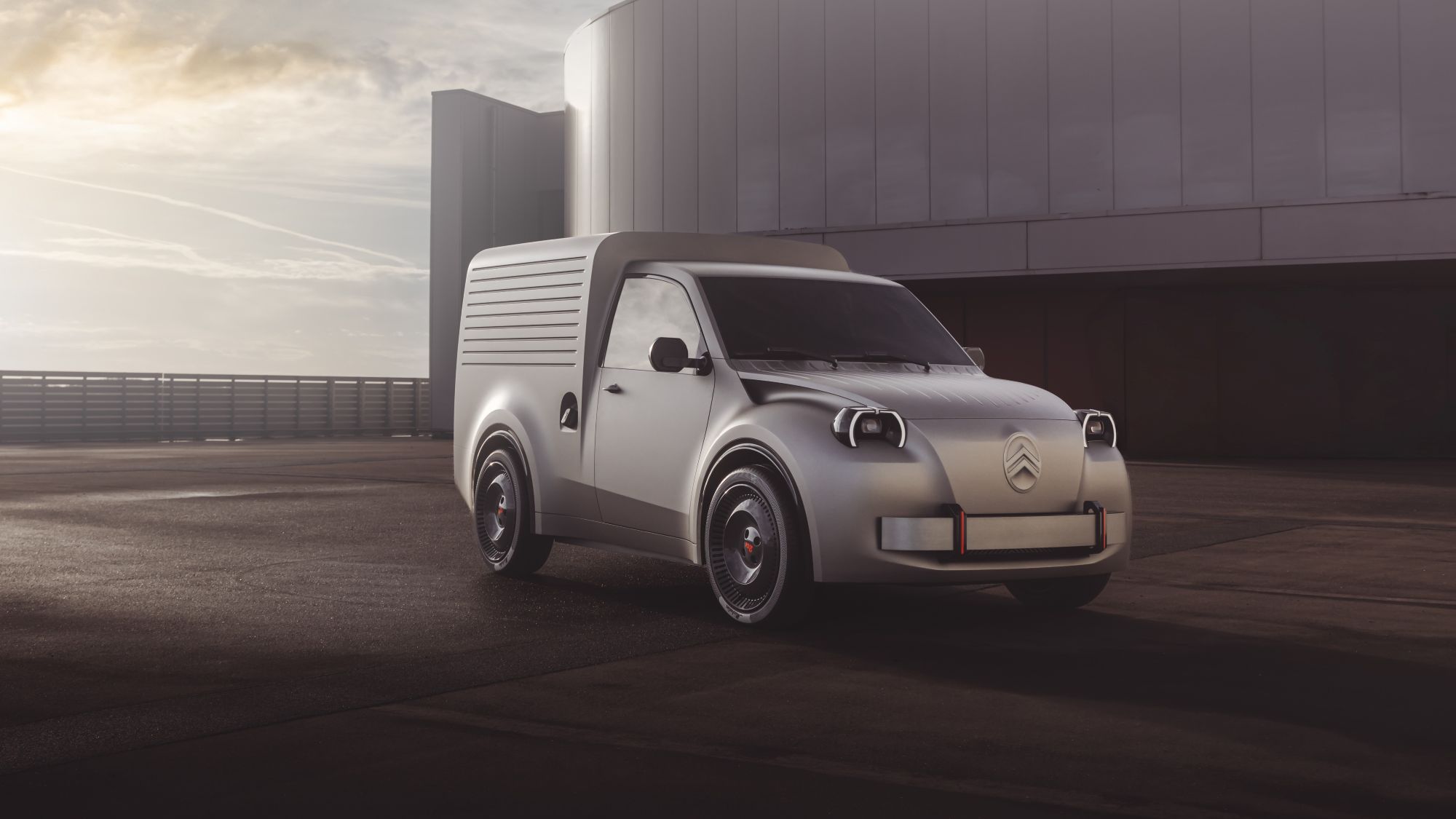
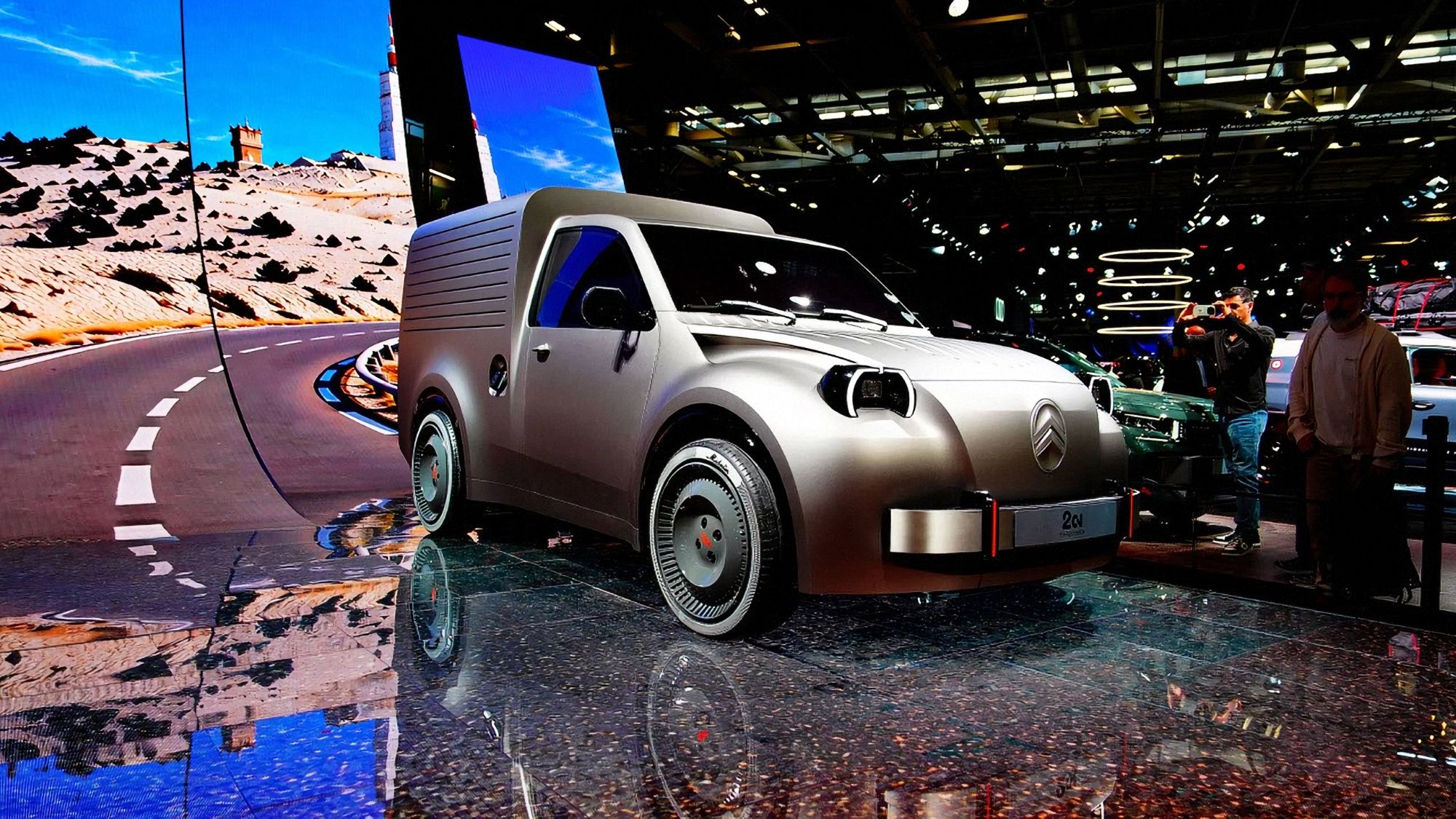
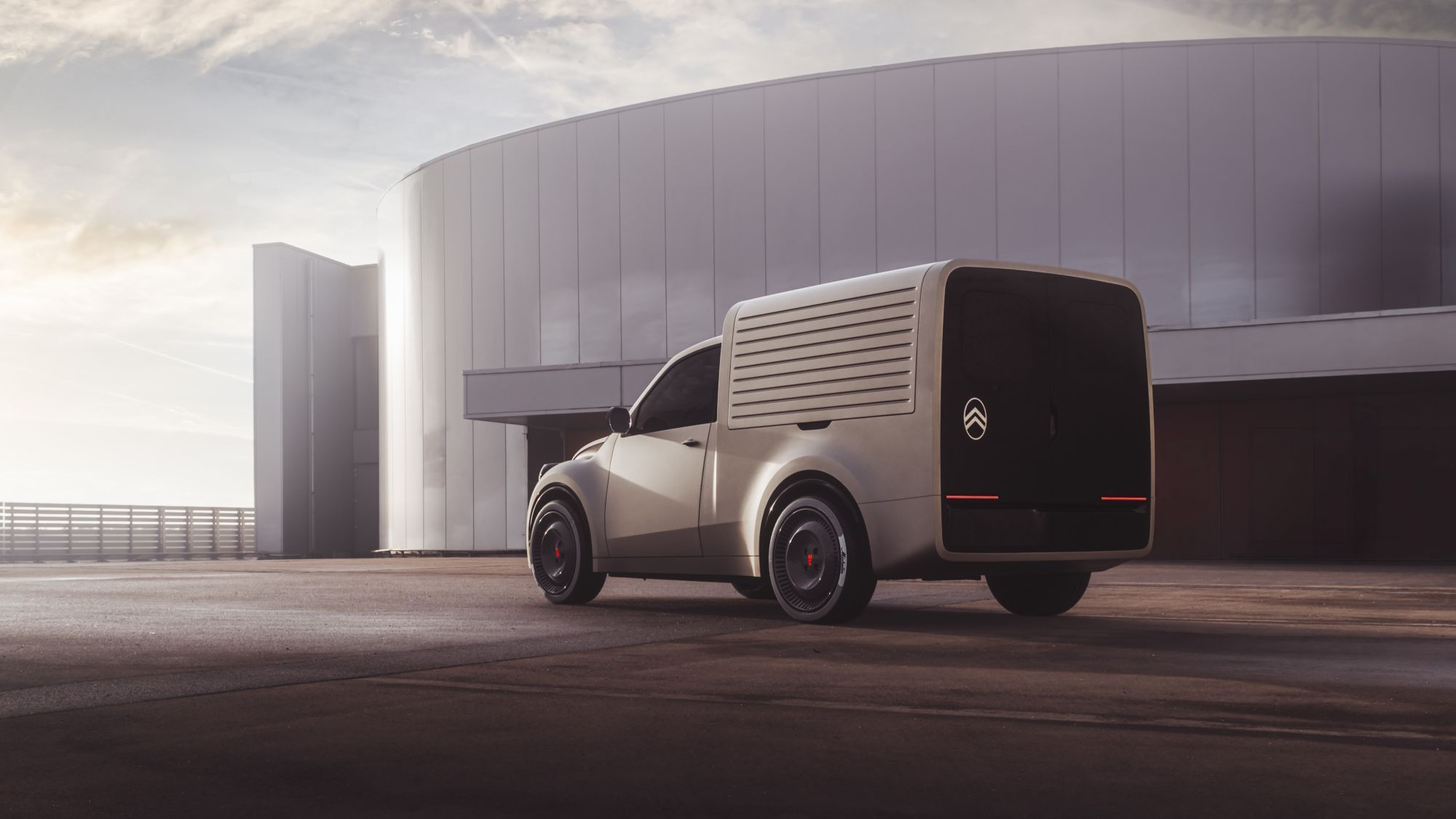
At the Paris show, Citroën also presented a Fourgonnette delivery-van variant of the concept, a contemporary take on an iconic silhouette of the compact commercial vehicle that served generations of tradespeople, shopkeepers, and delivery drivers. With the 2 CV Fourgonnette Concept, the brand is “reaffirming” the close relationship it has maintained with professionals for more than a century.
“The 2 CV Fourgonnette was more than just a workhorse,” said Chardon. “It was part of everyday life. Simple, ingenious and accessible, it above all possessed something few commercial vehicles have: a soul. That is the spirit we are bringing back to life today. Because being useful should never mean being ordinary.”
The “passion project” of Citroën’s designers does not preview a future production model in the short term, but they say it opens up new avenues for consideration and demonstrates that the spirit of the 2 CV Fourgonnette remains relevant. It represents a more accessible, lighter electric light commercial vehicle that is faithful to the spirit of the original but focused “on the uses and challenges of tomorrow.”
After the concept’s unveiling, Citroën launched a website meant to be “an immersive experience” for visitors to discover the 2 CV Concept’s design, 100% electric mobility, approach to simplicity, and optimistic vision. For more, visit http://2cv-concept.citroen.com.
-

- Citroën 2 CV Concept front.
-

- Citroën 2 CV Concept front side view.
-

- Citroën 2 CV Concept rear side.
-

- Citroën 2 CV Concept rear.
-

- Citroën 2 CV Concept rolled fabric roof and string interior lights.
-

- Citroën 2 CV Concept at the Paris Motor Show.
-

- Citroën 2 CV Concept interior side view.
-

- Citroën 2 CV Concept interior front row.
-

- Citroën 2 CV Concept interior view rearward.
-

- Citroën 2 CV Fourgonnette Concept front side.
-

- Citroën 2 CV Fourgonnette Concept rear side.
-

- Citroën 2 CV Fourgonnette Concept at the Paris Motor Show.