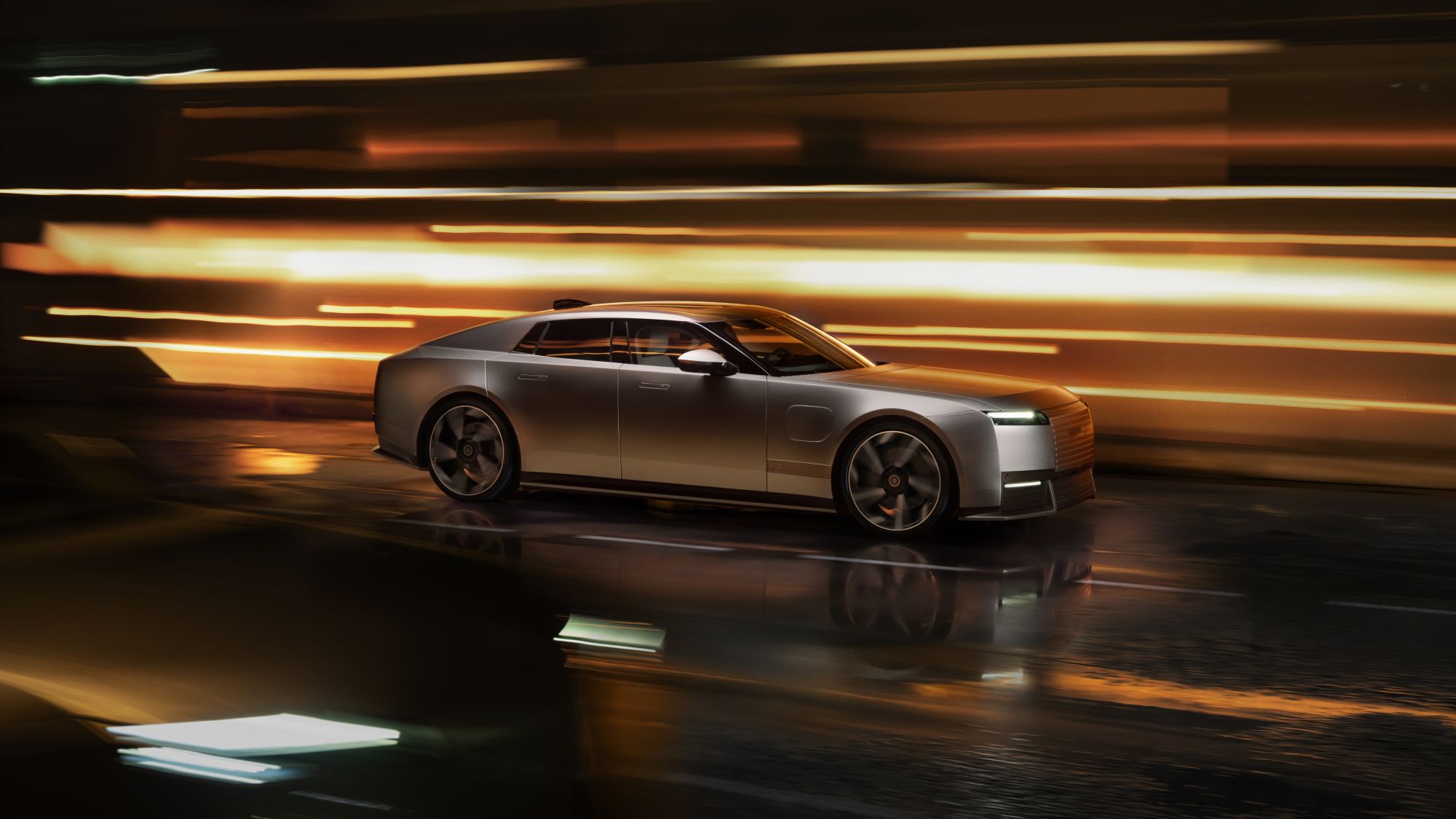
After first showing the second-generation Roadster design in 2017, promised for production in 2020, Tesla has revealed a reworked car for launch in 2028. The company’s Lars Moravy, Vice President of Vehicle Engineering; Franz von Holzhausen, Chief Designer; and Elon Musk, CEO, did the honors yesterday at SpaceX‘s 4000-acre rocket test and development center in McGregor, TX.
When the new car arrives, it will be about 20 years after Tesla revealed the first Lotus Elise-based Roadster, the proof of concept that proved that an EV was a viable product, fun to drive, and could “go the distance,” said von Holzhausen.
“The Roadster is the reason I came to Tesla,” added Moravy. “And we had a master plan to build an EV that proved that we could then make a cheaper EV that people could afford with Model S, and then we built Model 3 and Model Y.”
The last time the Roadster and SpaceX were together, Tesla put Musk’s personal first-generation car into space with “Starman” onboard. For the new car’s launch, the CEO promised: “You’re going to see some crazy stuff tonight. We need an audience to prove that it’s not AI or SI (artificial intelligence or super intelligence).”
Both companies’ engineers have been working to create the latest Roadster based on Musk’s “maybe a little bit crazy” suggestions to do “a little more of this, and a little more of that” in prepping for production of what may be, in the long term, the only manually driven car that Tesla makes.
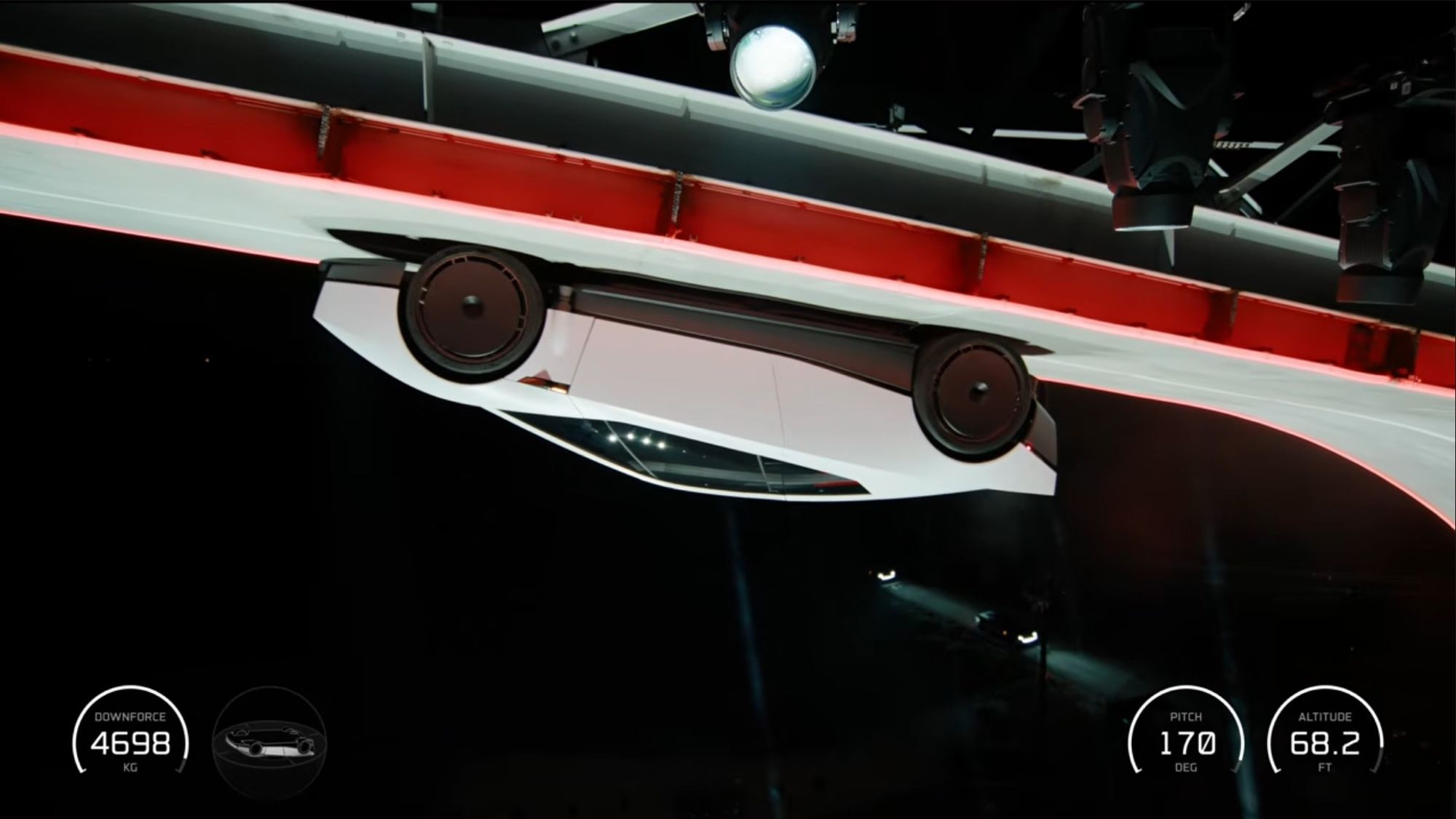
“To do that, we have a fan suction system on the bottom of the car that can pull up to 2 g to make the car go upside down, and then we borrowed some technology from SpaceX to do the rest,” said Moravy.
The first of a few choreographed stunts in Texas showcasing the new car’s suction capabilities had the car go vertically, then upside down on a ramp.
While a driver might not want “to stick upside down in a car maybe not that often,” Musk said, an actual benefit on the track or road is that the car’s downforce means it can corner incredibly well. “It looks like you’re breaking physics because the car sticks to the ground so hard. So, in acceleration and cornering, it’s going to crush every track record that has ever existed.”
According to Musk, attitude-control and main thrusters in the rear enable the car to “fly like a rocket and do crazy gymnastics.” He added that “this is not necessarily a safety-optimized car, but it takes the fun meter to 11 out of 10.”
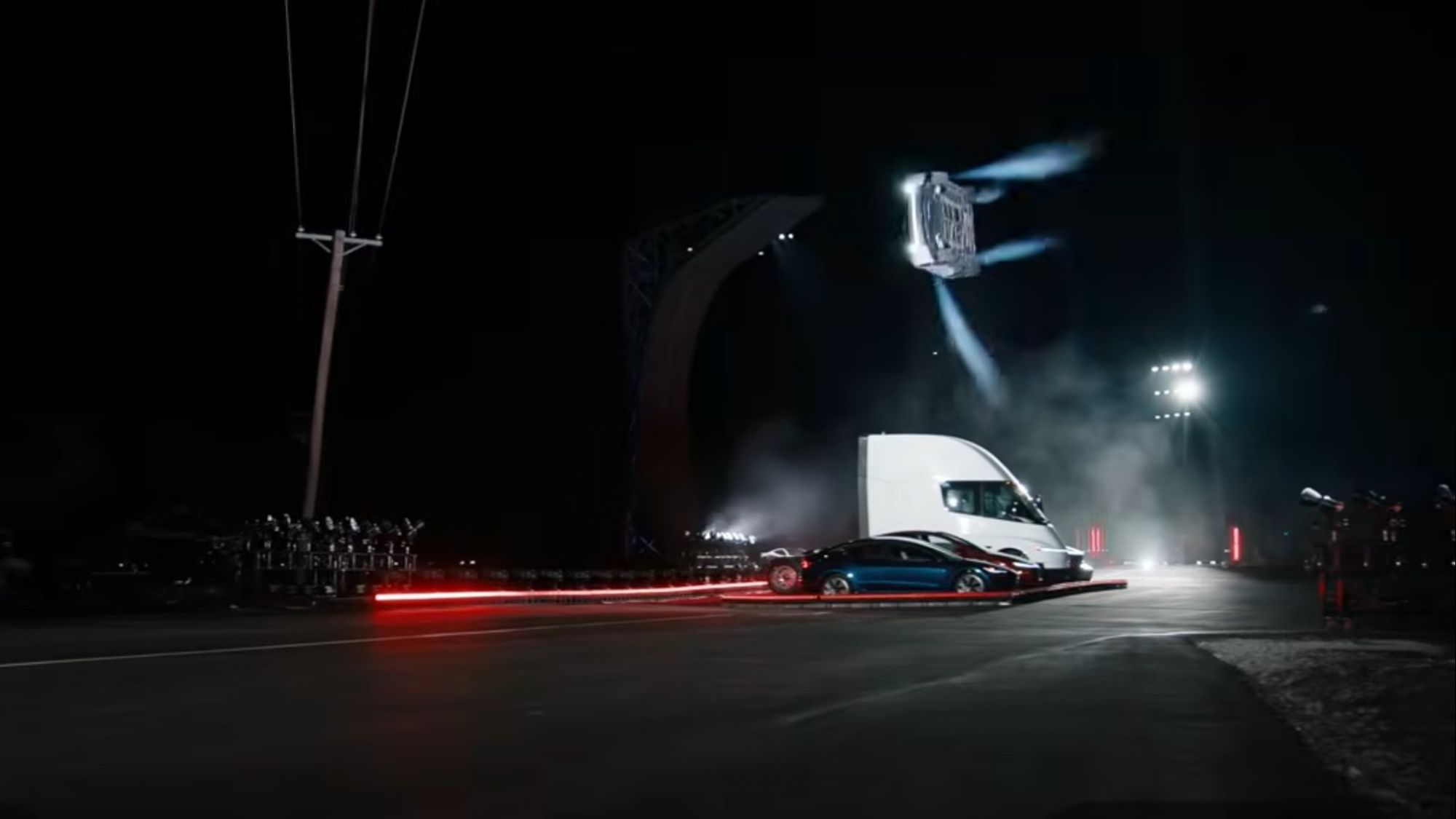
That fun was then demonstrated by a “kickflip” (a classic skateboarding trick) jump over five side-by-side Teslas—Cybercab, Cybertruck, Semi, Y, and 3. “Tony Hawk would be proud,” said von Holzhausen.
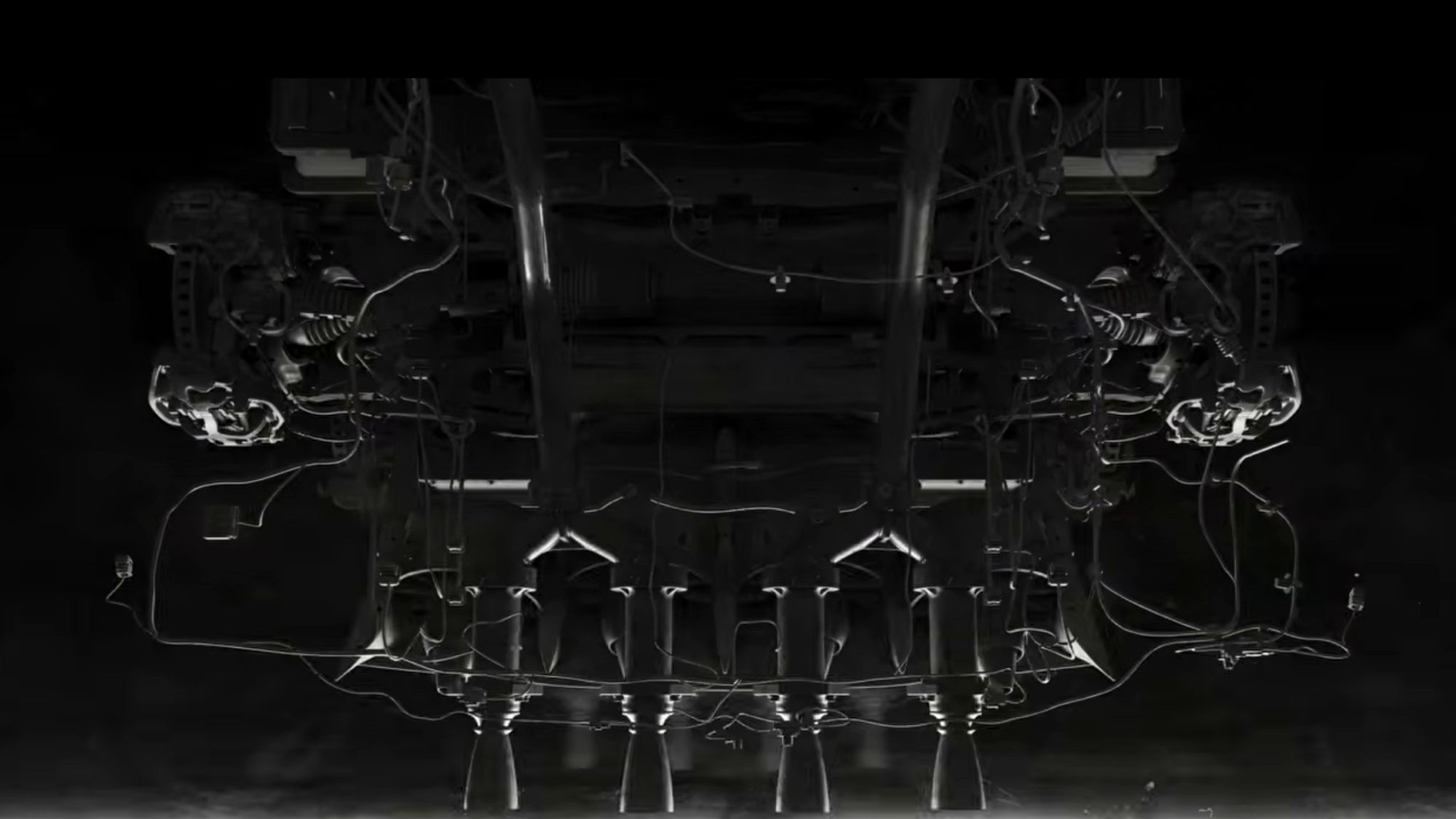
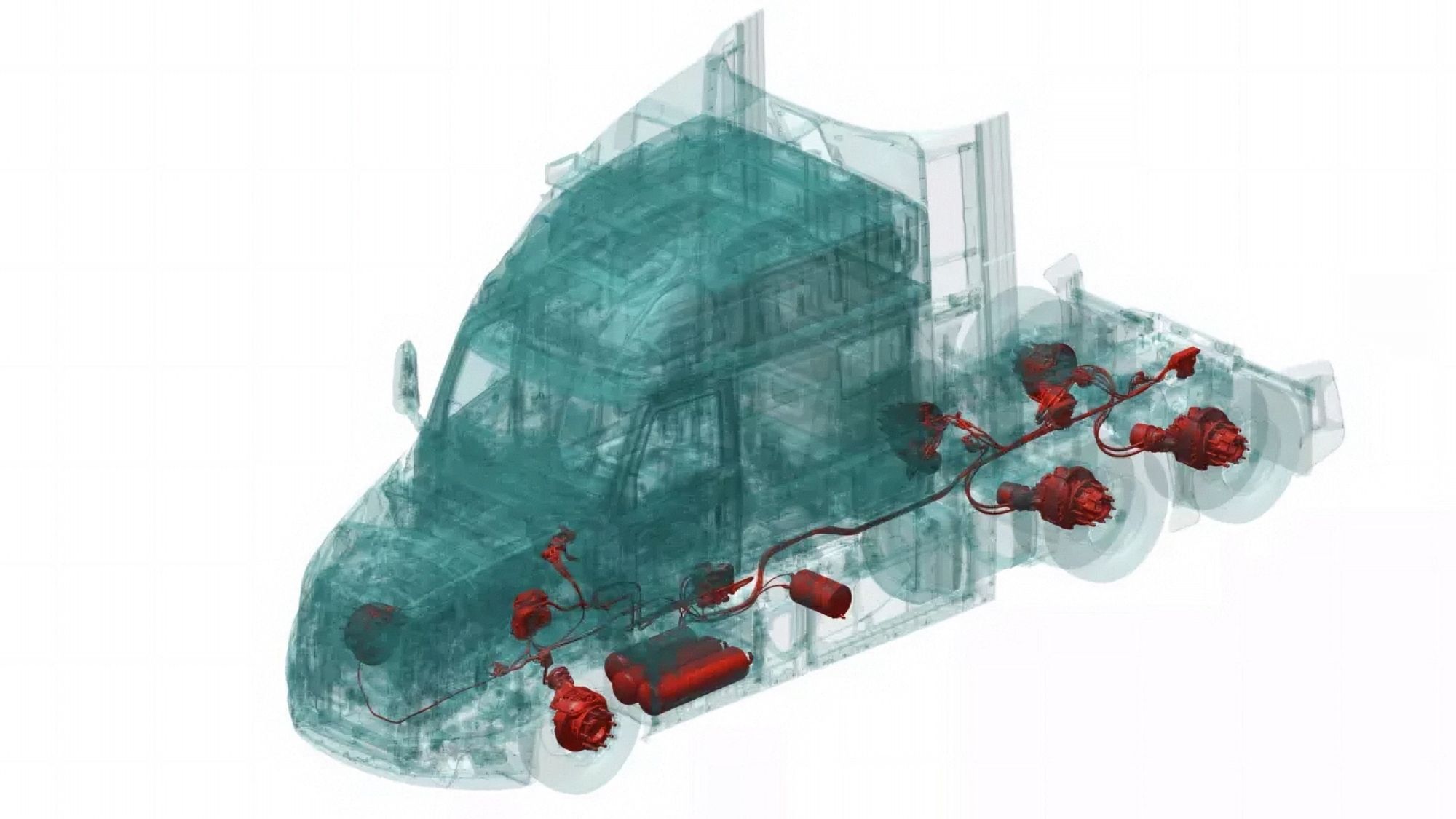
According to Moravy, that was accomplished with rockets using SpaceX technology and compressed air from two carbon overlay pressure vessels. They can hold 600 L (21 ft³), or about 250 kg (551 lb), of air at ultra-high pressure, and 10 nozzles enable the thrust.
The advanced cold-gas thrusters use all-electric actuators to offer precise thrust, completing micro-adjustments within a fraction of a second to help stabilize the vehicle in flight.
The car can quickly recharge its air tank, with no need for special propellant.
Minimalist design with hidden technology
Since von Holzhausen and his team were tasked with designing a Roadster that could fly, but still wanted it to look like a car, they looked for inspiration from “badass stuff out there” like the iconic Lockheed SR-71 reconnaissance aircraft and cars that transform. Transformation was key because they wanted to make a pretty car, but one that could deliver amazing downforce.
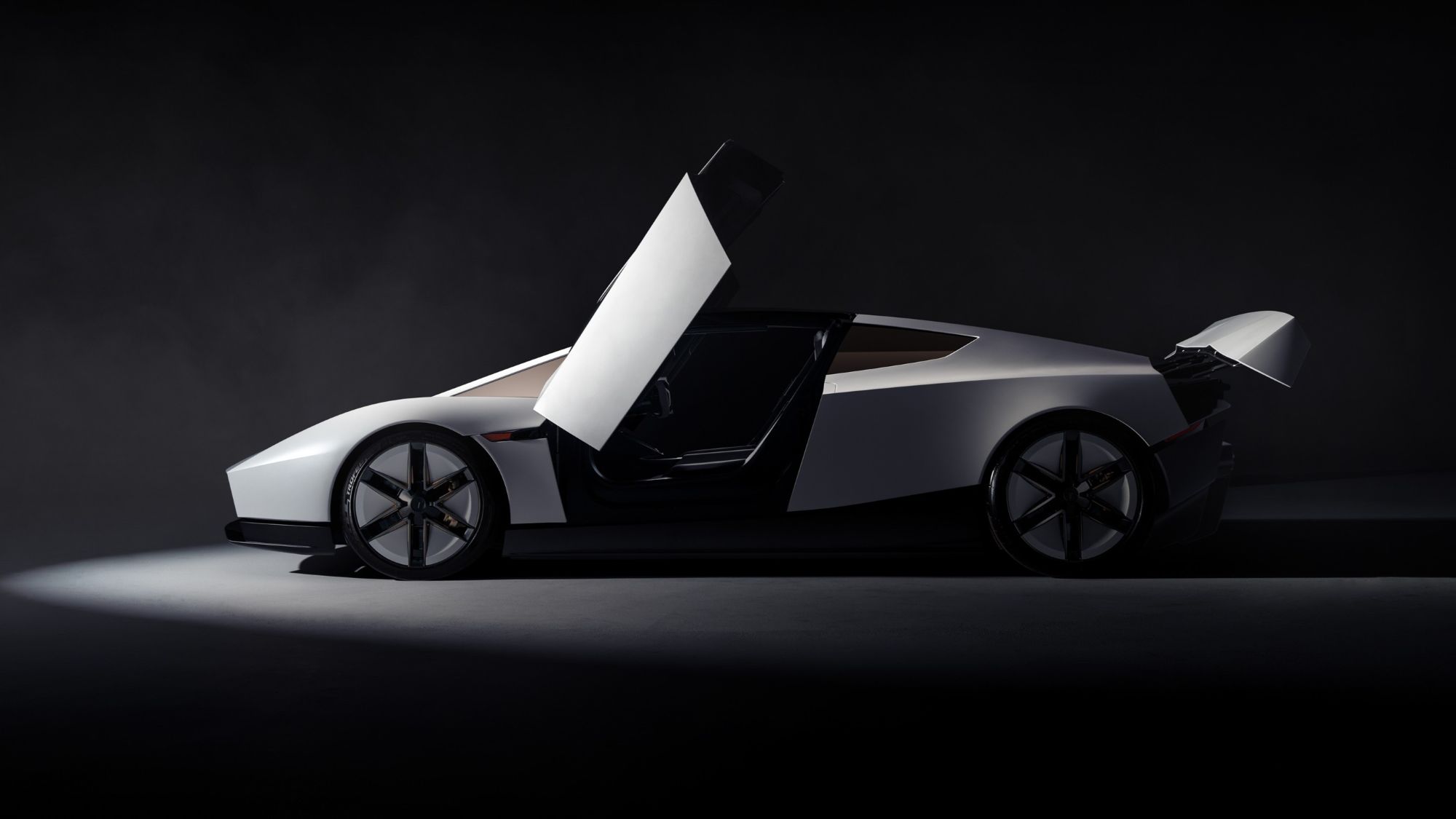
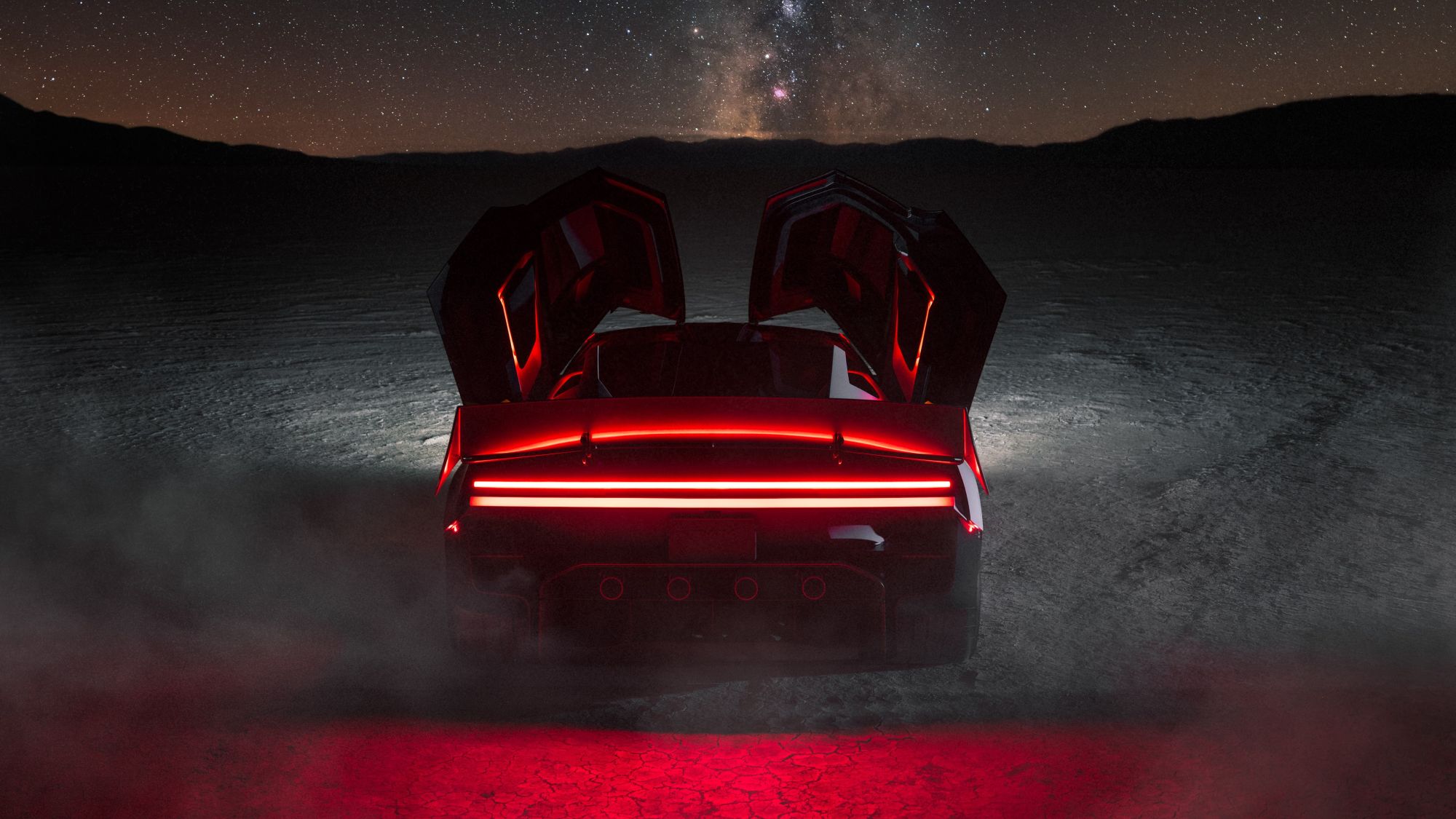
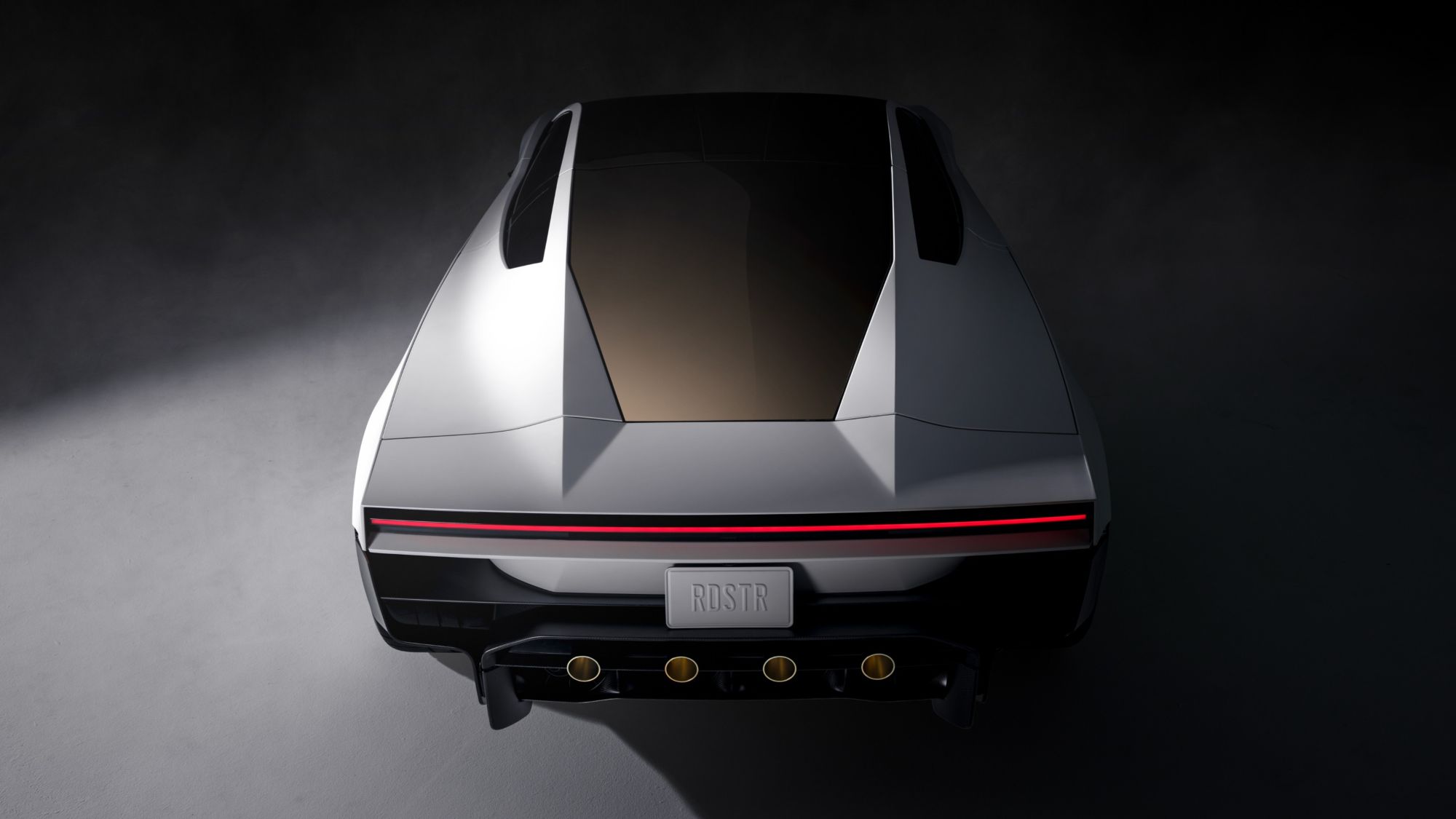
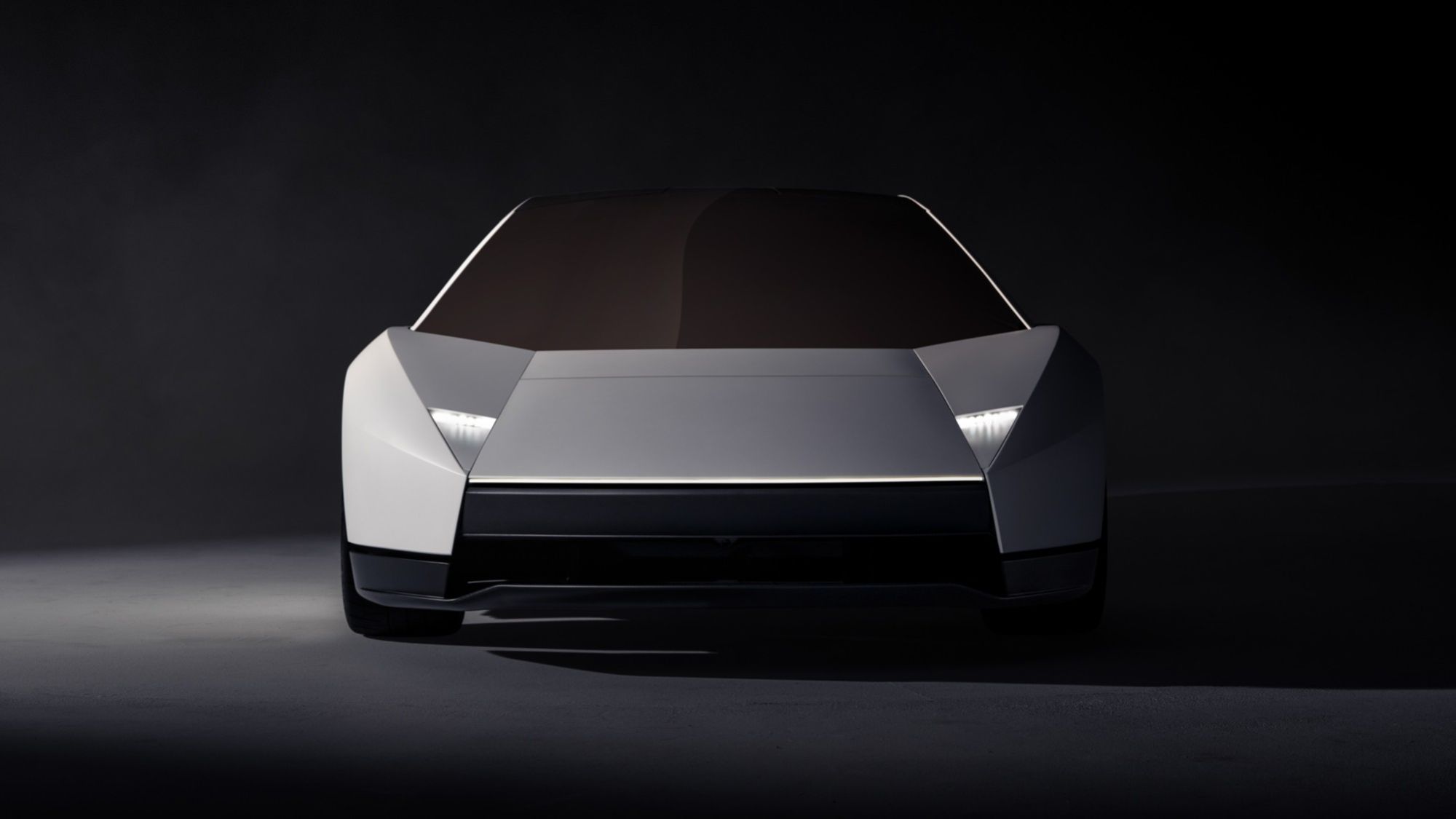
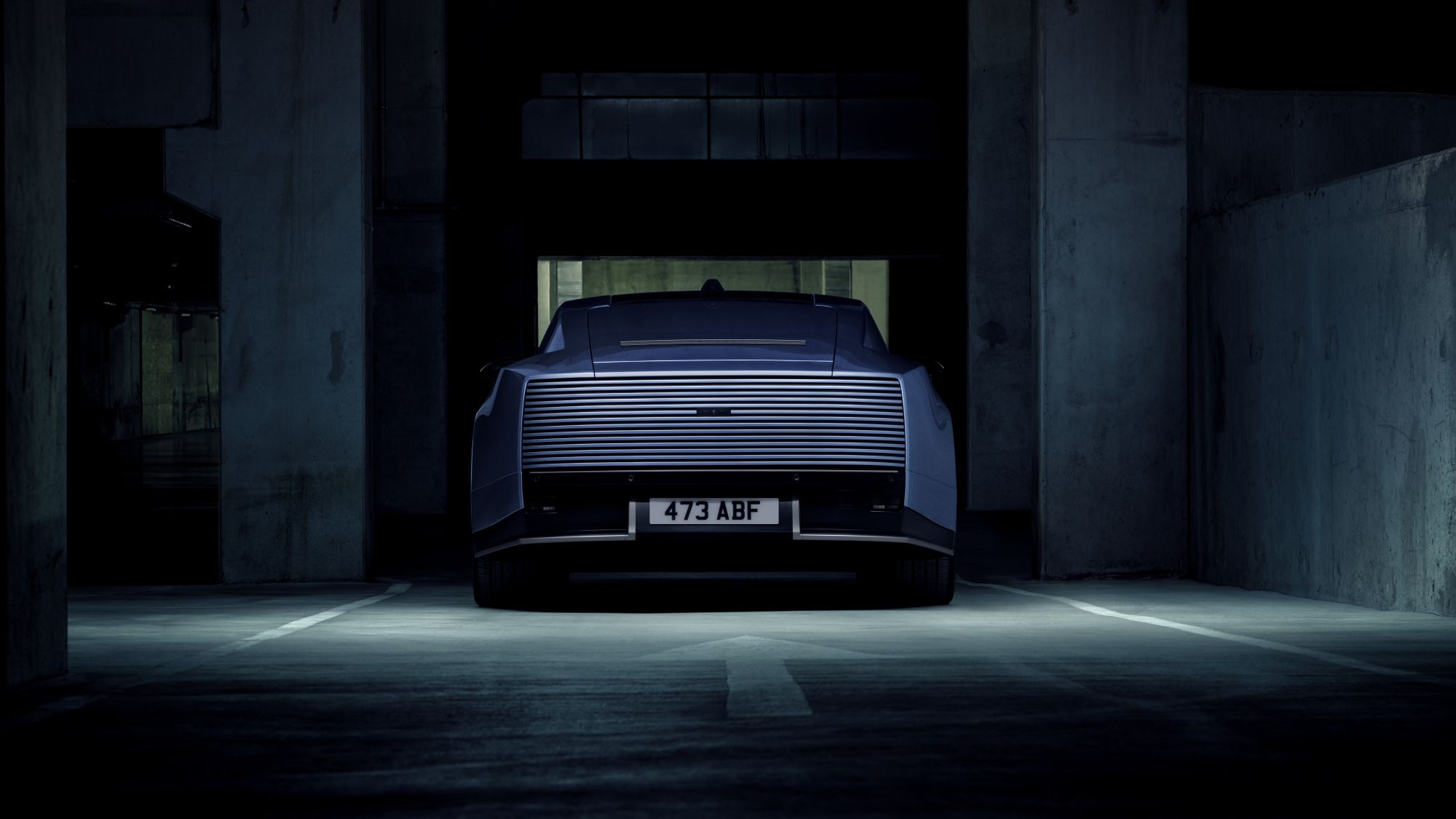
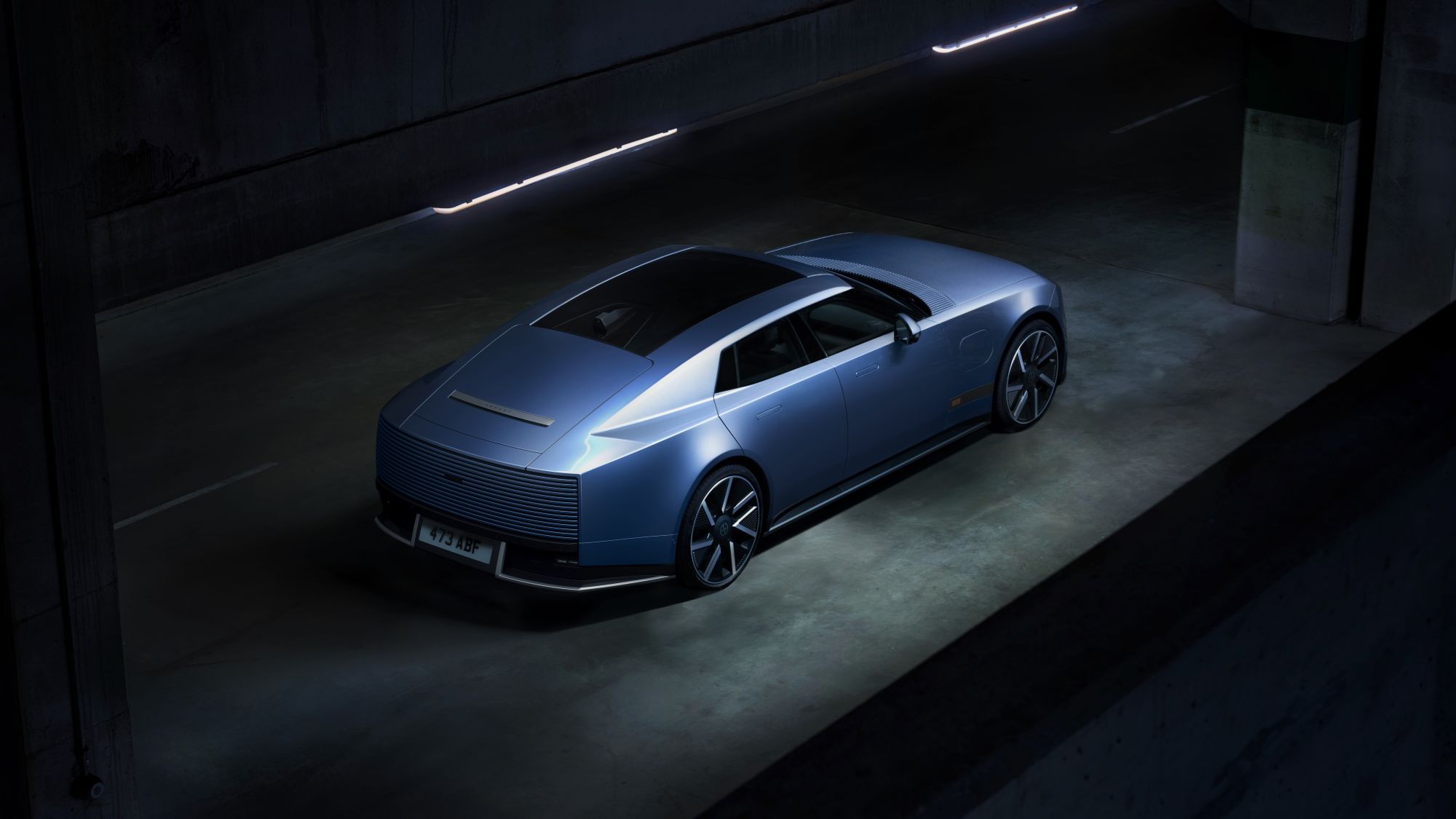
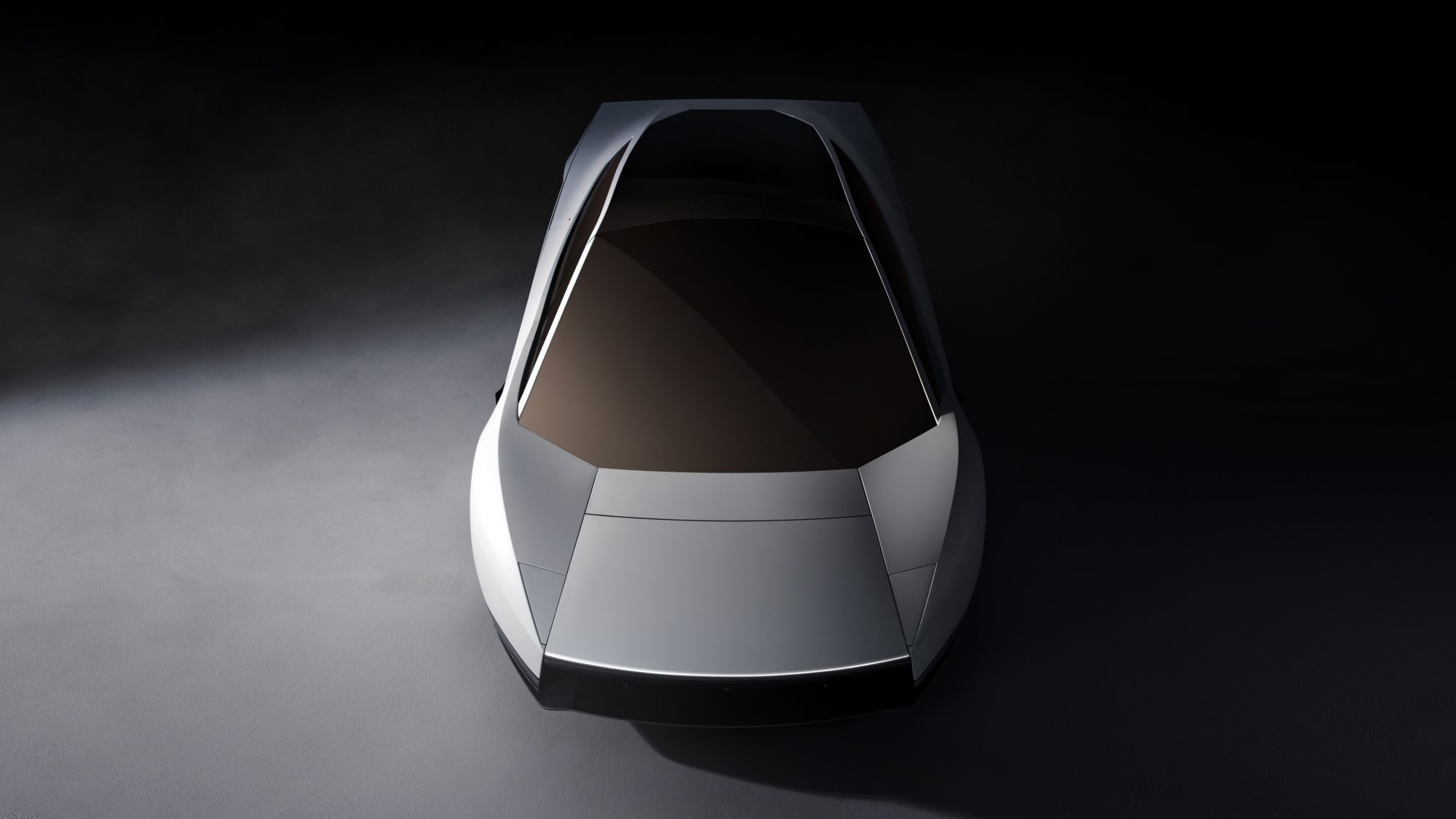
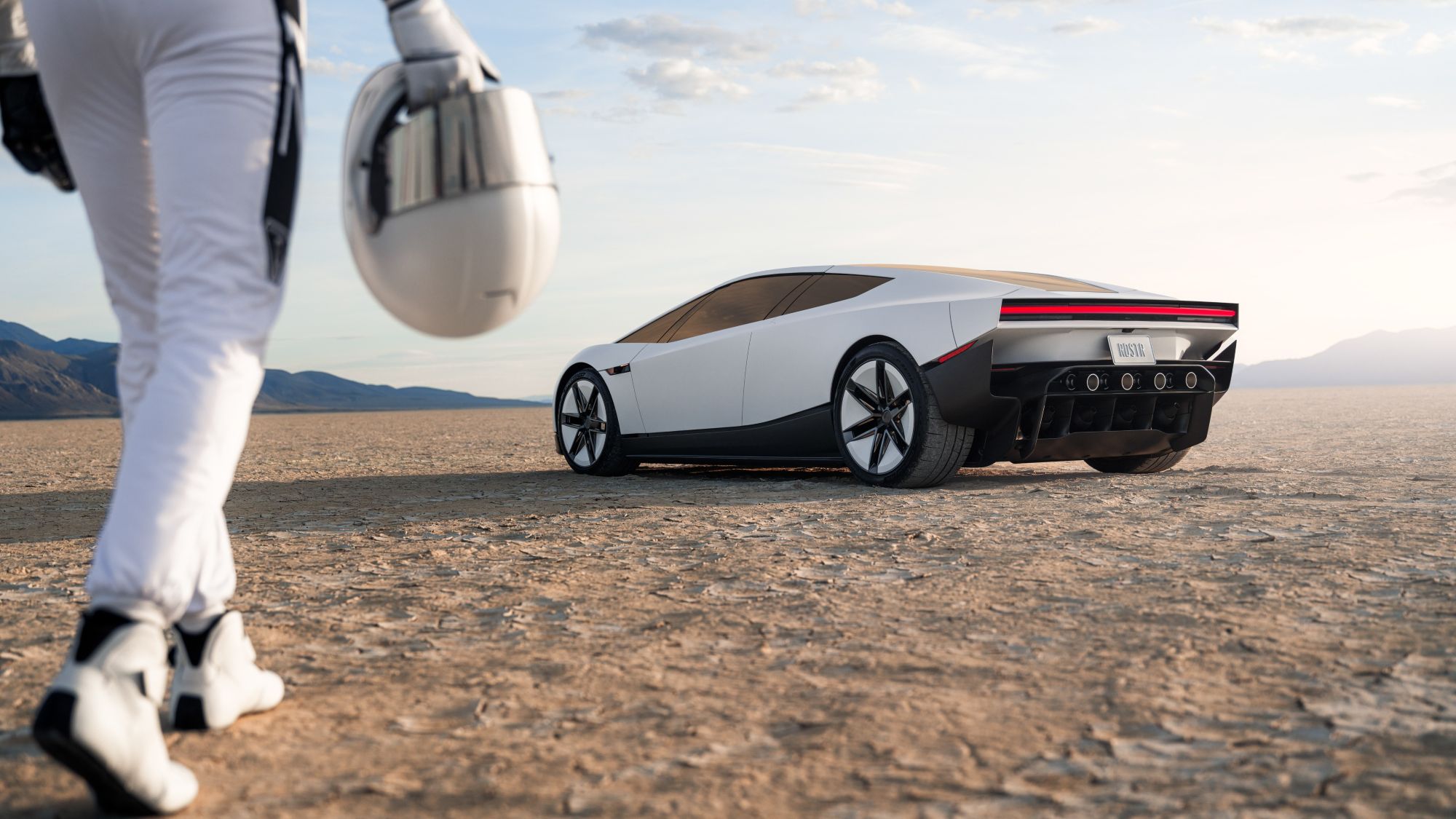
He says that the car has a nice clean aesthetic and the team “leaned into” some aerospace aesthetics. Designed to be “minimalist yet highly technical,” the car features hidden headlights, a full-length taillight, and flush-mounted aerodynamics concealing the vehicle’s true capabilities.
The Roadster’s Ano White paint takes inspiration from aerospace techniques that provide UV and cryogenic protection when exposed to the harshness of space, plus electrostatic dissipation and corrosion resistance to protect rockets during pre-launch and recovery.
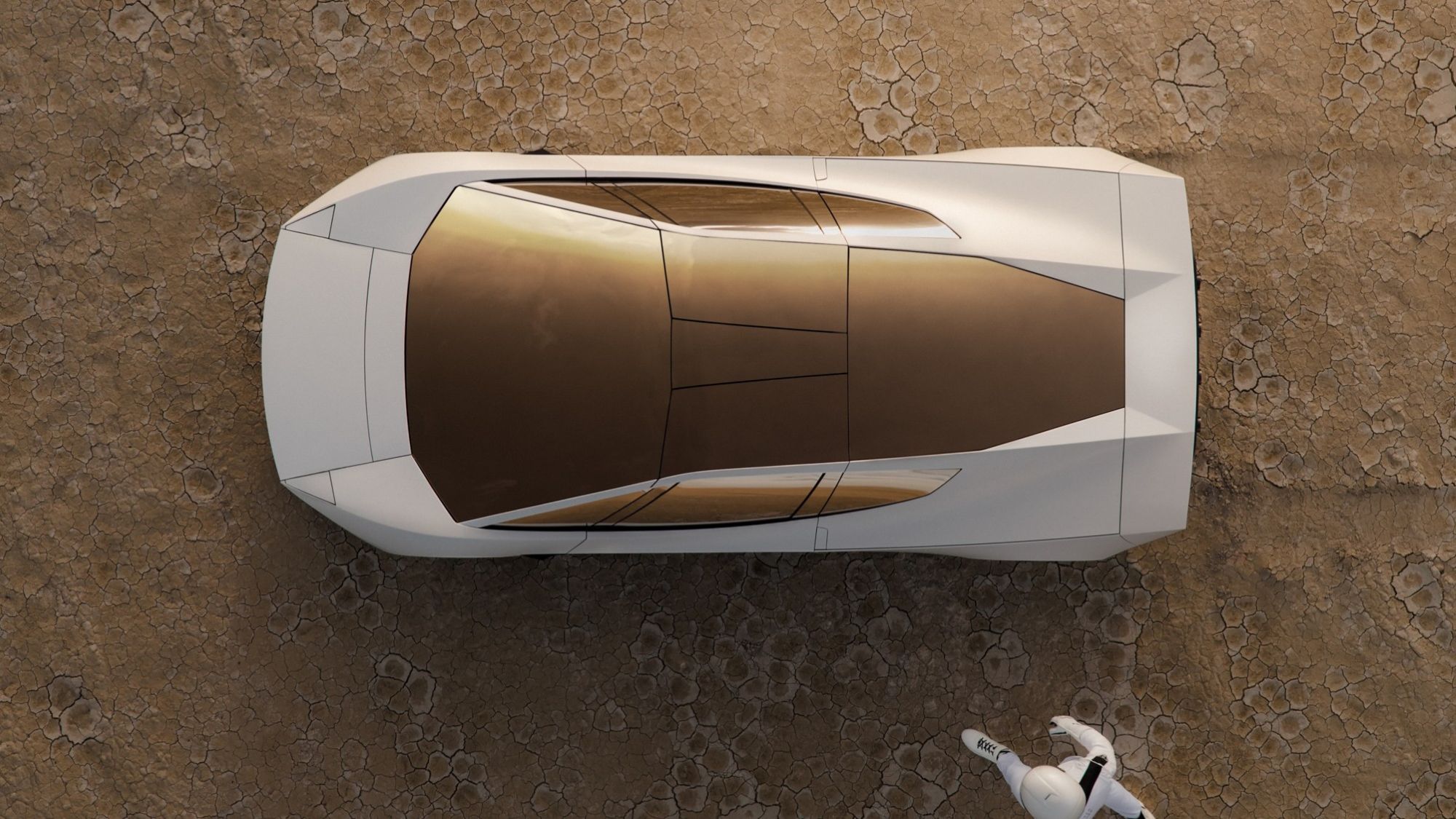
The car’s tinted glass window finish is designed to mimic the copper coating that gives spacesuit visors their gold radiance. Subtle titanium accents continue the space-age design theme while accentuating the vehicle’s most unique features.
He described the rear, which features a diffuser area where the thrusters and fans are, as “the business end” of the car. The elaborate rear wing has a variable pitch so it can adjust the downforce dynamically and automatically based on performance needs. While variable, there are two main modes: high downforce or low drag.
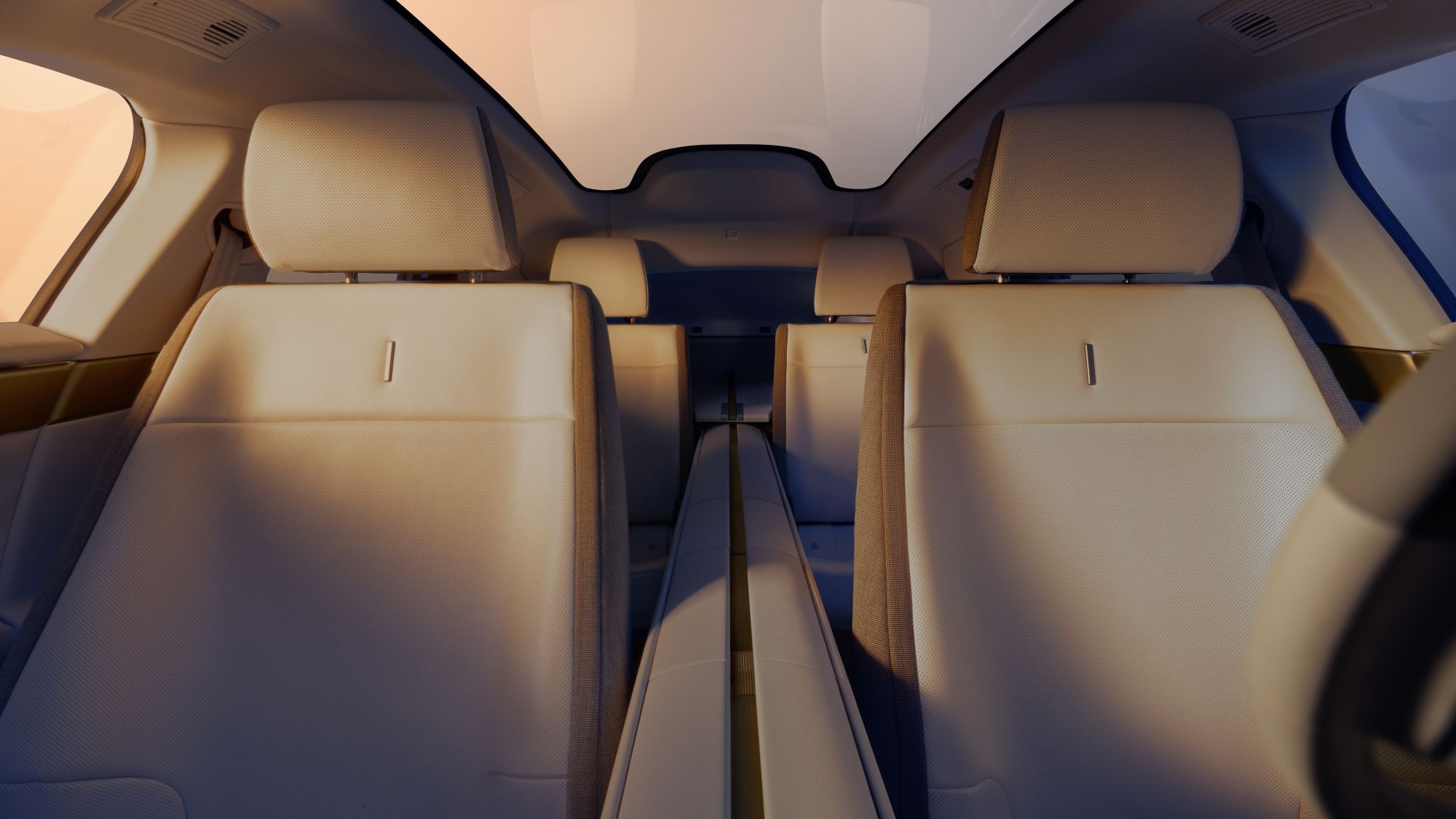
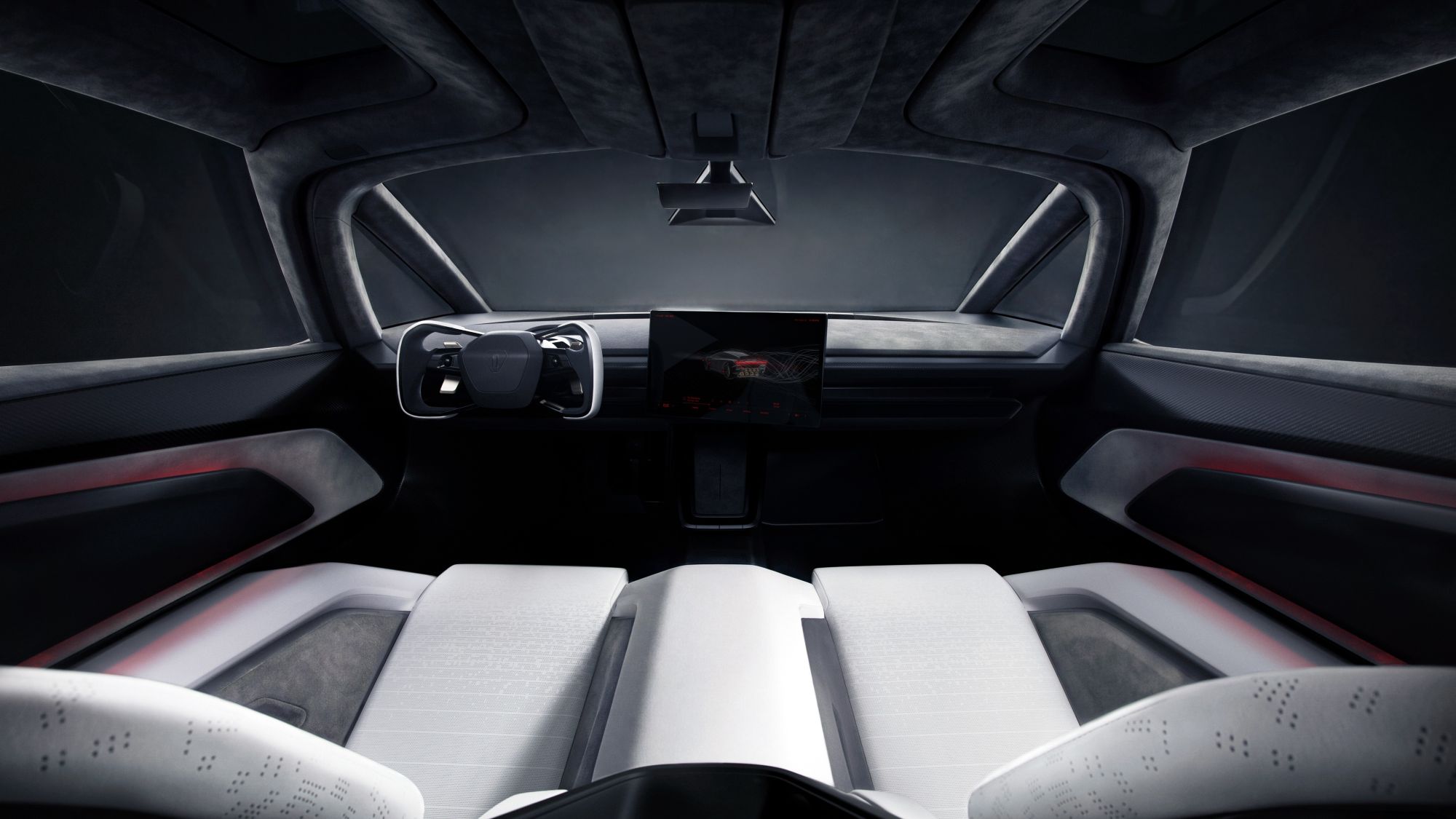
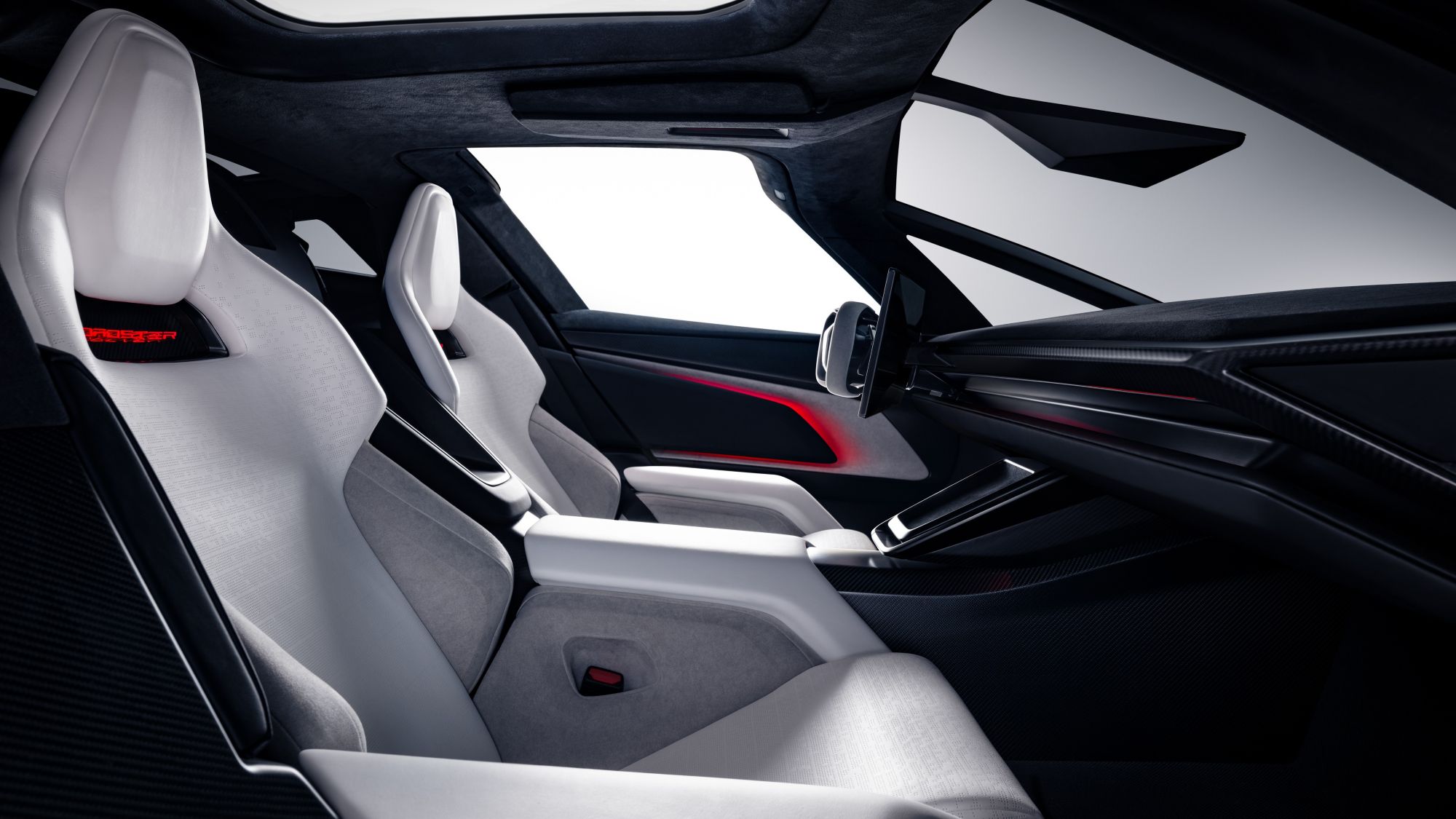
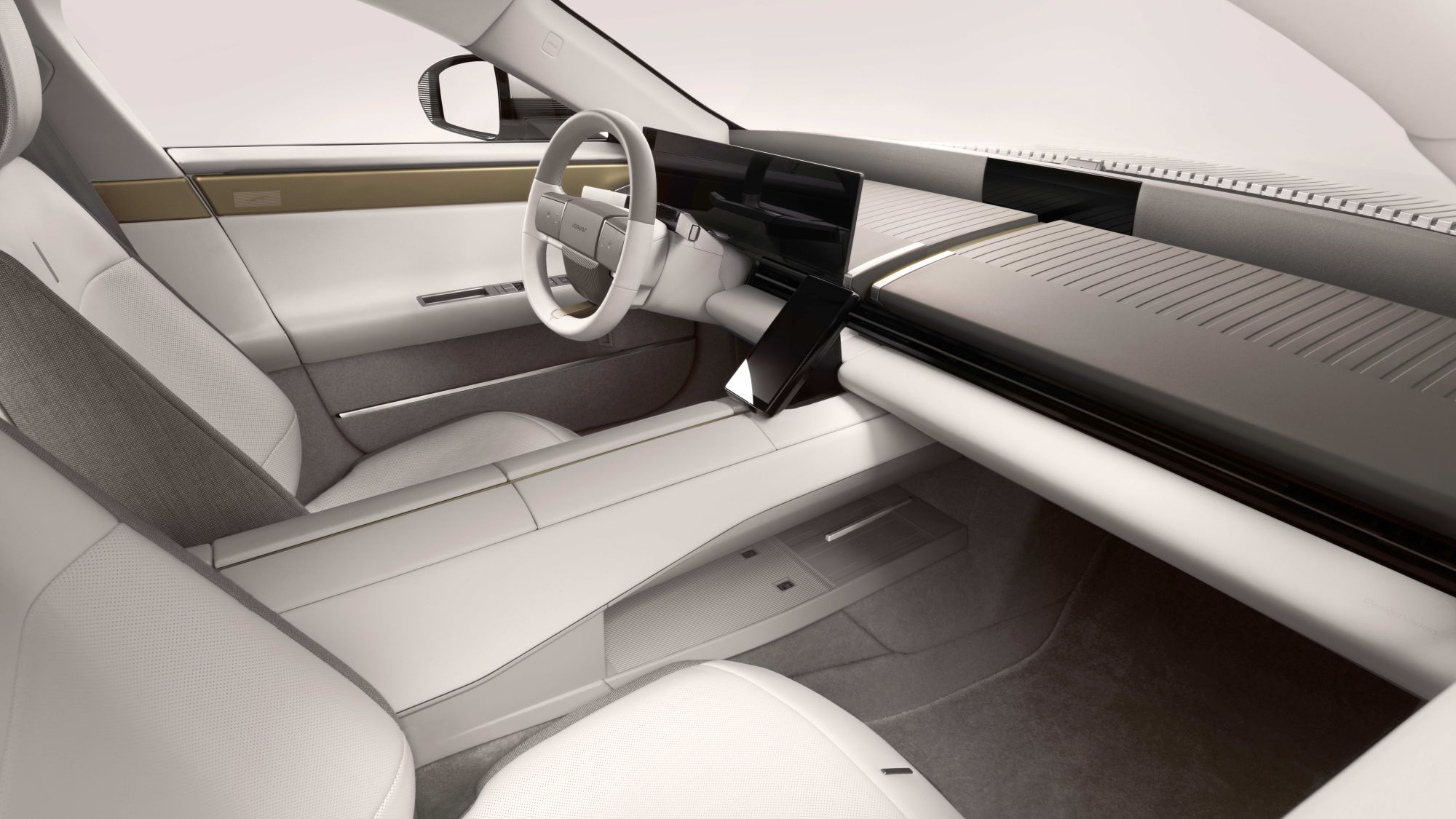
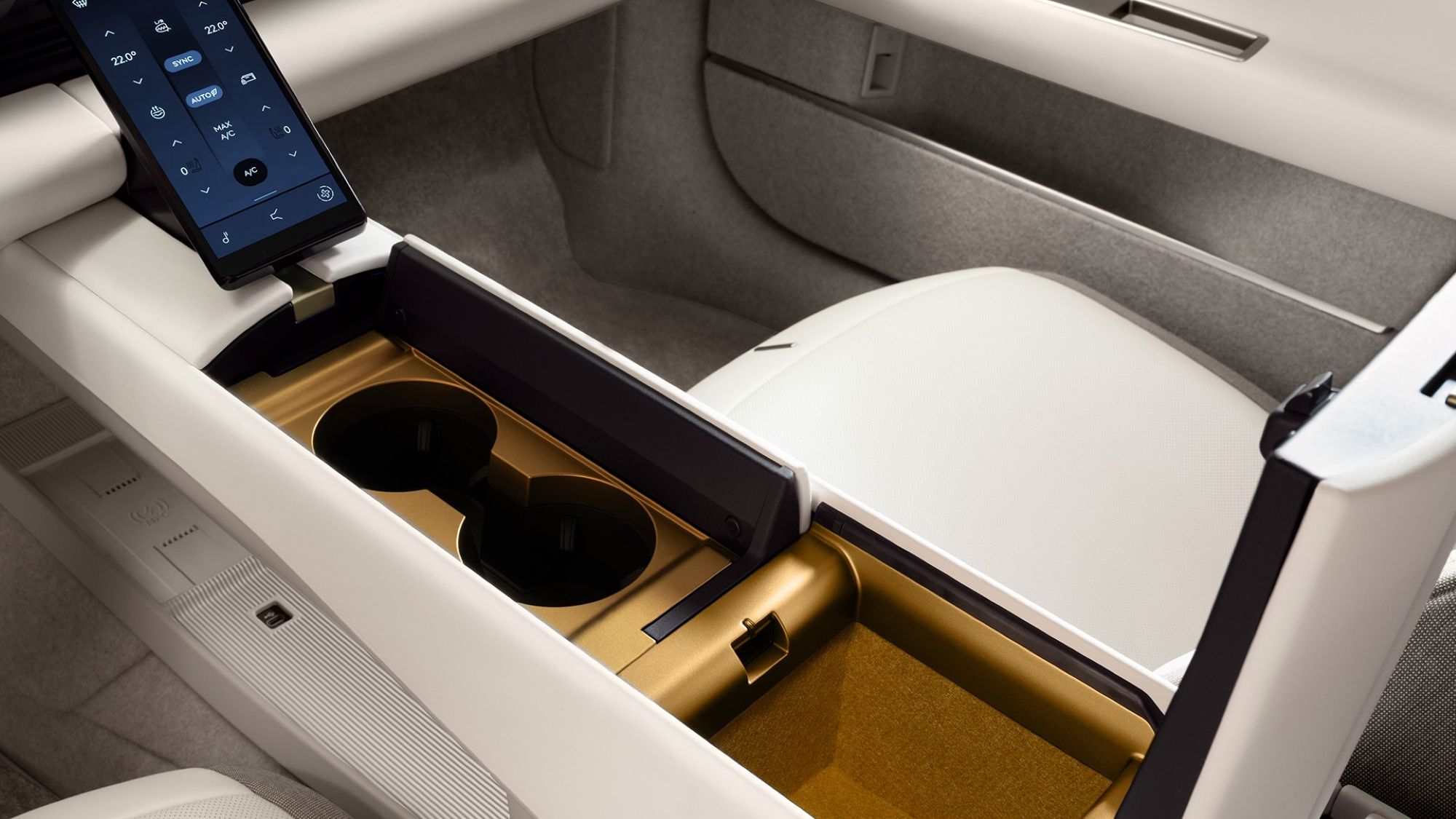
Inside is an Ultrawhite interior accented with gray microsuede detailing. Designers also “leaned into lightweight,” so the seats are molded into the chassis. They feature microsuede bolsters for added grip.
The yoke steering wheel is designed specifically for by-wire control, and the brake and throttle controls also employ by-wire technology. A center touchscreen supported by two smaller forward displays provides critical driving info.
“First principles” engineering, manual controls, and a fixed seat position help reduce overall vehicle mass. With lightweight, high-strength materials throughout, including magnesium, titanium, and carbon fiber, Tesla was able to achieve “even greater reductions,” allowing the Roadster to respond to driver inputs “almost instantly during extra-dimensional driving.”
Breaking the laws of physics
The multi-mode fan and ground-sealing system acts as a downforce generator, pulling air out from beneath the vehicle. This provides enough suction to hold the vehicle upside down, even when stationary. Powered fans and active wings maximize traction and cornering speeds in all conditions, achieving massive downforce at zero speed.
“This car is meant to be the best driver’s car, and to do that, we wanted to break the laws of physics,” said Moravy. The fan suction system enables cornering “traction that goes beyond the tires” at greater than 2 g. The fan system has two modes.
“It can suck the car down at low speed to give us traction when we need it and at high speed will open up the front and rear parts of the suction system to create even more flow underneath the car,” explained Moravy.
For 0-60 mph (0-97 km/h) acceleration, Musk wanted to beat 1 s. At the event, a demo produced a 0.81-s time.
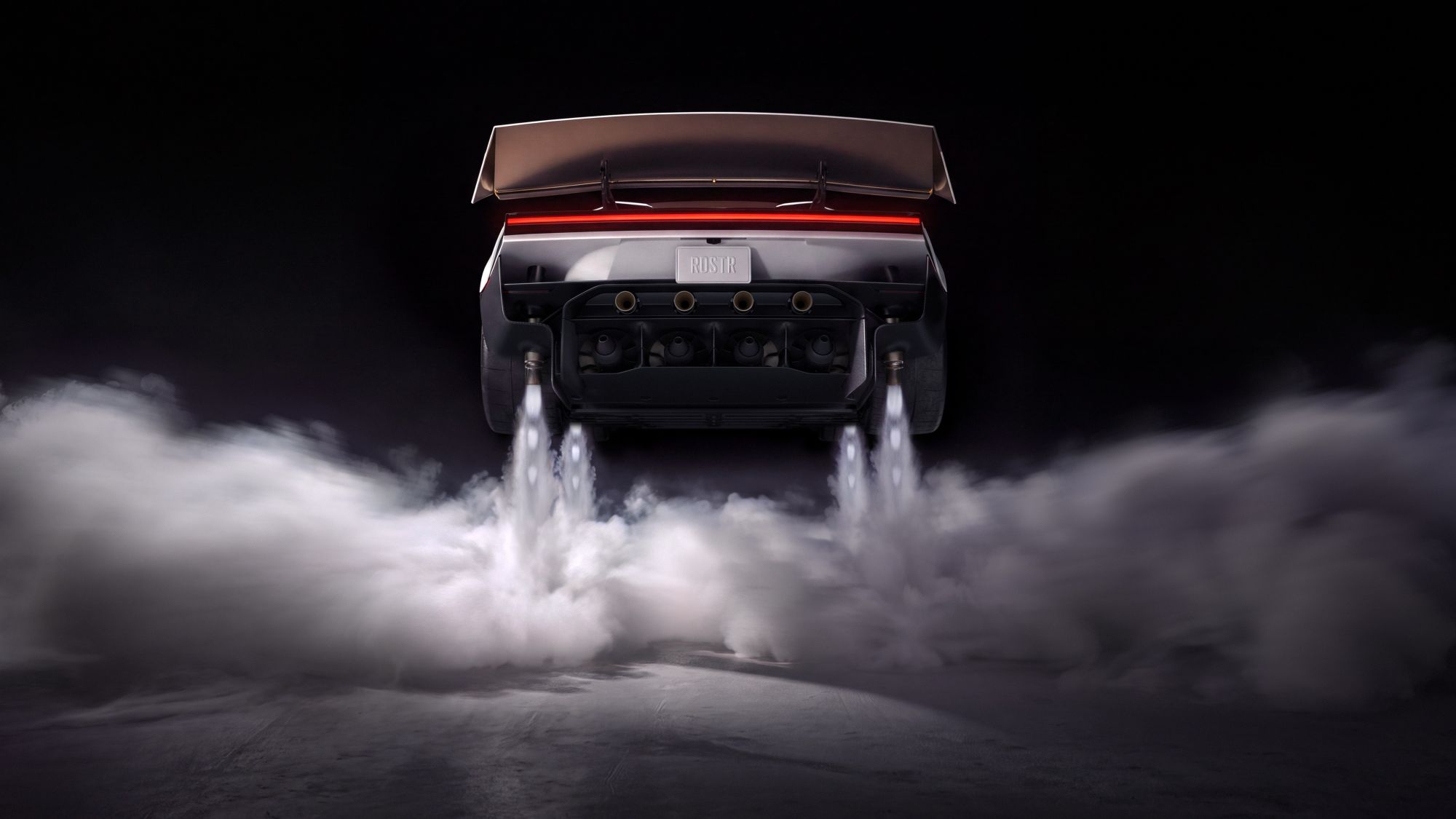
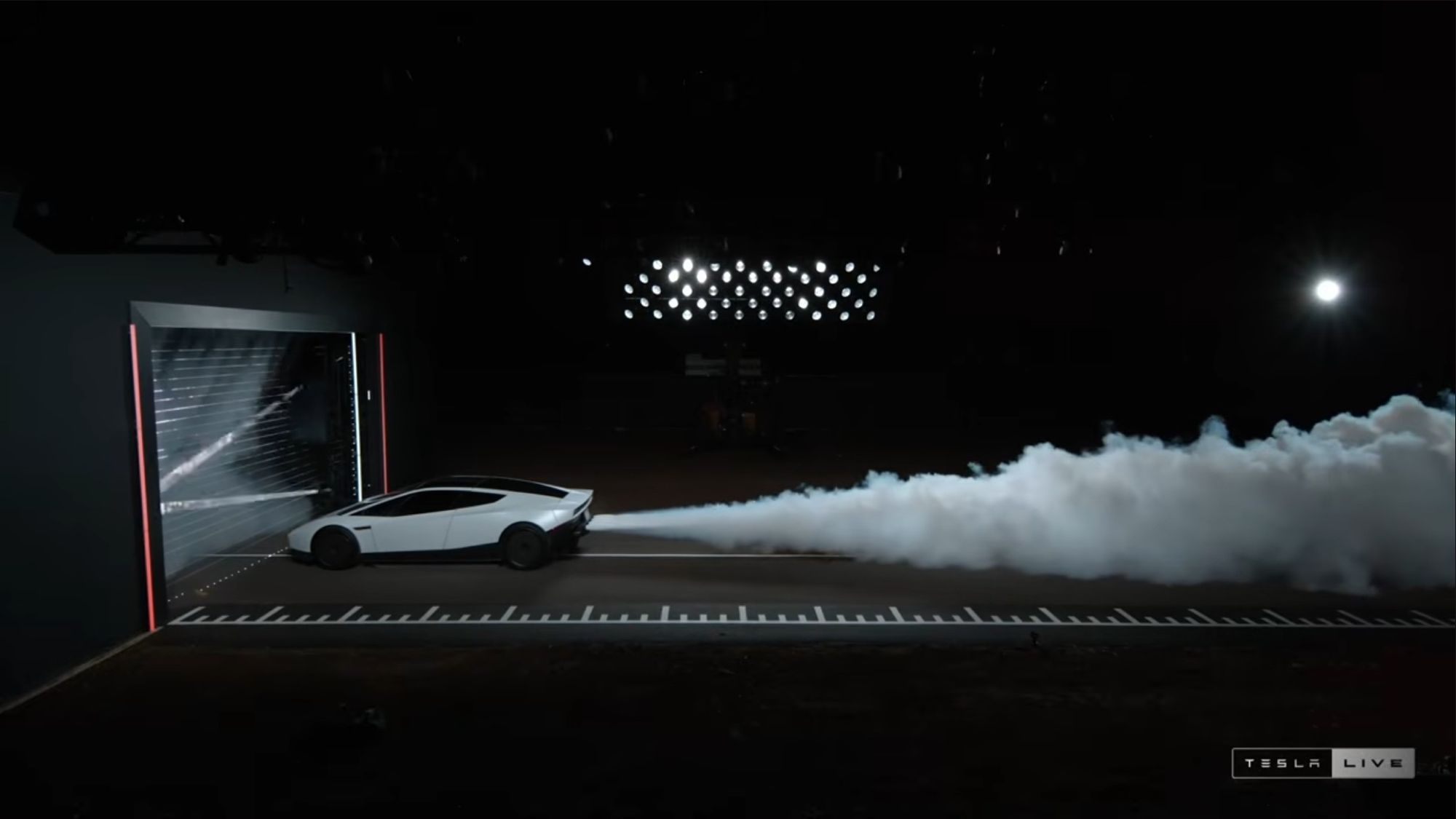
Enabling the performance are four rear thrusters, pushing out air faster than the speed of sound and creating over 80 kN (18,000 lb) of thrust. The demo even came with Mach diamonds, also known as shock diamonds or thrust diamonds, the repeating, bright patterns of standing waves that form in the supersonic exhaust plume of a jet engine, rocket, ramjet, or scramjet.
“There are cars, and then there’s one car that has Mach diamonds,” joked Musk, who teased even better performance for production.
“As you increase force and decrease mass, you get more acceleration,” he said, hinting at the possible performance improvements. “The production car will actually do better than that. We’ll just ride the limit of…don’t detach the retina of the human in the car.”
In addition to being the world’s quickest production car from 0 to 60 mph, Moravy says the Roadster will accelerate through a half mile in the time that other cars do a quarter mile. The car’s top speed is over 230 mph (370 km/h), but he is hopeful it can get even faster.
Of course, the primary motivation is by electric powertrain. According to various online reports, the Roadster’s has two to four electric motors, depending on variant, with the two rear motors packaged in a single housing. Total reported output ranges from 800 to 1100 kW. The car is said to use Tesla’s proprietary large-format cylindrical 4680 lithium-ion battery cells, with pack gross capacities around 100 to 210 kW·h for estimated ranges of 310 to 320 mi. Speculation estimates the car’s high-voltage architecture is rated between 800 and 1000 V.
At the event, Tesla had the Roadster perform one last stunt, a straight-up launch and flip. However, Musk and Lars promised a few more follow-on demos to come, including one like Evel Knievel’s unsuccessful attempt to jump the Snake River Canyon in Twin Falls, ID, using a steam-powered rocket-like Skycycle X-2 motorcycle.
Performance and Augments
After many delays, Musk said the Roadster will “actually” (to laughter from the crowd) enter production in 2028. Customers can now learn about and reserve the new Roadster at https://www.tesla.com/roadster.
Performance trim, by reservation, is road-ready with seating for two. It features the active aerodynamics and multi-mode suction system that maximizes downforce for performance on and off the track.
The next-level “Augment,” or option, is the “limited-release” Thrust, said to be race-ready with seating for two. It includes the Performance active aero and multi-mode suction system paired with cold-gas acceleration thrusters in the rear.
The invite-only Rocket Augment is air-ready with seating for one. It includes Performance and Thrust, plus a full flight system. The multi-mode suction system, paired with cold-gas thrusters positioned around the vehicle perimeter, supports forward and upward acceleration as well as lateral rotational movement.
The Rocket trim is not available in all regions and is not approved for public road use.
For a quick video review from Tesla of the Roadster’s design and tech, check out the YouTube video at https://www.youtube.com/watch?v=cvKIR-c1SsU.
-

- Tesla Roadster launches.
-

- Tesla Roadster front from above.
-

- Tesla Roadster front.
-

- Tesla Roadster openings side view.
-

- Tesla Roadster rear from above.

-

- Tesla Roadster suction demo.
-

- Roadster kickflip over five other Teslas.
-

- Tesla Roadster jet-assisted acceleration.
-

- Tesla Roadster driver-pilot approaches.
-

- Tesla Roadster driver-pilot approaches.
-

- Tesla Roadster interior.
-

- Tesla Roadster seating.
-

- Tesla Roadster ghost view rear with thrusters.