BYD Group had a significant presence at this past weekend’s Goodwood Festival of Speed in West Sussex, UK. The Chinese automaker’s large display featured its premium technology-oriented brand, Denza, and, for the first time, its new Z all-electric supercar.
Targeted for the European market, the new offering is built on the brand’s new e3 platform, with a triple-motor configuration producing and DiSus-M magnetorheological suspension. At the Goodwood event, the company confirmed three planned versions of the car: the Coupe, Spider, and Racing models, plus a Special Edition designed to attempt a new Nürburgring Nordschleife lap record later this year.
“The Denza Z is born to perform and built to win,” said Stella Li, BYD’s Executive Vice President, who unveiled the new supercar alongside former Formula One World Champion Jenson Button. “It redefines performance with its power, acceleration, and dynamic ability, and Flash Charging means it’s the only electric supercar without compromise on how these strengths can be used. Z is a great example of how Denza’s technology-led approach is going to set new benchmarks in every segment it enters. It really is the supercar for the new-energy generation.”
‘A living sculpture of speed’
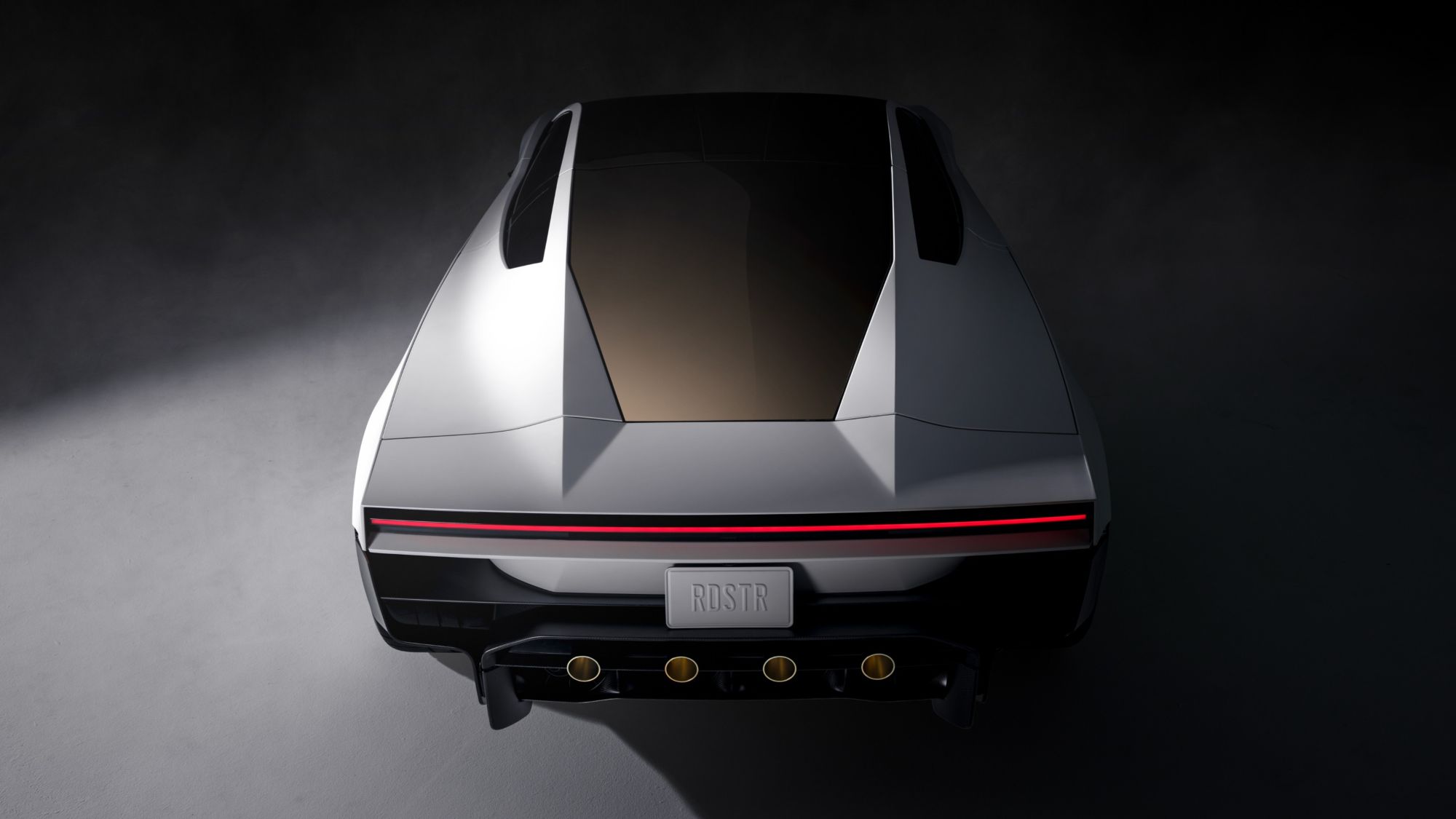
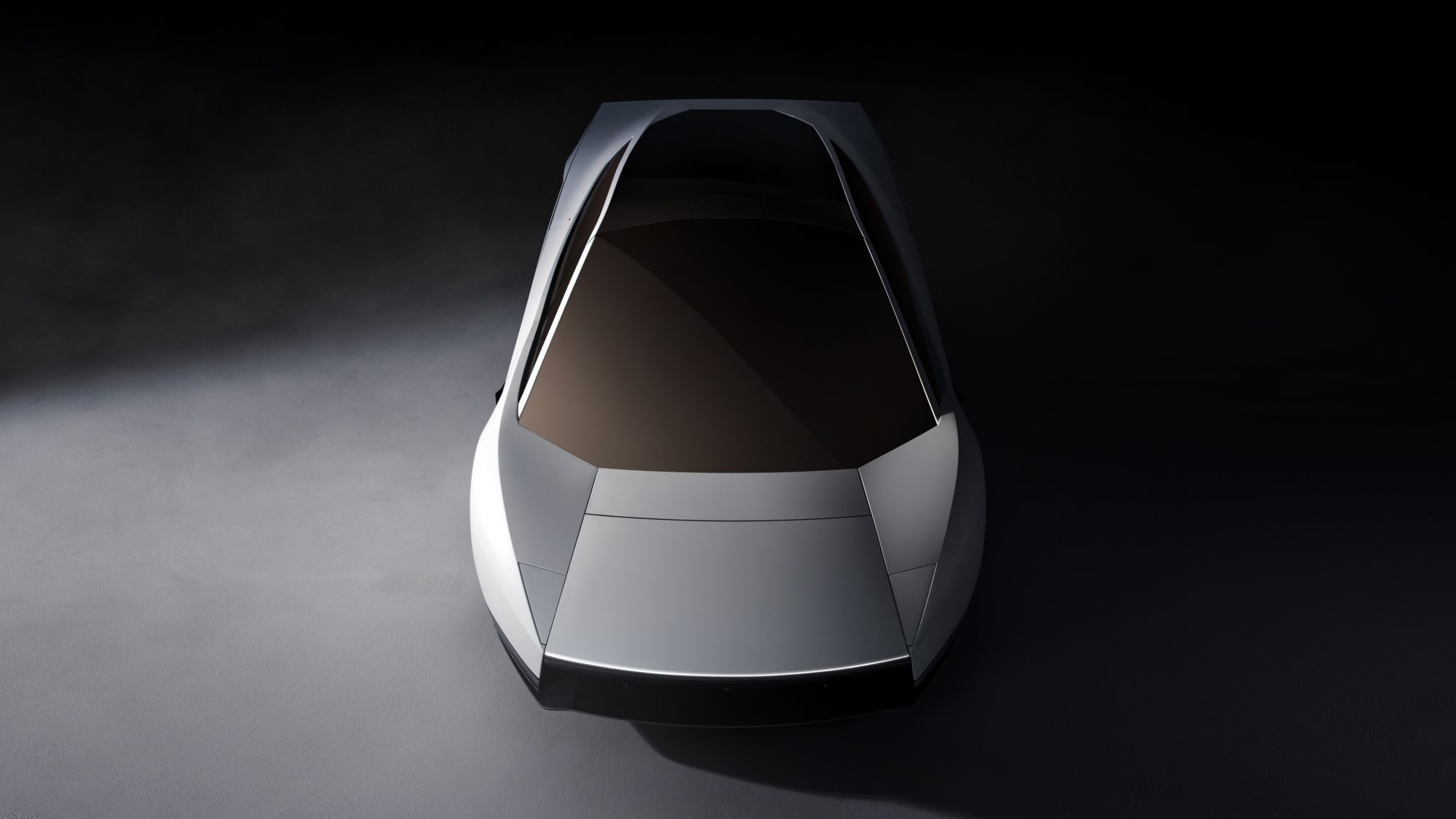
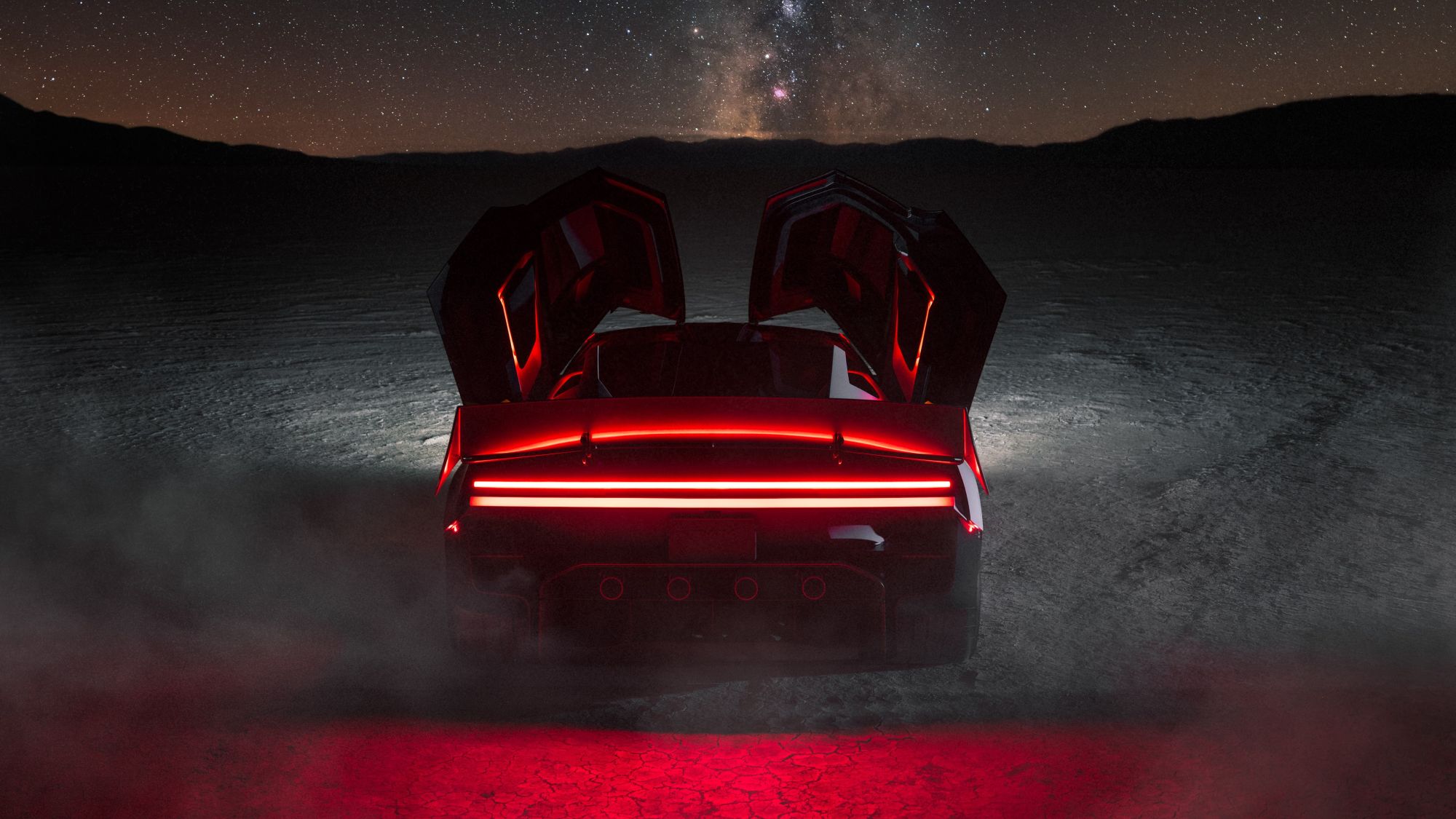
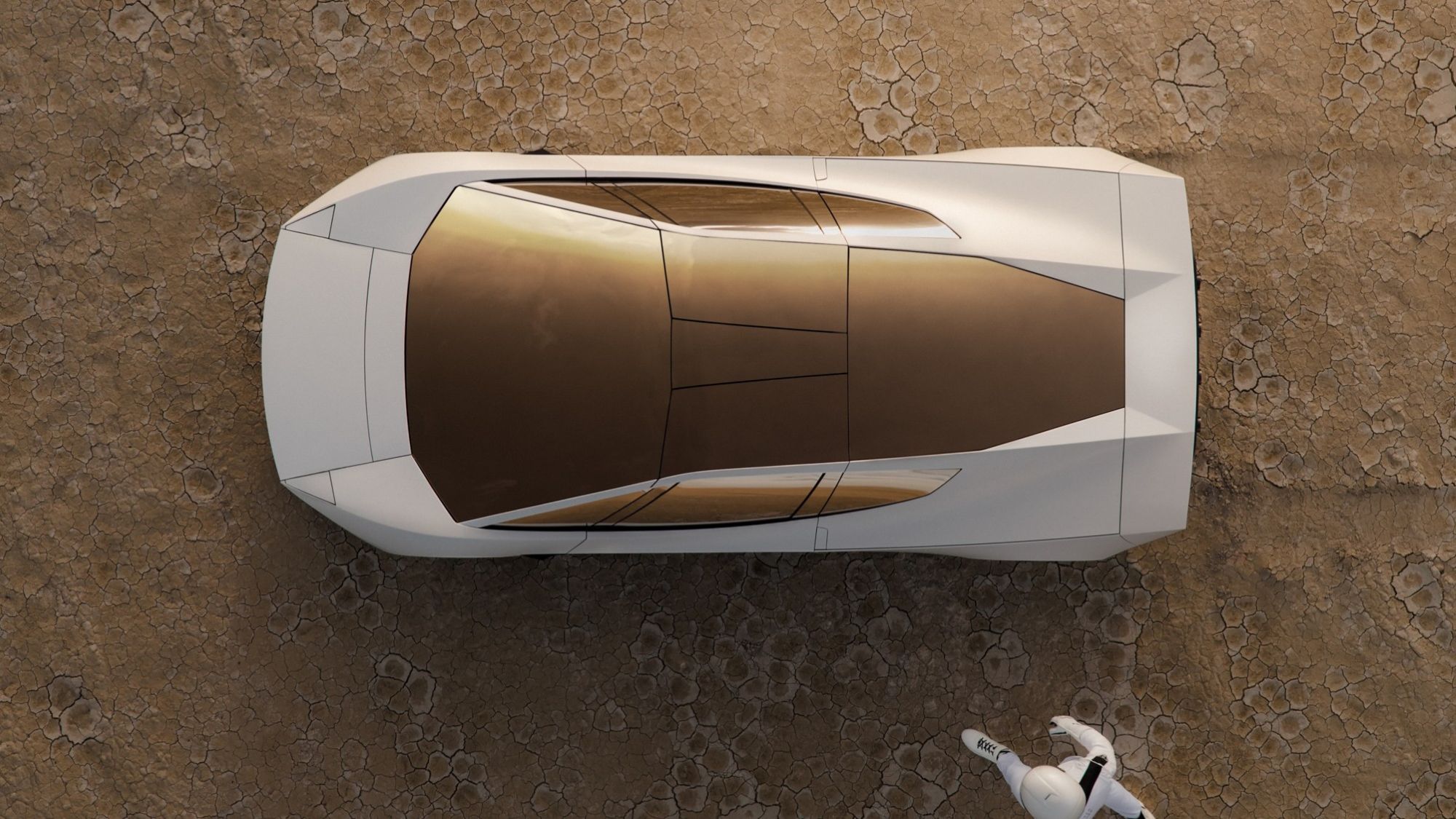
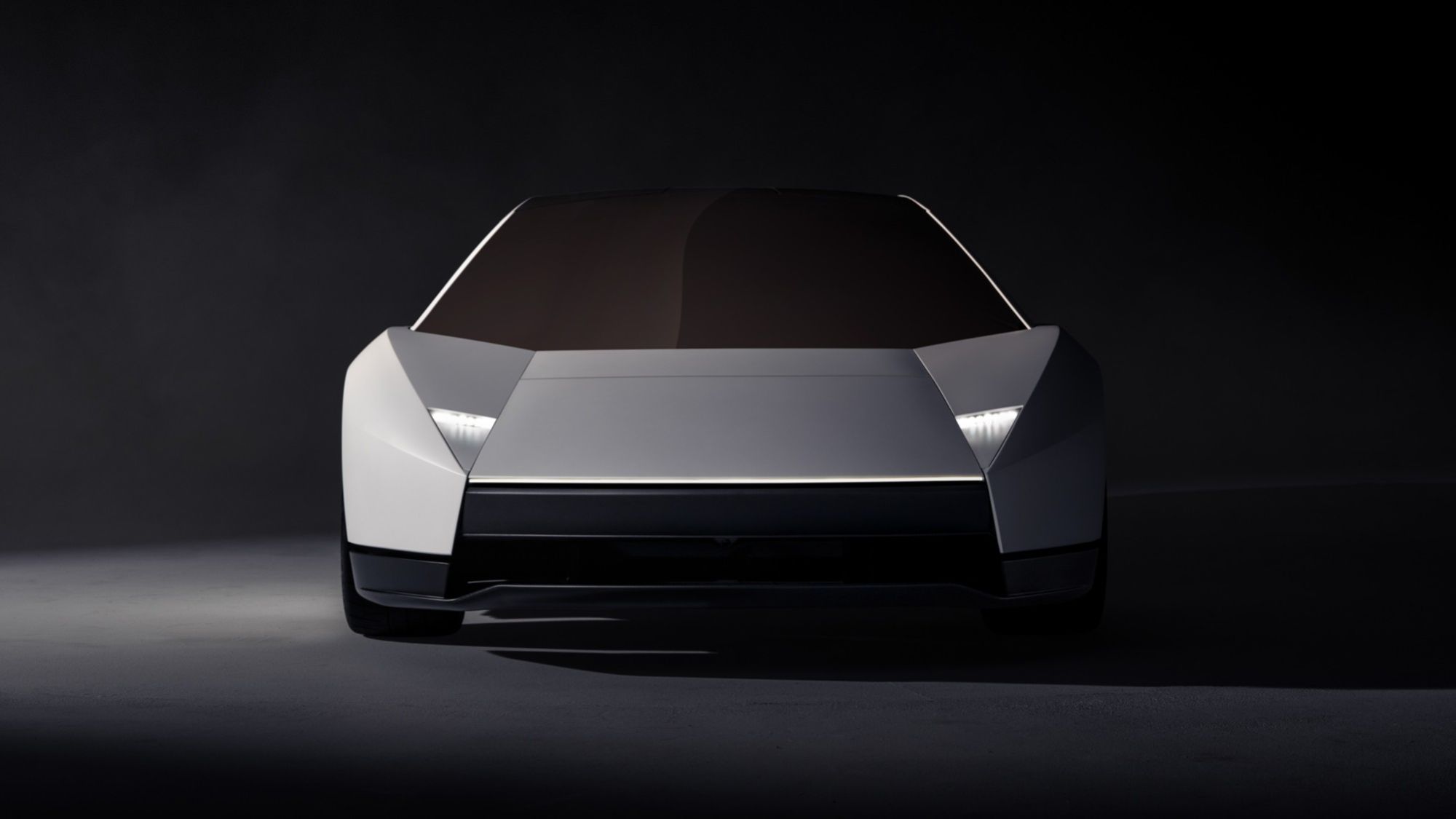
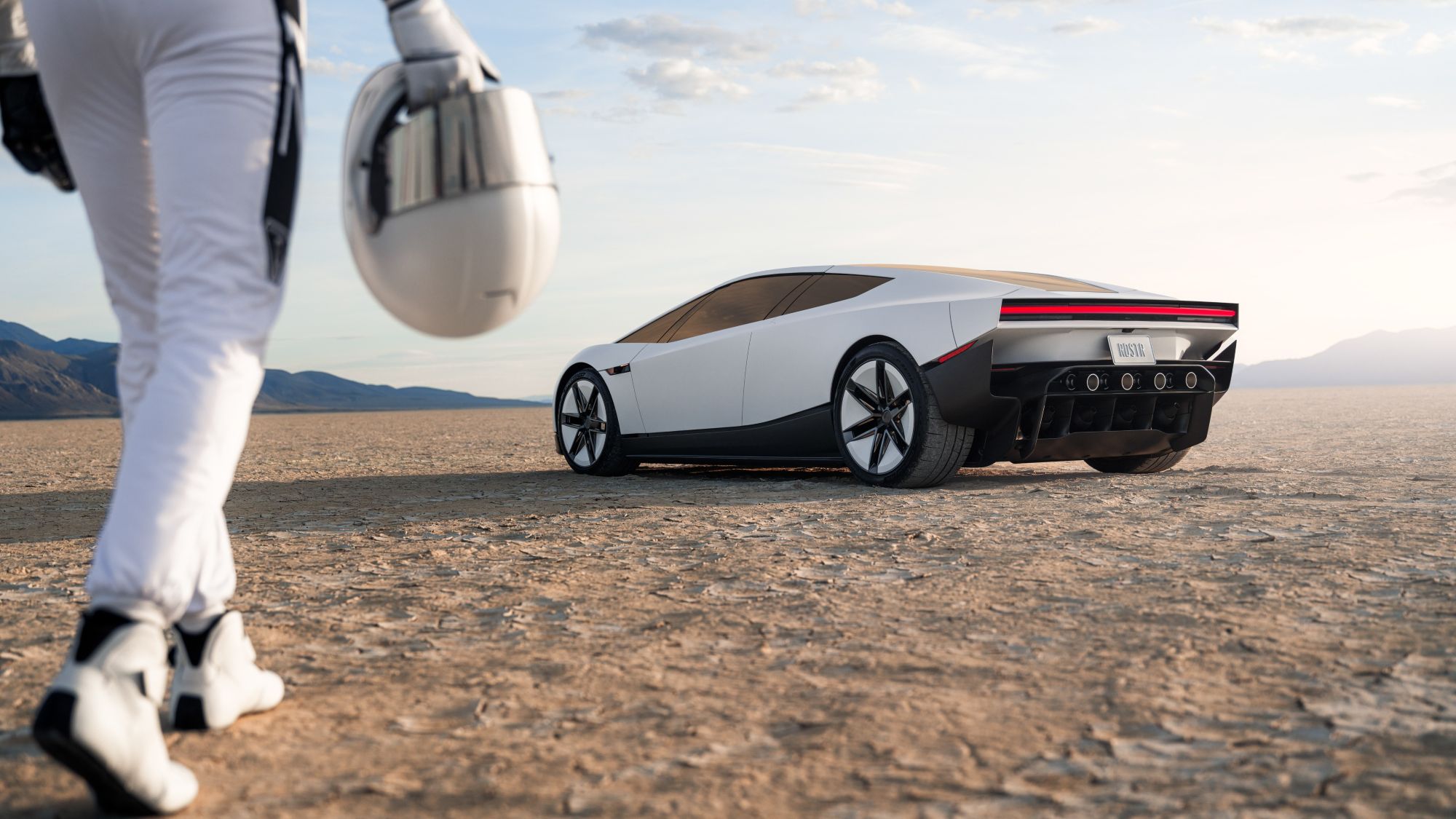
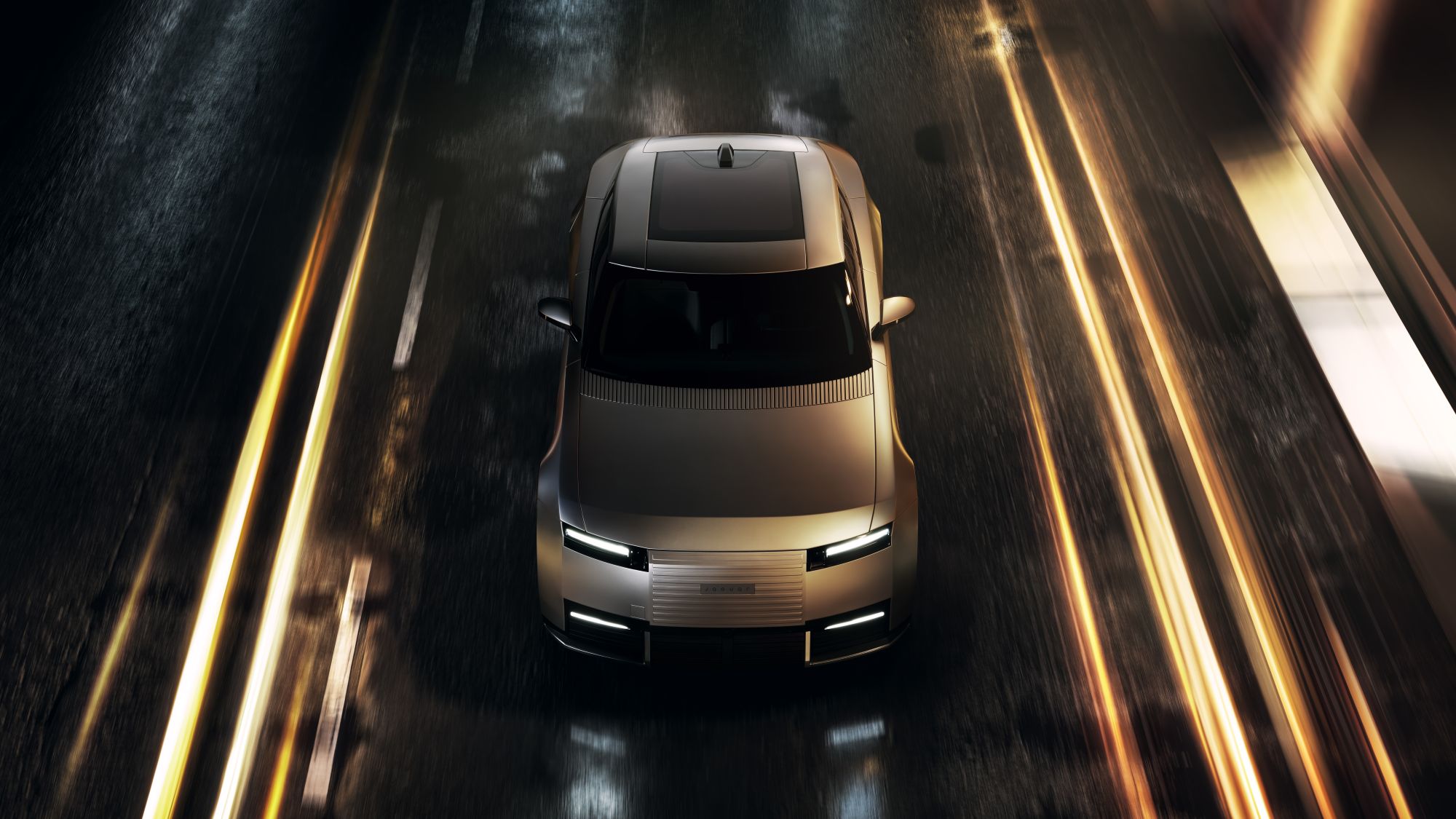
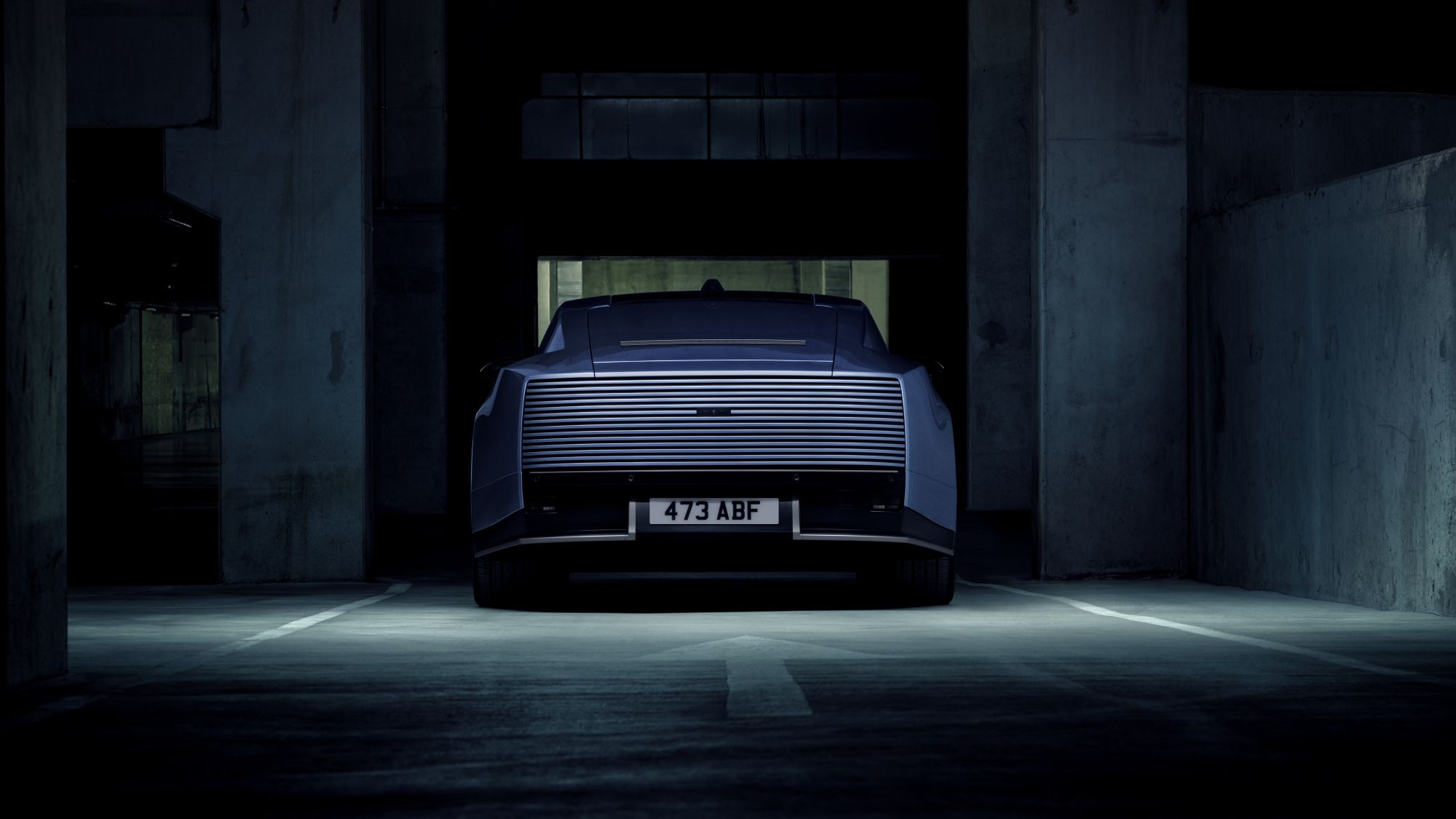
Denza said the car’s design blends sensuous curves with functional elements that help to deliver exceptional aerodynamic downforce for high-performance situations, calling it the perfect convergence of aesthetics and racing spirit. It is the work of Wolfgang Egger, Global Design Director at BYD Auto, who has also been credited with designing the Alfa Romeo 8C Competizione, BYD Song Max, and Yangwang U9, in addition to holding previous positions at Lamborghini and Audi.
Described by Egger as “a living sculpture of speed,” the Z Coupe and Spider measure 4780 mm (188.2 in) long, making them the most compact Denza available for European customers. The vehicles’ wheelbase measures 2780 mm (109.5 in).
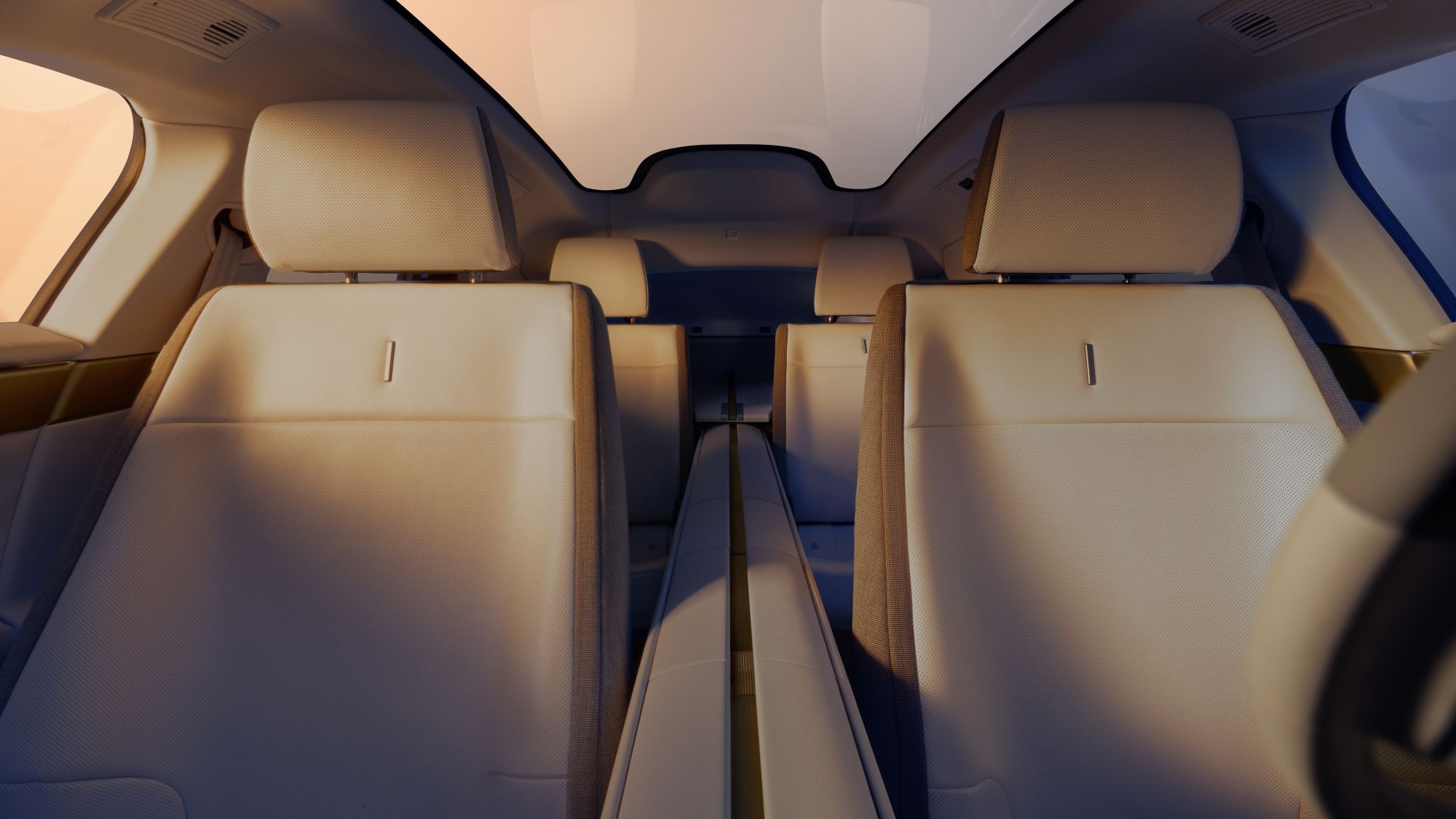
Because the Z’s wheelbase is similar to many executive saloons, all versions of the car are capable of a four-seat layout. The storage capacity in the Coupe and Racing is 250 L (8.8 ft³), enough for light luggage, and the rear seats can be folded down to increase cargo storage capacity to 550 L (19.4 ft³).
The Racing version of the car features a re-engineered front air intake optimized for extreme conditions, paired with a multi-duct cooling system for better thermal management, boosting electric-motor cooling efficiency by 50%, while also increasing brake-disc cooling rates by 32%.
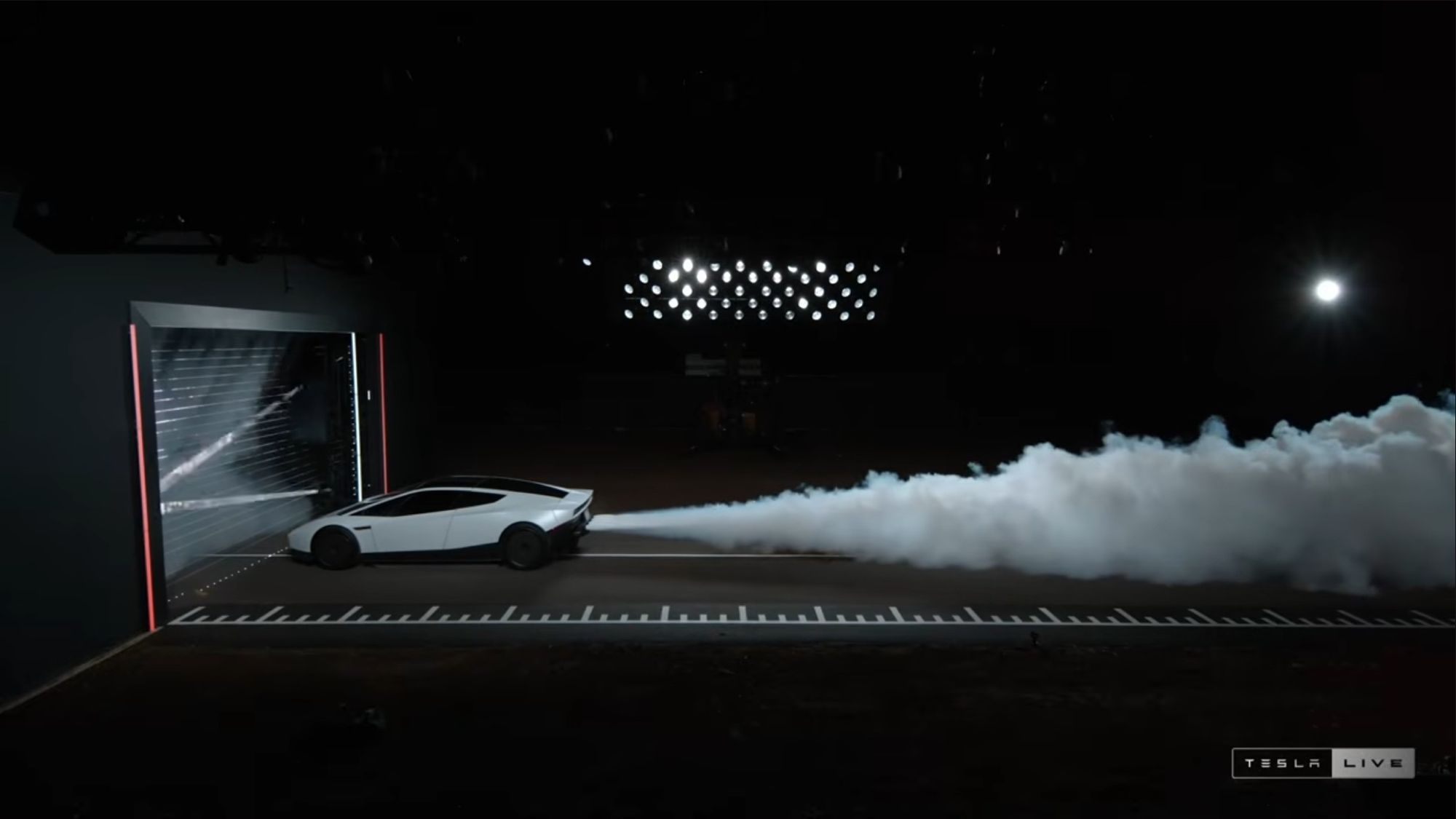
The Z Special Edition’s exterior is built with race-grade dual-layer composite bodywork, including panels made completely from carbon fiber. It also has a drag-reduction system that coordinates a front active diffuser and a rear wing flap to cut drag by up to 40%, while producing more than 2000 kg (4410 lb) of downforce at 186 mph (300 km/h).
Three motors for all
All three Z versions are powered by a triple-motor configuration, a single front motor and one driving each of the rear wheels. The combined maximum system output for all versions of the car is 1180 kW and 1240 N·m (915 lb·ft). That’s enough for a 0-62 mph (0-100 km/h) acceleration time of 2.25 s in the Coupe, faster than many internal combustion engine supercars, and a top speed of 186 mph.
The Racing version of the Z accelerates even more quickly when fitted with optional semi-slick tires, beating the two-second mark for 0-62 mph, at just 1.96 s, and achieving a higher top speed of 217 mph (350 km/h). The Z Special Edition features “track-grade” enhanced thermal management, increasing powertrain and battery cooling rates by 180% and 30%, respectively. Its total system power is over 2000 PS (1470 kW), and it can accelerate from 0-62 mph in less than 1.7 s.
The twin rear motors are key components of the world’s first 15-in-1 fully integrated electric-drive unit. This self-developed technology incorporates two motors, each with its own reduction gear and motor control unit, onboard charger, DC-DC converter, vehicle control unit, battery management controller, power distribution unit, boost charging, energy management, and charging heating. The motors can spin to 30,000 rpm.
Second-generation Blade Battery and Flash Charging
Regardless of version, the Z features a second-generation Blade Battery pack. A capacity of 76 kW·h is good enough for 254 mi (409 km) of range in the Coupe, 248 mi (399 km) in the Spider, and 236 mi (380 km) in the Racing.
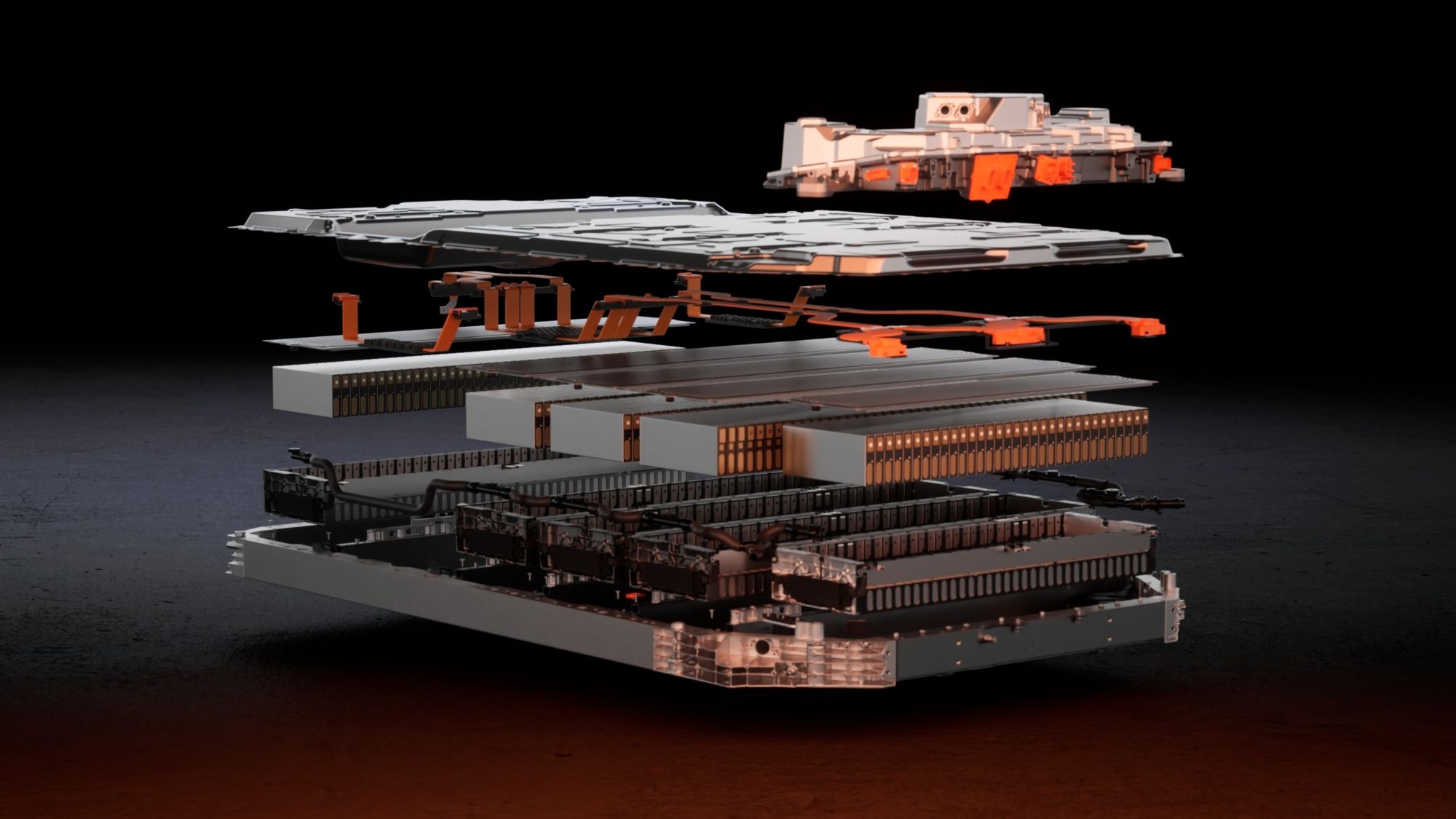
The battery is integrated into the e3 Sports Car Platform using a gigacasting-based CTB (cell-to-body) architecture, a technology BYD says it pioneered that removes the complexity of battery packs and modules. It says the battery cells are positioned directly into the chassis, with the passenger-compartment floor acting as their top cover.
The new Blade Battery allows the Z to benefit from BYD Group’s latest breakthrough—Flash Charging, which delivers up to 1500 kW through a single connector, allowing refill times that match the refuelling speeds of conventional combustion-engined cars.
The system can take the Z from 10-70% of battery capacity (called “ready”) in only 5 min, and from 10-97% (“full”) in just 9 min. Even in -30°C (-22°F) conditions, the Z can recharge from 20-97% in only 12 min.
The company says that these fast times fulfil the promise of “Ready in 5, Full in 9, Cold Add 3” and open the possibility for the vehicle’s full performance to be enjoyed without fear of extensive downtime afterwards as the battery is refilled.
The performance is enabled by both BYD Group’s Flash Charging station and second-generation Blade Battery, the result of six years of intensive R&D. While fast charging and high energy density are often seen as conflicting technical goals, according to the company, it’s engineers have achieved both, while retaining safety and durability, by developing a FlashPass ion-transport system that pushes the boundaries of LFP (lithium iron phosphate) batteries.
It’s based on three core breakthroughs. The Flash-Release cathode features a directionally engineered, multi-level particle-size architecture that enables dense packing and rapid deintercalation. The Flash-Flow electrolyte uses AI-driven high-throughput screening to deliver high ionic conductivity and fast ion mobility. The Flash-Intercalate anode has a multi-dimensional lithium-insertion site construction, allowing high-speed lithium-ion intercalation. Together, these technologies mean significantly reduced internal resistance, cutting heat generation at the source.
Further innovation in the anode, which features high-throughput electrode restructuring and graphite particles aligned perpendicular to the electrode plane, reduces lithium-ion transport resistance and allows smooth, faster intercalation.
The battery features a breakthrough SEI (solid electrolyte interphase) layer. BYD’s solution uses molecular-level engineering and macroscopic structural optimization to be both ultra-thin, allowing higher ionic conductivity, and highly dense, ensuring chemical stability. It also features dynamic self-repairing technology to strike the balance of “thin yet strong.”
DiSus-M intelligent damping for e3 Sports Car platform
The car’s vehicle motion control commands the controllable actuators of the car, including those for braking, suspension, and steering. Its signal-transmission time of 10 ms provides better control of the car’s motion at greater speed, according to the company.
The Z marks the first use of DiSus-M intelligent damping in the e3 Sports Car platform. This active system uses a magnetorheological fluid in its dampers that can change viscosity in milliseconds when exposed to a magnetic field. This allows the Z’s control system to make ultra-fast adjustments to rebound and compression damping.
The result is that the Z’s suspension—comprised of front double wishbones and rear multi-links—can remain compliant on broken surfaces, while still offering assured body control in high-performance situations. The Coupe and Spider versions feature air suspension, while the Racing has coil springs for a more track-focused experience.
All Z versions feature carbon-ceramic drilled brake discs for total weight savings of around 30 kg (66 lb), improved cooling performance, and increased durability, with up to 186,000 mi (300,000 km) of service life. They’re fitted with six-piston front and four-piston rear fixed calipers that can be ordered in custom colors, including orange, yellow, red, and blue.
Comprehensively equipped
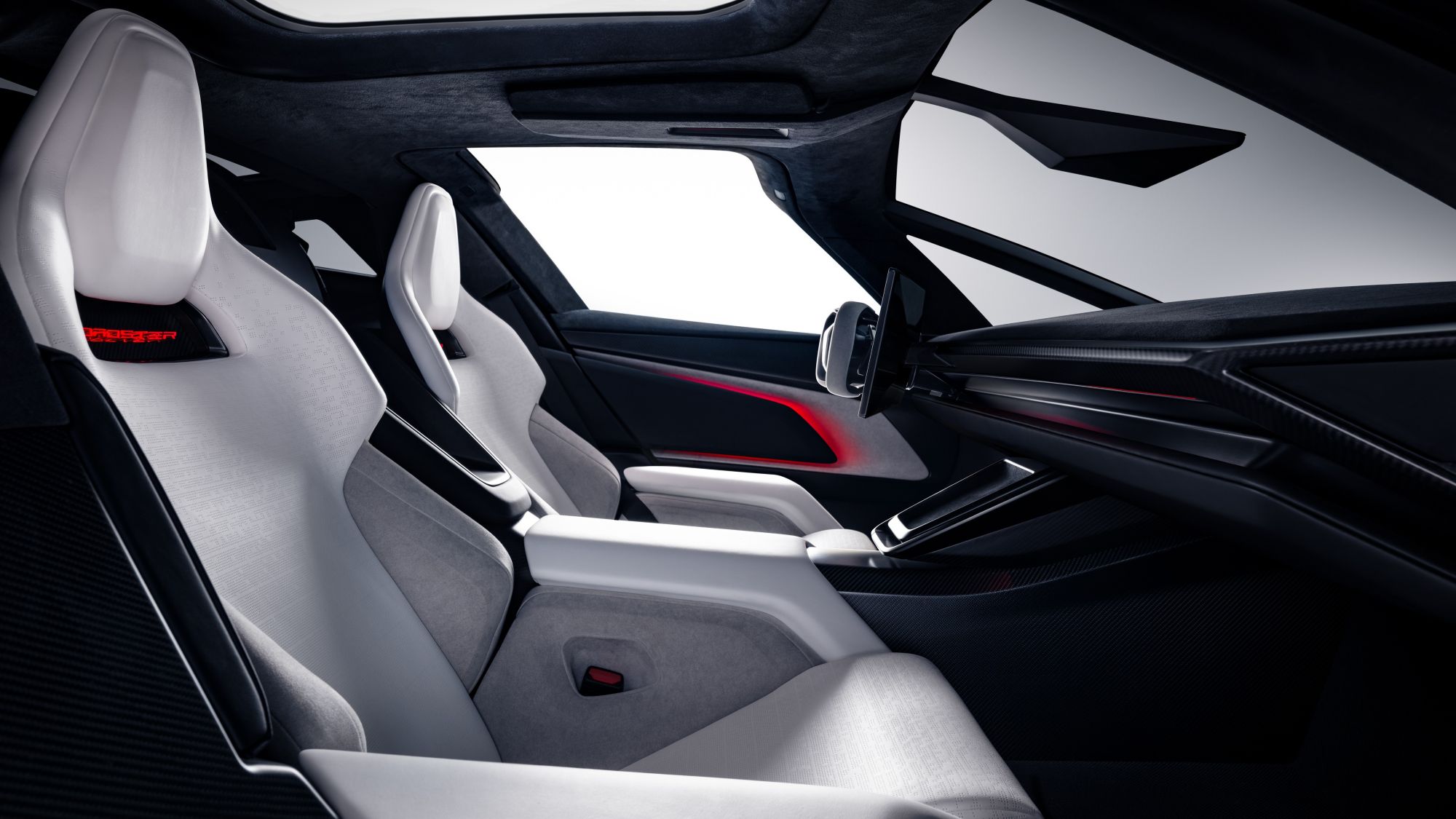
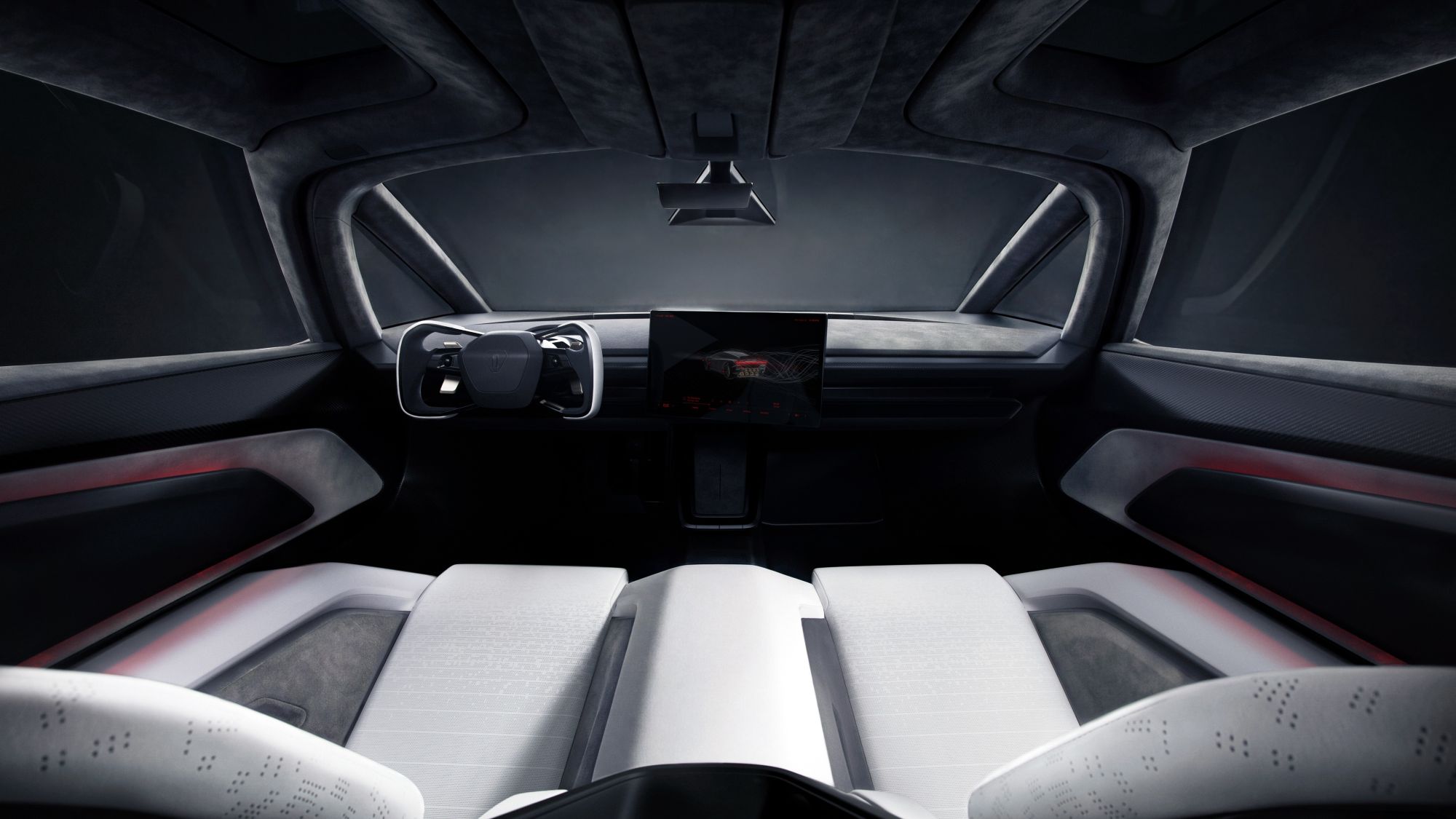
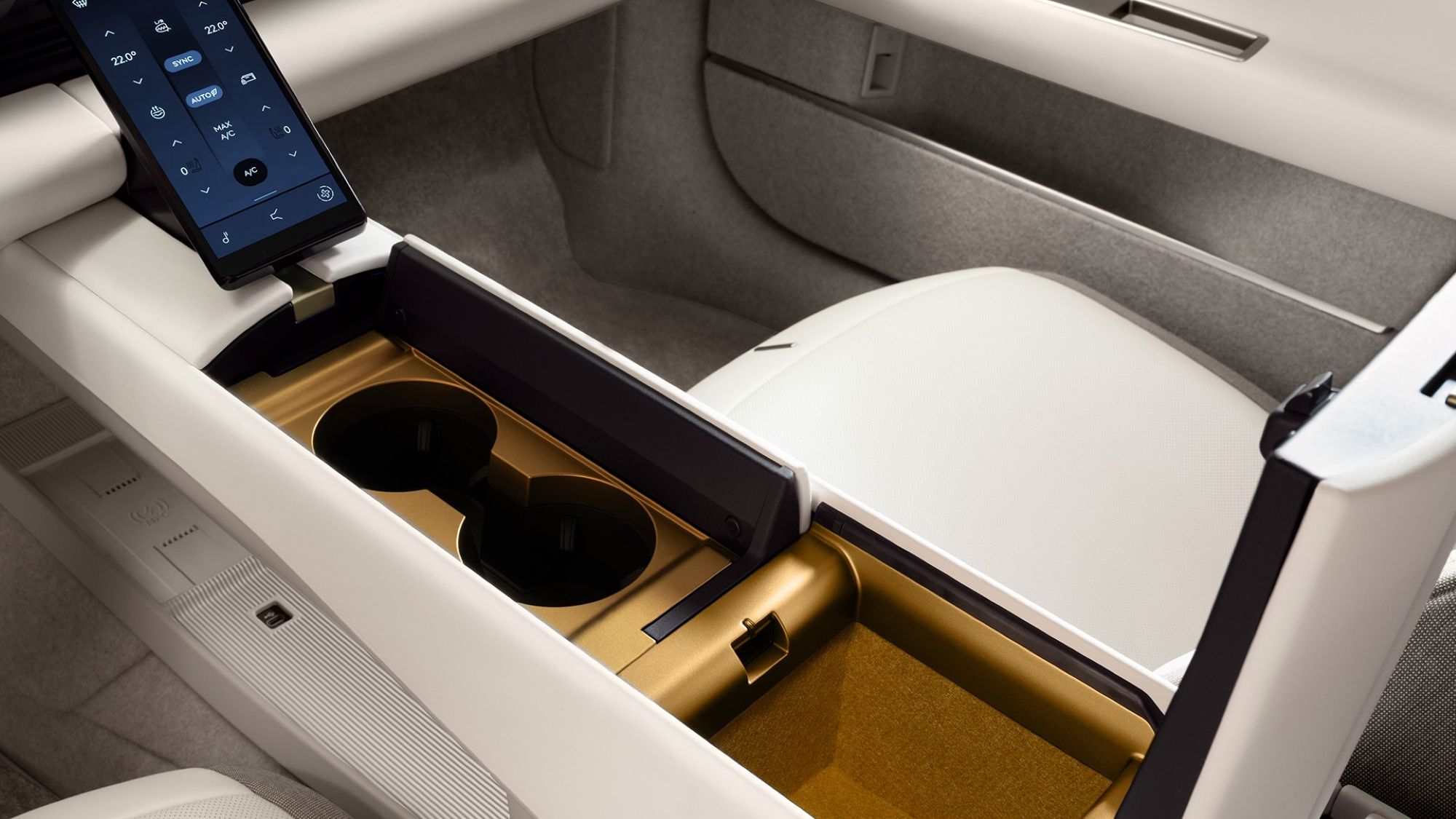
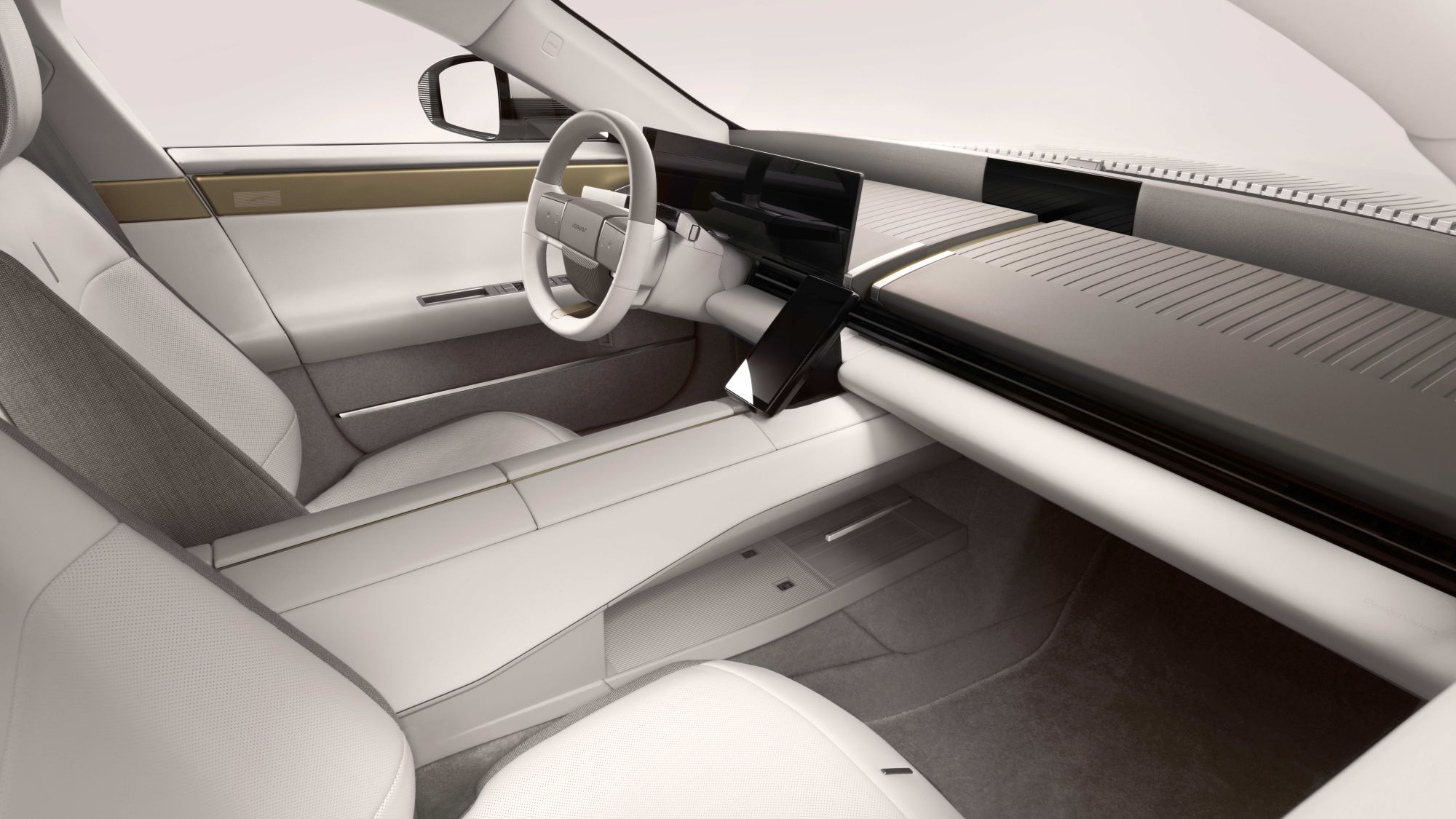
The cabin features high-quality materials such as carbon fiber, suede-effect fabrics, and metal finishes. Its motorsport-inspired steering wheel includes six physical buttons set into its lower panel for easy access to key functions like Track and Boost modes. Technology integrations include an 8.88-in digital instrument display, a 12.8-in infotainment system, and a wireless smartphone-charging pad.
The seat design strives for a mixture of comfort and sporty support, with Z Coupe and Spider models featuring active lateral support in the driver’s seat for high-speed cornering. The driver and front passenger seats feature eight-way power adjustment, four-way electric lumbar support, heating, ventilation, and massage function. The headrests include built-in speakers for the Devialet sound system, which uses 12 speakers in the Coupe and Racing edition, 10 in the Spider.
All versions of the Z come with a comprehensive standard equipment list. Features like the digital instrument panel and infotainment screen, heated and ventilated front seats with massage function, power-assisted soft-closing doors, vehicle-to-load (V2L), digital rear-view mirror, Devialet sound system with Dolby Atmos, wireless smartphone charging and remote access via the Denza app are all included. This leaves customers to experiment with the extensive range of color and trim options to personalize their vehicle.
The Coupe, Spider, and Racing versions of the Z will be available for ordering this summer in select markets, with first deliveries expected to reach customers before the end of the year. BYD is not currently able to sell vehicles in the U.S., so it is not planned for sale to customers here.
Kevin Jost contributed to this article.
-

- Denza Z Racing on the track.
-

- Denza Z at the Goodwood Festival of Speed.
-

- Denza Z at the Goodwood Festival of Speed.
-

- BYD introduced the Denza Z at the Goodwood Festival of Speed.
-

- Denza is the performance brand of BYD Group.
-

- The Denza Z steering wheel is race-inspired.
-

- All versions of the Denza Z supercar have room for a rear seat.
-

- Denza Z Spider.
-

- Denza Z Spider roof operation.
-

- Denza Z Spider interior.