McMurtry Automotive today revealed the production form of its single-seat, electric hyper track car with 95% new components compared to prototype models (See Futurride’s previous coverage here). The Spéirling Pure is engineered to deliver accessible F1-level performance with a strong focus on a plug-and-play ownership experience.
The new car will be displayed at the Goodwood Festival of Speed on July 9-12. It will make its official public debut in full production form at The Quail, A Motorsport Gathering, in Monterey, CA, on August 14.
Named after the Gaelic word for “thunderstorm,” the car is the brainchild of the late Irish engineering pioneer, Sir David McMurtry, and former Formula 1 engineer Thomas Yates. McMurtry and Yates, formerly with Mercedes-AMG High-Performance Powertrains, established McMurtry Automotive in 2016, with the goal of going against the industry’s direction of bigger and heavier cars. To put the McMurtry name on the map, they revived and modernized fan car downforce technology inspired by the successful 1970s Can-Am and Formula 1 fan cars and built the Spéirling around it.
Following a decade-long research and development program, during which prototypes accumulated thousands of kilometers in testing, McMurtry says it “leveraged its engineering creativity and worked outside of industry norms” to create a track vehicle that is unlike anything else in the automotive world.
“Less than ten years ago, there were just a handful of us with the brief and ambition to create a car company,” said Managing Director Yates. “We’ve come an awfully long way since then, patenting revolutionary new technologies, gathering a world-class team of talented individuals, and raising the bar in the performance vehicle sector.”
McMurtry first captured attention in 2022 when the Spéirling prototype set a new Goodwood Festival of Speed Hillclimb record. In 2025, it beat the Top Gear test track record once held by the 2004 Renault F1 car. That year the prototype also became the first car to drive upside down thanks to the company’s differentiating Downforce-on-Demand system.
The blue validation prototype car that set lap records since 2024 had a 2000-mm (78.7-in) wheelbase, 1050-kg (2315-lb) mass, 60-kW·h battery, and slightly smaller slick tires. Production-car lap times are anticipated to be very similar to the prototype.
“The Spéirling Pure marks the beginning of a new era in track driving with mind-bending performance to suit all levels of owner, from weekend enthusiasts to professional drivers,” said Yates. “In production form, the car is significantly more usable, but no less outrageous. In terms of exhilaration, grip, acceleration, sound, aesthetics, and technology, we offer something that no other manufacturer is able to.”
Key performance specs are 0-60 mph (0-97 km/h) acceleration, with one-foot roll-out, in 1.55 s. Top speed is 190 mph (305 km/h). Cornering and braking forces peak at 3 g, with downforce up to 2000 kg (4400 lb) from 0 mph.
The single-seat car features carbon-composite chassis and bodywork and is powered by a 1000-bhp (746-kW) twin-motor, rear-wheel drive powertrain with an e-differential. Its closed cockpit has space for drivers up to 201 cm (6’ 7”).
New exterior and interior design
While the exterior design of the production-spec car sees significant changes from prototype models, the McMurtry design team focused on maintaining the car’s unique stance and proportions.
“Feedback from our earliest Spéirling Pure deposit holders has been instrumental in shaping our final customer offering,” added Yates. “They recognized our vision, and their input has helped us turn a record-breaking prototype into an extraordinary and highly usable track car that people can own and enjoy. This final form is not just the result of our engineering ambition, but also the result of listening intently to the people who are going to drive it.”
Wheelbase grew 10%, width 14%, and length 11% to accommodate a larger battery and onboard systems, but the car is still a small vehicle. It is 3815 mm (150.2 in) long, 1795 mm (70.7 in) wide, and 1056 mm (41.6 in) tall on a 2200-mm (86.6-in) wheelbase. Weight is about 1350 kg (2980 lb), but subject to options.
New carbon-fiber bodywork was sculpted around these new dimensions. Relocating the Downforce-on-Demand fan system reduced the center of gravity and allowed the fan inlet ducting to be visible, for a unique design element.
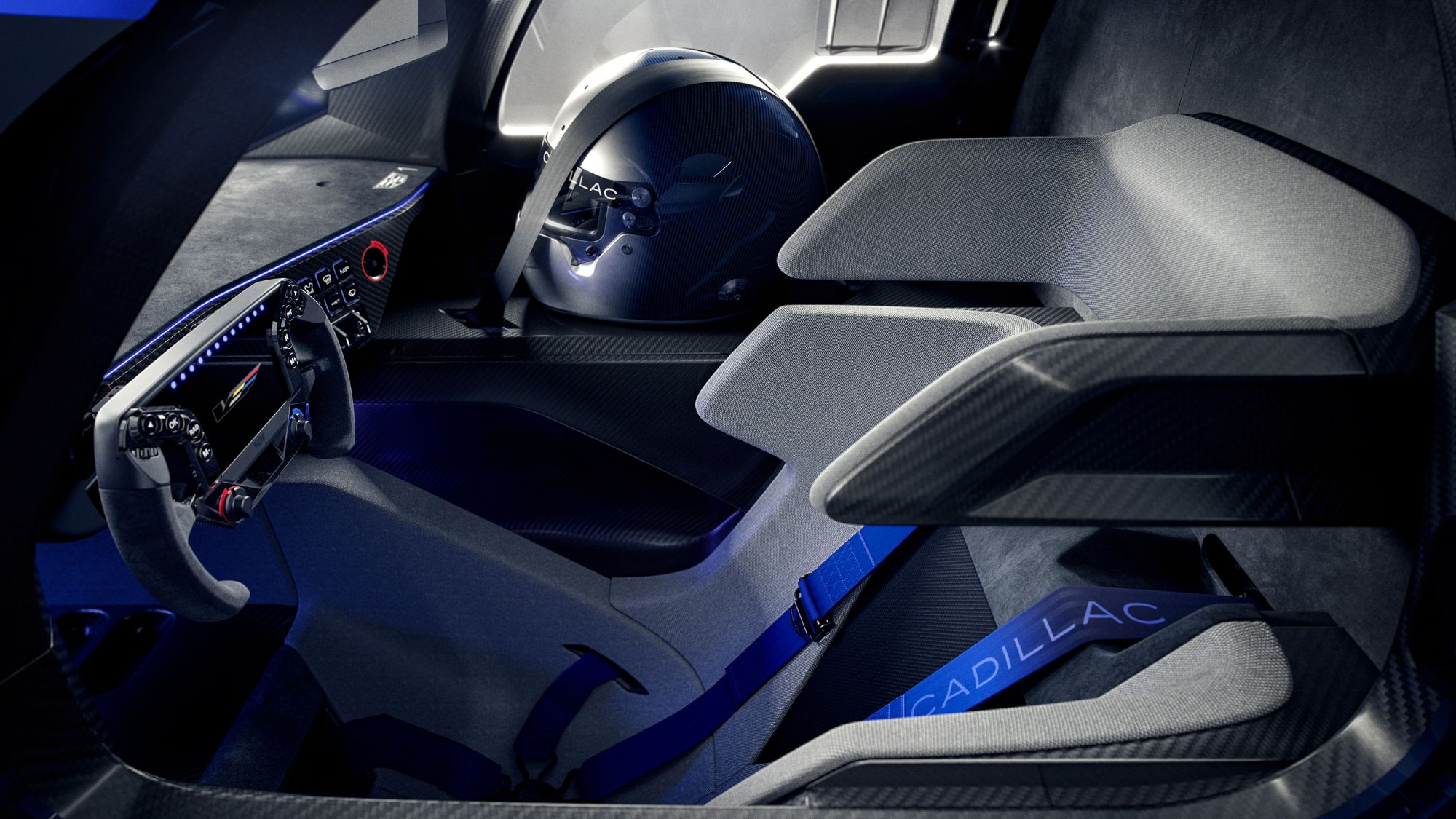
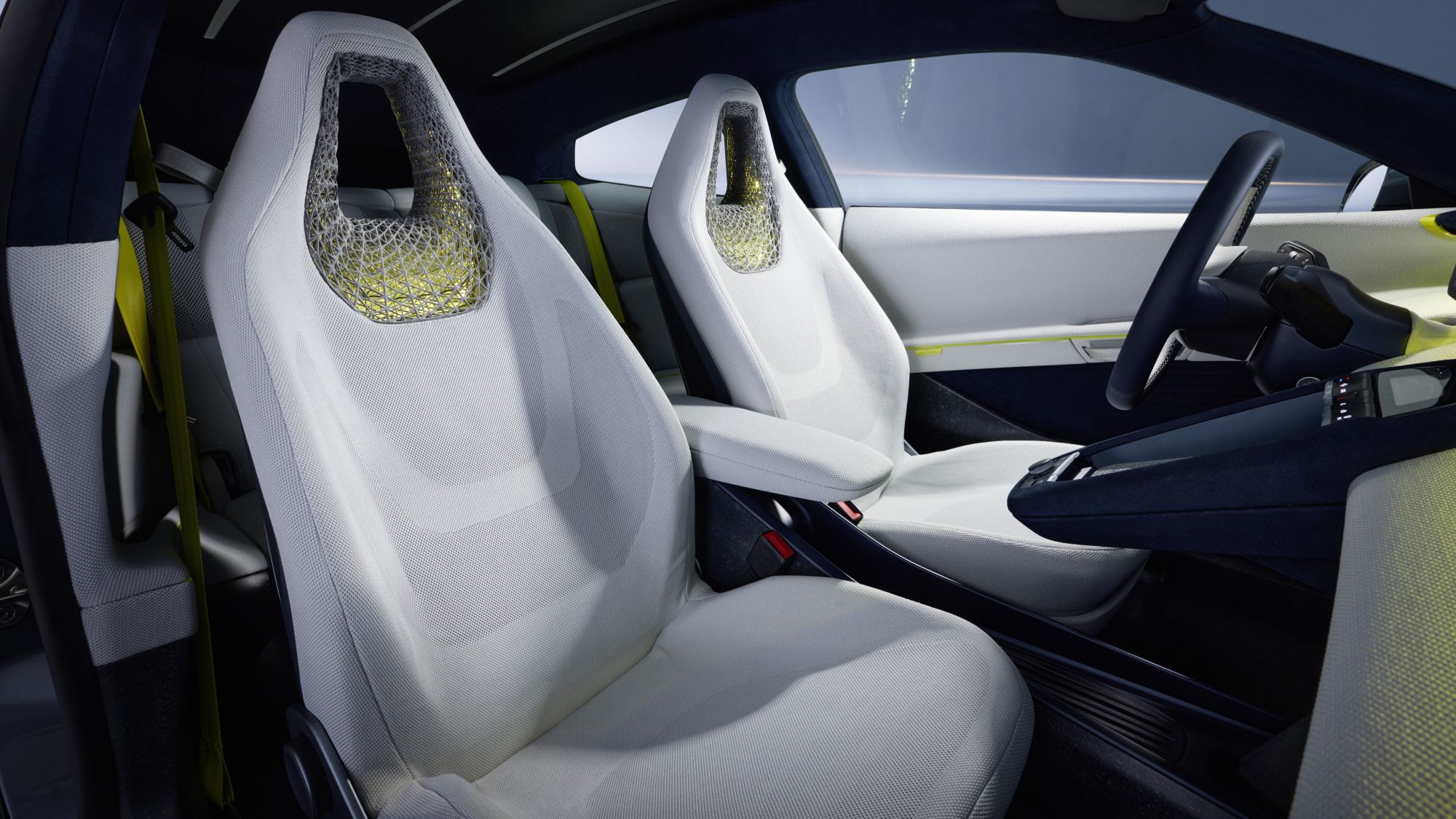
The interior has taken a significant step beyond its original purely functional design to become a more refined and sophisticated environment. Driver aids include traction control and anti-lock braking. The pedals and steering wheel are adjustable, and air conditioning is optional.
Each seat is uniquely tailored to its owner, being custom molded in a process similar to that used for Le Mans prototypes. This ensures a precise fit said to provide “exceptional” comfort, support, and a strong connection to the car.
An adjustable racing-style steering wheel is engineered to provide easy access to key controls while driving at speed, with a fan rev paddle for pitlane fun. A central screen delivers legible graphics for key information such as power and fan settings, state of charge, speed, and temperatures to inspire confidence.
A range of options in colors, stitching, stripes, and logos can be selected for the seat, steering wheel, and dashboard trim.
Detailed changes from prototype to production
In production form, the Spéirling Pure represents the culmination of relentless research and development to produce a hyper track car that comprises 95% new components compared to prototype models.
Improvements made from prototype models on the powertrain are headlined by an increased battery capacity of 100 kW·h, up from the 60 kW·h batteries in prototypes, to improve overall running time. A typical run distance is 40-50 km (25-31 mi) at an LMP2 racecar pace.
The standardized, modular McMurtry battery pack design—with futureproofing built in for evolution upgrades—uses Molicel P50B NCA 21700 lithium-ion cells.
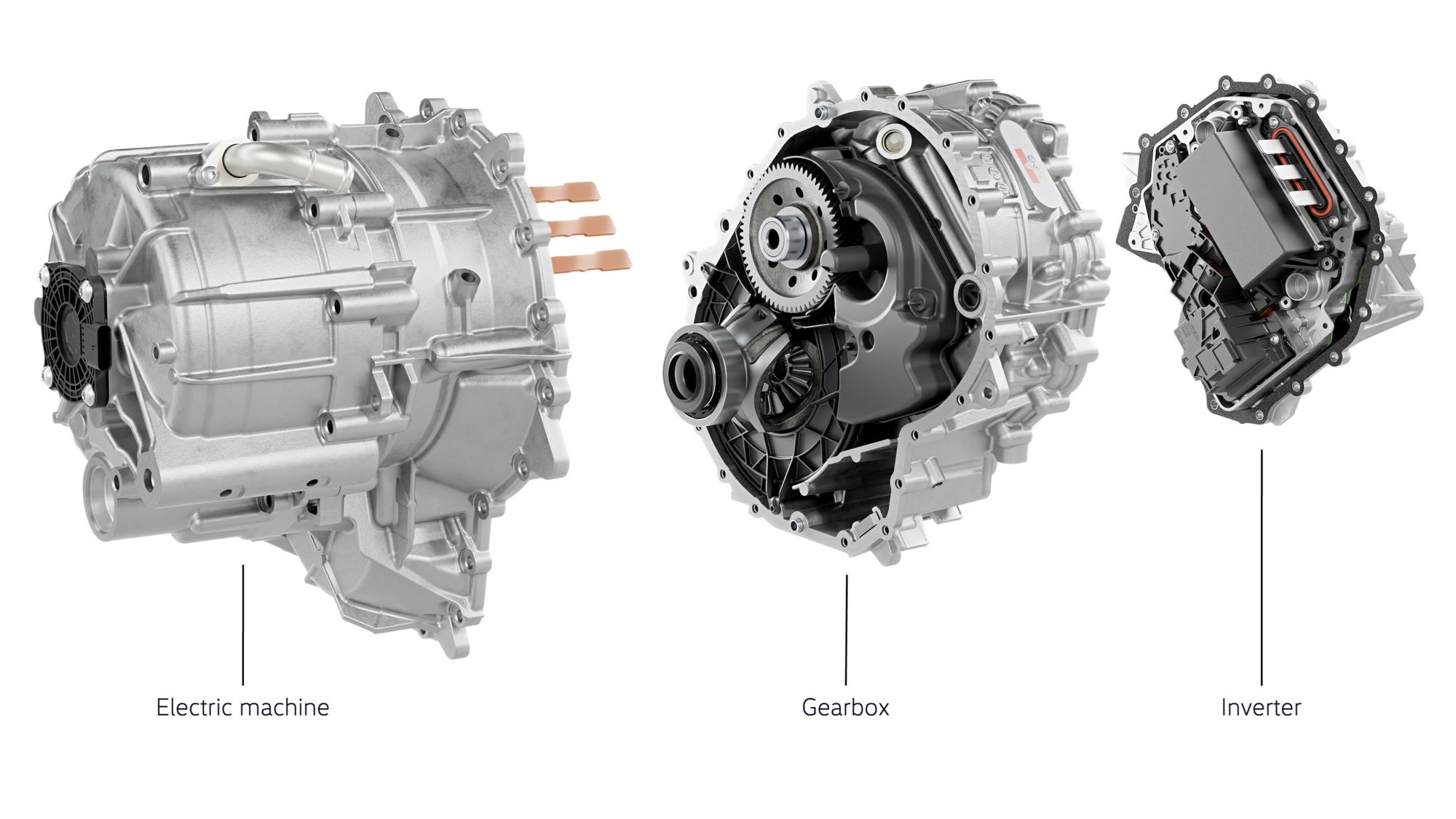
Regenerative braking energy recovery was increased at up to 200 kW for all states of charge. New Helix drive motors (see Futurride’s coverage here), with additional torque, are mated to an upgraded gearbox. Moving the powertrain cooling system from the rear to the front of the car brings dual benefits in efficiency and aerodynamics.
The car’s wheelbase increased from 2000 to 2200 mm to accommodate the new 100 kW·h battery. The production car’s body size growth to accommodate the larger battery also enabled cleaner airflow across the car and through its rear tunnels.
The new carbon-fiber monocoque was designed to meet global motorsport safety standards. It not only accommodates the larger battery but also enhances cabin space with more elbow and leg room, improves ingress/egress via wider door opening, and has a repositioned A-pillar for a wider field of view.
The secondary door has wider hinge spacing to aid ingress/egress. A swan-neck style rear wing accommodates a compartment underneath for a helmet and HANS (head and neck support) device.
Headlights allow for evening/nighttime track running, while track day safety features include indicators, hazard lights, brake lights, and main beam flash.
A redesigned suspension brings increased articulation and a nominal ride-height bump of 20% when in use. Electronically adjustable dampers are an optional extra.
Tires are off-the-shelf Michelin Pilot Sport GT S8M slicks that are available worldwide, with fronts being 30/68-18 and rears 31/71-18. They are 11% wider in front and 3% wider in the rear and have a 15 mm (0.6 in) increase in sidewall height front and rear to improve ride compliance.
Brakes are 390 x 34 mm (15.4 x 1.3 in) vented carbon-ceramic discs with Brembo six-piston calipers.
The electric power steering is replaced by a hydraulic power-assisted system with Formula 1-style valving for lighter steering and increased driver feedback.
Downforce-on-Demand
The Spéirling Pure’s unique driving experience is enabled, in large part, by McMurtry’s patented, revolutionary Downforce-on-Demand technology.
It uses dual fans for redundancy, ensuring that if there is an issue with one unit, the driver can retain control of the car. Unlike traditional downforce that is primarily generated by direction-specific airflow over wings or under diffusers, the car maintains downforce in the event of a spin, allowing drivers to come to a controlled stop in a much shorter distance.
The system gets new fan motors and a cooling design with new fan blades for enhanced durability and a position relocation to improve the car’s center of gravity. Under-car downforce skirt durability and travel improvements enable the car to perform for thousands of kilometers.
An air compressor for the Downforce-on-Demand enables its skirt to be retracted independently for trailer loading and slow-speed maneuvering such as in the pits. Spéirling prototypes required an external air bottle to pre-charge the system.
The system’s two high-speed fans generate immense suction, pulling the car to the road surface. With fans spinning at up to 23,000 rpm, they draw air from a sealed region beneath the chassis through filters, creating immediate and consistent downforce. As air is expelled from the rear, the car produces a jet-engine-like sound, in contrast to the near-silence typical of EVs.
A focus on ownership experience
Vehicles capable of extreme performance are synonymous with being difficult to service and complicated to run, detracting from the enjoyment of ownership, according to McMurtry. The Spéirling Pure is designed to break this trend, being designed to provide owners with a straightforward, plug-and-play experience.
With just a driver and a competent friend, the company says the car can be run at track days or competitive events—a stark contrast from what is required to run other ultra-high-performance track vehicles. However, if owners desire, a full factory support program is available to make running a Spéirling Pure seamless.
The car can be recharged from 20% to 95% in 20 to 60 min, depending on ambient temperature and charger power. While many global racetracks now have high-speed charging infrastructure, to allow charging at any venue McMurtry has developed an optional portable 100-kW·h storage, 120-kW output power bank that can be charged by any conventional three-phase pit garage source.
Access panels have been added to the monocoque and bodywork so the car can be serviced at far greater ease, with key components easily accessible. An example is emptying the fan filter cassette via quick access panels in the side pods.
The Spéirling Pure is eligible for competition in events such as the Global Time Attack in the U.S. and the European Time Attack Masters at the Nürburgring. Non-competitive but race-inspired events, such as GT1 Sports Club, are also recommended.
An extensive options program allows customers to make each car their own. During the order process, customers collaborate with an in-house designer to create a personalized specification, choosing from an array of wheel designs, unique graphics, and paint finishes, to custom interior trim. The company says that no two cars will be the same.
Via the McMurtry Owners Club, a calendar of track events will be organized throughout the year and supported by the factory engineers, technicians, and driver coaches. The exclusive community for McMurtry owners was created to enhance the ownership experience through shared social and driving journeys.
The club provides Advanced Driver Training to help drivers extract the most from their car. For example, the first event in Sweden focused on near-zero-grip ice driving before experiencing supreme downforce on track.
Members receive deep dives into the engineering and production of their cars, including exclusive updates and technical insights not released to the general public. The club organizes and manages all logistics for international driving events at premier racing circuits, ensuring a seamless transition from arrival to the cockpit.
McMurtry wants the owners’ group to help develop future vehicles, providing input into the development of its next models.
Coming later this year
The car is priced from £995,000, or about $1.3 million or €1.15 million at current exchange rates, plus local taxes, shipping, and options, with deliveries beginning later in 2026. It will be built at the new McMurtry factory in Wotton-under-Edge, UK, which spans 2700 m² (29,100 ft²).
“Designed and built by hand at our new state-of-the-art factory in the Cotswolds, England, later this year we’ll be handing over the first Spéirling Pure to customers,” concluded Yates. “We cannot wait to see what owners across the globe achieve in their cars, but rest assured, we also have some big plans of our own.”
-

- Two McMurtry Spéirlings on the track.
-

- The rear view of the McMurtry Spéirling on track.
-

- McMurtry Spéirling track from above.
-

- McMurtry Spéirling studio front view.

-

- McMurtry Spéirling studio side view.
-

- McMurtry Spéirling studio rear.
-

- McMurtry Spéirling studio interior.
-

- McMurtry 2026 team photo in build bays.
-

- McMurtry fan system.
-

- McMurtry portable charger.
-

- New McMurtry factory in Wotton-under-Edge, UK.