Because the C-Class is one of Mercedes‑Benz’s best-selling and most popular model series globally, one can understand if the German automaker has been averse to making any significant changes to it over the years. However, the company has redesigned the C-Class lineup to better compete with BMW.
The recently introduced all-electric C‑Class is the second offering from Stuttgart to be produced on the MB.EA (Mercedes-Benz Electric Architecture) after the GLC (see our coverage of that SUV here), but it’s the first time a C-Class vehicle will be built as an EV. The 2027 C 400 4Matic is the company’s direct competitor to the BMW i3. See our coverage of that car here.
“The all-new electric C‑Class is redefining the mid-size segment for electric vehicles,” said Ola Källenius, Chairman of the Board of Management, Mercedes‑Benz Group AG. “Customers will get exactly what they expect from this new version of the beloved model: the perfect blend of performance, comfort, dynamics, and intelligence. On top of that, it is the most powerful and sportiest C‑Class we’ve ever built, offering pure driving pleasure and outstanding real-world range—all while being the perfect sanctuary for our customer.”
From the outside, the new C 400 EV looks sleek and almost coupe-like, with a GT rear and the iconic Mercedes-Benz grille illuminated on the front. The headlamps feature a star running-light design, and although the vehicle carries an overall sporty look, the company says it designed the C 400 for long-distance trips.
“With the all-new electric C‑Class, we have made a profound statement: reinventing classic elegance for the electric age,” said Bastian Baudy, the new Chief Design Officer of Mercedes-Benz Group AG. “Its distinctive coupe-like silhouette, sculpted with taut surfaces and muscular wheel arches, radiates a powerful emotional appeal. From the iconic illuminated grille to the star design headlights, every detail instantly symbolizes our new era of Mercedes‑Benz.”
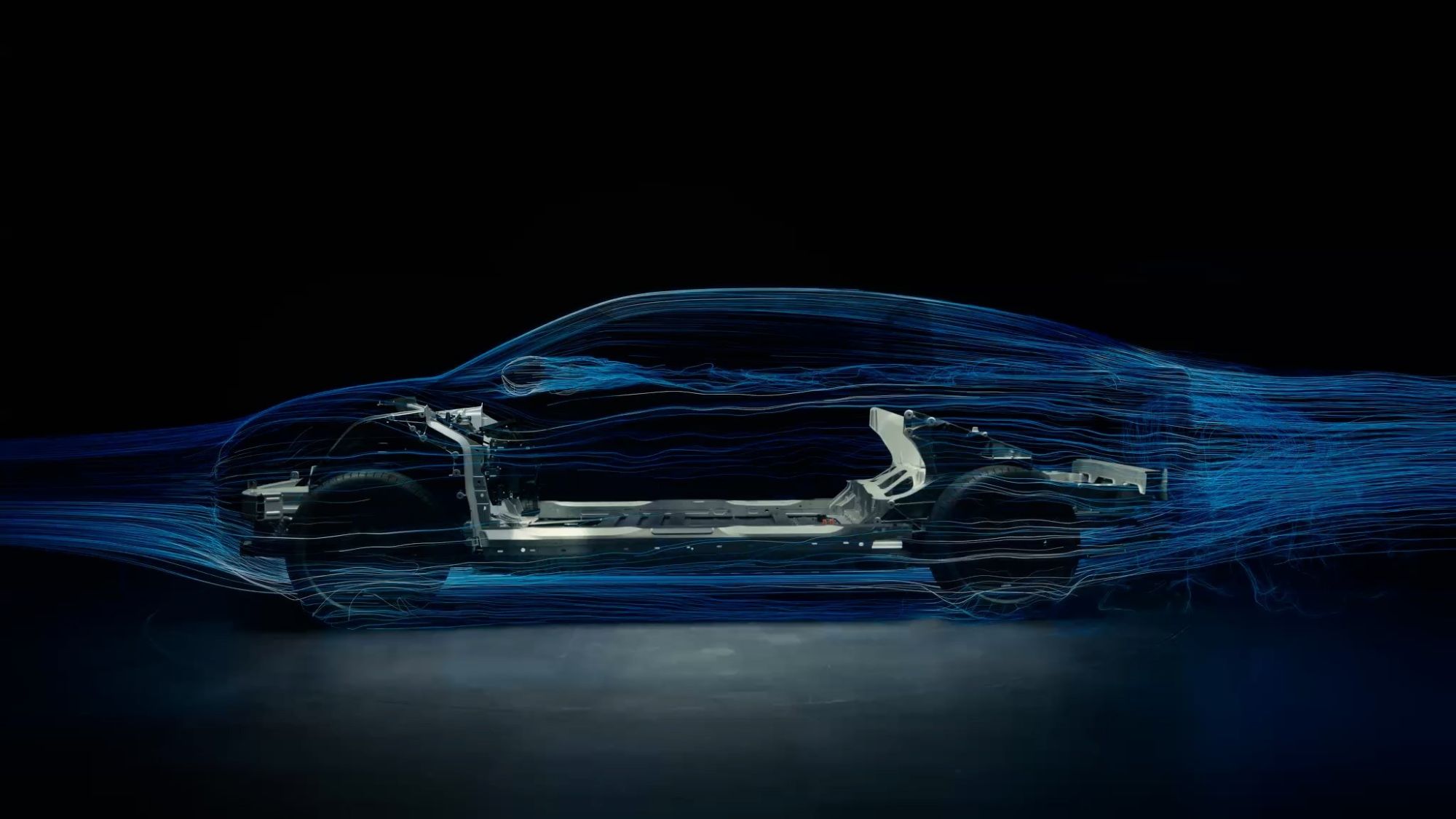
The electric C-Class features an impressive drag coefficient starting at 0.22. The most important aerodynamically optimized measures include streamlined front and rear fascias, sealing of gaps in the frontal area, design of the exterior mirrors and trunk lid edge, including spoiler, side break lines in the taillights, and a smooth, almost completely enclosed underbody. The large flush-fitting wheels and tires are also aerodynamically optimized.
Major overall measurements for the car are a 192.2-in (4882-mm) length, 74.5-in (1892-mm) width without mirrors, and 59.2-in (1504-mm) height. Its purpose-built all-electric architecture enables a more generous interior space.
The 116.6-in (2962-mm) wheelbase is 3.8 in (97 mm) longer than the combustion-engine C‑Class sedan. This particularly benefits front passengers with 0.5 in (13 mm) more legroom. Thanks to the standard panoramic roof, maximum headroom increases by 0.9 in (23 mm) front and 0.4 in (10 mm) rear. The electric C‑Class also features more generous cargo space, with the trunk capacity of 16.6 ft³ (470 L) and additional frunk cargo space.
Two motors and speeds
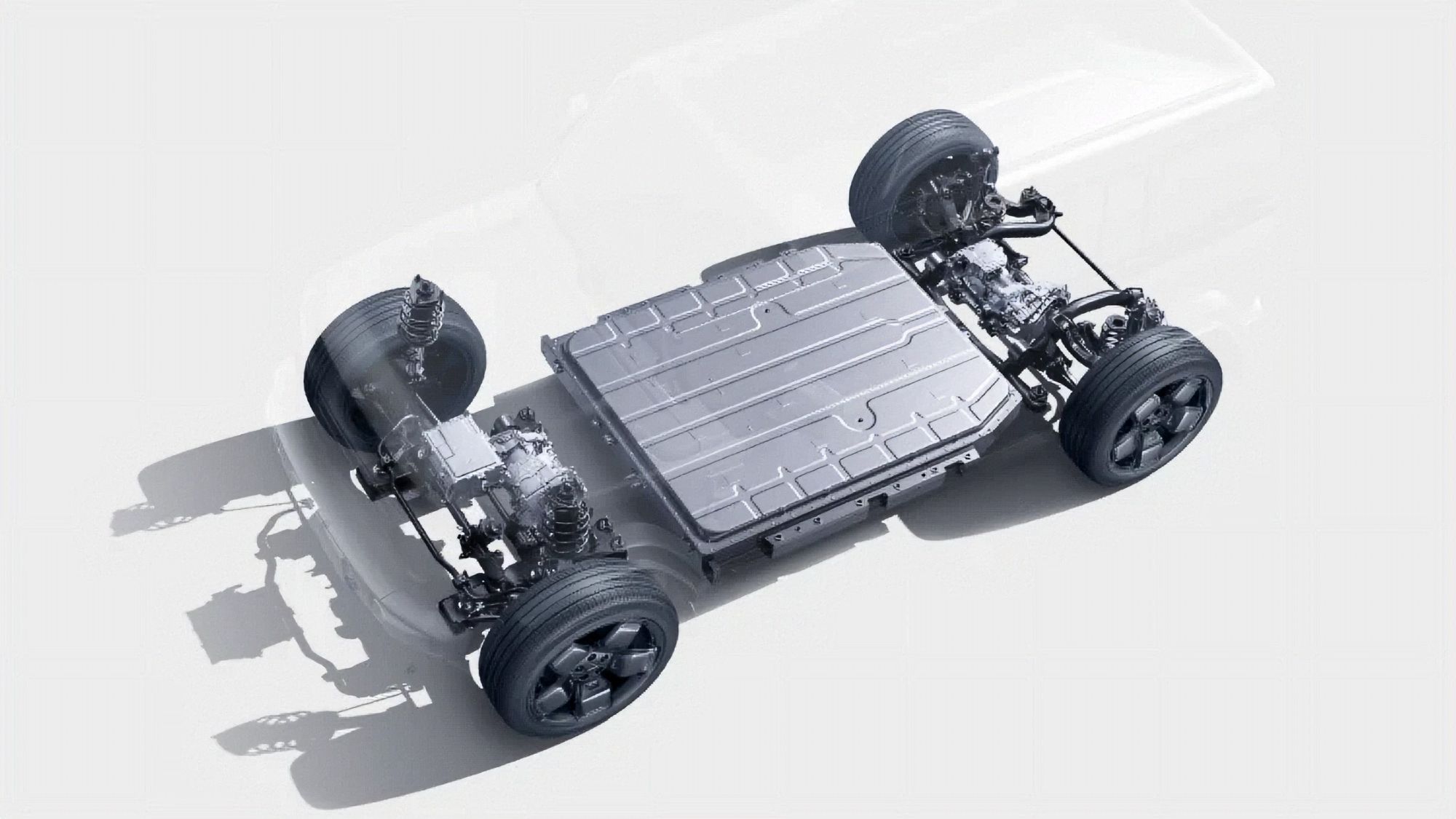
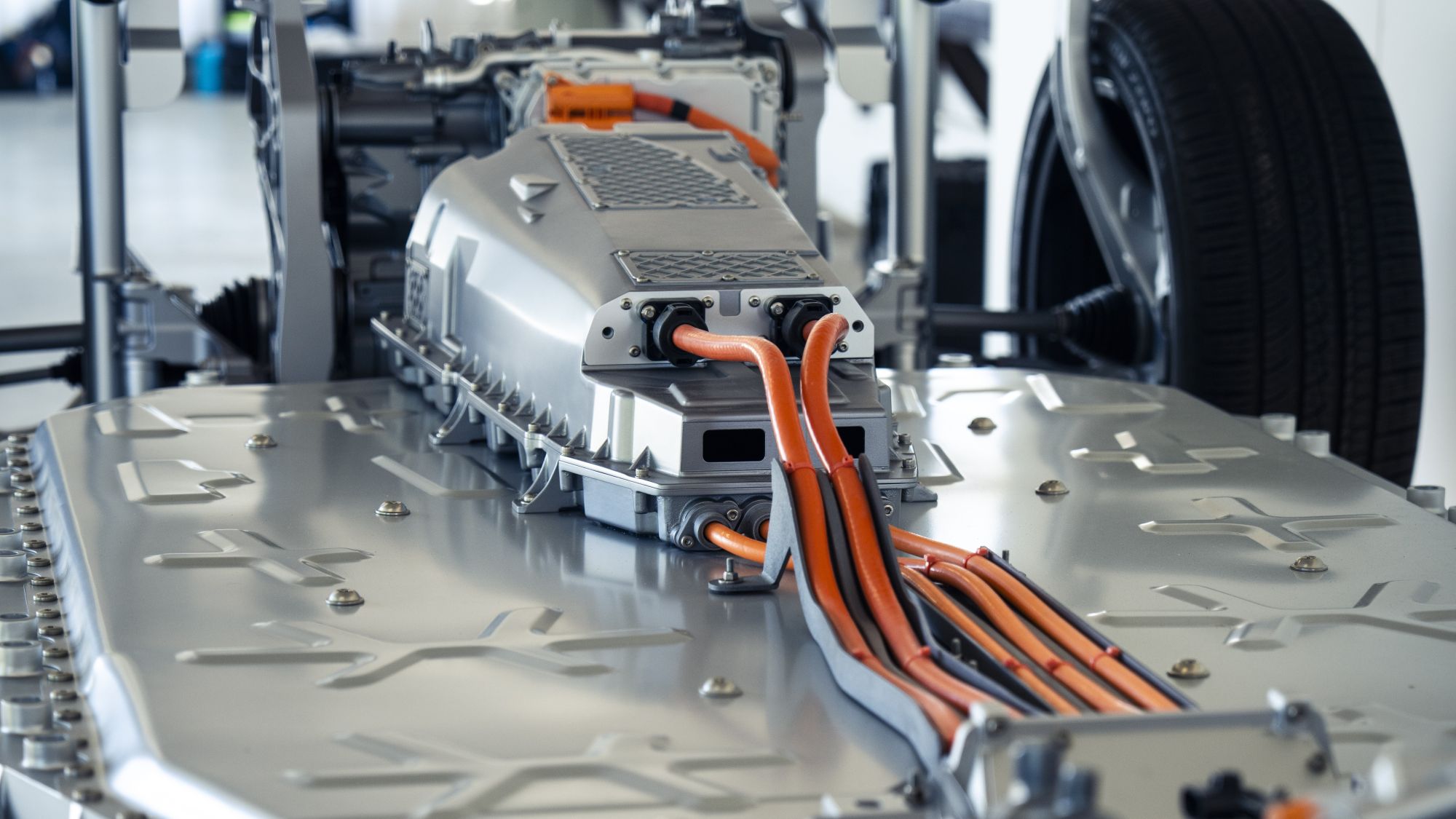
Powered by two electric PSMs (permanently excited synchronous motors) for all-wheel drive, with a two-speed transmission, and energized by a 94.5-kW·h lithium-ion battery pack, the automaker claims a WLTP range of 762 km (473 mi) for the C 400. The new sedan matches the GLC’s 360 kW, with 590 lb·ft (800 N·m), for 0-60 mph (0-97 km/h) acceleration in 3.9 s. Like the GLC, the C 400 regenerates power with its one-box braking system, which has up to 300 kW of recuperation power.
Thanks to 800-V technology, up to 325 km (202 mi) in WLTP range can be added in as little as 10 min. DC fast charging up to 330 kW is possible at 800-V charging stations. However, a DC converter is fitted as standard to also enable charging at 400-V charging stations.
A battery-to-wheel efficiency over long distances of 93% is enabled in part by the two-speed transmission on the rear axle, which combines high efficiency with strong performance. The first gear has a short 11:1 ratio, enabling “excellent” acceleration from a standstill and greater efficiency even in city driving. The second 5:1 gear ratio is designed for power delivery at higher speeds and efficiency in highway driving, ensuring “excellent” range and comfort on long journeys. The shift points are based on the driving situation and the selected Dynamic Select drive program.
The front-axle electric motor functions as a “boost” drive. Depending on the driving situation and driving program, it is activated via a disconnect unit, for example, when the corresponding power or traction is needed for the driving situation. Under low load, the electric motor is decoupled for greater efficiency. This reduces losses on the front axle by up to 90% and increases the range.
Comfort and MBUX tech focus
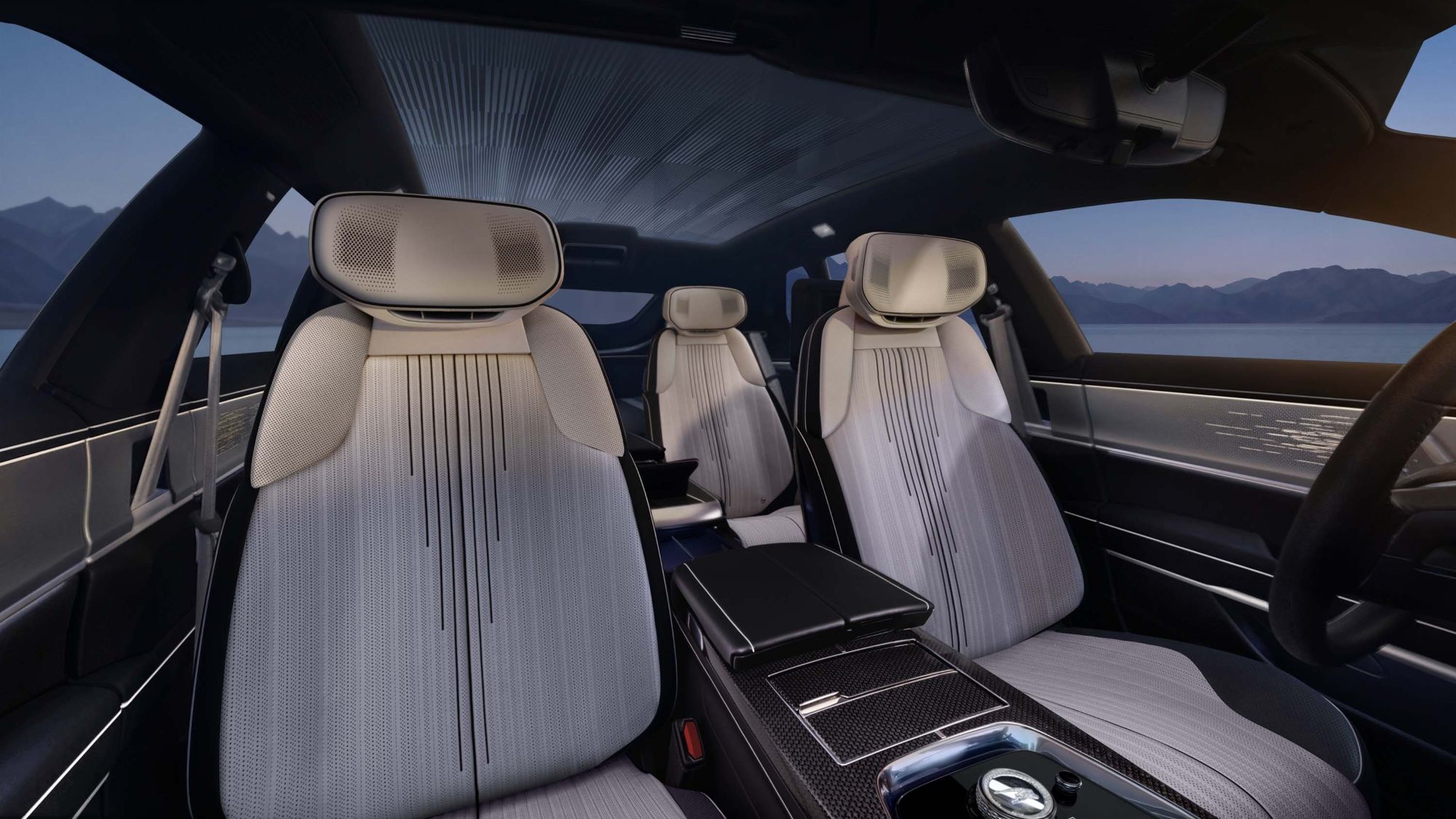
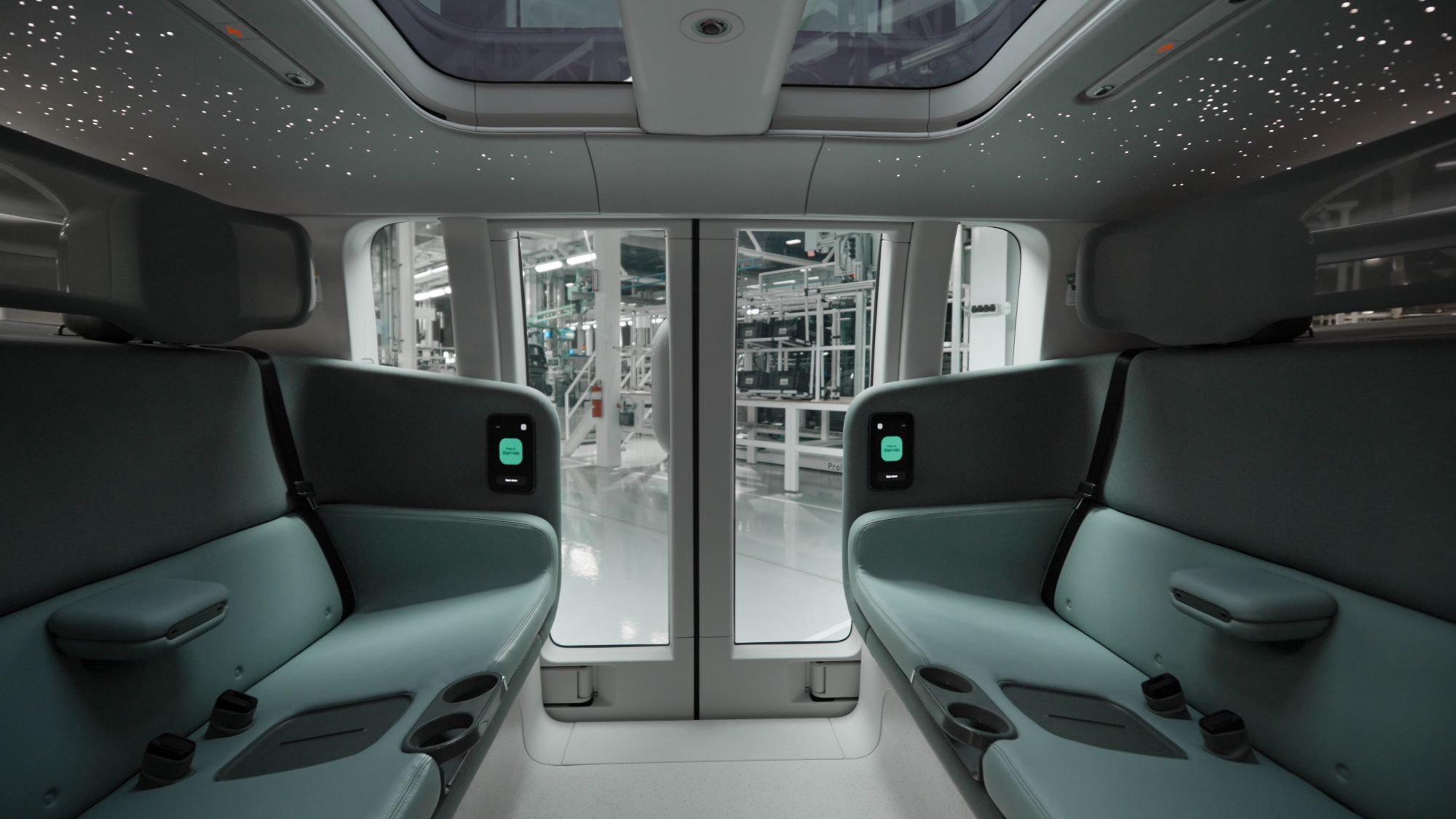
The C-Class interior includes comfort-focused technology such as a multisource heat pump capable of heating the cabin twice as quickly as a combustion-powered vehicle. An optional ambient lighting system illuminates 162 stars on the cabin ceiling, replicating a starry sky.
First introduced in the electric GLC, the electric C-Class is said to be the second vehicle in the world with an available vegan interior certified by The Vegan Society. The Vegan Package includes all soft-touch surface materials in the interior—from the seat upholstery and the headliner to the pillars, door panels, and carpeting.
Another interior option, the 39.1-in Hyperscreen, is divided into three zones: a driver’s display, a center infotainment section for navigation and media, and a passenger screen for movies and games. The MBUX in-car assistant system, which is built on the Mercedes-Benz MB.OS operating system incorporates Google’s Gemini and OpenAI’s ChatGPT AIs.
Two other interesting technologies are the MBUX Surround Navigation and the MBUX Augmented Reality Headup Display.
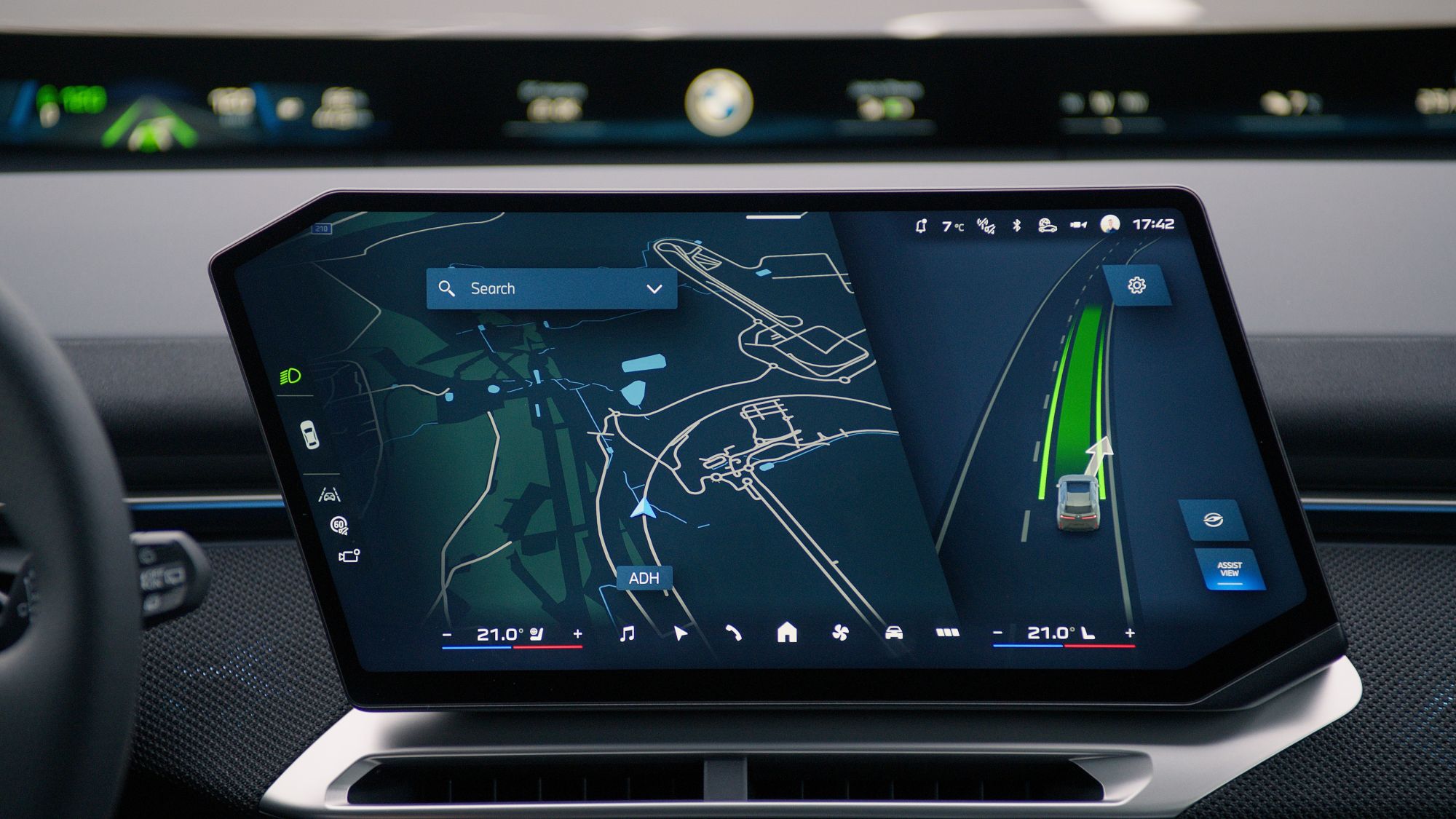
The navigation is said to take visual interaction to a new dimension. Supported by cameras and sensors, it displays a real‑time 3D representation of the vehicle and its surroundings on the display, benefiting the driver with enhanced situational awareness.
Available on the C-Class for the first time, the AR headup display presents relevant information and route guidance to the driver in an 18-in display area, with a virtual color image appearing in the driver’s field of view.
Performance handling is enabled by the C 400’s optional Agility & Comfort Package, which includes 4.5-degree rear-axle steering, reducing the turning circle to 36.7 ft (11.2 m), and Airmatic air suspension with intelligent damping based on Car-to-X4 and Google Maps data.
Several Mercedes-Benz ADAS technologies are included, such as MB.Drive Standard as well as other features such as Digital Extra: Distance Assist Distronic. The City Pro feature, which will enable a seamless point-to-point driving experience, even in dense city traffic, will be available at a later date, according to the company.
The C 400 4Matic Electric is scheduled to arrive at U.S. dealerships in the first half of 2027.
Kevin Jost contributed to this article.
-

- Mercedes-Benz Electric C-Class front side.
-

- Mercedes-Benz Electric C-Class rear side.
-

- Mercedes-Benz Electric C-Class frunk.
-

- Mercedes-Benz Electric C-Class illuminated grille.
-

- Mercedes-Benz Electric C-Class electric drive.
-

- Mercedes-Benz Electric C-Class rear electric drive.
-

- Mercedes-Benz Electric C-Class drive battery.
-

- Mercedes-Benz Electric C-Class Hyperscreen.
-

- Mercedes-Benz Electric C-Class front seats and ceiling stars.
-

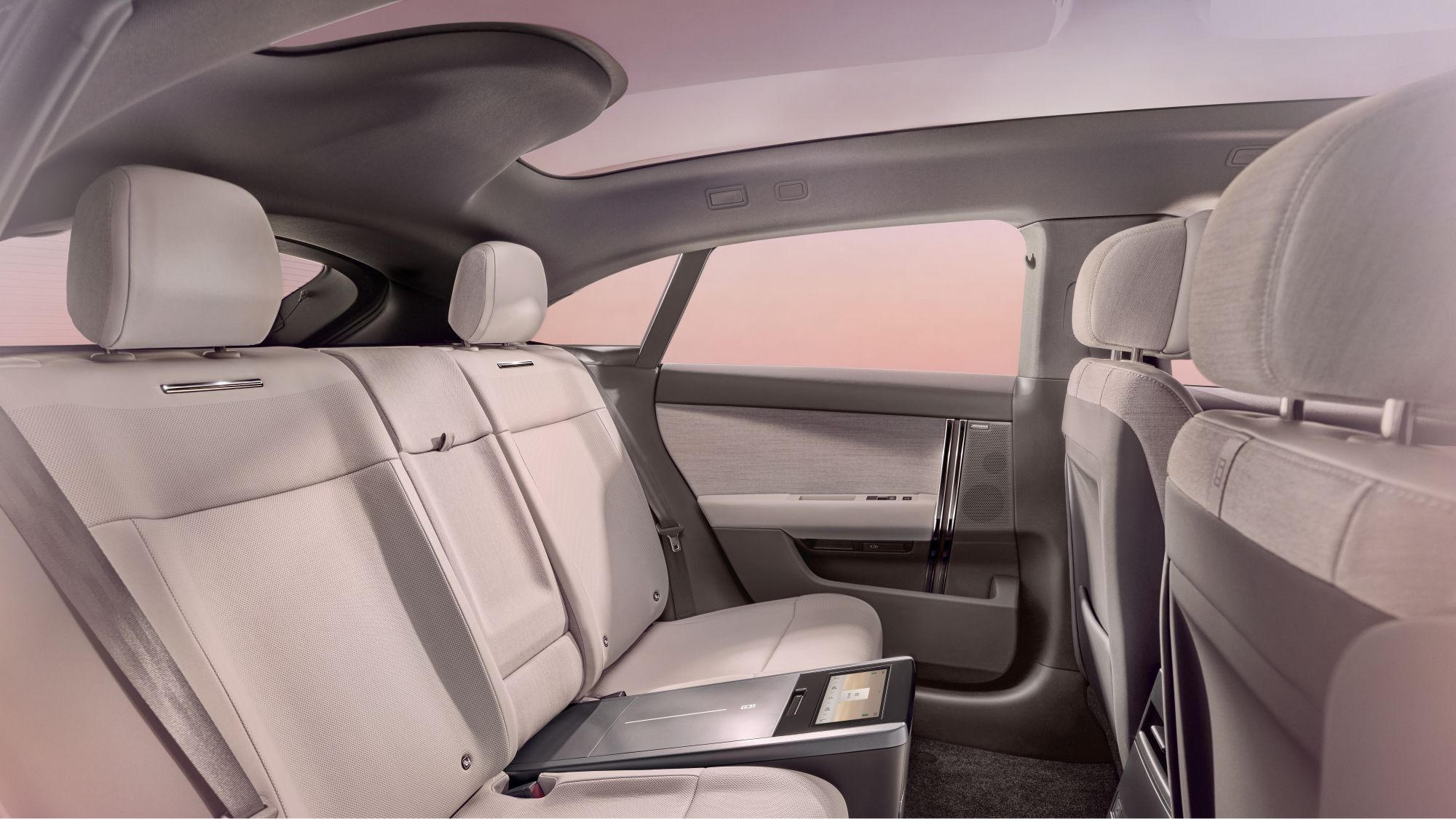
- Mercedes-Benz Electric C-Class rear seating.