Seoul, South Korea-based radar company Bitsensing today launched its AIR4D imaging radar, engineered to help AV (autonomous vehicle) companies deploy autonomous fleets faster and at scale. The new radar gives companies direct access to high-resolution 4D sensor point cloud and Doppler data, including radar raw data outputs, to train smarter models and drastically speed up the commercialization of AVs.
“By delivering high-resolution 4D perception data, including, importantly, all raw data outputs, our goal at Bitsensing is to empower autonomous vehicle companies to build systems at speed and at scale,” said Jae-Eun Lee, CEO of Bitsensing.
Founded in 2018 in South Korea, Bitsensing has raised $52 million from investors including AF WPartners, Korea Development Bank, and HL Mando and has partnered with industry leaders such as NXP Semiconductors to bring “radar everywhere.” The company has expanded the use of its high-performance, automotive-grade radar across a variety of applications in autonomous driving, connected living, smart cities, and health tech.
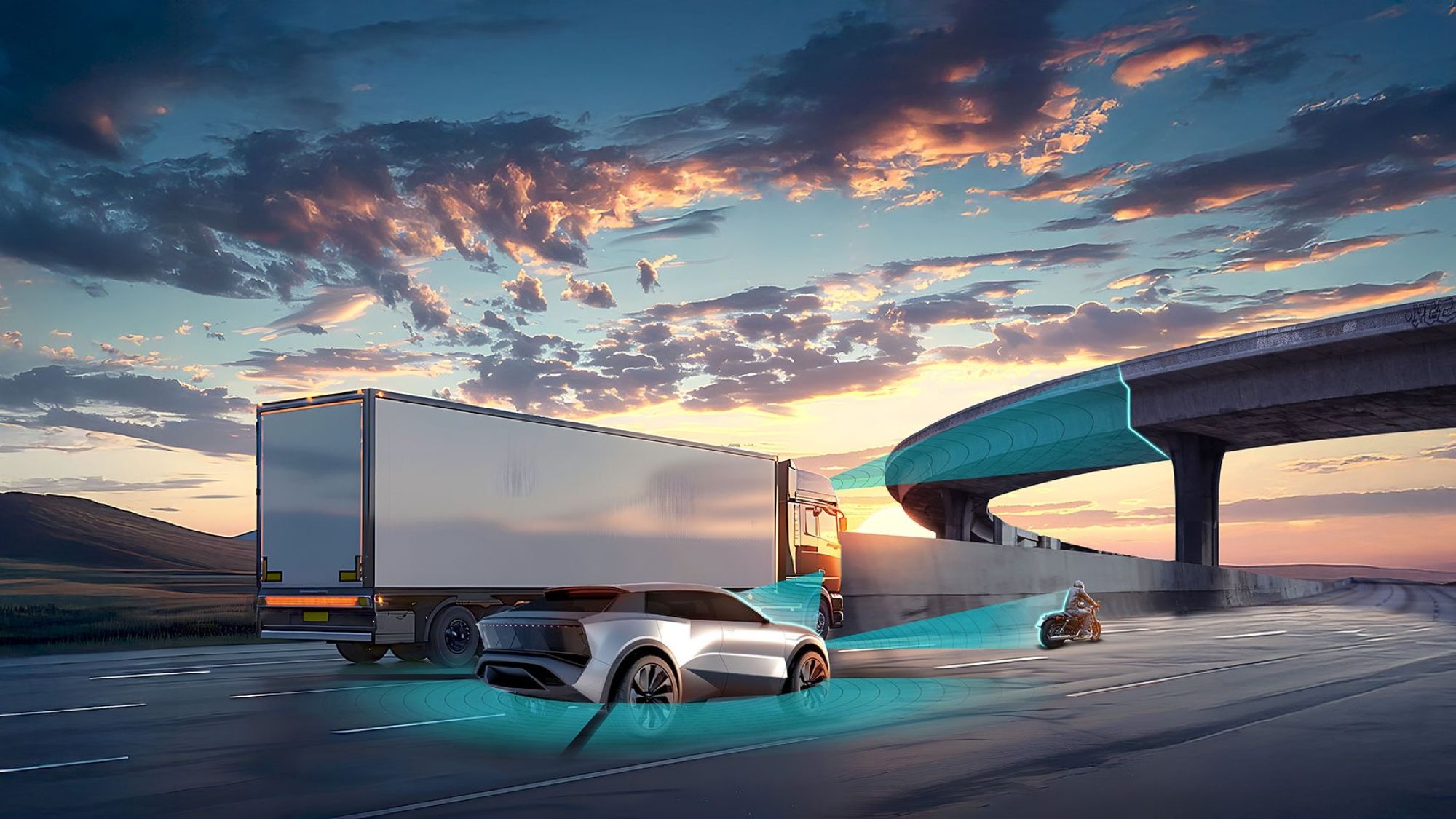
Before the availability of 4D radar, other sensors were relied upon to provide spatial accuracy for AVs that 3D radars could not replicate, such as distinguishing a pedestrian from a vehicle or a road sign from an obstacle. The recent development of 4D imaging radar resolves this challenge by adding elevation data. What this means is that AVs equipped with 4D radar get a high-resolution, real-time spatial picture of their environment which is the level of perception fidelity that safe autonomous driving demands.
Currently, other 4D radar solutions often operate as closed systems, limiting the availability of all the raw data produced from testing. Access to these raw radar data is critical because it enables developers and AV companies to continuously refine perception models, validate performance, and accelerate the path from testing to safe, large-scale fleet deployment.
Compared to other 4D radars on the mobility market, the company says that AIR4D clearly differentiates itself by being purpose-built for AVs.
It delivers detailed 4D sensor data designed specifically for AV AI (artificial intelligence) models, while being optimized for power and heat efficiency, helping these vehicles operate reliably in the real world. By contrast, many 4D radars were developed for lower-level ADAS (advanced driver assistance systems) and not for fully autonomous driving functionality.
AIR4D imaging radar relies on an AV camera-plus-radar architecture, opening a viable path to significantly lower per-vehicle sensor costs. Its robust distance and velocity measurements are said to complement the high-resolution imagery from cameras, resulting in a comprehensive perception system that enhances the reliability of autonomous driving.
Specifically, the off-the-shelf deployment offers direct velocity per object, measuring how fast surrounding vehicles, cyclists, or pedestrians are moving in real time, and enabling faster and more accurate decision-making for AVs. It provides long-range detection up to 300 m (984 ft), identifying vehicles and obstacles farther down the road and giving AVs more time to react safely.
The 4D radar provides better accuracy in nighttime and zero-light environments, performing in near-total darkness (i.e., <0 lux). It is stable in harsh weather, delivering strong sensing performance in rain, fog, snow, and other challenging conditions that can reduce visibility for other sensors because its millimeter-wave frequencies can better penetrate these adverse environmental barriers. This reliability is no longer a nice-to-have; it is a baseline requirement, according to the company.
-

- Bitsensing AIR4D radar nighttime performance demo.
-

- Bitsensing’s new AIR4D imaging radar.