San Francisco-based Ouster, Inc. unveiled its new lineup of OS digital lidar sensors featuring what it says is the world’s first patented native-color lidar sensor. Ouster said its new Rev8 technology, powered by its next-generation L4 silicon, provides up to double the range and resolution of the previous generation, and is designed for functional safety, reliability, affordability, and scale.
“Rev8 is the most advanced family of lidar sensors ever released and sets a new standard in sensing,” said Ouster CEO Angus Pacala. “With the L4 Ouster silicon, we are delivering on the promise of our digital architecture to deliver exponential improvements in performance, doubling our core specs, and simultaneously introducing the world’s first native color lidar to give machines 3D human-like sight for the next era of physical AI. Rev8 is the foundational technology that will allow customers to move from prototype to commercial production at scale, providing the reliability and affordability required to enable real-world autonomy across industries.”
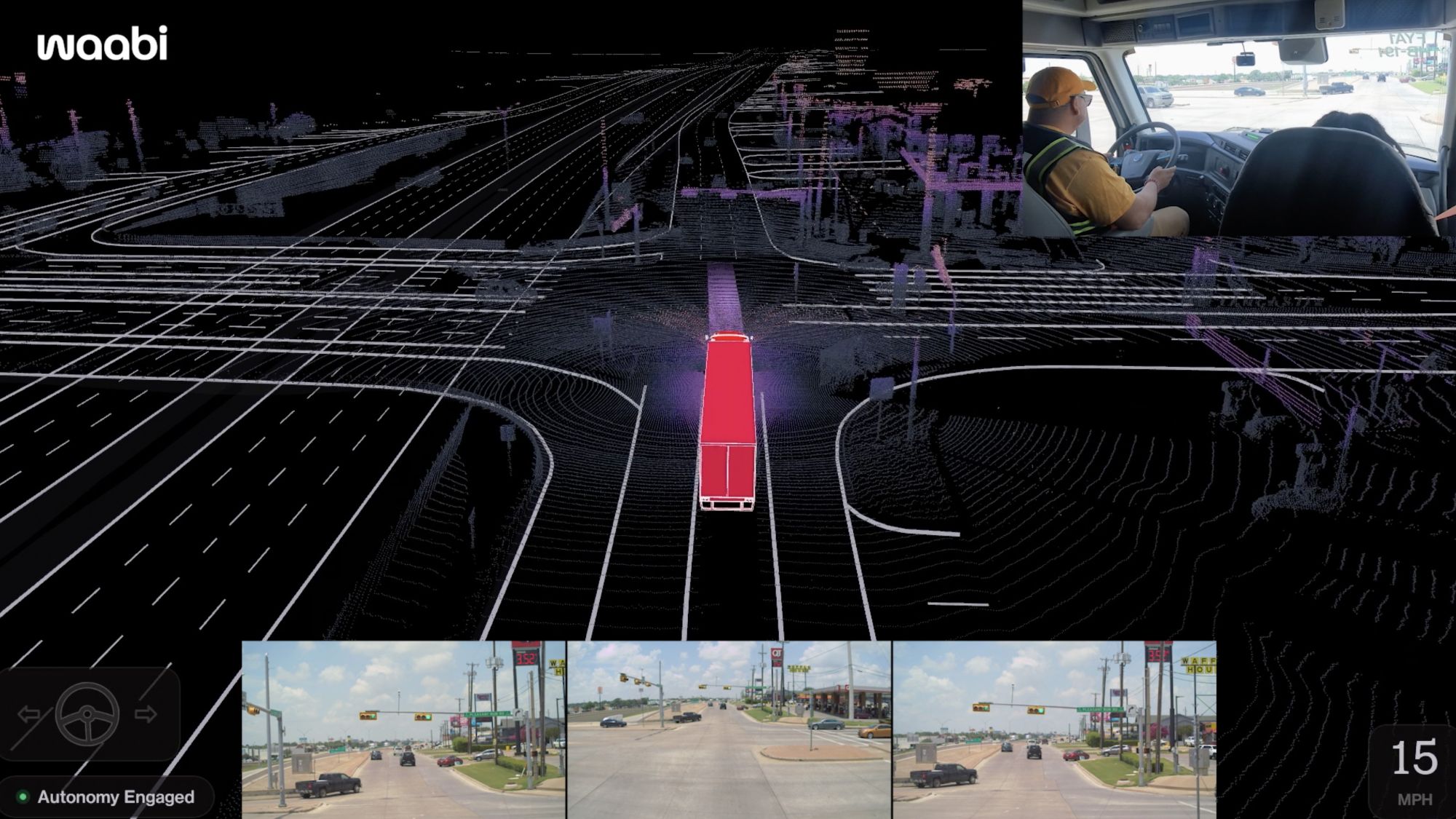
Up until now, lidar sensors have not featured native color, relying instead on post-processing techniques such as color draping, which combines separate 3D point clouds with 2D photographic orthomosaics (aerial images created by stitching together multiple, overlapping photographs, usually from drones). Ouster believes a combination of structure and color is required to perceive the world in full context, and the company claims its Rev8 is the first single lidar sensor that can understand road signs, interpret brake lights, or simply capture a vehicle’s surroundings in survey-grade, colorized maps.
With megapixel resolution and high image quality, Rev8 native color sensors fuse data through physics rather than software. Every point is “born” with color, ensuring ultra-low latency and perfect spatial-temporal alignment. This single-sensor solution eliminates the need for complex calibration, providing a seamless understanding of 3D environments with rich visual and depth information. Thanks to its 48-bit color depth and 116-dB dynamic range, Ouster said its native color data maintains performance in lighting extremes from 1 lux to 2 million lux.
Embedded with Fujifilm color science, the L4 chip enables native color data and hardware-enabled HDR. It boasts 42.9 GMACs (giga multiply-accumulates per second) of processing power, detection of up to 20 trillion photons per second, a 40-kHz measurement rate with picosecond timing precision, and is capable of processing up to 10.4 million points per second and 22.4 gigabits per second of data bandwidth off-chip. The L4 architecture features both the 128-channel L4 and 256-channel L4 Max.
Ouster’s Rev8 OS family features the reimagined OS0, OS1, and OSDome sensors, and now the flagship 256-channel OS1 Max sensor.
Purpose-built for high-speed autonomy, smart infrastructure, and heavy industrial use, Ouster said the OS1 Max offers native color and reliability to power long-range, high-performance applications. The OS1 Max boasts double the range and double the resolution of Ouster’s previous-generation product, Rev7, through a premier 256-channel architecture powered by the L4 Max. It sees up to 200 m (656 ft) at 10% reflectivity with a maximum detection range of 500 m (1640 ft), all with a 45-degree field-of-view.
Ouster says that every sensor is auto-grade, cybersecure to ISO 21434, and designed to meet several industry-standard functional safety certifications. With a planned 10-year production life, Rev8 is also designed for low-cost, high-volume production deployments to support mass market adoption.
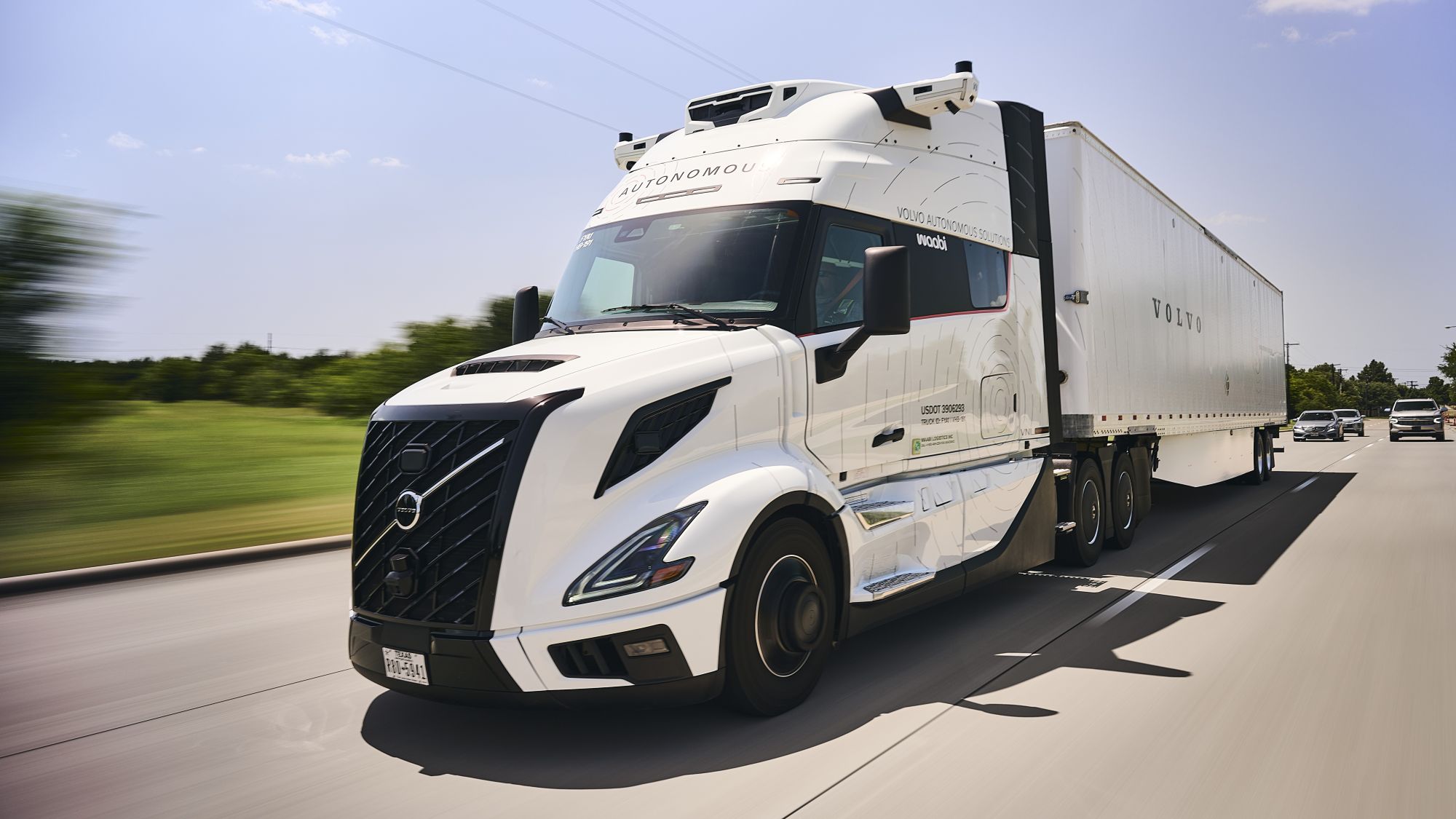
Interest in lidar solutions with native color capability is already high. Ouster claimed several global companies intend to adopt Rev8 OS sensors, including Google, Volvo Autonomous Solutions, Liebherr, Pratt Miller, Skydio, and ATI Robotics.
Rev8 OS sensors are available to order for shipping in Q2 2026.