Mazda Motor Europe has joined Drive Sustainability, an automotive industry group launched in 2012 and based in Brussels that is a collaboration of major car manufacturers to accelerate the transition towards a more transparent, responsible, and sustainable automotive value chain, according to the organization’s website. The group develops and promotes shared tools, sustainability standards, and supplier‑focused support programs on key responsibility topics, including business ethics, working conditions, human rights, health and safety, and environmental stewardship.
Mazda said its decision to join Drive Sustainability aligns with the company’s broader sustainability vision and reinforces its commitment to ensuring that its supply chain meets high ethical, social, and environmental standards. That vision includes its previously established goal of carbon neutrality across its entire supply chain and vehicle life cycle by 2050, according to the Mazda website. As a first step, the company aims to achieve carbon neutrality at its global factories by 2035.
“Sustainable supply chains are essential to the future of the automotive industry,” said Martijn ten Brink, CEO of Mazda Motor Europe. “Participating in Drive Sustainability supports our ambition to ensure that our vehicles are not only efficient and innovative, but also produced in a way that minimizes their environmental impact and reflects our responsibility towards people, communities, and the environment.”
Other members and supporters of Drive Sustainability include original equipment manufacturers such as Ford, BMW, Polestar, Aston Martin, Hyundai, Mercedes-Benz, Toyota, Volvo, Geely, and Volkswagen. With its participation in the group, Mazda said it will be able to utilize common assessment tools and guidance developed by the initiative, while the company will also continue to strengthen due diligence processes that are increasingly important for regulators, partners, and customers.
Mazda has lagged behind the industry in sustainability, particularly in EV (electric vehicle) development, and somewhat intentionally. During a recent announcement of the company’s annual financial results, it said it would delay the launch of its newest all-electric vehicle until 2029, reduce EV investment by 20%, and focus more on hybrids amid changing regulatory environments in the U.S. and Europe.
However, Mazda has begun electrifying some of its vehicles. Currently, the company offers three electrified vehicles in the U.S. market—the CX-50 hybrid SUV and the CX-70 and CX-90 plug-in hybrid SUVs—and the Mazda6e/Mazda EZ-6 EV in Europe/China developed with Chongqing Changan Automobile Co., Ltd. It is planning to launch a redesigned version of the CX-5 Hybrid SUV in 2027.
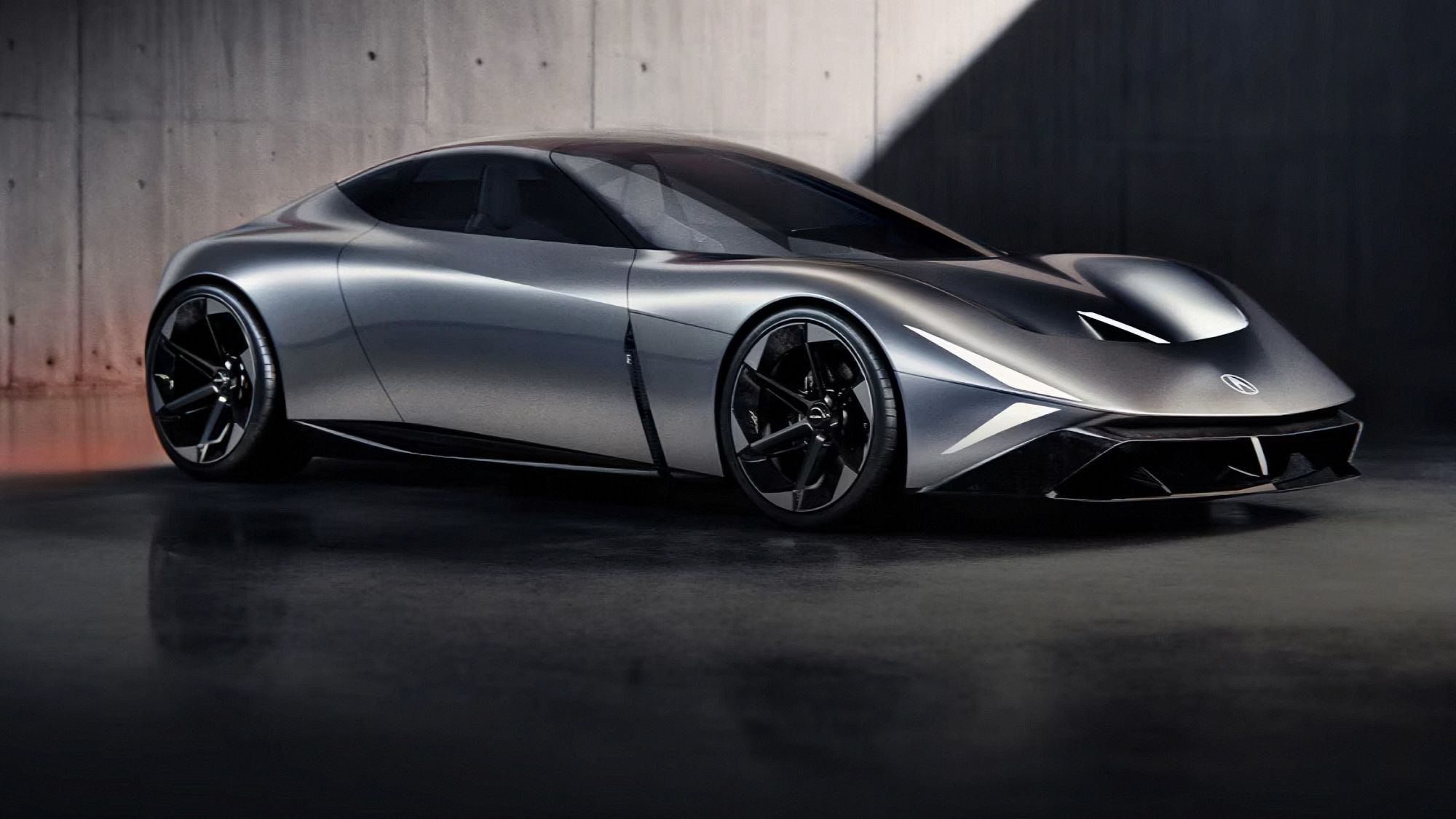
At the 2025 Japan Mobility Show in October, Mazda embraced its broader vision of sustainability by unveiling two vision models, the Vision X-Coupe, a plug-in hybrid, and the all-electric Vision X-Compact.
The Vision X-Coupe is interesting in its design, a four-door “crossover coupe,” and its plug-in hybrid system, which integrates a two-rotor rotary turbo engine with an electric motor and battery. With a maximum output of 510 PS (375 kW), the vehicle offers a driving range of 160 km (99 mi) in e-motor-only mode and up to 800 km (497 mi) when operating in combination with the rotary engine.
The vehicle contributes to CO2 reduction by combining a carbon-neutral fuel derived from microalgae with proprietary Mazda Mobile Carbon Capture technology. The two advances are part of a “future we want to aim for in 2035,” said Masahiro Moro, President and CEO of Mazda Motor Corp., after years of studying fuels and CO2 emissions.
The two innovations “represent just the beginning of our vision: a future where mobility plays a vital role in a recycling-oriented society…a future where we will contribute to a more sustainable world while continuing to bring the joy of driving to our customers,” added Moro.
Mazda’s capture technology integrates a collection system into the exhaust, enabling direct CO2 recovery from exhaust gases. The recovered CO2 can then be reused for promoting crop growth or creating high-performance carbon materials, contributing to a circular society Mazda envisions around 2035.
Kevin Jost contributed to this article.
-

- Mazda Vision X-Coupe front.
-

- Mazda Vision X-Coupe front side.
-

- Mazda Vision X-Coupe rear side.
-

- Mazda Vision X-Coupe interior.
-

- Mazda’s CO2 capture technology integrates a collection system into the exhaust.
-

- Mazda Vision X-Compact EV concept.
-

- The Mazda6e EV is available in Europe.
-

- A hybrid version of the Mazda CX-5 is coming for 2027.