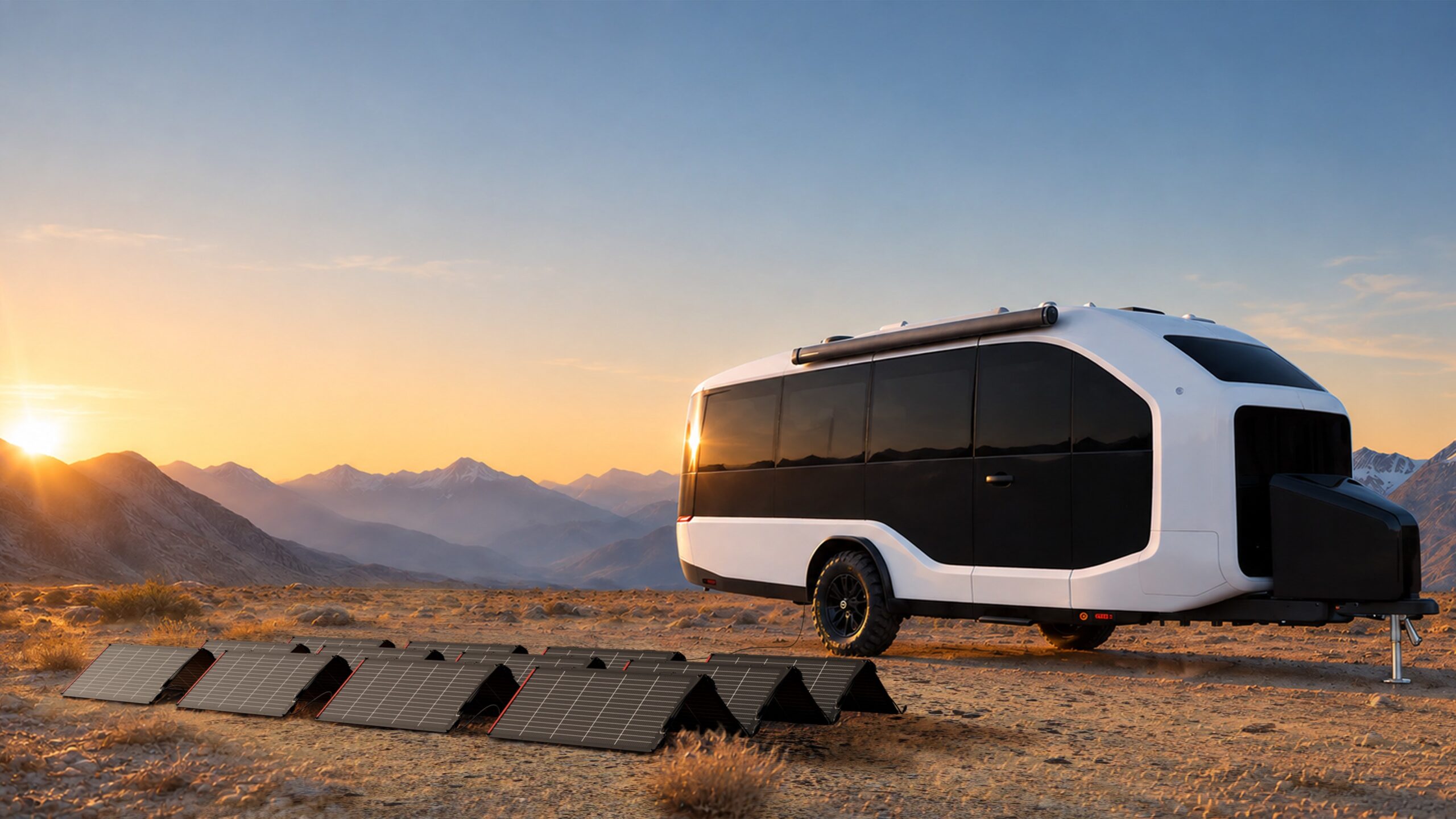
All-electric U.S. recreational vehicle (RV) startup Lightship announced today that it is scaling up to meet surging demand with a major expansion of its Colorado-based manufacturing facility alongside the launch of a new customization offering. The company began production of its first eRV, the AE.1, in August 2025.
The company will expand its existing 32,000-ft² facility by about 44,000 ft² to roughly 76,000 ft². Construction is already underway, with operations in the expanded space expected to begin this summer. The expansion will more than quadruple Lightship’s existing production capacity by the end of 2026 and support new local manufacturing jobs as production scales.
“At a time when many companies in this category are outsourcing their production and supply chain overseas, we’re doubling down on our commitment to American manufacturing, accelerating innovation and creating high-skill jobs in a region emerging as a hub for next-generation mobility,” said Toby Kraus, CEO and Co-founder of Lightship.
Lightship’s manufacturing approach is anchored in domestic sourcing and close supplier collaboration. Today, 80% of the component value of its AE.1 eRV is sourced within the U.S., which it says enables tighter quality control, faster product iteration, and greater insulation from global supply chain volatility. The expanded facility will enable the increasing of vertical integration, while expanding service and R&D capabilities to support future product development.
In addition to its manufacturing expansion, Lightship is introducing a streamlined configuration for its eRV, with an adjusted starting price of $157,500. The new approach centers on a single, configurable model, simplifying the lineup for customers. The 77-kW·h battery, roughly sixty times the size of an average trailer battery, and previously available only on the $184,000 top trim, is now standard across all AE.1 vehicles.
“More than ninety percent of our customers have chosen the 77-kW·h battery,” said Ben Parker, Co-founder and Chief Product Officer of Lightship. “This new lineup makes this popular feature more accessible. We are also adding options to give customers the flexibility to tailor the product for home backup, extended travel, short-term rental use, and full-time living. Because we are a direct-to-consumer brand that builds and sources in the U.S., we can incorporate real-world feedback into product improvements on a much shorter cycle.”
To help guide Lightship as it enters its next phase of growth and production scale, the company has appointed Tom vonReichbauer to its board of directors. He brings more than two decades of experience scaling complex, design-driven hardware and technology companies, including leadership roles at Tesla, Nest, Sunrun, Google, and Icon.
AE.1 highlights
Ground-breaking aerodynamic drag performance and TrekDrive propulsion are key features that make a Lightship’s AE.1 trailer unique in the industry.
The AE.1 is designed for “shape-shifting travel,” being aerodynamic on the road and expansive at camp. Dual Mode enables the trailer to convert between low-profile Road Mode, which minimizes the AE.1’s frontal area to increase range and towability, to Camp Mode, giving 7 ft of interior height and panoramic windows. The raise/lower functionality of the automated Canopy Lift System has undergone 1000+ tests for strength, durability, and reliability.
At the front of each Lightship sits the AeroHub, a functional element that shapes airflow to maximize aerodynamic efficiency and houses the most essential power systems together in one integrated space.
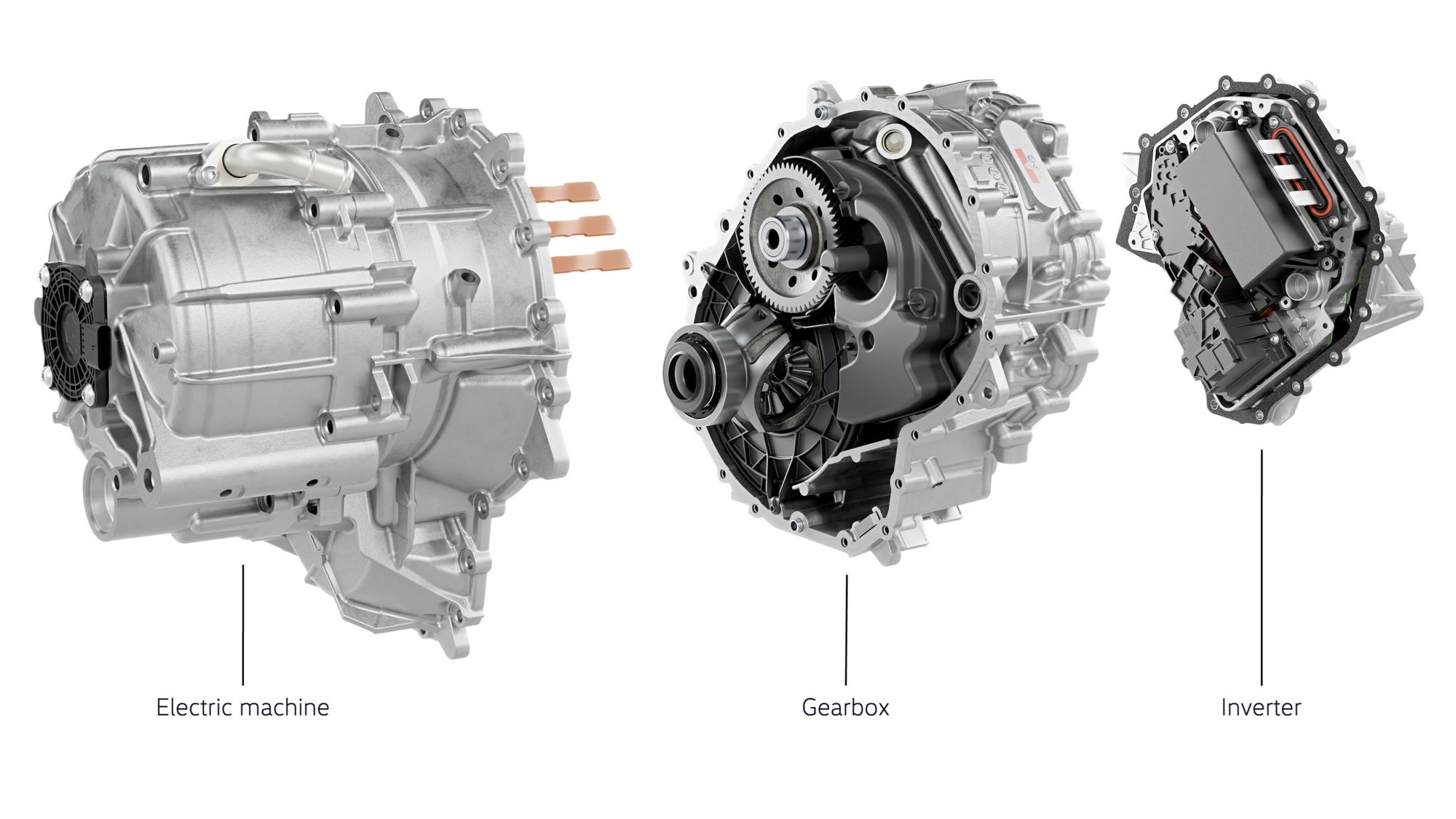
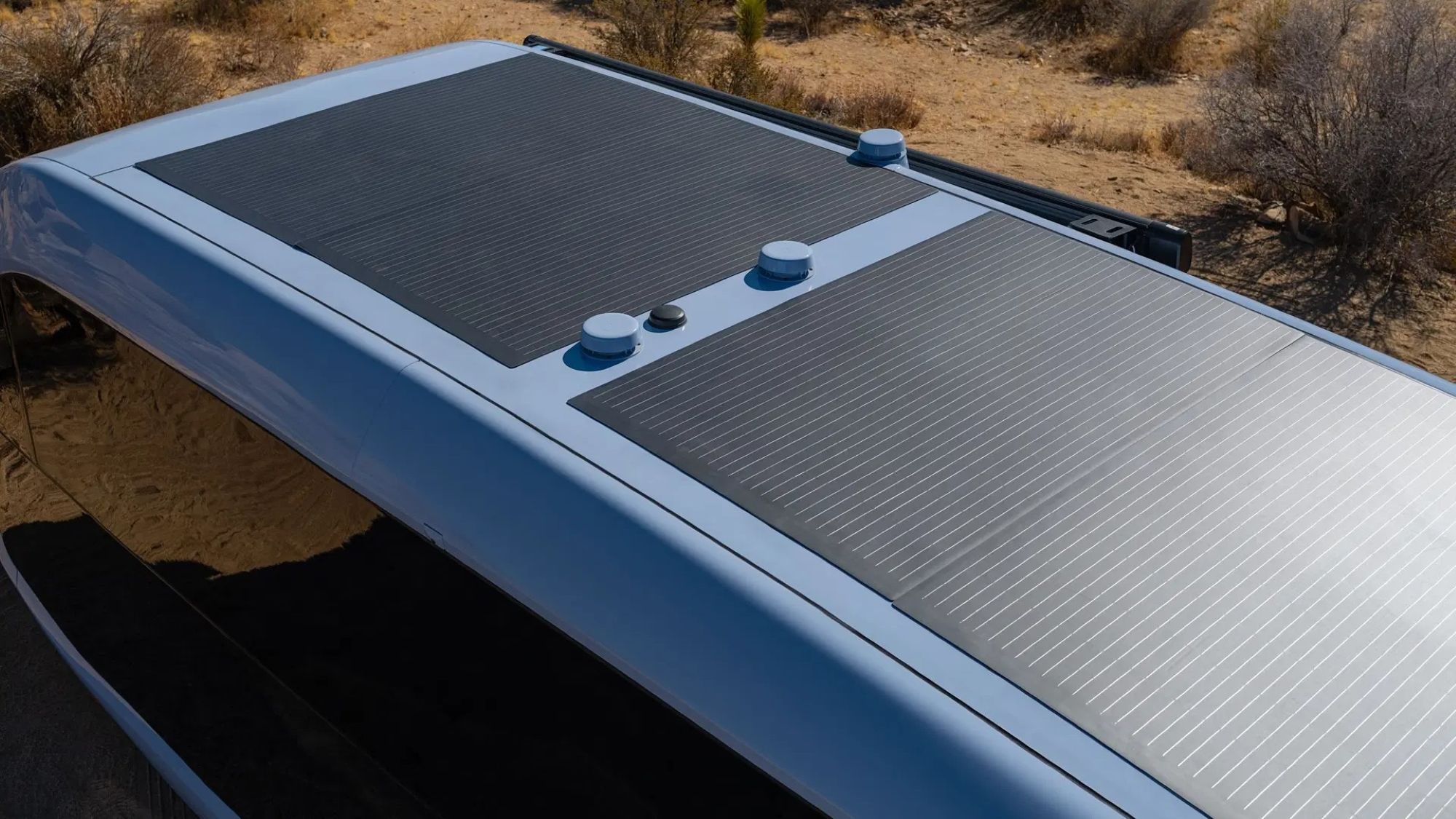
The TrekDrive powertrain provides torque for instant pull synced with the tow vehicle, reading the load and reacting in real time. Energy for propulsion and living comes from the 77 kW·h LFP (lithium iron phosphate) battery pack fed by up to 1.8 kW of integrated solar and NACS (North America Charging Standard) charging. Depending on available solar energy and appliance/HVAC usage, a family of four can camp off-grid comfortably for about a week, according to the company.
Every AE.1 comes standard with V2L (vehicle-to-load) technology to tap into stored energy to charge an EV, for instance. A V2H (vehicle-to-home) capability, for an integrated backup power source to support typical household loads, will become available in a future software update.
Lightship’s Atlas app can control all systems and provide real-time tracking of water and power. A back-up camera can help navigate tight spots right from the app. A built-in Starlink connection port enables users to stay connected even off the grid.
Testing range and feel
In December, Lightship product developers took the AE.1 out on a real-world loop in California to test it and its TrekDrive powertrain with electric trucks. They aimed to validate performance and capture quantitative results and qualitative “feel” observations that help refine the system.
The premise is that TrekDrive and aerodynamics should improve towing range. The proprietary electric propulsion system can contribute propulsion and manage energy intelligently on a drive, rather than asking the tow vehicle to do all the work, allowing the trailer to actively participate instead of the truck pulling the entire time. Lowering the canopy of the AE.1 to be in line with the tow vehicle creates a 300% reduction in the aerodynamic penalty of towing, especially helpful at highway speeds.
On their 196-mi (315-km) “Wine Country/Russian River” loop, with a Ford F-150 Lightning XLT “Flash” Extended Range 2024 model, testers wanted to demonstrate performance in rolling and mountainous terrain, where towing loads vary constantly. They aimed to show the potential to reach a destination that would otherwise be “out of bounds” for many EV truck owners towing conventional trailers—and without turning the day into a charging scavenger hunt.
A common benchmark for the Lightning Extended Range when towing a large, conventional travel trailer is about 90 mi (145 mi) of range. The state-of-charge on departure was 100% for the truck and 96% for the trailer, and on return, 29% for both. Measured energy consumed over the loop was 93 kW·h for the truck and 47 kW·h for the trailer.
Truck efficiency while towing was 2.11 mi/kW·h. For context, the same truck towing a larger conventional trailer might see something closer to 0.69 mi/kW·h (directionally), which is why EV towing often feels range-constrained. The AE.1’s contribution of 47 kW·h represented real propulsion and/or energy support that the tow vehicle didn’t have to provide. System-level efficiency was 1.40 mi/kW·h.
In addition to extending practical towing range, TrekDrive demonstrated the smoothing of performance across terrain changes. A passive trailer just follows and drags, while a powered trailer can actively participate, which helps the rig feel more composed and less strained—especially in the transitions.
-

- Lightship AE.1 in its element.
-

- Lightship AE.1 at start of production.
-

- Lightship AE.1 in warehouse expansion space.
-

- Lightship AE.1 exterior in Moab.
-

- Lightship AE.1 in Camp Mode.
-

- Lightship AE.1 Interior lounge.
-

- Lightship AE.1 interior.
-

- Lightship AE.1 Atlas tablet control system.
-

- Lightship AE.1 TrekDrive power system.
-

- Lightship AE.1 range testing in lower Road Mode with a Ford Lightning.