San Francisco-based startup Humble Robotics today announced its emergence from stealth with a fully autonomous, cab-less, electric hauler designed for cost-efficient freight transportation. The Hauler is a new take on the classic tractor-trailer combo, designed from the ground up with modern technology. Its universal platform adapts to different cargo types and logistics environments, like warehouses, railyards, and seaports, with the first vehicle built to move shipping containers.
The company’s team is leveraging the most exciting advances in physical AI to add capacity and improve margins on even the most difficult routes. By removing the cab, the Hauler is significantly lighter than a traditional Class 8 tractor-trailer and is said to enable a breadth of new logistics use cases.
“I have dedicated my career to building electric and autonomous vehicle technology,” said Eyal Cohen, Humble’s Founder and CEO. “For the first time, freight can be fully automated all the way to the loading dock. We are making freight sustainable, safe, and efficient in a way no one thought was possible. And we’re doing it with an exceptional team of industry veterans and AV experts. Our first vehicle was completed in just six months.”
In a LinkedIn post, Cohen went a little deeper into his motivation for the segment.
“Freight has always been near and dear to me,” said Cohen. “My grandfather created the first overland mail route from Iraq to Haifa almost 100 years ago.”
The company’s purpose-built vehicle’s clean-sheet design takes “everything we have learned about trucking, electrification, autonomous driving, and uses it to rethink freight from the ground up,” he added. “How do we get the lowest possible cost of moving freight? We remove the cab. How do we connect the semi-truck to trailers, a tedious task handled by drivers? Let’s simply combine them into the same vehicle. How do we make it reliable and resistant to oil shocks? Leverage electric powertrains.”
He says that Humble’s “entirely new approach to moving freight” is focused on the lowest possible cost per mile.
“This comes just at the right time, as the trucking industry faces tight freight capacity, challenging labor markets, and volatile fuel prices,” said Cohen.
The company is trying to take a bite of the truck-based freight market that, in just the U.S., represents a $906 billion industry, according to the American Trucking Associations. Despite frequent driver shortages and supply-chain fragmentation that plague even the most established shippers and logistics providers, autonomous trucking has yet to make meaningful commercial headway, says Humble execs. They add that their solution removes the last few obstacles to affordable, efficient AV freight movement, with the first Class 8 solution that can unload directly at the dock.
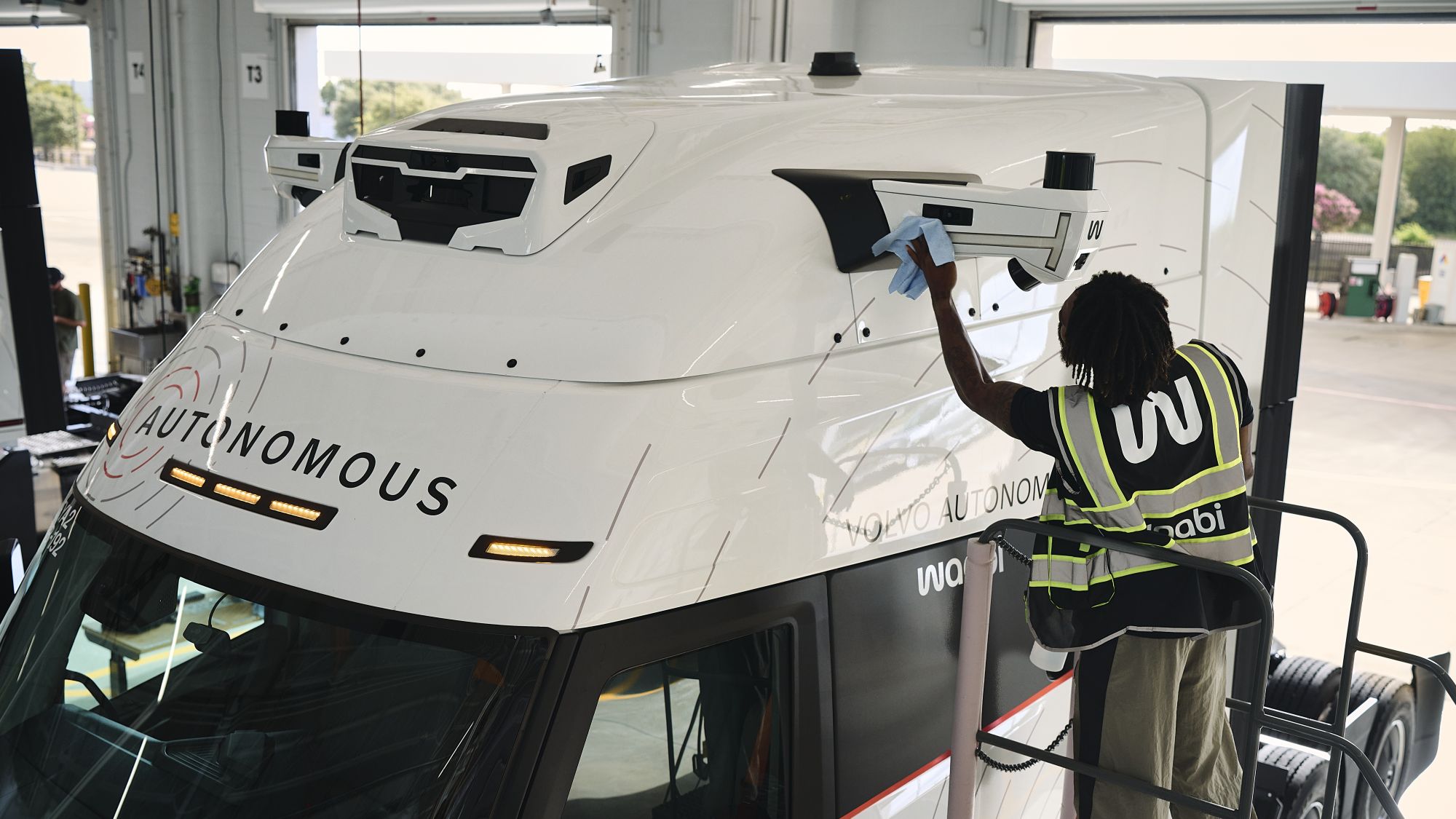
Cohen, a two-time entrepreneur whose career has spanned autonomous driving, electric vehicles, and logistics at companies like Apple, Uber, and Waabi, assembled Humble’s founding team from a roster of talent from Tesla, Waymo, and Cruise that have driven major advances in physical AI. This includes Humble Head of Robotics and AI Drew Gray, who led Autopilot at Tesla in its earliest days, scaled engineering at Cruise, and helped build autonomy programs across Otto, Uber, and Voyage.
“The thing I’ve always wanted, the entire reason I became an engineer, is to build a general physical intelligence—something that can reason, act, and move through the world capably and safely,” wrote Gray, on LinkedIn. “At Humble Robotics, we’re building an electric autonomous platform from the ground up, an embodiment for our foundation model, purpose-built to move through the world and do real work.”
As it emerged from stealth, the company also revealed it has raised $24 million in seed funding, led by Eclipse with additional participation by Energy Impact Partners, RedBlue Capital, and others. Among the impressive cast of investors and partners that Cohen singled out are Jiten Behl, Seth Winterroth, and Lior Susan at Eclipse; Anil Achyuta and Michael Campos with Energy Impact Partners; and Olaf Sakkers and Elisha Jacobs at RedBlue Capital.
The funding will support continued development of next-generation vehicles, expand its autonomy stack, launch initial pilot deployments, and enable early manufacturing as the company works toward initial deployment on public roads.
“Humble is operating at an unprecedented pace,” said Behl, Partner at Eclipse and a Humble board member. “They understand that autonomous trucking isn’t just a software problem—it requires a full-stack rethink across hardware, AI, and electrification. That integration is what unlocks speed to scale and a step-change reduction in the cost of moving freight.”
Instead of retrofitting existing trucks, the company is building a purpose-built system powered by VLA (vision-language-action) models that allow it to adapt to complex, dynamic environments. The models allow reasoning about the world and take the right action even in scenarios its vehicle has never experienced, dramatically improving safety and time-to-market.
The company says its approach enables higher payload efficiency, its cabless design increasing usable capacity vs. traditional Class 8 trucks; true end-to-end automation designed for dock-to-dock freight movement without human intervention; and lower cost and greater reliability, its electric architecture reducing fuel and maintenance volatility while enabling continuous operation.
The fully autonomous, cab-less vehicle is said to weigh 20% less than a traditional day cab and chassis, and as a bonus, is towable with any Class 8 tractor.
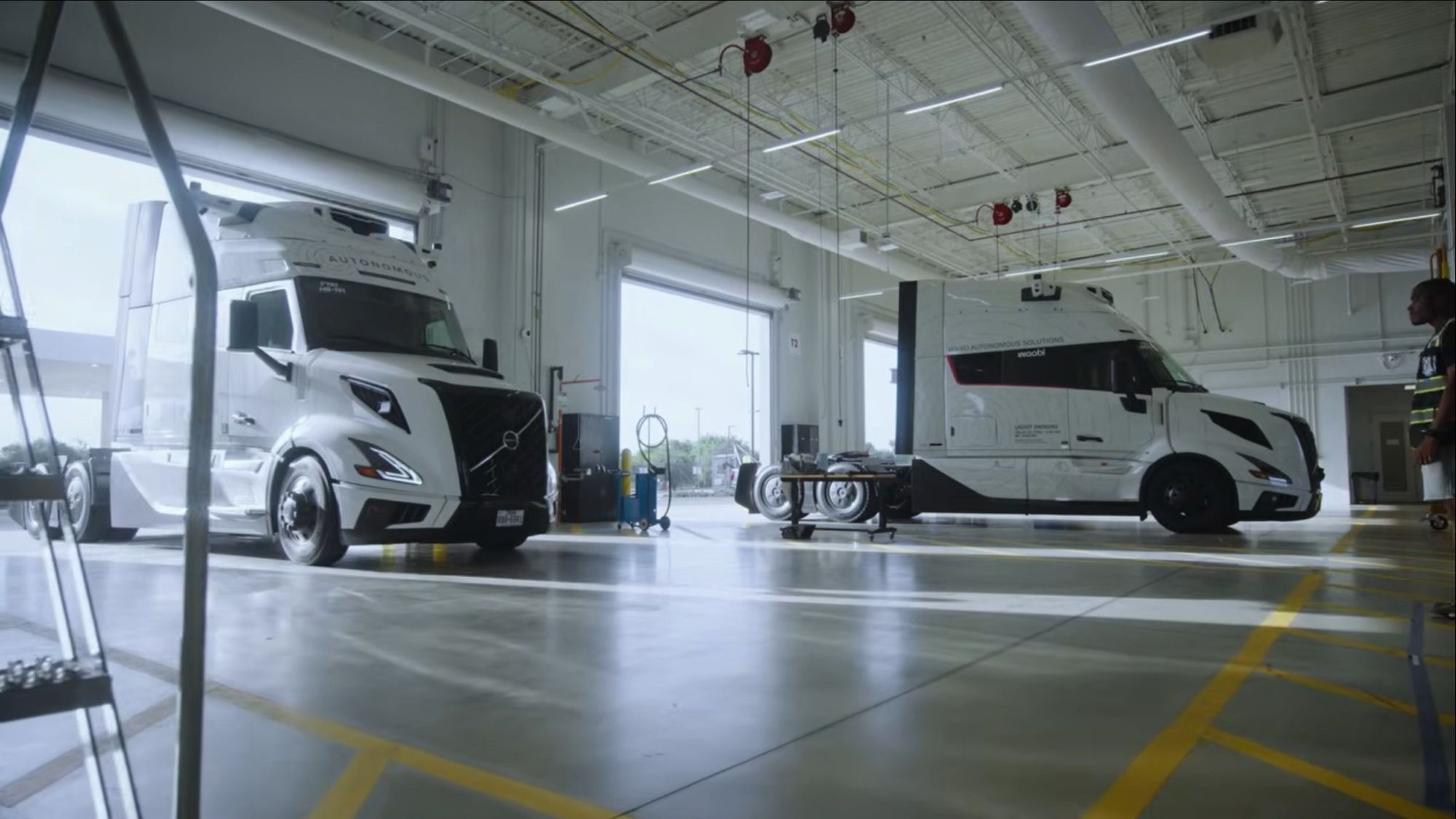
Multiple safety fallbacks are built into the “vision-first” autonomy system, including proprietary guardrails designed to manage risk in dynamic commercial environments. The vehicle’s design allows for 360° coverage of its surroundings with L4-capable, cost-effective pods housing camera, lidar, and radar sensors, which allows for “true” dock-to-dock operation.
Humble says that the Hauler’s all-electric powertrain protects it from volatile fuel costs and an increased maintenance burden while helping meet sustainability targets. Its low-maintenance e-axle powertrain provides a 200-mi (322-km) range and 55-mph (89-km/h) cruising speed.
Humble says it is already partnering with market leaders in logistics and supply chain to begin autonomous testing and commercialization pilots. As the partners expand their fleets, the company will meet the needs of a broader customer base with flexible vehicle configurations tailored to several industrial use cases.
-

- Humble Hauler at a dock.
-

- Humble Hauler parked at a dock.
-

- Humble Haulers leave shipping container facility.
-

- Humble Haulers lined up for shipping containers.
-

- Founder and CEO Eyal Cohen with Humble team.
-

- Humble Hauler in the forest.
-

- Humble Hauler 360-degree sensing.
-

- Humble Hauler is being engineered for lowest per-mile cost.
-

- Humble Hauler’s e-axle powertrain.
-

- Humble Hauler enables greater hauling capacity.