At the 2026 Auto China/Beijing Auto Show earlier this week, Geely Auto Group showcased its full technology ecosystem, aiming to illustrate its entry into the “Full-Domain AI 2.0” era and affirm the group’s leading position as a global automotive enterprise driven by intelligent technologies. Among the key technologies on display were AI-embodied bipedal robots, a 900-V electric architecture, 12C ultra-fast charging technology, solid-state batteries, intelligent cockpits, and future intelligent assisted driving solutions designed for mobility services.
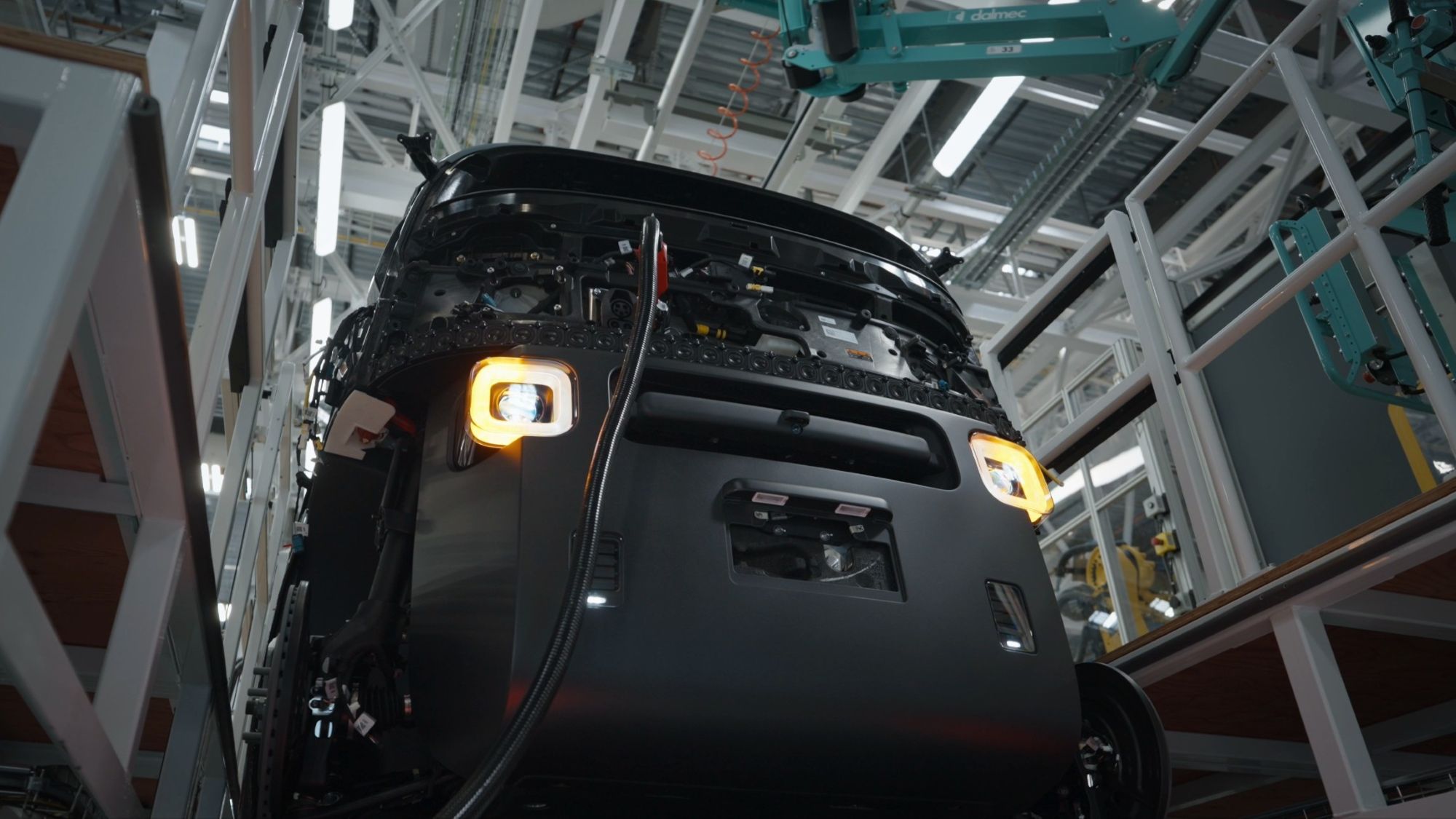
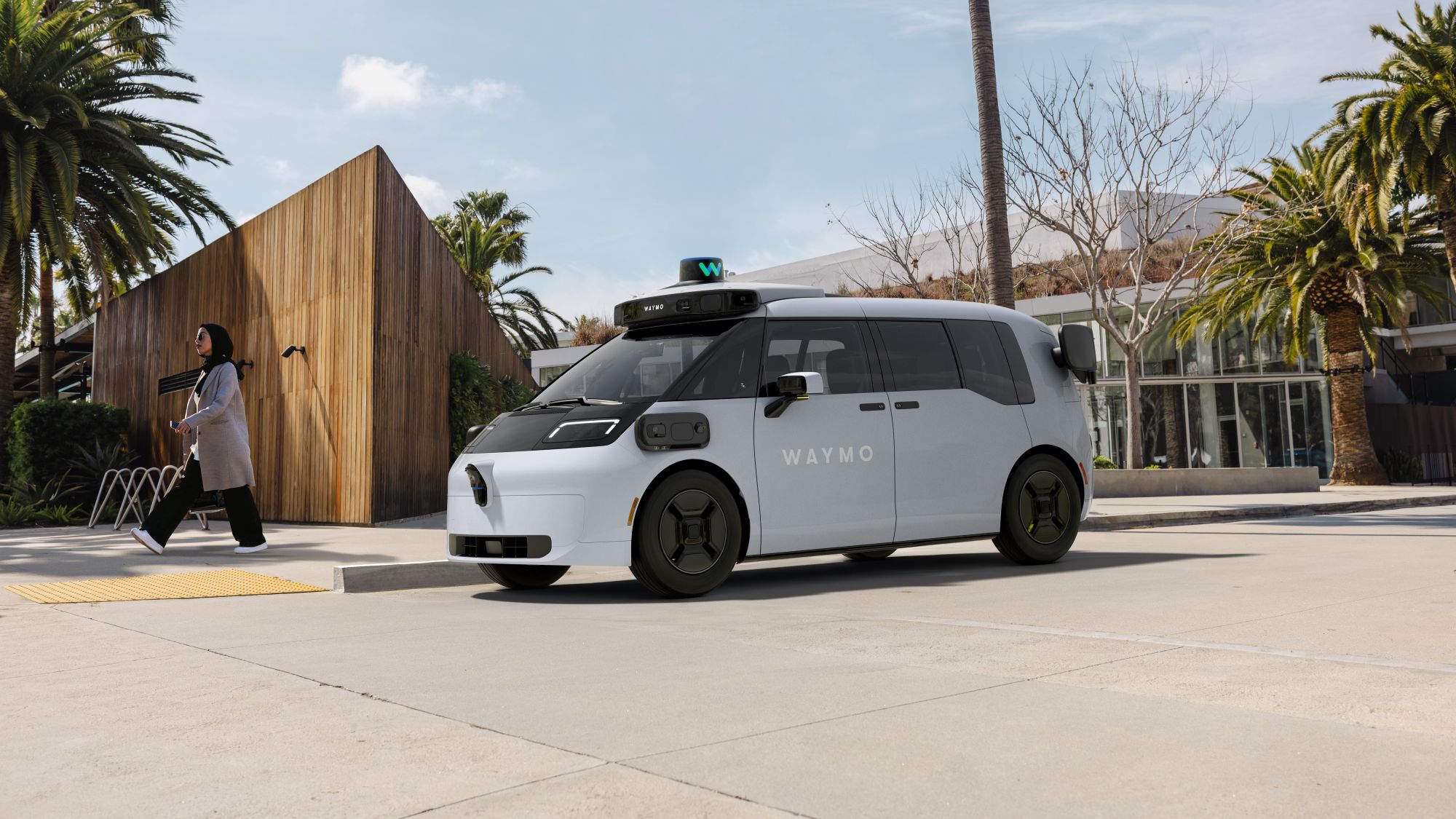
On the opening day, it unveiled China’s first purpose-built robotaxi prototype with the help from automated driving partner Afari Technology and Geely ride-hailing subsidiary CaoCao Mobility—and the humanoid robot. The company says that the Eva Cab debut served as a demonstration of the future of new energy mobility through “embodied intelligence.” As a cutting-edge technological demonstrator of the Full-Domain AI 2.0 framework, the robotaxi prototype is designed to lead the way in defining the future mobility experience across four key dimensions: design, hardware, software, and ecosystem integration.
“One of Geely’s core principles has always been a commitment to openness and collaboration, striving to build partnerships that create shared value,” said Victor Yang, Senior Vice President of Geely Holding Group. “It is this philosophy that has taken us from our origins in China to the world stage. By bringing our global partners into direct contact with our Full-Domain AI 2.0 ecosystem, we are aligning our worldwide network around a shared vision of intelligent mobility, one where shared technological foundations empower distinct brand identities and create lasting success for every partner.”
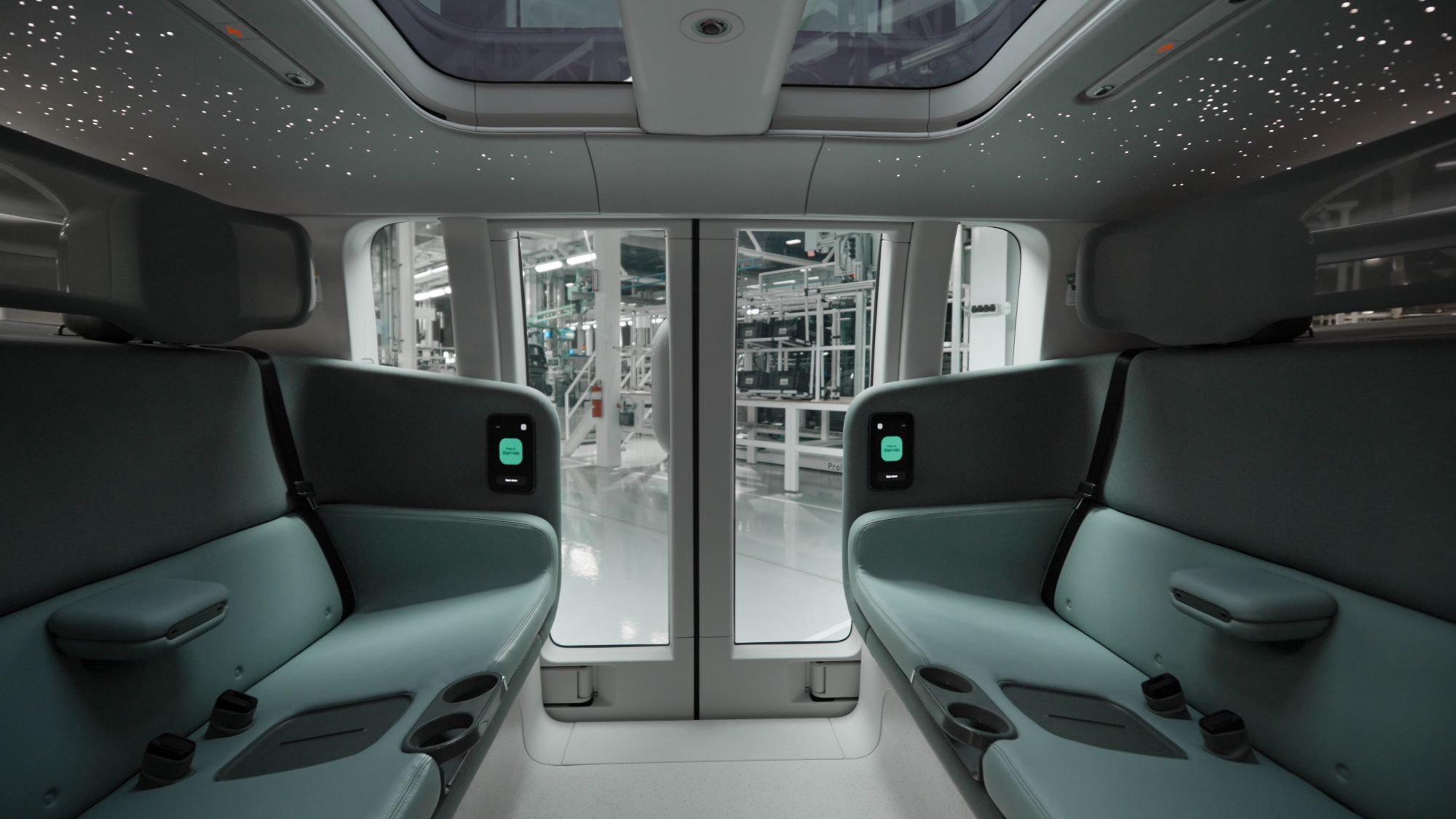
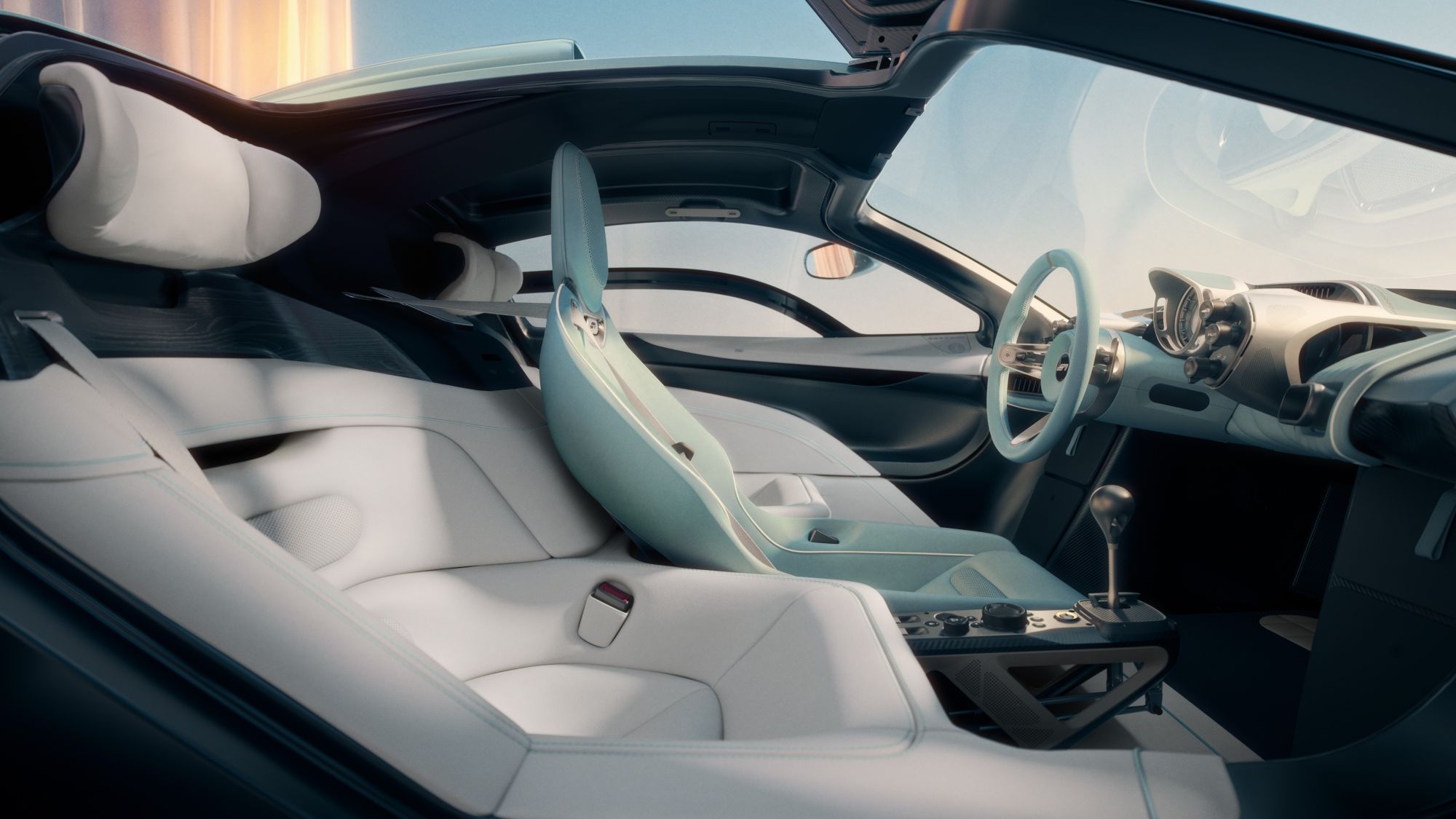
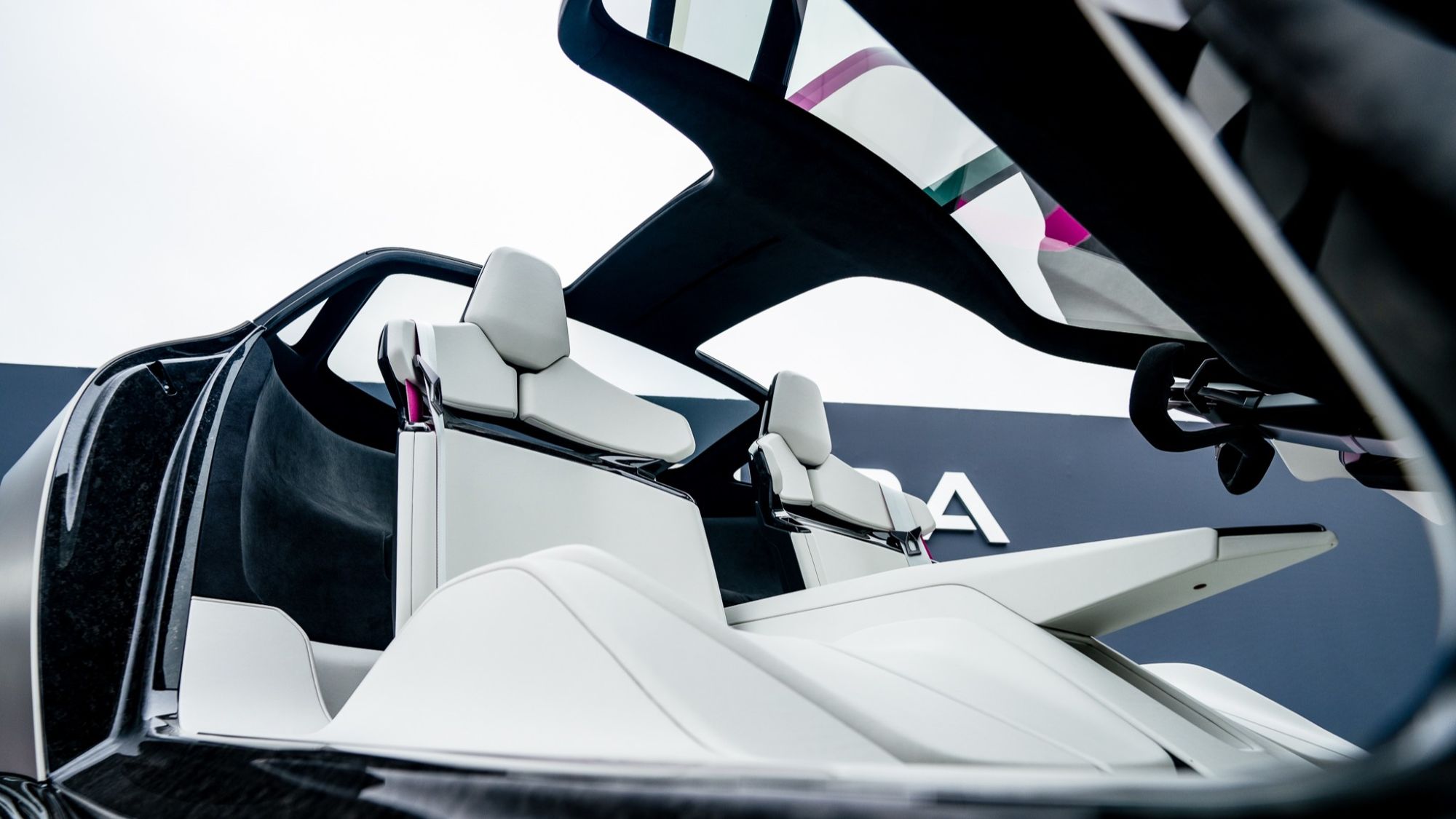
The robotaxi features wide-opening electric sliding doors paired with a face-to-face cabin layout that blends sophisticated aesthetics with maximized interior space. Inside, the Galaxy Skyroof ceiling, Drifting Galaxy door panels, and Orchid Pavilion and Meandering Streams armrests are meant to infuse the concept with a sense of warmth and human connection.
Among the Eva Cab’s industry-leading Geely-developed technologies are a “world-first” “quantum-level AI electrical/electronic architecture,” world-first 2160-line digital lidar system, and industry-first mass-production-ready L4-assisted driving software solution.
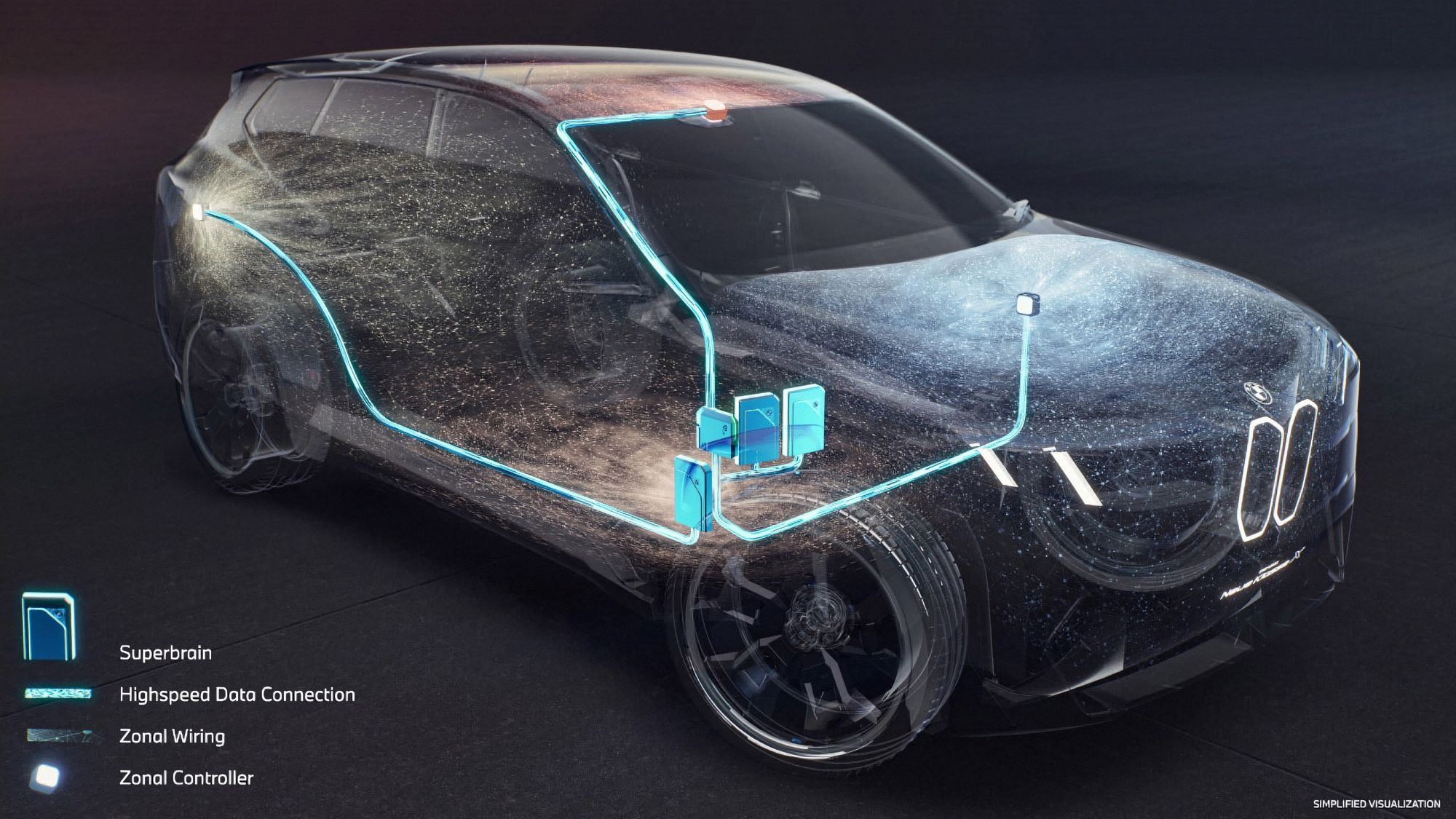
The EEA (electrical/electronic architecture) 4.0 establishes end-to-end, quantum-grade security protection across both vehicle and cloud platforms, covering a range of high-frequency application scenarios such as Bluetooth keys, remote vehicle control, OTA updates, and data privacy. The vehicle also features the industry-first SOVD (service-oriented vehicle-cloud integrated diagnostics) to create a proactive protection system for users that spans the vehicle’s lifecycle. With it, Geely says it will become the first global automaker to obtain the ISO 8800 AI safety certification.
Geely says the Eva Cab is equipped with the industry’s most powerful in-vehicle computing platform. It integrates three flagship chips—the Nvidia SuperChip, Nvidia Thor U, and Qualcomm Snapdragon 8397—that deliver combined computing power exceeding 3000 TOPS (tera operations per second). The combination boosts the parameter count 7x and inference frame rate 3x for its WAM (World Action Model) engineered for cross-domain collaboration. It is said to be more than sufficient to meet the computational demands of Level 4 autonomous driving and extreme driving scenarios, according to the company.
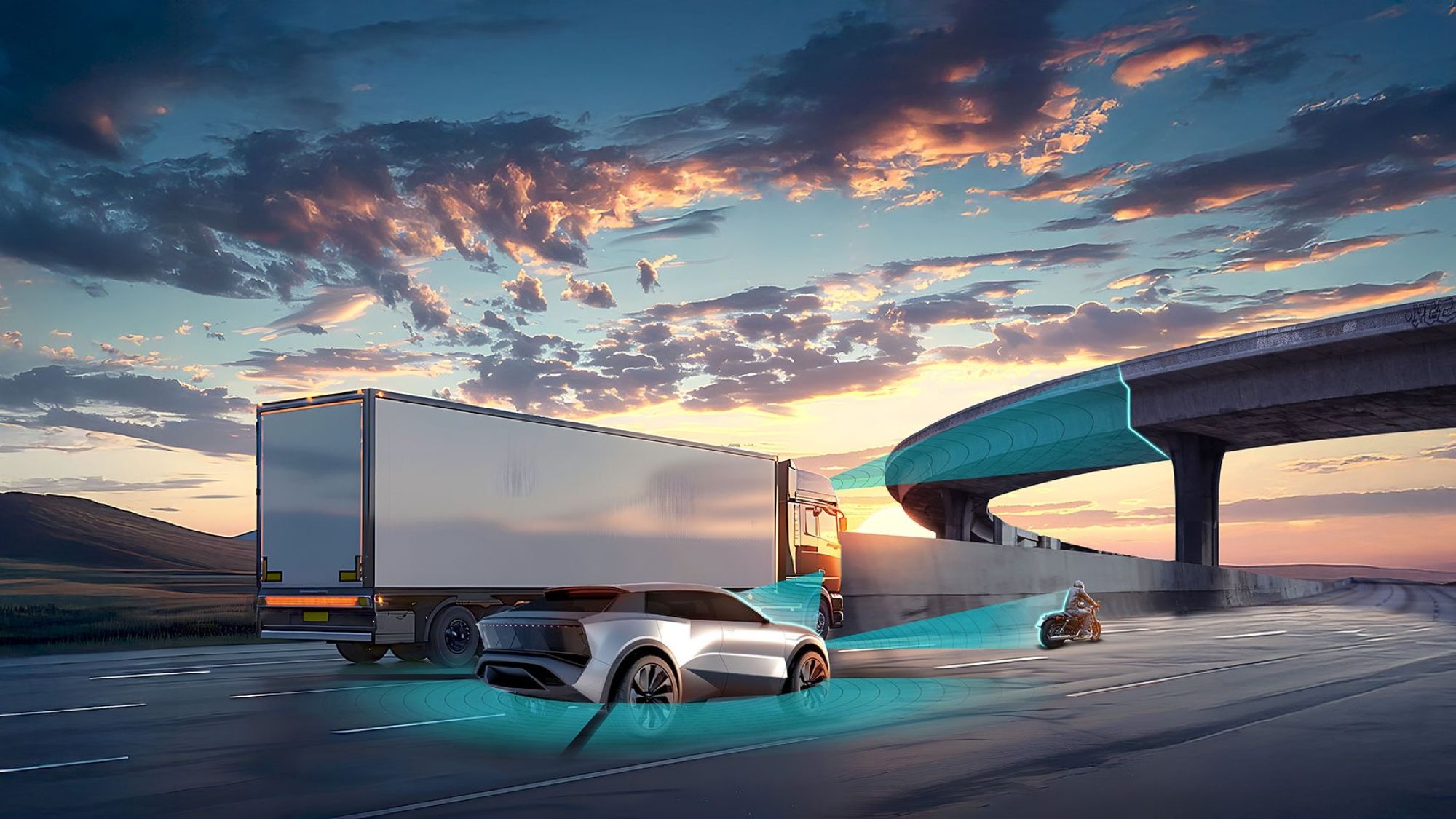
The 2160-line digital lidar system boasts ultra-high imaging capabilities of 25.92 million points per second and a detection range extending up to 600 m (1970 ft). The Geely-Afari Smart Driving (G-ASD) Level 4 assisted driving software solution is said to enable fully unmanned shuttle services on open public roads.
Moving forward, the company will continue to validate the reliability and practicality of its robotaxi in real-world road environments, while integrating it into its “Space-Ground” intelligent technology ecosystem to achieve the group’s vision for future mobility characterized by “zero wait, zero congestion, and zero accidents.”
Geely Auto Group pioneered research into foundational large models as early as 2021 when it launched the Xingrui AI Large Model—what it says is the world’s first full-stack, independently developed, full-scenario AI large model for the automotive industry. That same year saw the official launch of the Smart Geely 2025 strategy.
Through five years of intensively building AI infrastructure, the OEM has constructed an intelligent technology ecosystem empowered by full-domain AI. Geely says its Xingrui Intelligent Computing Center—the automotive industry’s first integrated cloud-data-AI supercomputing center, established by Geely in 2022—now boasts a comprehensive computing power of 23.5 EFLOPS, ranking it first among all Chinese automakers.
In 2025, Geely Auto Group unveiled what it says is the automotive industry’s first comprehensive “full-domain AI” technology system by securing the world’s most comprehensive vertical integration capabilities in AI and applying AI extensively across every aspect of its vehicles. The company rapidly introduced breakthroughs such as the Xingrui AI Cloud Power, AI Digital Chassis, and AI Intelligent Architecture. It partnered with StepFun, Geespace, SiEngine, Xingji Meizu, in addition to Afari Technology to establish an open AI ecosystem.
At CES 2026, Geely unveiled its WAM for cross-domain collaboration across the entire vehicle that it says is the first automotive intelligence endowed with a continuously evolving “worldview” and “judgment capability.” Acting as the “vehicle brain,” WAM manages two core intelligent agents—the Smart Egg Cockpit and G-ASD 4.0 ADAS (advanced driver assistance system)—while coordinating numerous sub-domain agents covering areas such as chassis, powertrain, and body control.
Building upon the WAM architecture, Super Eva serves as the vehicle’s central intelligence hub endowed with memory and inferential capabilities. It is integrated with underlying systems such as intelligent driving, chassis control, and powertrain management.
The G-ASD 4.0 represents the latest iteration of Geely’s ADAS, integrating Super Eva and the Step 3.5 large language model. This has resulted in what the company says is a quantum leap in assisted driving capabilities, pioneering China’s first “integrated cockpit-smart driving” intelligent vehicle experience and creating a new mobility experience “where dialogue translates directly into action.”
The Eva Cab features the deep integration and continuous evolution capabilities of both Super Eva and G-ASD. In the future, the company says it will evolve into a true “mobility bot”—one capable of perceiving, thinking, making decisions, and executing actions.
Geely Auto Group is scheduled to launch a CaoCao Mobility-customized edition of the Eva Cab in 2027 to accelerate the large-scale deployment and commercialization of robotaxi services. In the robotaxi sector, the OEM has already conducted pilot operations for over a year in cities such as Hangzhou and Suzhou.
-

- Geely Eva Cab from above.
-

- Geely Eva Cab robotaxi with humanoid.
-

- Geely Eva Cab reveal at Auto China 2026.
-

- Geely Eva Cab.
-

- Geely Eva Cab rear side.
-

- Geely Eva Cab user interfaces.