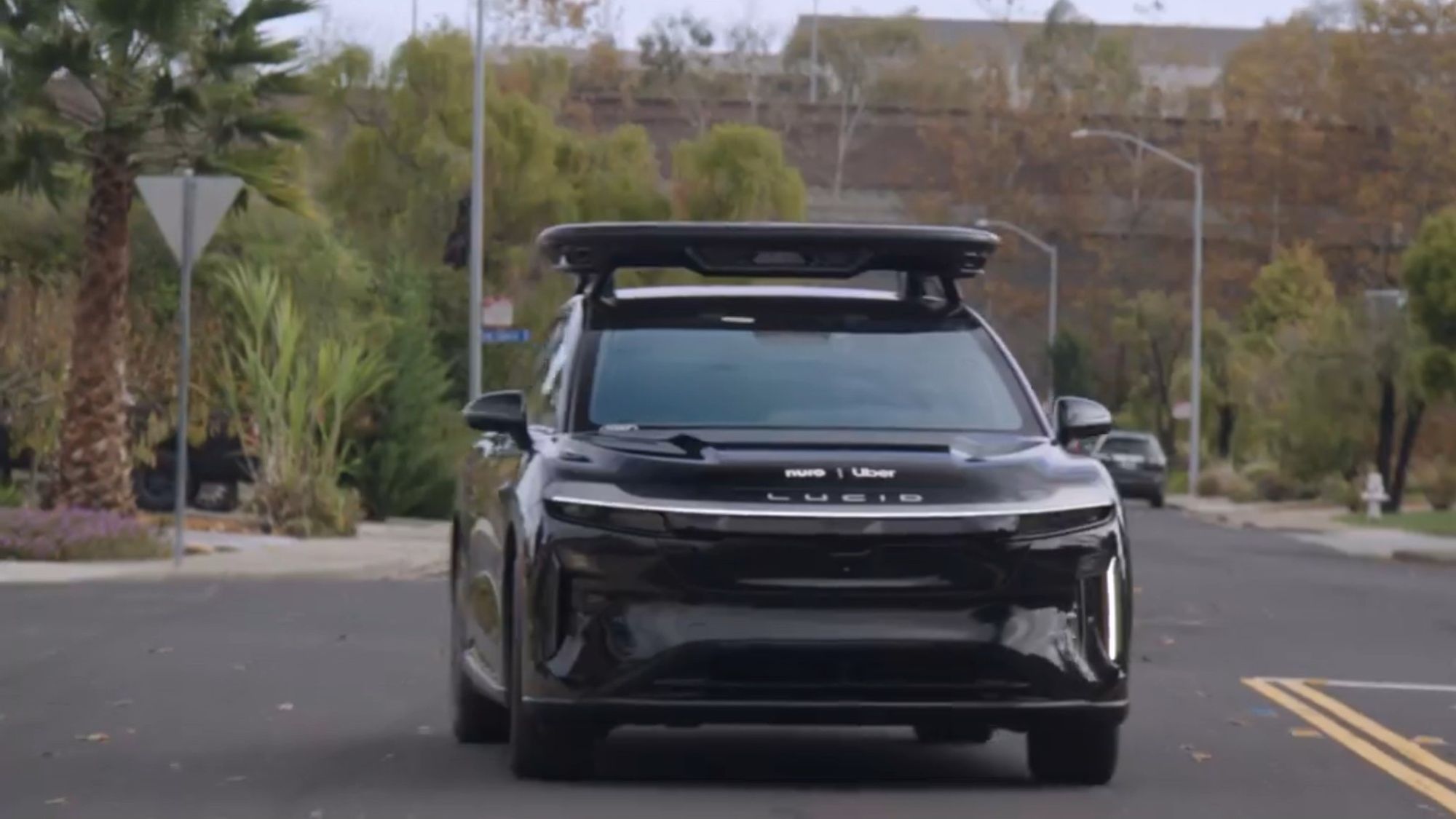
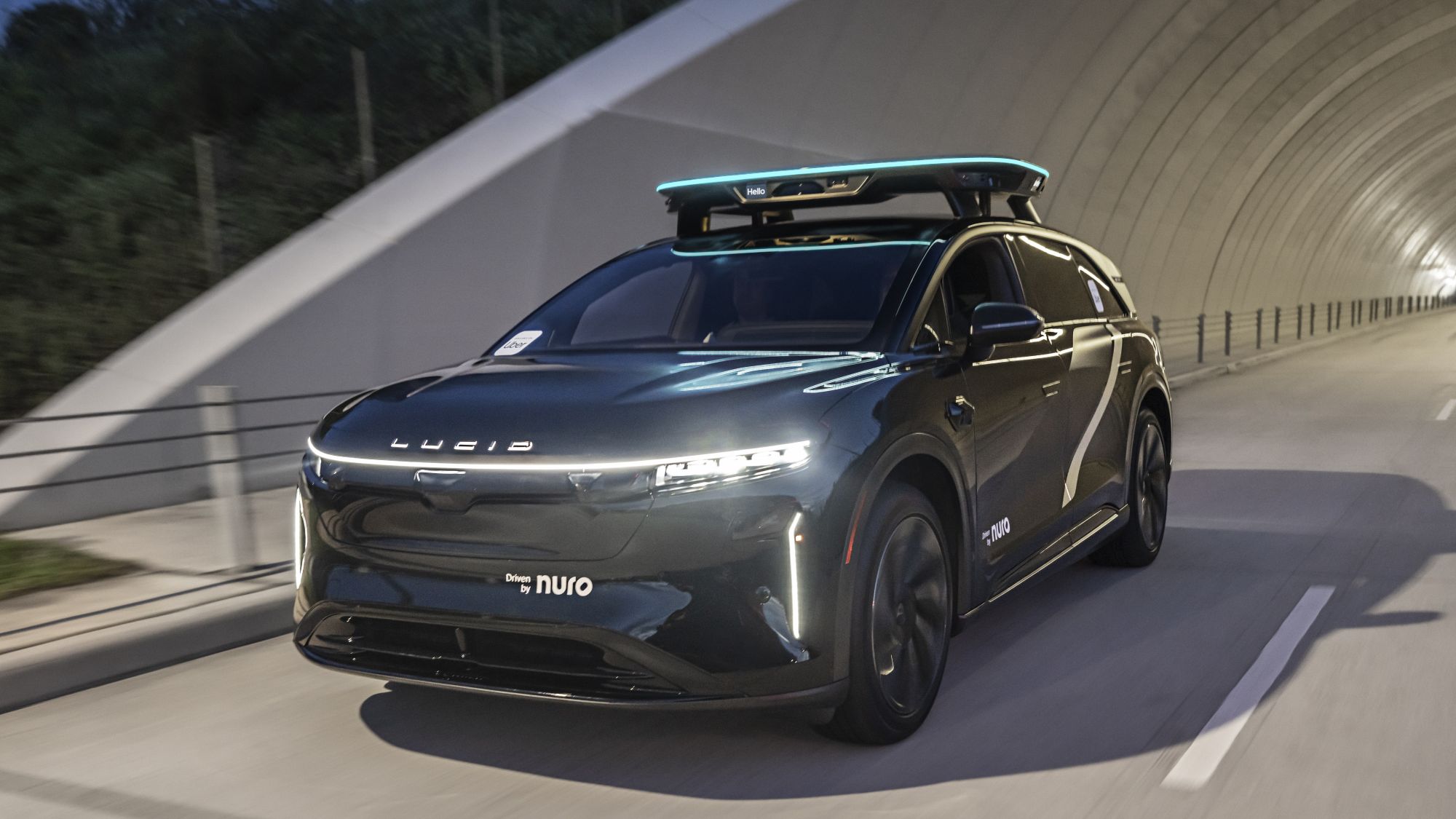
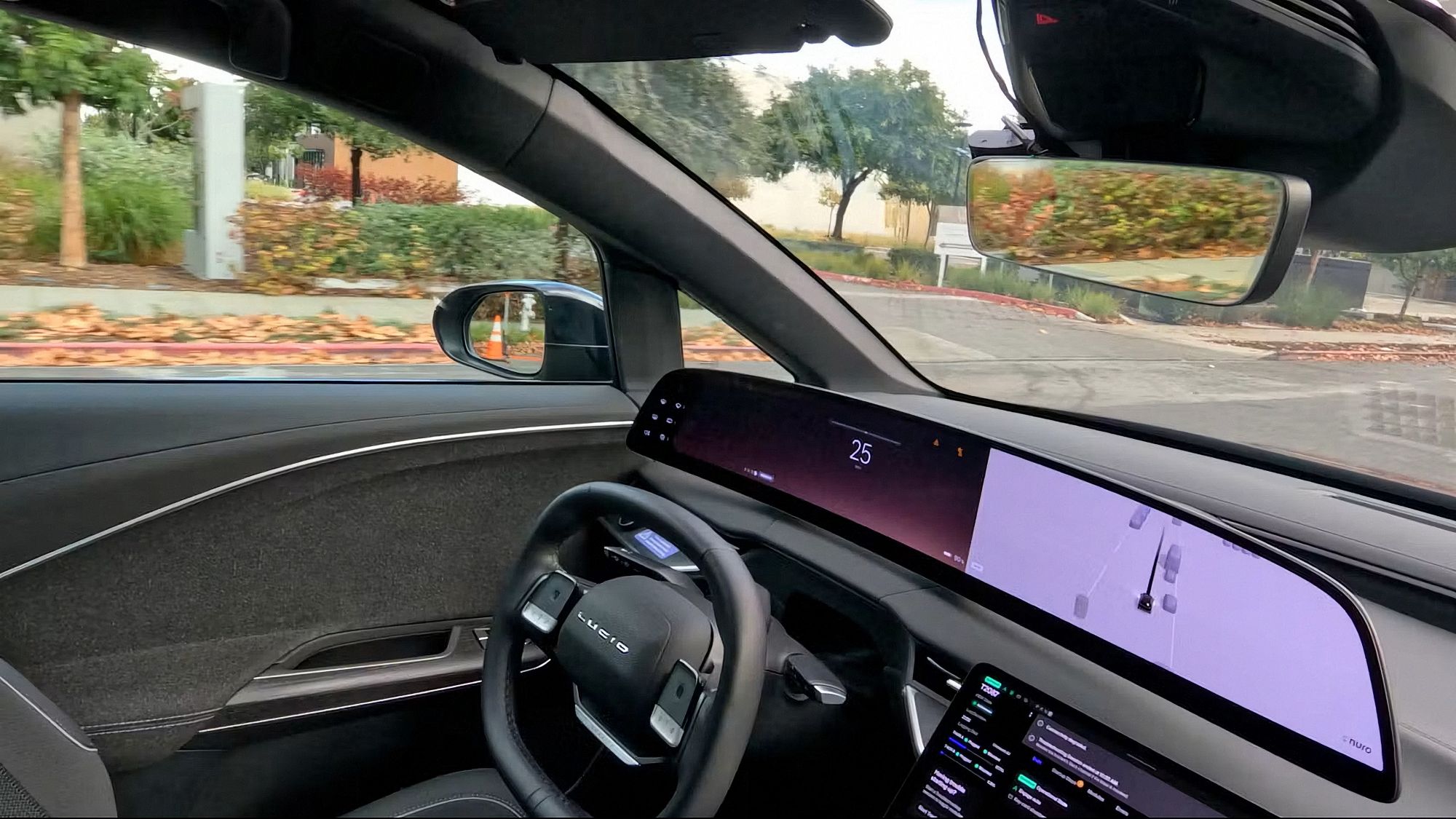
Nuro, Inc., the Silicon Valley-based physical AI company and developer of SAE Level 4 autonomous driving technology, along with EV maker Lucid Group, Inc. and ride-hailing giant Uber Technologies, Inc., have announced the start of fully driverless testing of the Lucid Gravity robotaxi on public roads across the San Francisco Bay Area.
The announcement comes after eleven months of supervised autonomous testing in the Bay Area and Houston, which included safety drivers. Nuro said its successful supervised testing has prepared its Nuro Driver software platform to support fully driverless on-road testing, with no in-vehicle safety driver present. Supervised robotaxi testing similar to Nuro’s has been conducted in the Bay Area in recent months by Waymo, Zoox, and Tesla.
The companies also announced that employee rides in driverless vehicles will begin soon, with a public launch of the robotaxi service in the San Francisco Bay Area in Q1 2027.
“Driverless isn’t new to us, but this marks an exciting first: bringing that experience to a passenger vehicle as we take the next step toward launching our next-generation robotaxi program,” said Tilo Schwarz, Vice President of Engineering and Head of Nuro Driver at Nuro. “It’s a defining milestone, backed by millions of scenarios of rigorous testing and validation, and brings us closer to making safe, sustainable, and scalable autonomous transportation a reality around the world.”
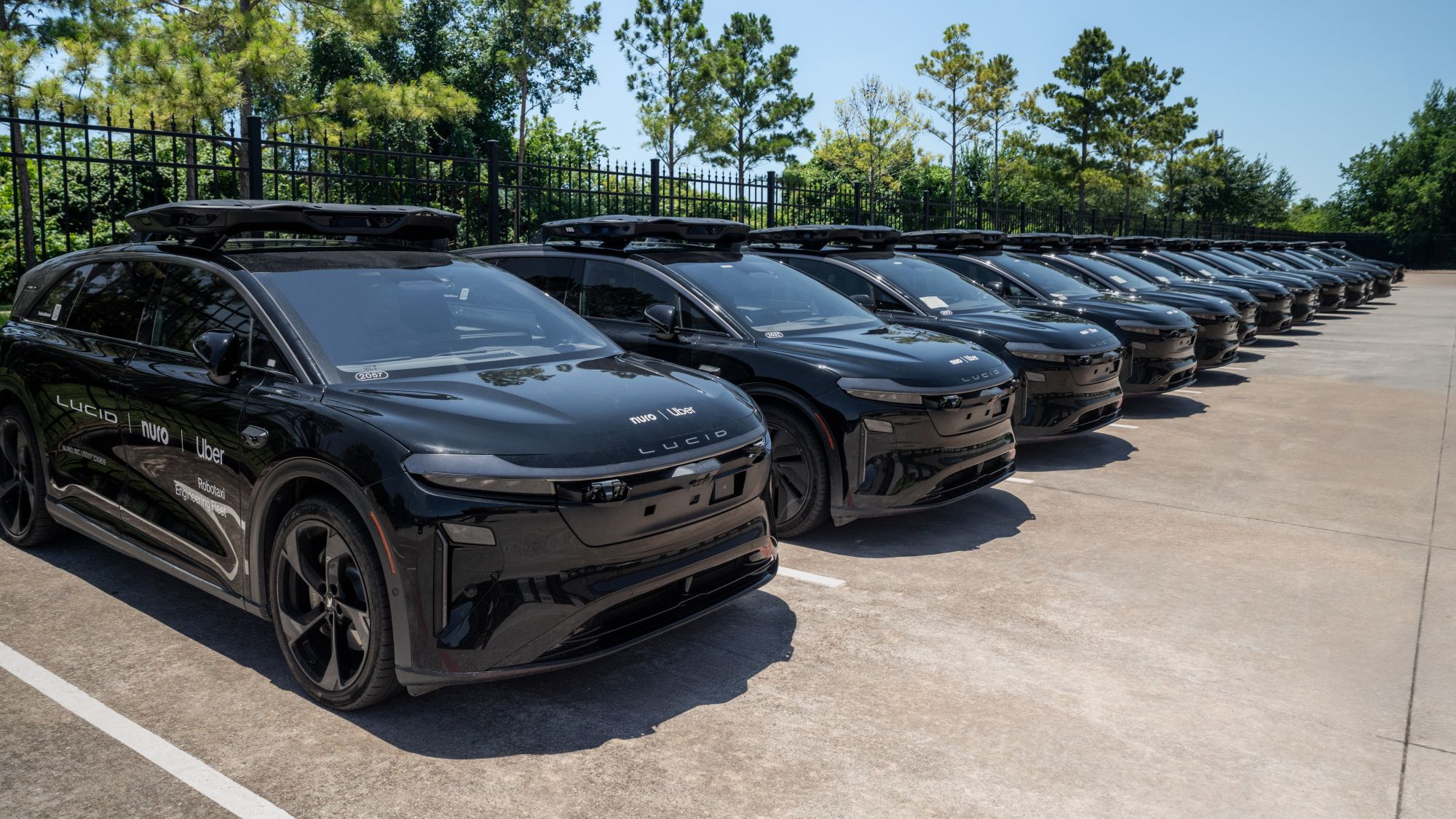
To support the next phase of testing, Lucid has delivered a fleet of more than 100 Gravity SUVs featuring hardware, software, and rider-experience updates, bringing the robotaxi closer to commercial readiness.
“This milestone reflects the strength of Lucid’s software-defined vehicles, our manufacturing velocity, and the close collaboration among all three partners,” said Kay Stepper, President of Lucid Technologies and Chief Digital Officer at Lucid. “Together with Nuro and Uber, we are moving at a pace rarely seen in autonomous mobility and look forward to bringing a premium robotaxi experience to riders in the months ahead.”
Four Silicon Valley locations have been chosen for the initial round of driverless on-road testing: Palo Alto, Mountain View, Los Altos, and Sunnyvale. Additional testing will take place in other Bay Area cities next year.
“Removing the safety operator from behind the wheel is an important milestone in our partnership with Nuro and Lucid, and a testament to all three partners’ focus on executing against our shared roadmap,” said Samarth Kejriwal, Global Head of Autonomous Mobility at Uber. “As we prepare for our first driverless passenger rides in the coming months, we’ll be working closely together to refine our operations, infrastructure, and the in-cabin experience to ensure a safer, more comfortable ride.”
Nuro said its validation process includes significant on-road testing and data collection, large-scale simulation of driving performance, and closed-course testing at the company’s Las Vegas facility. There, it conducted autonomy validation and no-vehicle-operator testing in controlled, repeatable conditions, enabling Nuro’s team to evaluate the vehicle, its systems, and operational responses across rare and challenging situations, including pedestrian encounters, right-of-way violations, hazards, and unusual traffic conditions.
Two key permits were awarded to Nuro by the State of California for robotaxi operations earlier this year, including the California Department of Motor Vehicles Driverless Testing Permit, making Nuro one of just six companies permitted to test on public roads in California with no driver behind the wheel.
Announced in July 2025, the global robotaxi program brings together Lucid’s advanced software-defined vehicle platform and factory integration, Nuro’s Level 4 universal autonomy platform and validation expertise, and Uber’s global ride-hailing platform, fleet operations, and rider network.
Under the terms of the project, Uber has committed to purchase at least 35,000 Lucid vehicles equipped with the Nuro Driver, with plans to expand across dozens of global markets over the coming years.
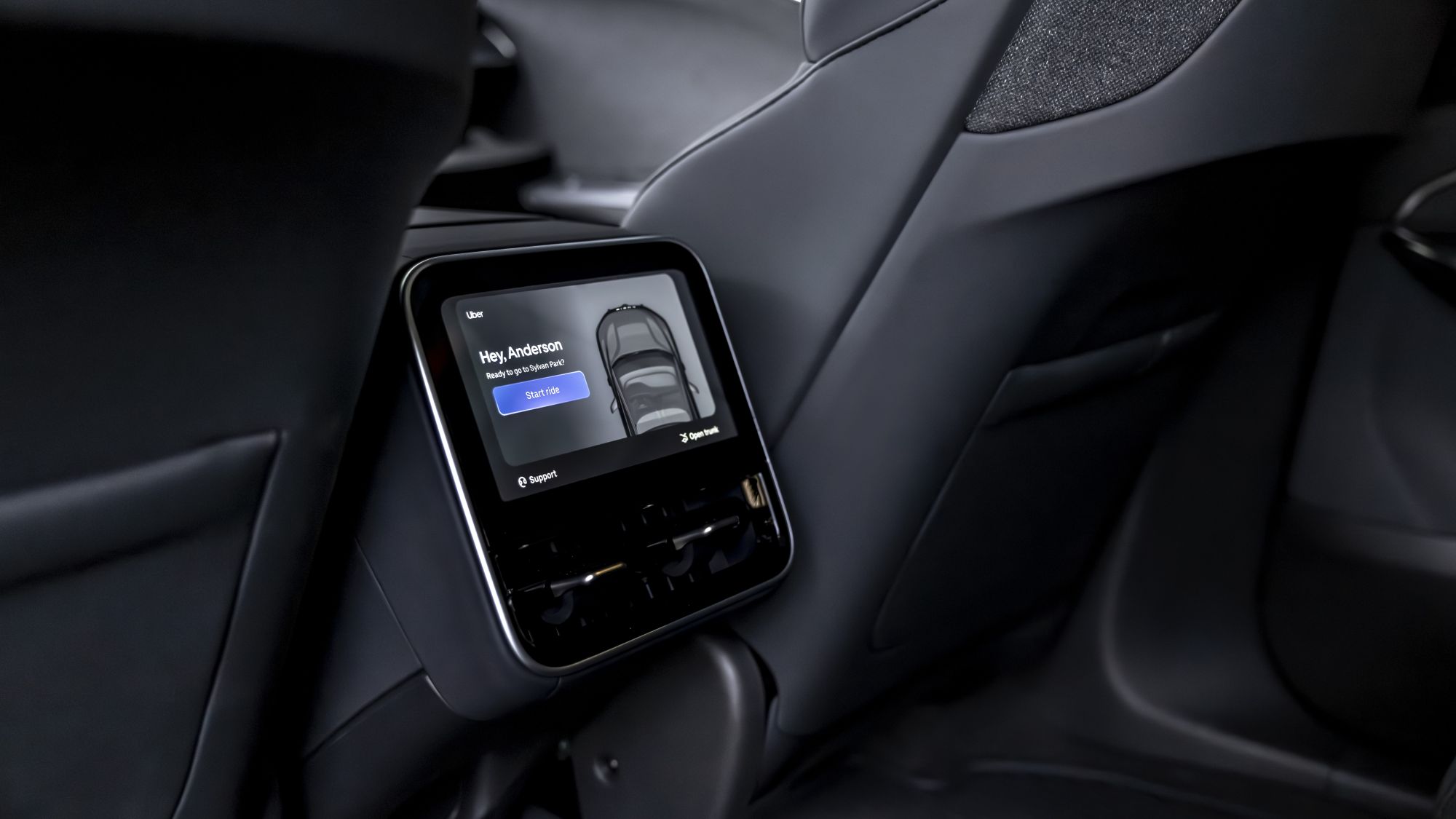
In addition to the Gravity, Nuro’s robotaxi service will leverage future Lucid midsize vehicles equipped with the Nuro Driver platform, which includes a redundant camera, lidar, and radar sensor suite and a roof-mounted halo. Uber is designing the broader in-cabin experience, including personalization, support, and rider controls, with autonomy visualization provided by Nuro.
The vehicles will be owned and operated by Uber and its fleet partners and made available to riders exclusively through the Uber network.
Beyond California markets, the three partners in June said they expect to launch the service in Houston in mid-2027 exclusively through the Uber network, with plans to expand the service to dozens of additional markets over the coming years.
Uber secured a 50,000-ft² depot and dedicated charging pitstop in Houston, serving as the operational backbone for Uber’s autonomous robotaxi program—supporting a fleet of Lucid Gravity robotaxis powered by Nuro’s autonomous technology—and will enable Uber and its fleet partners to manage charging, maintenance, repairs, cleaning, and other day-to-day fleet operations at scale.
Nuro global expansion
In May, Nuro announced it was establishing operations in Germany, creating its first presence in Europe. Located in the Munich area, Nuro’s Germany office will serve as the company’s European hub, supporting engineering, operations, and partner engagement. The company says the country will introduce a broader range of road infrastructure and regulatory frameworks that will further strengthen the generalizability of the Nuro Driver.
Nuro’s growing global footprint includes Japan, where the company demonstrated in March zero-shot autonomy with its Nuro Driver, showing its platform could operate in a new driving environment without prior training on local driving data—and reinforced its broader strategy to scale across global markets.
According to the company, autonomous systems that rely heavily on location-specific tuning can struggle to expand quickly. Its approach is different, using an autonomy stack built around a generalizable AI driver powered by an end-to-end foundation model, designed to reason about the world, adapt to new scenarios, and respond safely as conditions change in real time. This universal autonomy model doesn’t memorize each city it drives; instead, it has learned the underlying structure of safe driving and applies that knowledge to every road it encounters.
This is what made the zero-shot autonomous driving in Japan possible. Without any prior training, the model adapted to a major domain shift and safely, confidently, and autonomously navigated public roads in Tokyo.
Production-intent vehicle
The partners unveiled the production-intent vehicles that will be used in their global robotaxi service and introduced the Uber-designed in-cabin rider experience at CES 2026.
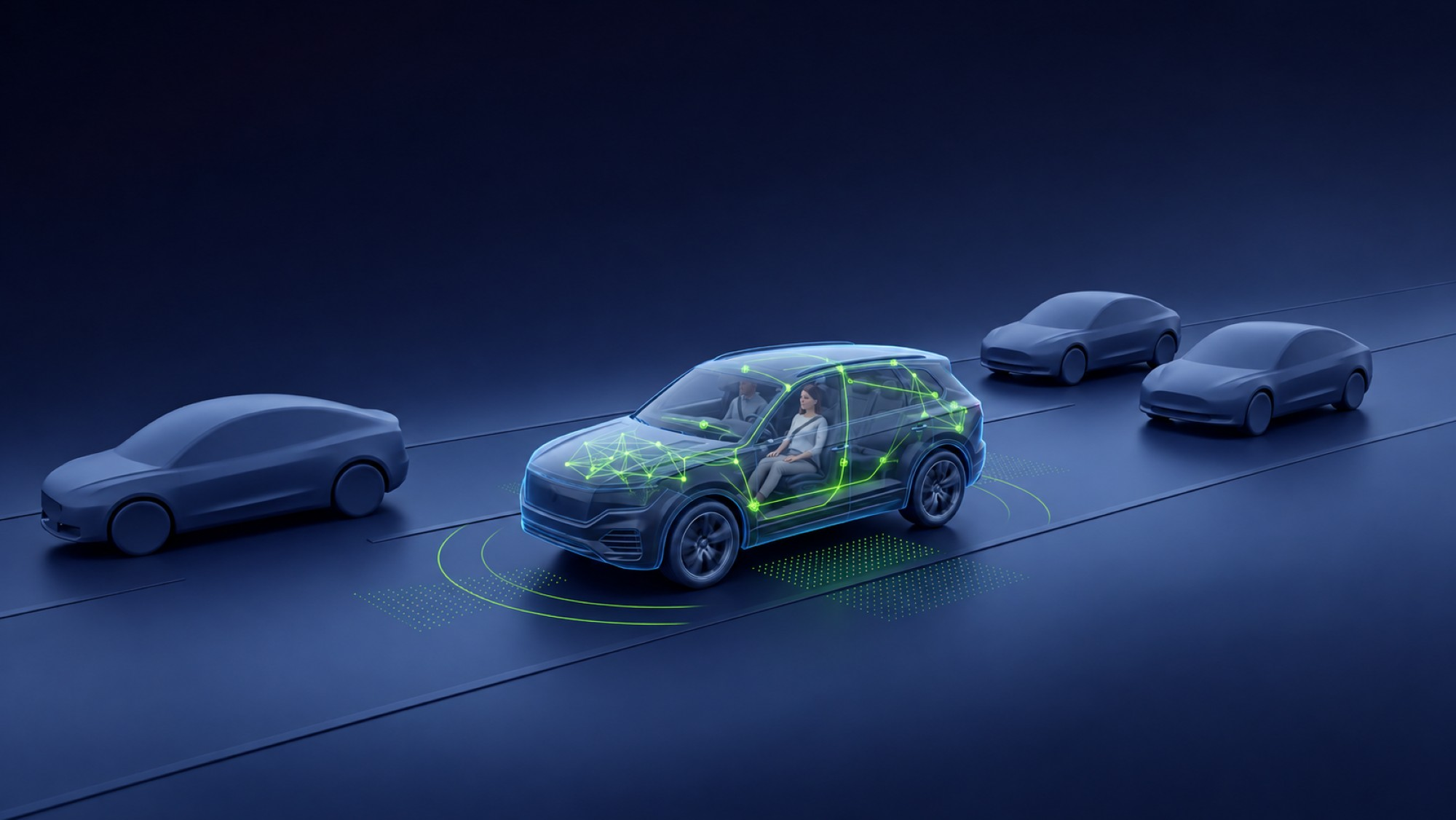
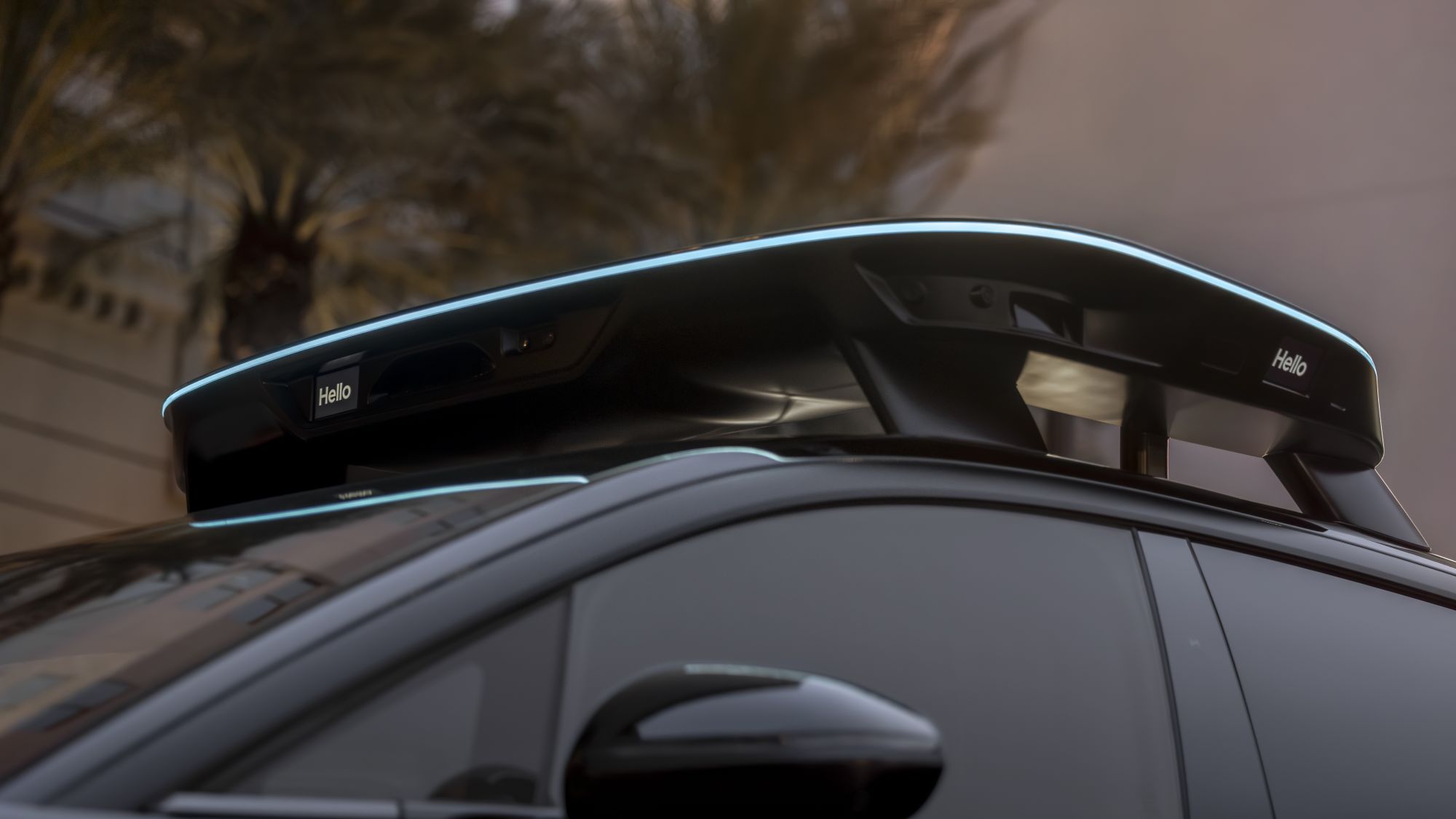
Highlights of the robotaxi include a next-gen sensor array featuring high-resolution cameras, solid-state lidar sensors, and radars that provide 360-degree perception. The sensors are integrated throughout Gravity’s body and in the low-profile roof-mounted halo module designed to maximize visibility while preserving the vehicle’s design.
Halo-mounted integrated LEDs help riders easily identify the correct vehicle, display rider initials, and provide clear status updates from pickup through drop-off.
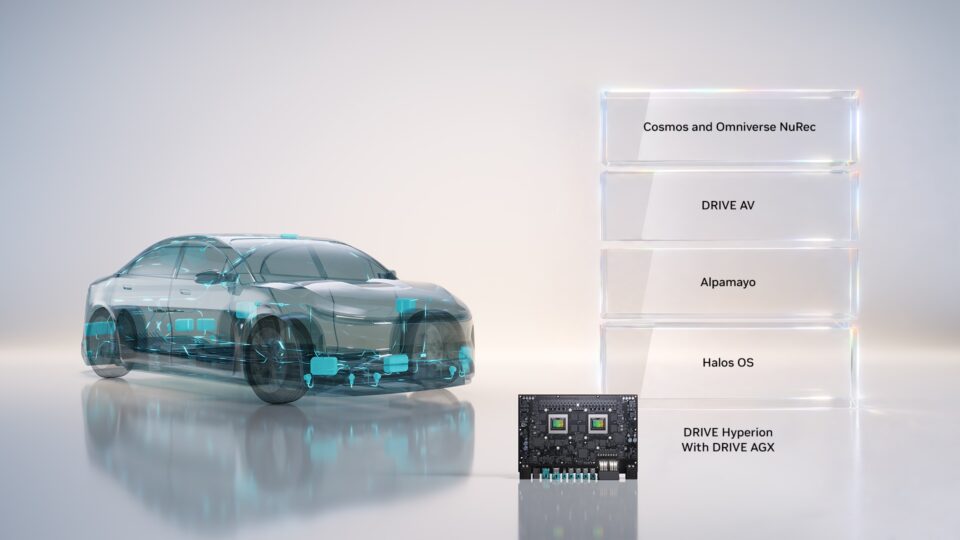
High-performance compute is based on Nvidia Drive AGX Thor, part of the GPU maker’s Drive Hyperion platform, supporting the real-time AI processing and system integration required for advanced autonomous driving.
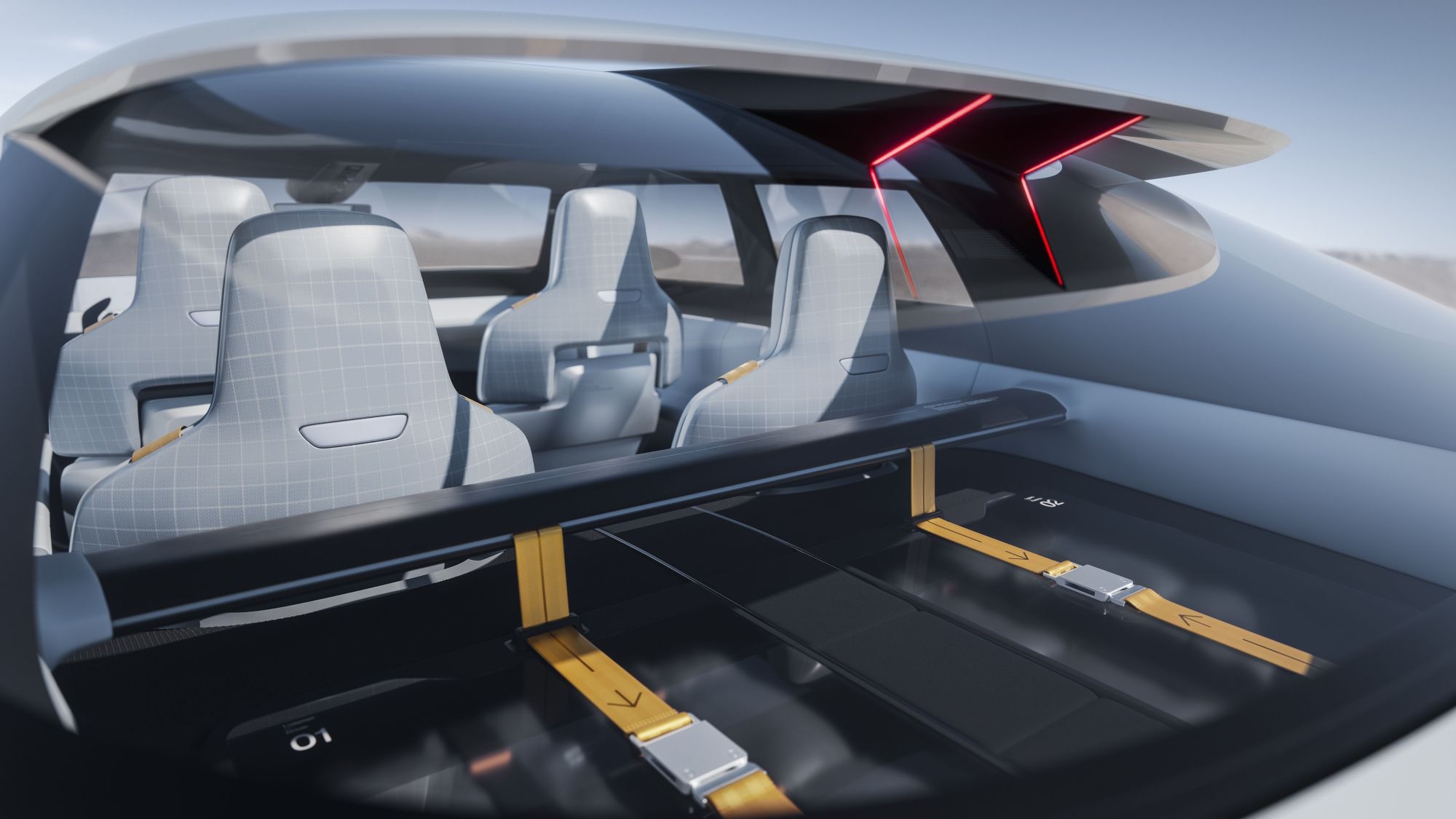
Interior configurations comfortably fit up to six passengers and their luggage for “premium” group travel.
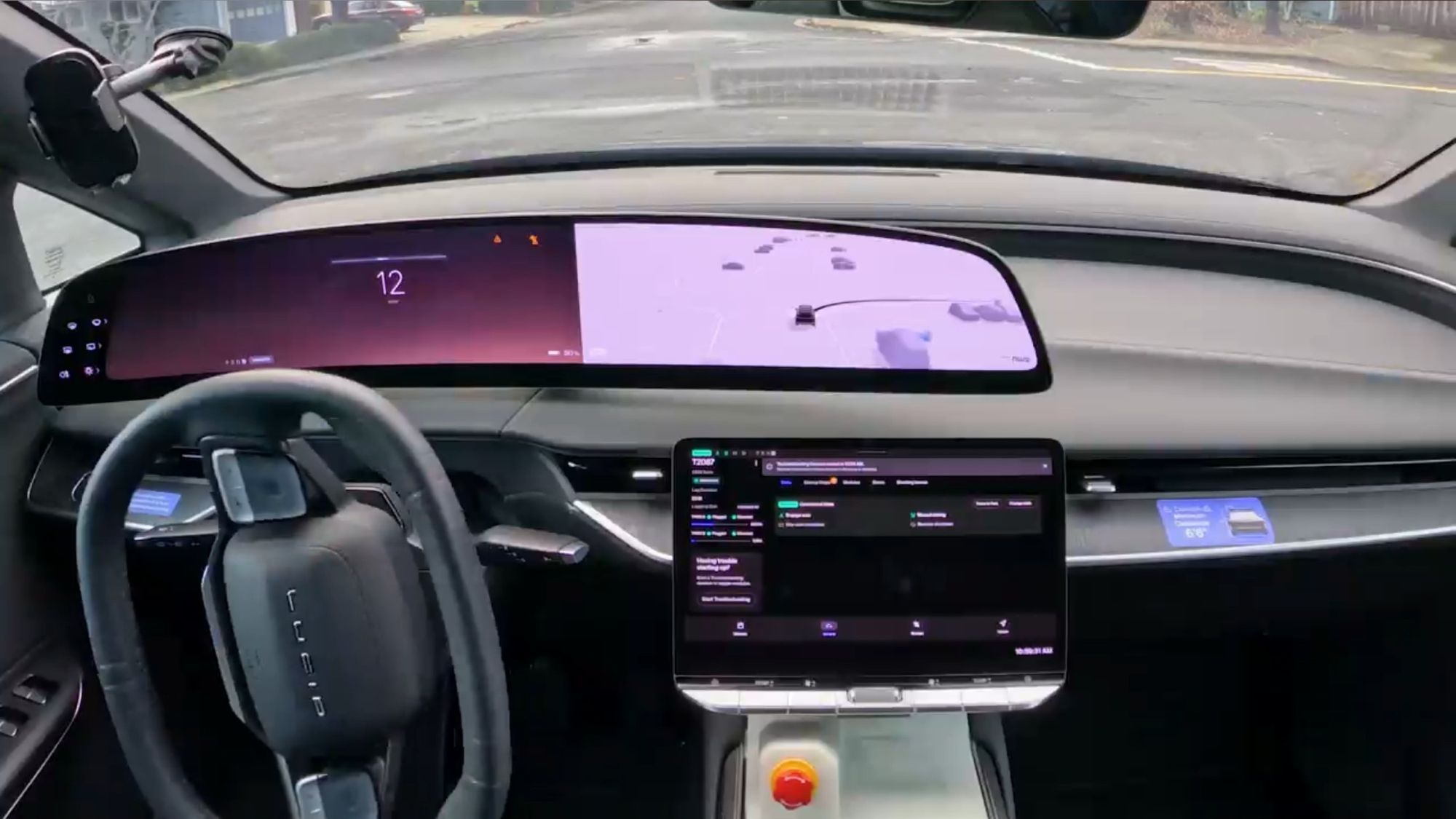
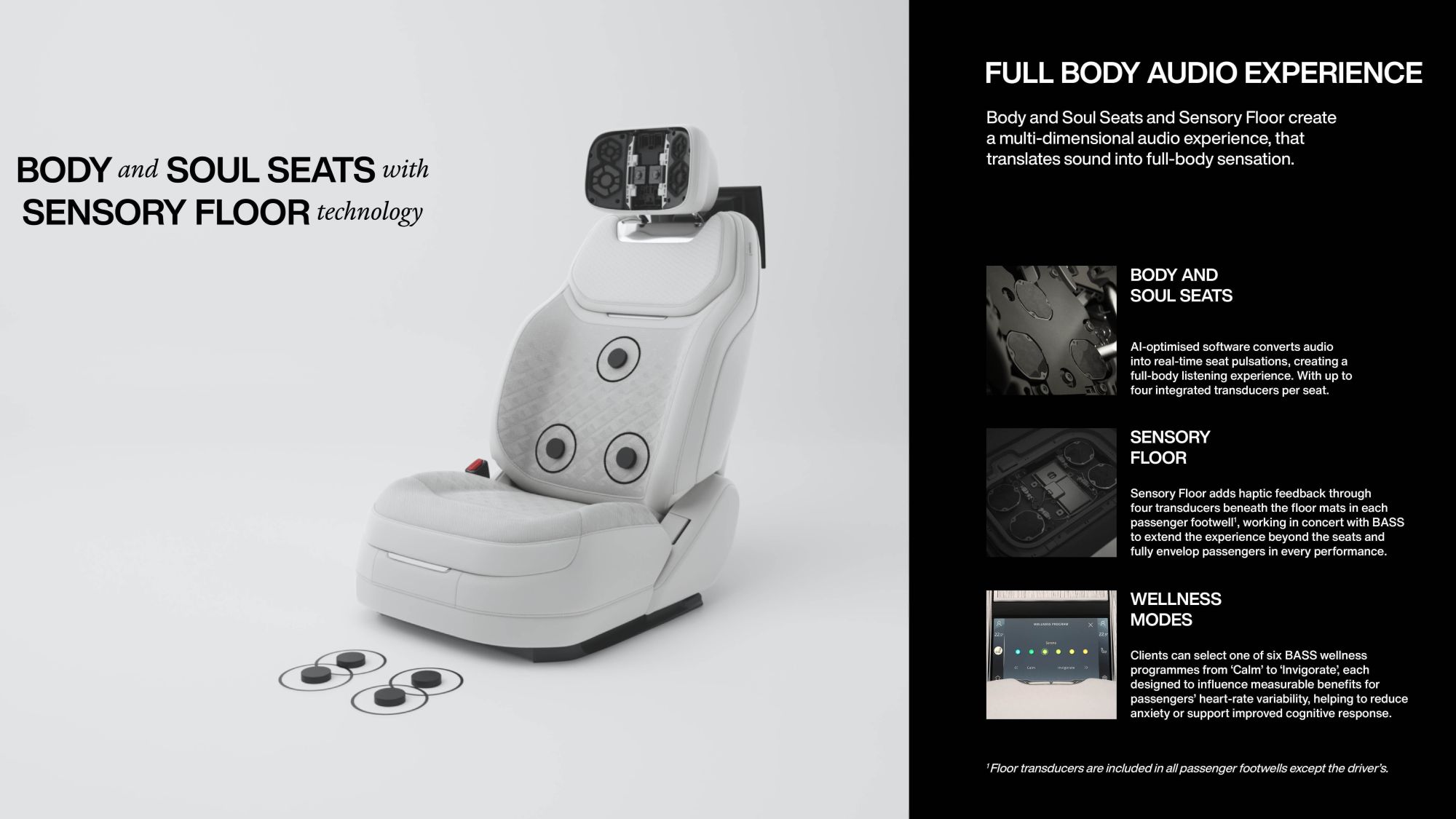
The in-ride experience features interactive screens that let riders personalize their autonomous journey, from heated seats and climate controls to music, as well as options to contact support or request the vehicle to pull over. In-vehicle visualization shows what the robotaxi sees and its planned path in real-time, including maneuvers such as yielding to pedestrians, slowing at traffic lights, changing lanes, and dropping off a passenger.
Kevin Jost contributed to this article.
-

- Nuro, Lucid, Uber driverless testing in California.
-

- The Nuro Driver controls its new Lucid Gravity robotaxi.
-

- The Nuro Driver controls its new Lucid Gravity robotaxi.
-

- Nuro, Lucid, Uber testing in Houston.
-

- Nuro, Lucid, Uber fleet in Houston.
-

- In May, Nuro announced it will expand to Germany.
-

- Closeup of Nuro, Lucid, Uber roof-mounted halo module.
-

- One screen of the Nuro, Lucid, Uber user experience.