At the end of this month, the first full-electric Venetian water taxi from energy and sustainable mobility company Repower Group called Lucietta will play a starring role at Venice International Film Festival. The innovative vessel, which premiered at the Salone Nautico di Venezia in June, was developed by the Swiss Group, with help from Nauta Yachts on the design and Cantiere Serenella with “artisanal” construction.
Lucietta strikes a balance between tradition and innovation, reinterpreting the historic charm of the Venetian water taxi with a more modern, sustainable, electrified design. The boat features a contemporary design, rooted in Venetian tradition, and builds on the legacy of Repower’s second electric boat, called Repowere.
It was designed and built based on survey inputs from a selection of Venetian taxi drivers, which helped define the necessary specifications for a vessel for the lagoon, but also at home in other environments. In the realm of electric boating, Repower’s commitment to design and dedication to aesthetics led to the selection of Nauta Design to craft Lucietta’s form.
Founded by President Mario Pedol and Director of Design Massimo Gino in 1986, Nauta Yachts started out as a shipyard but became a design and consultancy firm in the early 1990s. Having built up a reputation as a top international designer for sailing yacht projects, Nauta created the exterior design of the Lurssen Azzam, said to be the world’s longest yacht at 180 m (590 ft), launched in 2013. Today, Nauta is a yacht design studio working on the general concept, exterior, and interior design for both custom and production series projects, designing sailing and motor yachts of all types and sizes.
“Starting from a meticulous study of the original drawings of old taxis and interviews with taxi drivers, we defined the essential upgrades to design the electric taxi for the new millennium,” said Gino. “Repower’s Lucietta represents a modern reinterpretation of the Venetian taxi, featuring stylistic elements that evoke the appeal of electric vehicles, making its sustainable core immediately recognizable.”
“The dimensions of Venice’s water taxis are dictated by the city itself—its canals, bridges, and moorings,” Gino continued. “Therefore, construction height, maximum width, and length must adhere to very precise constraints.”
Compact dimensions of 9.30 m (30.5 ft) long, 2.25 m (7.4 ft) wide, and 2.10 m (6.9 ft) tall allow the Lucietta to navigate the canals with agility while respecting the city’s structural constraints. Unlike traditional taxis, it offers more onboard space and can carry up to 14 people, with quieter operation and no harmful emissions. Weights are 4000 kg unladen and 4650 kg fully loaded.
The new boat introduces several cutting-edge materials, including carbon fiber for the hull and recycled glass from Murano glassworks. Rehub, a Murano, Italy-based glass startup and winner of the 2023 Repower Special Award for Innovation, developed a method to recycle and use the glass for the new vessel.
The Lucietta project represents a significant milestone for Repower in electric boating, and it reaffirms the Group’s commitment to promoting sustainability in the tourism sector, which is increasingly sensitive to topics like energy efficiency and e-mobility. The company says that sustainability is poised to be one of the key growth drivers for the tourism industry in the coming years, adding that the objective unites environmental protection, economic development with local benefits, social inclusion for regional communities, and intergenerational sustainability.
Repower aims to be a benchmark for sustainable tourism, supporting businesses not only with energy supply but also by enhancing destinations through sustainable mobility, digitalization, and training. Innovation and technology are key tools to accelerate this transition. Through integrated digital solutions, tourism can improve flow management, optimize traveller experiences, and reduce environmental impact.
“Electric boating represents a crucial part of the revolution that has been underway for years in the sustainable mobility and tourism sector,” said Fabio Bocchiola, CEO of Repower Italia. “This revolution is progressing at varying speeds, partly due to an evolving geopolitical landscape that has pushed many countries to adopt new policies and rethink their overall energy transition strategies.”
The Repower Group, active in the electricity sector for over 100 years, is among the leading Swiss operators in renewable energy generation. Since 2002, Repower has also been active in Italy, where it exclusively serves businesses. In 2024, Repower Italia generated revenues of €1.45 billion out of a total Group revenue of about €2.609 billion.
Bocchiola highlighted that the European Union has outlined an ambitious path to reduce emissions in the electric boating sector—a market that is projected to reach a global business volume of about $13 billion by 2030.
“I can proudly say that Repower has been a pioneer in urban electric boating,” he added.
The Repowere, designed for both open and closed waters, was presented in 2018 at the Venice Boat Show of Sustainability. The effort was bolstered by an Honorable Mention at the 2020 Compasso d’Oro Award.
“Thanks to this experience, the Lucietta project was born, a boat that represents a new chapter in the history of lagoon taxi boats, balancing historical identity and sustainable innovation,” said Marcello Bertoldi, CEO of Bertoldi Boats and Repower nautical partner. “Lucietta is not simply an ‘excellence of the lagoon’s know-how’ but also a contribution to the debate on public transport in Venice, a solution capable of integrating with fast-charge tools for cars and offering performances and ranges equal to those of the endothermic boats that currently work in the Venetian waters.”
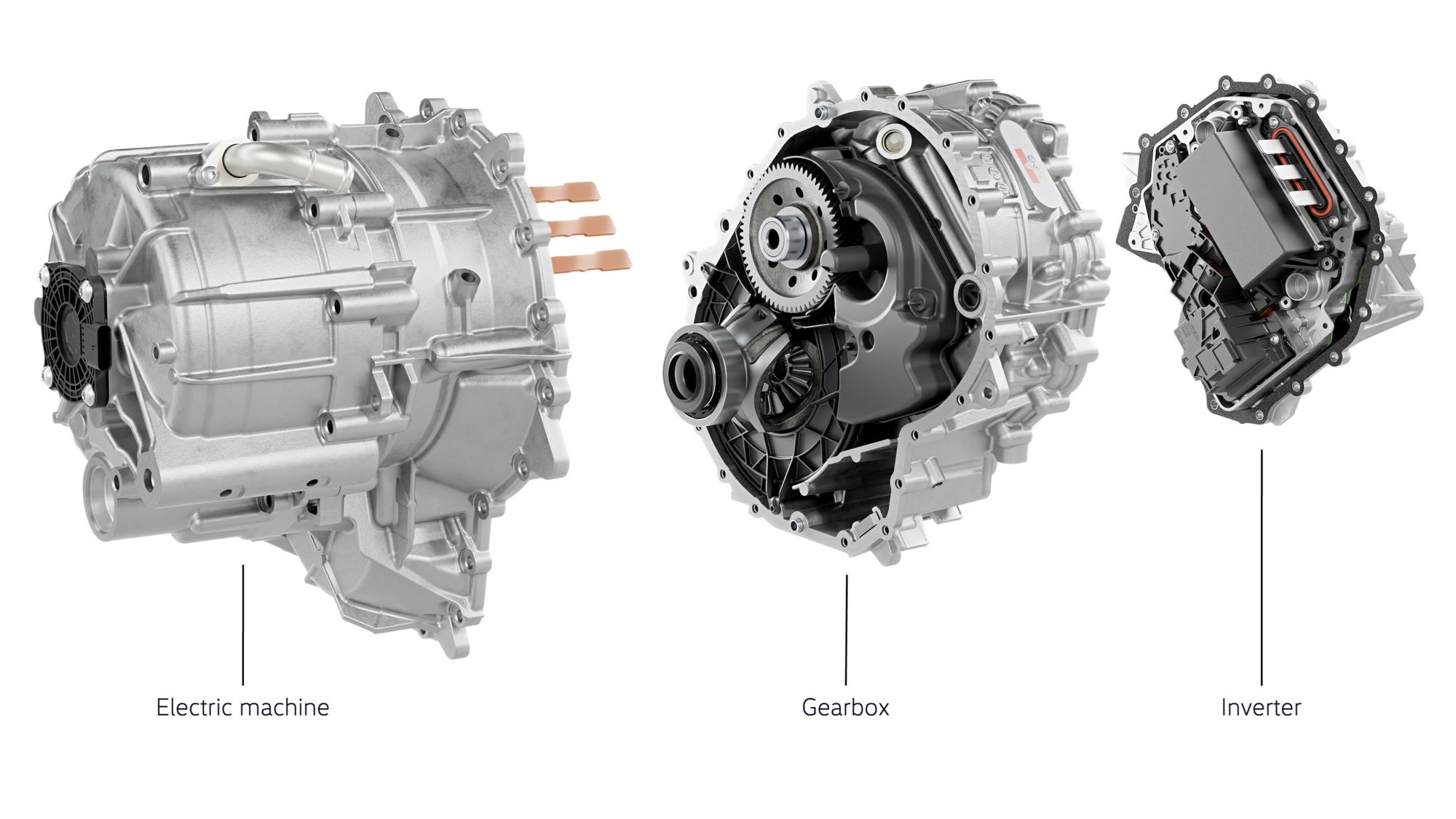
Lucietta propulsion is provided by a 200-kW full-electric motor and Konrad dual-prop stern drive backed by a 182.25-kW·h (9 x 20.25 kWh) 600-V lithium-ion battery pack. The combination allows the boat to reach a top speed of 30 kt (56 km/h), but, more importantly, when operating at the regulated speeds of 7 to 20 km/h (4 to 12 mph) in the lagoon, it can cover an entire workday without needing to recharge. Charging ranges from 2.4 to 120 kW.
-

- Repower Lucietta in Venice.
-

- Repower Lucietta in Venice.
-

- Repower Lucietta in Venice.
-

- Repower Lucietta from above.
-

- Repower Lucietta from above.
-

- Repower Lucietta in Venice.
-

- Repower Lucietta at speed.
-

- Repower Lucietta helm.
-

- Repower Lucietta cabin.
-

- Repower Lucietta power detail.