Earlier this week, Prince Mohammed bin Salman bin Abdulaziz Al Saud, Crown Prince, Prime Minister, and Chairman of the Board of Directors of the Public Investment Fund (PIF), revealed the Exobot flagship electric sedan and SUV from Ceer Motors, Saudi Arabia’s new national automotive company. The milestone reflects the country’s strategic direction to develop an advanced industrial sector aligned with the objectives of Saudi Vision 2030 and establish a foundation in the global automotive industry.
“The launch of Ceer’s first vehicles represents another step forward in Saudi Arabia’s progression to build a sustainable and prosperous industrial ecosystem,” said bin Salman. “It further enables the automotive sector as a key driver of economic growth, through attracting investments, empowering national talent, and expanding the private sector’s role to further position Saudi Arabia to become a leading regional and global hub for this industry.”
PIF, with help from Foxconn, launched Ceer in 2022 as the first Saudi vehicle brand, with the aim to support the development of the national industrial ecosystem, attract investments, create opportunities for the private sector, and increase Saudi GDP. Since then, the new company has been focused on building a diverse mix of Saudi and global experts, growing from 20 to 2300 employees and securing key partnerships with international leaders including BMW, Hyundai Transys, Rimac, Siemens, Sabelt, Isoclima, Andritz Schuler, Dürr, XYG, Lear, Benteler, Fangxin, Shin Young, JVIS, and Sabic—as well as leading local companies such as Zamil Group, Abdul Latif Jameel, and APICO.
The vehicles, which are designed, engineered, and manufactured in Saudi Arabia, are part of a planned portfolio of seven models—including midsize and compact vehicles with various propulsion options—to be launched over the next five years. The vehicles will be manufactured at CMC (Ceer Manufacturing Complex), the largest automotive production facility in the Middle East and one of the most technologically advanced in the world.
Ceer’s localization strategy is meant to ensure swift availability through local production at King Abdullah Economic City, aiming for an order-to-delivery time measured in weeks, not months. By 2034, the brand is committed to achieving 45% local materials in its vehicles, backed by a supplier ecosystem that guarantees fast, reliable aftersales service with locally sourced parts. The Ceer enterprise is projected to contribute $8 billion to Saudi Arabia’s GDP, $21 billion to trade balance improvement, and create quality direct and indirect jobs by that same date.
Saudi-inspired exterior design
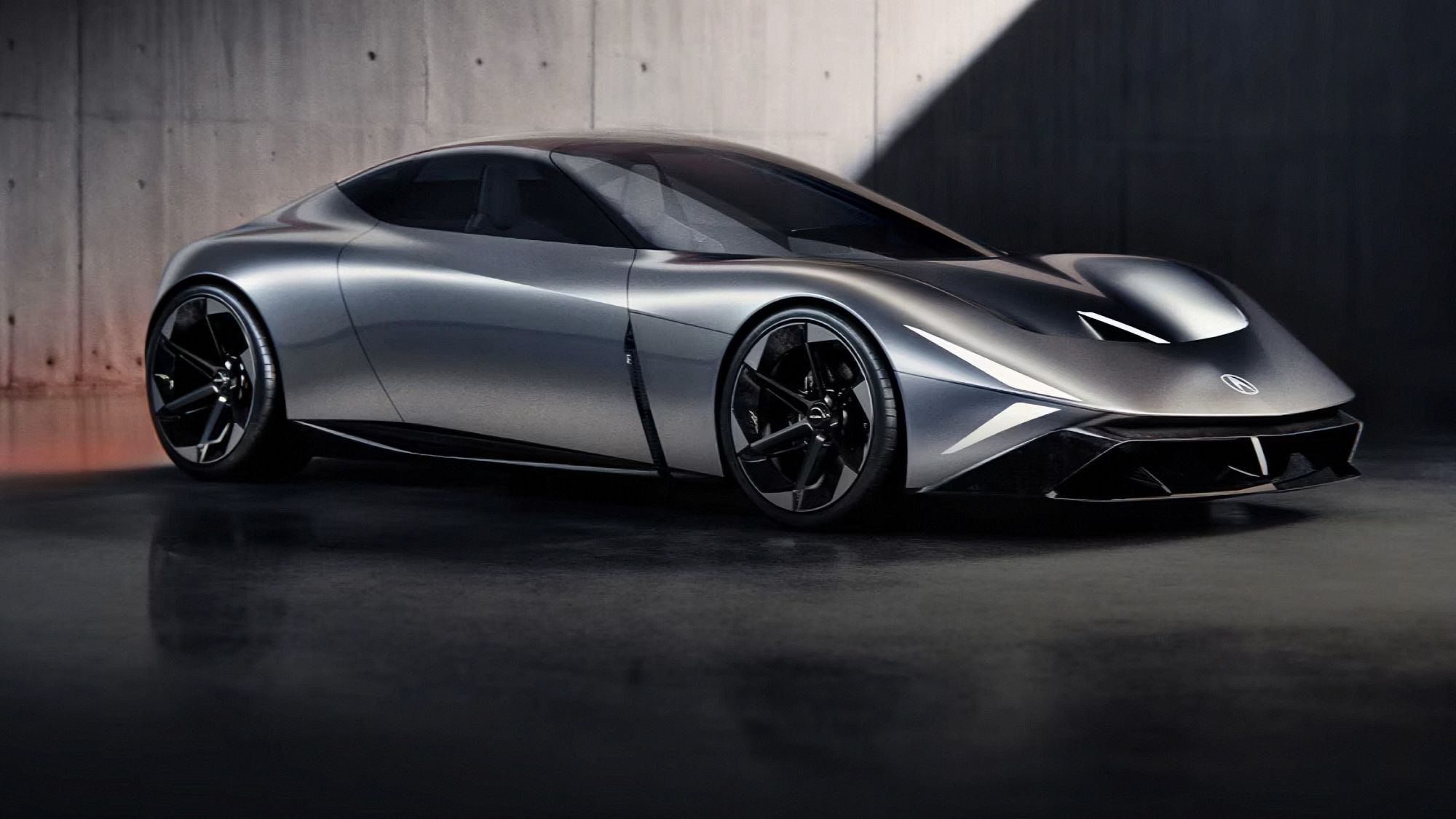
The Exobot designs are inspired by Saudi Arabia’s landscape, rooted in its culture, and reflective of its vision. Their exteriors are characterized by dynamic proportions and a distinctive wedge profile, blending razor-sharp, machined volumes at the front and rear, with fluid surfaces in the mid/occupant sections.
Their horizontal light signature is meant to maximize visual width and on-road presence, with the 32 distinctive light bars inspired by the year 1932, when Saudi Arabia unified to become a kingdom. The vehicles’ lightweight forged aluminum wheels feature a triangular motif influenced by the Al-Lahuj style openings seen in the architecture across the Kingdom.
The sedan measures 5260 mm (207.1 in) long, 2102 mm (82.8 in) wide, and 1428 mm (56.2 in) tall; the SUV is 5016 mm (197.5 in) long, 2101 mm (82.7 in) wide, and 1693 mm (66.7 in) tall—positioning them in the large passenger vehicle segment. Both share a 3200-mm (126.0-in) wheelbase. Trunk capacities for the sedan and SUV, respectively, are 424 and 402 L (15.0 and 14.2 ft³), or 1007 and 1091 L (35.6 and 38.5 ft³) with folded rear seats.
They are said to feature the largest windshield ever produced, at 2.4 m (7.9 ft) long, set at a radical 15°, the most inclined in class. The dramatic sweep of ultra-thin glass, with an advanced reflective coating, is meant to redefine aerodynamics and visibility, shield occupants from the sun, and minimize solar heat absorption.
One of Exobots’ most striking features is the nearly 3 m (9.8 ft) long Shahin Wing Doors, inspired by the flight of the Shahin falcon. Operated remotely via the key fob or door-mounted controls, they open to create a wide, welcoming entrance for both front and rear passengers.
The vehicles are engineered for peak thermal resilience to survive the region’s extreme heat, intense sun, and demanding long-distance driving. An advanced Halo Cooling system delivers industry-leading cooling performance in extreme climates. Special foils minimize solar heat gain, and triple silver-coated glass and optimized aerodynamic roof airflow provide heating and de-misting while preventing thermal buildup.
Combined with dual front and rear air-conditioning systems, every passenger enjoys rapid, uniform cooling. In high-heat conditions typical of Saudi Arabia, cabin temperatures are rapidly reduced from 65°C to 32°C (149°F to 90°F) within 10 min.
Delivering a cocoon of safety for drivers and passengers is a suite of active and passive safety systems said to go beyond global safety standards. They include structural cell-to-pack battery technology specifically designed for rough and demanding environments; seven airbags; and enhanced aluminum casting and extrusion space-frame technology integrated into the body and doors.
Interior personalized ‘oasis’
The interior is designed to be a sanctuary with innovative features intended to enhance the driver and passenger experience with a personalized “oasis.”
A steering yoke places essential controls at the driver’s fingertips and allows switching between multiple driving modes. The unique lower door glass provides an instant transition between tinted and opaque settings, offering a choice between a bright cabin with an expanded view or complete privacy.
The cantilevered center console blends physical and digital controls that are “intuitive enough for eyes-up use, yet refined and responsive to the touch.” Bringing the Ceer digital environment to life, and inspired by the cinematic feel of the Riyadh skyline, is the main 48-in pillar-to-pillar curved Digital Horizon display with 8K resolution, 10.4-in central control screen, and 8-in rear occupant display.
Access to the interior is via a digital key and smartwatch integration. An advanced Virtual Voice Assistant is engineered to deliver an AI experience that understands and responds fluently in both Arabic and English. The Exobots connect with the Ceer App for secure access to essential vehicle systems, from monitoring charging status to pre-conditioning the cabin temperature to remote parking.
The sound experience is headlined by SoundStage Audio technology that uses exciters to transform cabin surfaces into part of the audio experience, working alongside dedicated sound components to create a rich, 360° immersive cinematic environment.
A personalized fragrance system offers three unique scents at a time.
The Exobot offers an advanced autonomous ecosystem that acts as a vigilant co-pilot, enhancing safety and reducing driver fatigue for peace of mind behind the wheel with hands-free driving support, automated lane changes, and point-to-point navigation-based autonomous driving on highways.
Specific driver-assistance features are obscure object visualization, adaptive cruise control with stop and go, lane centering assist, intelligent speed assist, highway and traffic jam assist, automatic parking, and advanced remote parking control. Planned for delivery by 2028 with an OTA update are auto lane change assist, highway and traffic jam pilot, navigate on pilot, and auto memory parking.
Electric performance and market launch
The Exobot powertrain is engineered around a tri-motor all-wheel-drive fully electric architecture that, in top spec, can produce up to 1111 hp (828 kW) and 1500 N·m (1106 lb·ft). The sedan can accelerate from 0 to 100 km/h (0 to 62 mph) in just 2.1 s, with a top speed limited to 250 km/h (155 mph). The SUV does 0 to 100 km/h in 2.4 s, with a limited top speed of 210 km/h (130 mph).
Continuous torque vectoring and active chassis systems work to maintain stability, agility, and control. Steer-by-wire technology eliminates the traditional steering column and provides freedom in design, ergonomics, and responsiveness.
Steering input is reduced from 400° to 160° for “the feel of supercar handling.” Rear-wheel steering provides tighter turning in urban environments, enhanced stability at high speeds, and greater cornering precision.
The Exobot collection will debut with the First Edition, followed by Plus models, with expected deliveries starting in early 2027. Pricing has not yet been announced.
The limited First Edition is available as a sedan and SUV powered by a tri-motor powertrain generating 850 hp (625 kW) and 1000 N·m (738 lb·ft). The all-wheel-drive sedan and SUV accelerate from 0 to 100 km/h in just 2.6 and 2.9 s and top out at 230 and 210 km/h (143 and 130 mph), respectively.
The 112-kW·h NCM battery pack provides NEDC (New European Driving Cycle) range up to 560 km (348 mi) for the SUV and 670 km (416 mi) for the sedan. An advanced 800-V architecture supports 250-kW fast charging from 10% to 80% in under 30 min. Other options are 11-kW AC and 3-kW travel charging.
The First Edition brings distinctive exteriors and interiors. Buyers can choose between two exterior finishes—Harrat Grey or White Musk—and a combination of red painted brake calipers with Black Color Pack. Inside are black and red Nappa leather seats finished with a First Edition emblem debossed into the headrests, custom floor mats, and a First Edition numbered plaque that matches the VIN number.
Ceer promises that the Exobots will continue to evolve long after they leave the factory with over-the-air updates that enhance vehicle performance, unlock new features, and elevate the user experience.
-

- Ceer Exobot sedan and SUV.
-

- Ceer Exobot sedan doors up.
-

- Ceer Exobot sedan rear side doors up.
-

- Ceer Exobot sedan side view.
-

- Ceer Exobot body structure.
-

- Ceer Exobot Digital Horizon display.
-

- Ceer Exobot SUV side top view.
-

- Ceer Exobot SUV luggage space.
-

- Ceer Exobot sedan side view.
-

- Ceer Exobot SUV HMI central controls.
-

- Ceer Exobot 800-V architecture.
-

- Ceer Exobot obscure object visualization.