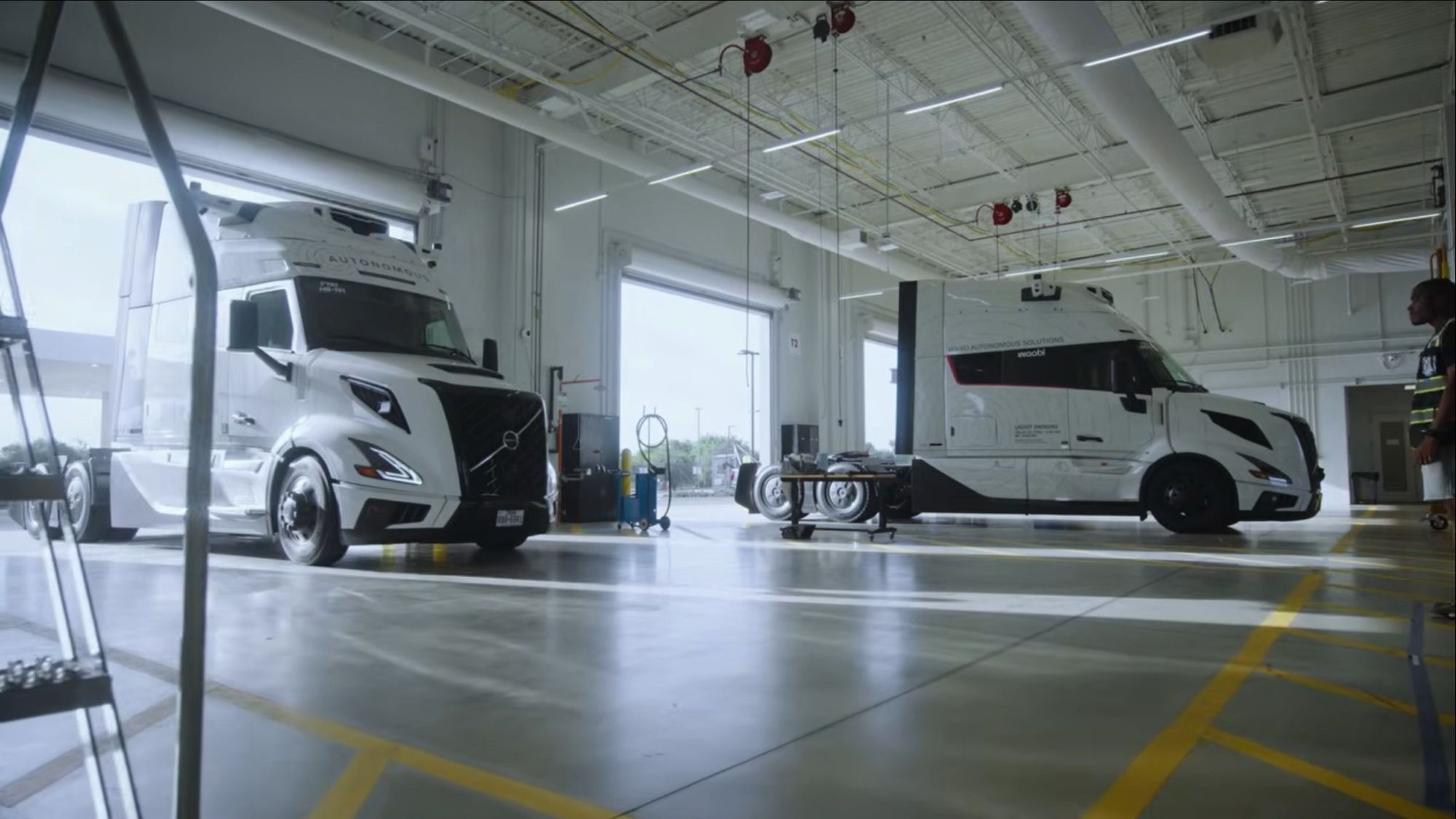
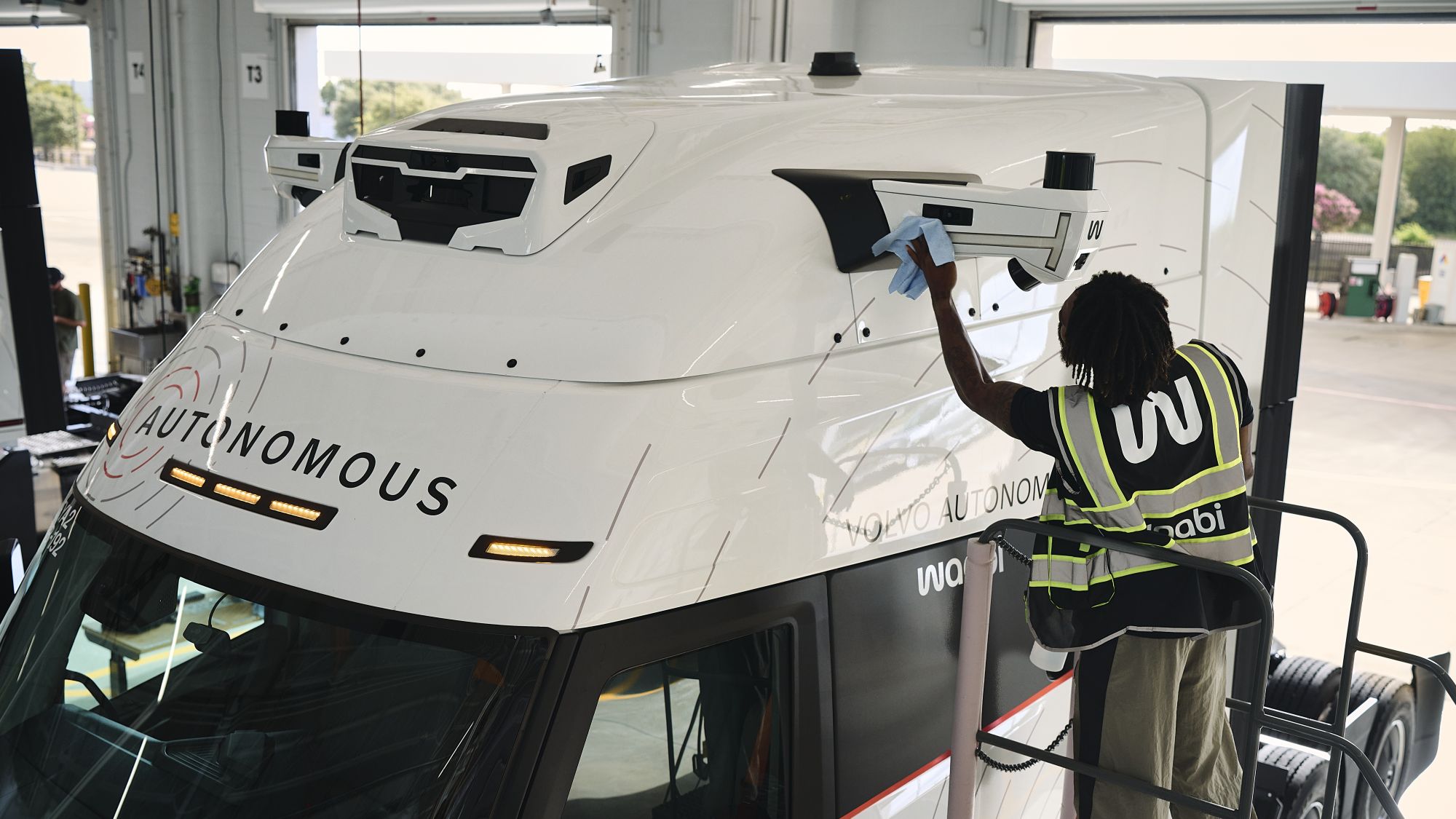
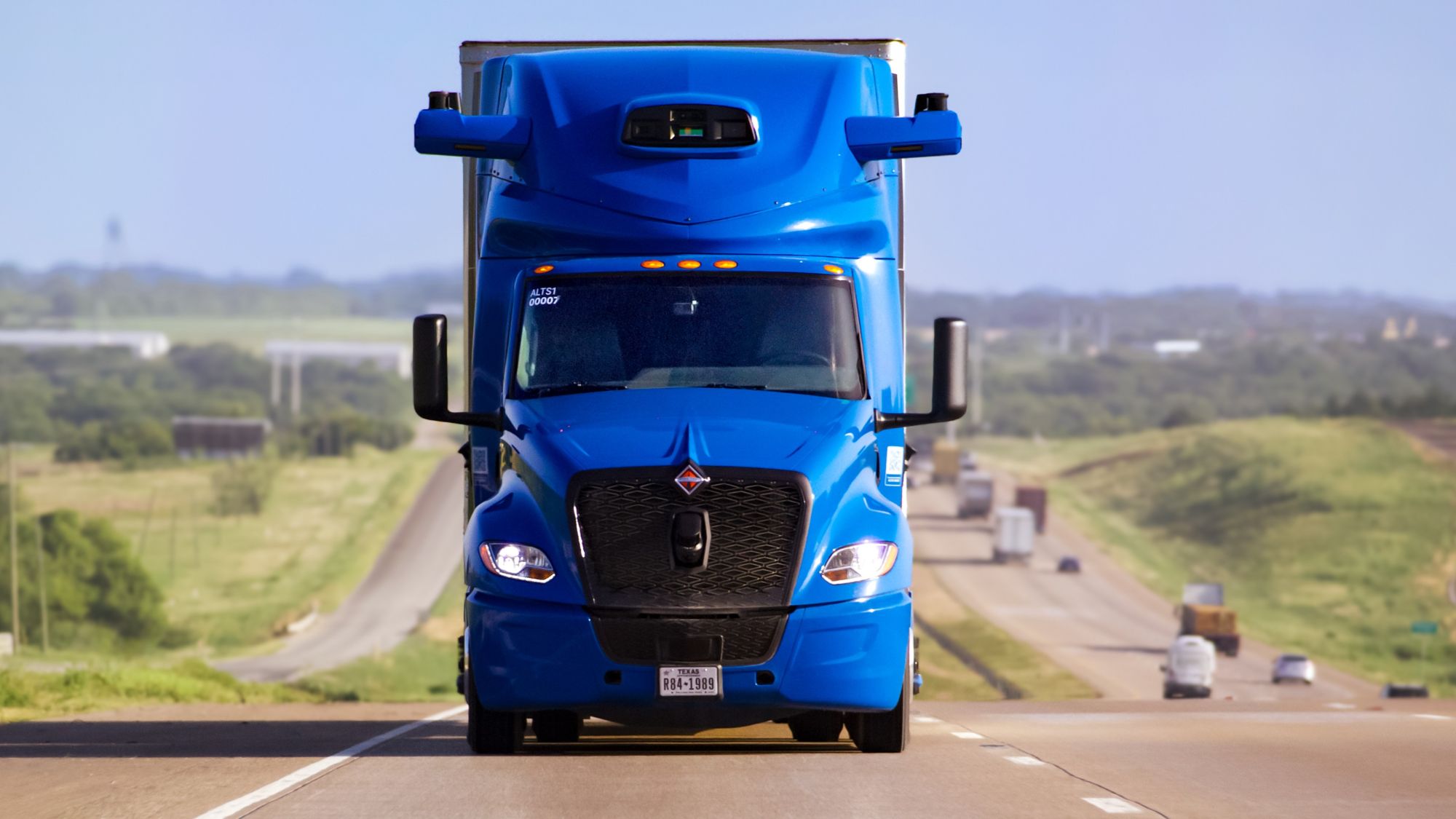
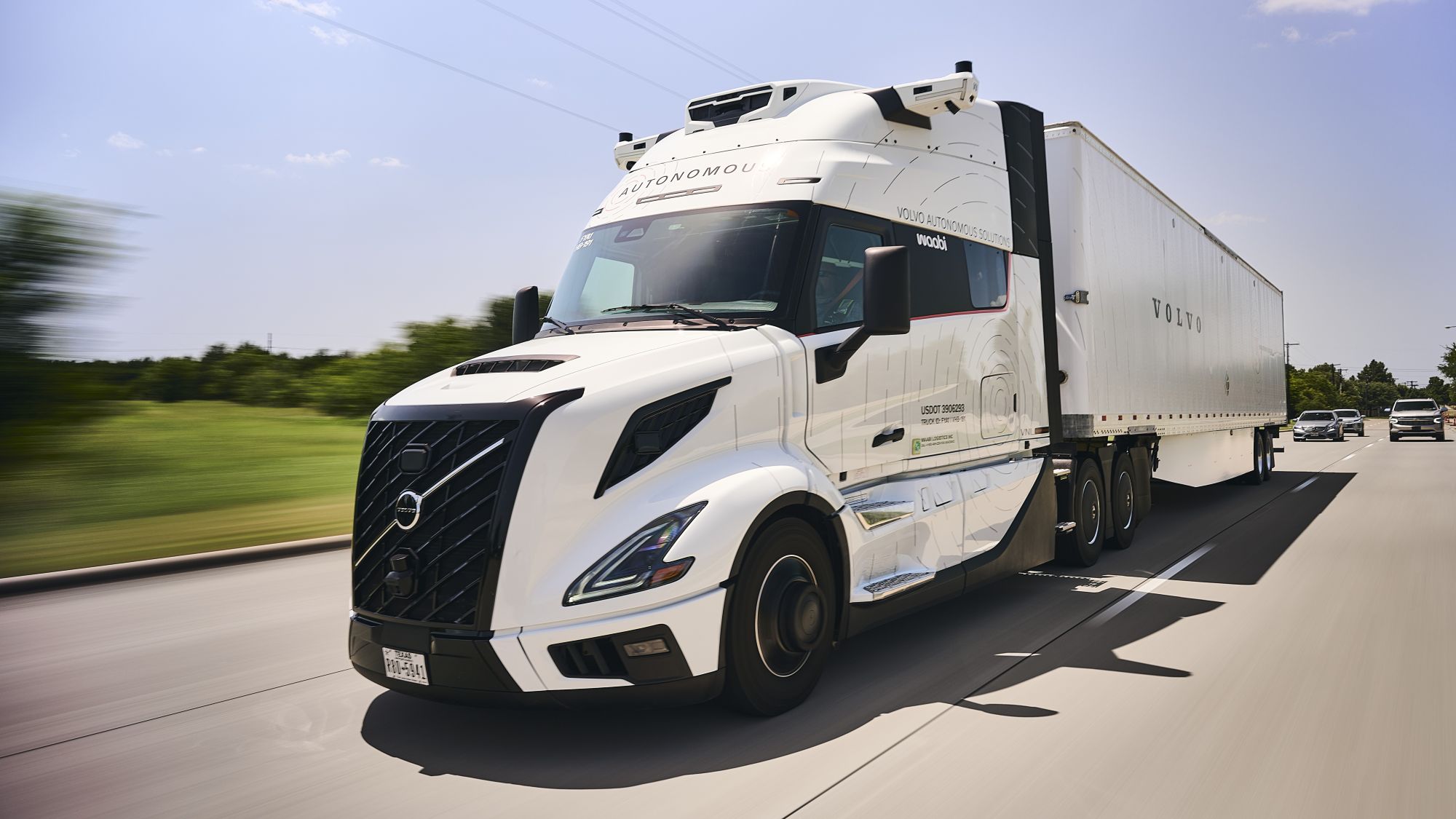
Volvo Autonomous Solutions (VAS) and Waabi have announced the start of autonomous operation for Warp in Texas, the first customer operation for their partnership. The Volvo VNL Autonomous, based on a Volvo Truck‘s VNL truck powered by the Waabi Driver, is now transporting freight directly to third-party facilities along the Dallas-Houston corridor.
The operations will enable Warp, an open-source freight network that provides LTL (less-than-truckload) and FTL (full-truckload) freight services for carriers and shippers, to transport its customers’ goods autonomously along the corridor.
“Waabi and Volvo Autonomous Solutions are building toward a future where autonomous trucks integrate seamlessly into the networks that move freight every day,” said Lior Ron, COO of Waabi. “Our work with Warp is the first milestone on that path, demonstrating that the Volvo VNL Autonomous, powered by the Waabi Driver, can take on the full range of real-world freight, from operating within less-than-truckload networks to moving goods directly to third-party facilities, meeting customers where they are.”
LTL shipping requires dynamic networks to consolidate, haul, and distribute goods from multiple customers on tightly coordinated schedules. By moving freight directly between facilities, without handoffs, the Volvo VNL Autonomous powered by the Waabi Driver gives LTL providers like Warp a more predictable way to keep their networks on schedule.
“Working with Volvo Autonomous Solutions and Waabi demonstrates what Warp’s network was built for: bringing advanced technology into the everyday movement of freight,” said Daniel Sokolovsky, CEO of Warp. “The value of autonomy grows when you can coordinate the freight around it. Warp brings together shipments from multiple customers and aligns routes, capacity, and timing, so advances on a single lane can benefit the broader network.”
Currently, autonomous hauls are run with an observer in the driver’s seat. With customer operations underway, VAS and Waabi will use real-world experience from the Dallas-Houston lane to prepare for additional routes and support the broader scaling of autonomous freight in the coming years.
“Together with Warp and Waabi, we are bringing autonomous freight into customer operations in one of logistics’ most demanding segments,” said Nils Jaeger, President of Volvo Autonomous Solutions. “This shows how quickly our ecosystem can adapt to new customers and more complex operations. What we learn on the Dallas-Houston corridor will help us strengthen our partnership and continuously improve the ecosystem as we scale.”
Volvo Autona / freight and VNL Autonomous
Integrating the VAS autonomous transport ecosystem called Autona / freight into Warp’s network creates opportunities to optimize freight flows and support more efficient movement of goods as demand grows. Autona / freight brings together the Volvo VNL Autonomous truck, Waabi’s autonomous driving technology, fleet and transport management, terminals and customer endpoints, operations, and uptime support to deliver a complete transport solution designed to scale.
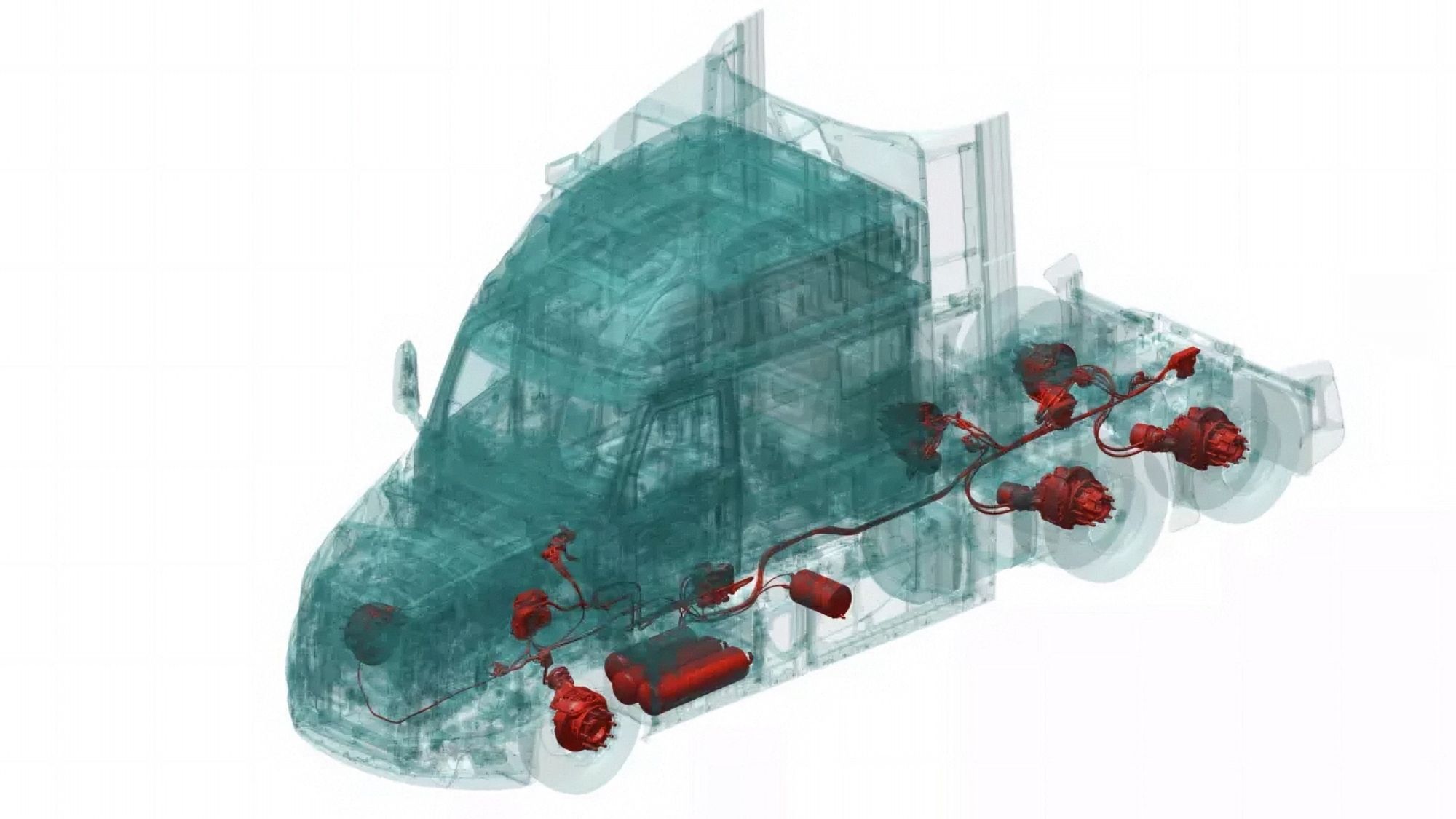
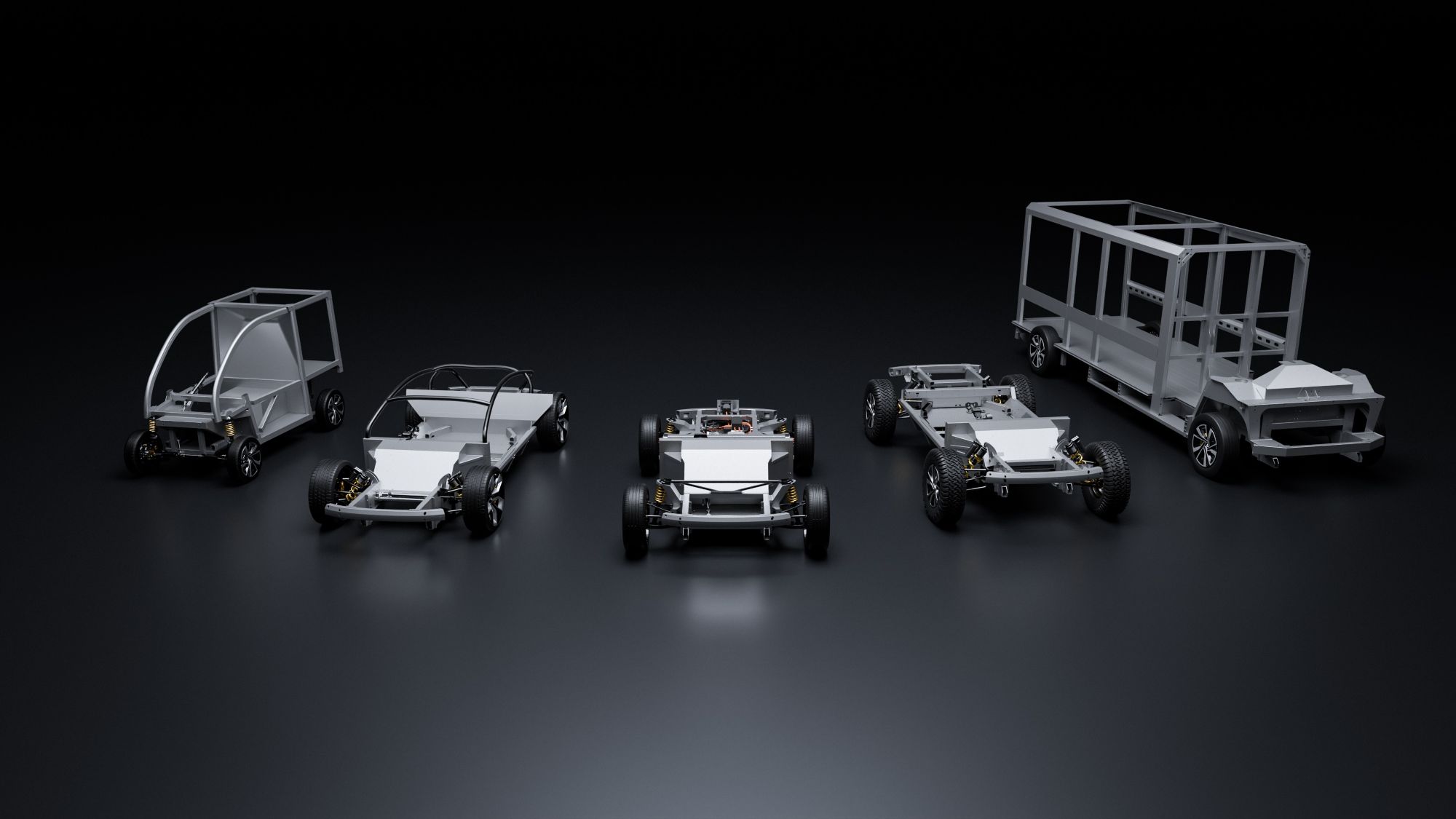
The Volvo VNL Autonomous is built from the ground up for autonomy with redundancies for six safety-critical systems and specifically designed to integrate autonomous driving systems from partners such as Waabi. Its architecture includes redundancies for braking, steering, communication, computation, energy and power, and vehicle motion control, bringing these capabilities together in a platform designed around the realities of autonomous freight.
Autonomous trucks can operate for longer periods, maintain more consistent speeds for higher fuel efficiency, and avoid hours of service constraints. On long, repeatable highway routes, those advantages help offset the additional complexity of the autonomous platform.
Redundancy does not prevent every failure, but it ensures that a failure does not become a loss of control. By preserving critical functions, separating shared dependencies, and enabling a coordinated response, redundancy allows an autonomous truck to reach a safe condition even if part of the system stops working.
For autonomous trucking, this is the difference between demonstrating that a vehicle can drive itself and proving that it can operate safely and reliably in the real world. By designing for failure from the outset, redundancy makes it possible to combine safety with dependable, commercially viable freight operations.
Waabi zero shot: next frontier of generalization
Delivering on the promise of physical AI requires systems that can generalize at superhuman levels, transferring learned knowledge to new situations and tasks, performing reliably and safely in the unknown, according to Waabi.
There are two distinct frontiers of generalization in self-driving.
The first is the ability to generalize across environments and behaviors. This means the virtual driver should be able to apply its knowledge and skills safely across very different ODDs (operational design domains), from highways to dense urban streets, across different traffic patterns, road geometries, and driving behaviors.
Waabi said this is something its Driver excels at, as the industry’s only verifiable end-to-end AI system with human-like reasoning capabilities. It enabled the company to reach a major milestone in Q1 2025 by expanding beyond highways to safely and confidently operate on complex general surface streets.
The second frontier is the ability to generalize across embodiments. This means the virtual driver should be able to seamlessly transfer to an entirely new vehicle platform with different sensors, control systems, and physical characteristics. Historically, this has been one of the most difficult challenges in autonomous driving, with each new platform requiring extensive engineering, data collection, retraining, and validation.
Waabi built its Driver from the start as a single AI brain, designed to enable embodiment generalization and automatically adapt to different vehicles as humans do.
To prove its ability to generalize in this way, Waabi collaborated with Volvo Autonomous Solutions to integrate its Driver, trained on a Peterbilt 579, on the Volvo VNL Autonomous, a new form factor for the Waabi Driver, for a generalized zero-shot. In other words, without requiring new real-world data, simulation data, or fine-tuning, the VNL Autonomous, powered by the Waabi Driver, was fully performant from the start. It drove autonomously across both highways and complex surface streets safely, confidently, and smoothly—like the best human drivers.
With this achievement, Waabi said it set a new benchmark for generalization across the industry, proving its ability to transfer learned knowledge across the most complex driving environments and the most challenging form factors. While demonstrated in autonomous trucking, the breakthrough also represents a foundational advance for the broader sphere of physical AI, according to Raquel Urtasun, Founder and CEO of Waabi.
“This is a defining moment for physical AI,” she said. “For the first time in the industry, we have shown that a virtual driver can generalize across fundamentally different embodiments without requiring a single training example—neither real nor simulated—or fine-tuning. This capability has the potential to transform far more than transportation. It is the foundation for a new generation of intelligent machines that can adapt, scale, and operate across the physical world, creating possibilities and opportunities we can scarcely imagine today.”
-

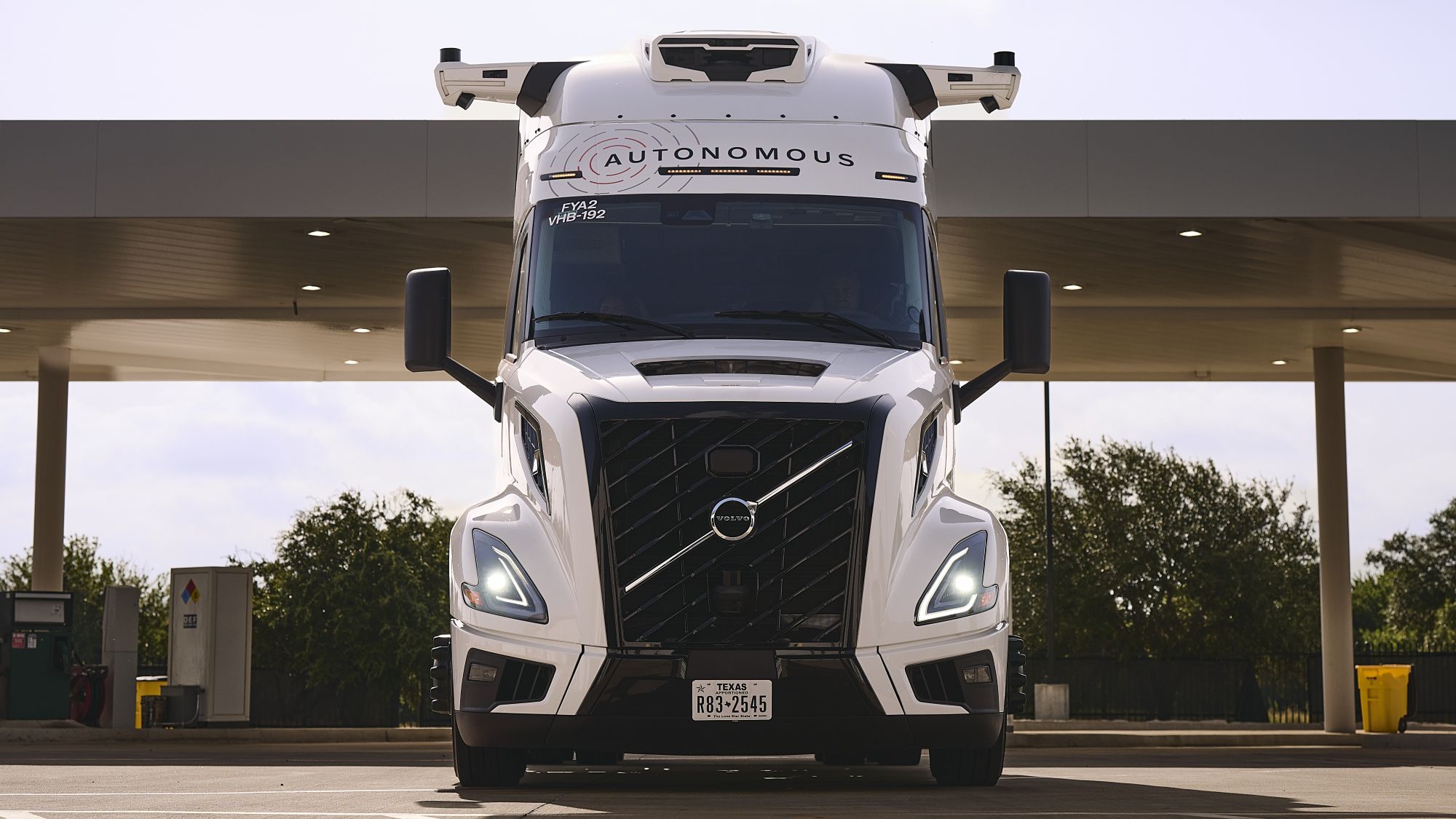
- Volvo VNL Autonomous integrated with the Waabi Driver.
-

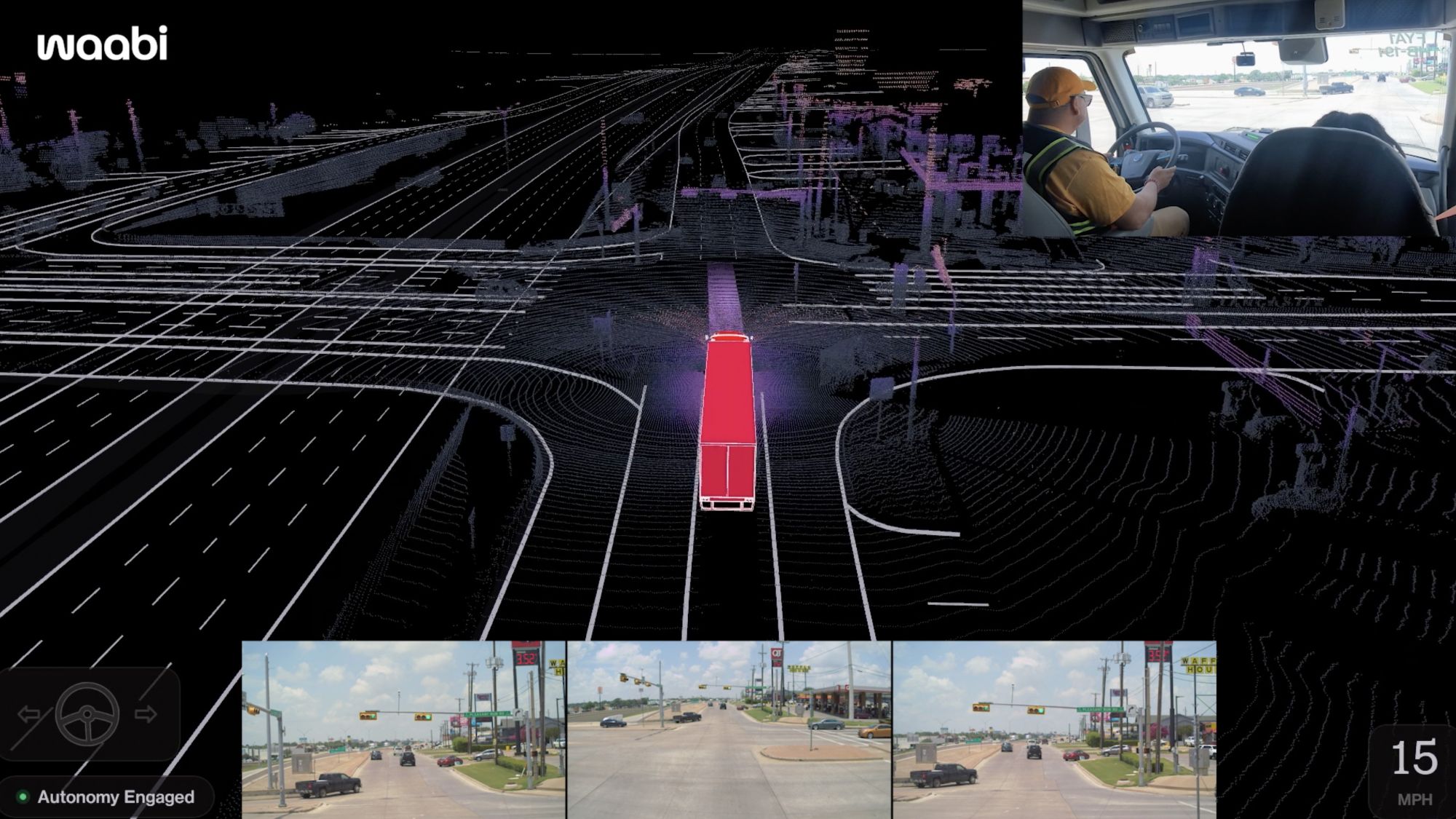
- Waabi and VAS kicking off customer operations with Warp.
-

- Volvo VNL Autonomous at a refueling station.
-

- Volvo VNL Autonomous under-the-skin redundancy.
-

- Volvo VNL Autonomous sensor cleaning.
-

- Volvo VNL Autonomous with Waabi Driver autonomy engaged.