SteelWatch‘s first assessment of major global steelmakers shows that none are currently ready to transition to near-zero-emissions production. Despite many committing to long-term climate goals, coal dependence remains the norm, and the scaling of green iron has barely started, according to the non-profit organization.
Released earlier this week, the first SteelWatch Corporate Scorecard pulls together previously disparate and opaque company data to evaluate 18 iron and steel producers across 11 countries, with operations in 29. The scorecard assessed steelmakers based on published data, mainly company data from annual reports published in FY 2025, which includes data from FY 2024.
“Embarrassingly, not a single steelmaker has scored above 50 points out of 100, and even those at the head of the pack have big gaps to bridge before they can claim to be acting responsibly on the climate crisis,” said Caroline Ashley, SteelWatch’s Executive Director.
Accounting for around a tenth of global CO2 emissions, the steel industry is critical to addressing the climate crisis, according to SteelWatch. The companies assessed are based across Asia, Europe, and the Americas. All operate coal-based blast furnaces, an outdated technology that is responsible for up to 90% of the sector’s overall emissions.
Rankings from first to last are SSAB, Thyssenkrupp, ArcelorMittal, Ternium, JSW, Cleveland-Cliffs, NLMK, U.S. Steel, Gerdau, Tata Steel, Baosteel, JFE, MMK, Oyak, POSCO, Hyundai Steel, Nippon Steel, and HBIS.
While still far from the transformation required, Sweden’s SSAB is ahead of the pack, with Germany’s Thyssenkrupp in second, with scores of 46.2 and 41.9 out of 100, respectively. These two companies are “breaking away from the rest” as they have plans in place for green iron and blast furnace retirement, without the reinvestment or recent relining of coal-based assets that is common among their peers. However, both still need to implement and scale green iron.
Hyundai Steel, Nippon Steel, and HBIS are among the worst performers, with total scores of 21.2, 16.8, and 8.3 out of 100, respectively. Their heavy reliance on coal-based blast furnace production, limited progress or reporting on renewable energy, and lack of confirmed action, in this reporting period, on green iron development are said to be missed opportunities to close transition readiness gaps.
“This first scorecard shows, with unprecedented clarity, that leading steelmakers are failing to lay the foundations for near-zero-emissions production fast enough,” said Ashley. “Consistently low scores illustrate the yawning gap between company actions and what our climate requires. Investments this decade to cut coal dependence and scale green are critical to avoid compounding problems later.”
Using the latest company data, the scorecard shows that no steelmaker currently looks good on the near-zero-emissions transition. While most companies have long-term net-zero goals, they are not ready to deliver on their own climate plans, certainly not at the pace and scale necessary to halt catastrophic climate change, according to the report. The “transition readiness gap” captures the difference between what is needed for a credible near-zero-emissions transition and what companies are actually doing.
With most assessed companies still investing in coal-based blast furnaces, coal dependence and the lack of scaling green iron are the common elements holding back progress, according to SteelWatch. The overall average score for Phasing Out Coal is 10.5 out of 25; all but four companies have recently made or announced further investment in coal-based blast furnaces. The average score for Scaling Green barely registers, at 0.6 out of 25. Total scores out of 100 include Climate Performance, Transparency, and Social and Environmental Responsibility.
Despite the concerning picture, SteelWatch researchers say there are small signs of progress. Most companies do not currently have blast furnaces under construction. SSAB has a notable share of renewable energy uptake, and some companies have a measurable share of direct reduction of iron capacity, which could and should be shifted to near-zero-emissions iron production.
SSAB setting the automotive pace
SSAB is also setting an example in automotive sustainability with key partner Volvo Cars. In June, the two announced they had signed a new agreement for SSAB to supply recycled and near-zero-emissions steel starting last year, making Volvo the first car maker to sign a supply agreement for the material for serial production deliveries.
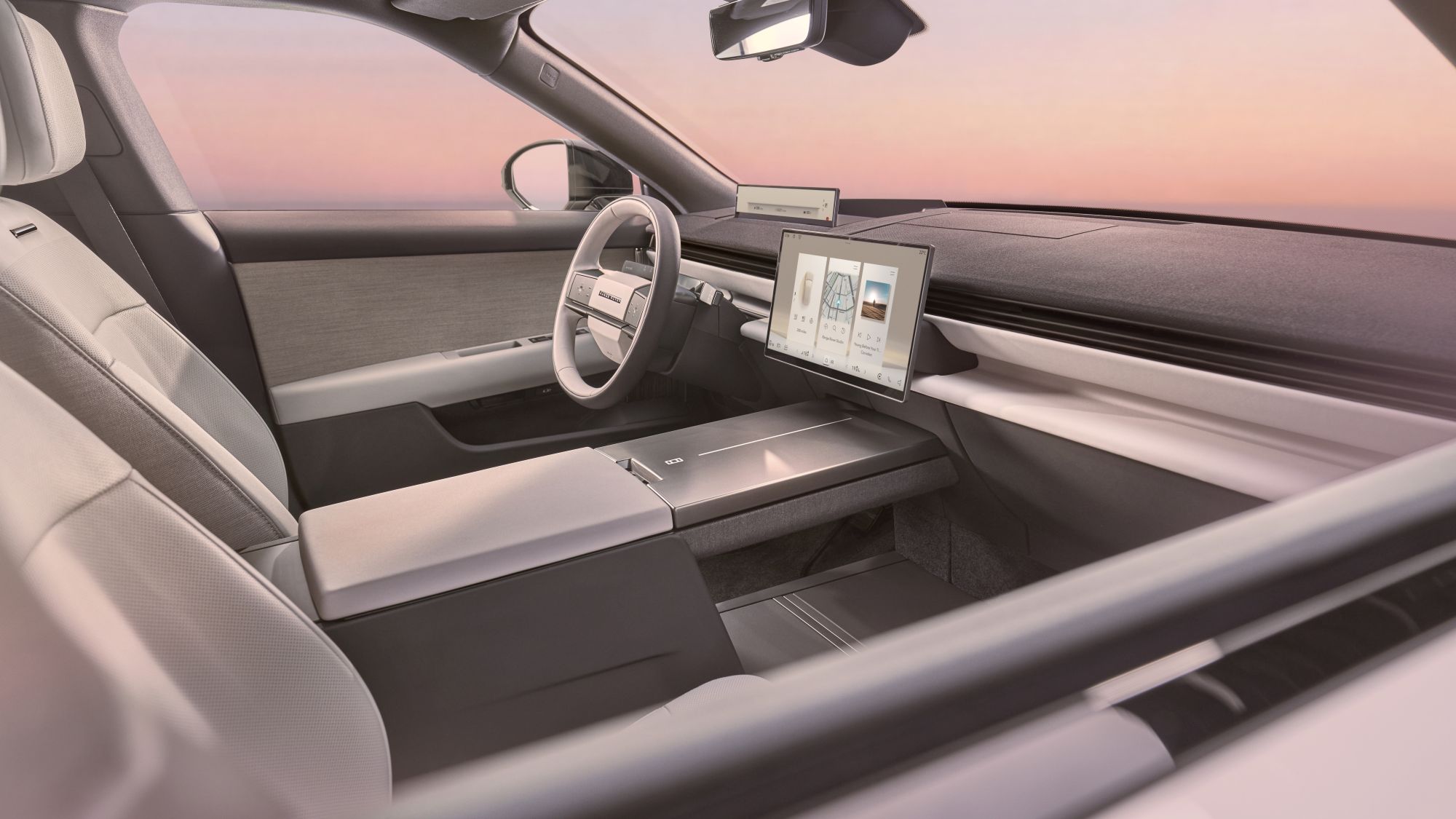
The recycled steel will be used in select components of the new, electric EX60 SUV (see Futurride’s coverage of that vehicle here) as well as other vehicles based on Volvo Cars’ next-generation SPA3 architecture.
(In 2021, the Volvo Group, a separate entity, revealed the world’s first vehicle made of “fossil-free” steel from SSAB. The concept machine was a load carrier for use in mining and quarrying. See Futurride’s coverage here.)
The new agreement is an extension of a long-term existing collaboration between the companies to be at the forefront of the transition to more sustainable steel. In addition to buying recycled and near-zero-emissions steel, Volvo Cars progresses towards its circular ambitions by also selling scrap steel, helping it to keep materials at the highest value for the longest period in a closed-loop system.
“One of the biggest sources of CO₂ emissions in our production process is the steel we use to build our cars, averaging 25% of all material-related emissions for a new Volvo car,” said Francesca Gamboni, Chief Supply Chain and Manufacturing Officer at Volvo Cars. “We work towards achieving net-zero greenhouse gas emissions by 2040, and cutting steel-related emissions really has the potential to move the needle.”
On the road to net-zero greenhouse gas emissions by 2040, Volvo Cars’ aim by 2030 is to have reduced CO₂ emissions per car by 65-75% compared to a 2018 baseline by continuously reducing CO₂ emissions across the value chain.
SSAB’s closed-loop system recycles scrap steel, significantly reducing CO₂ emissions and keeping materials and natural resources in use longer. Compared with traditionally produced steel in Europe, its recycled steel generates almost 100% less CO₂ emissions in its own operations and is made with a recycled content of almost 100%.
The agreement with SSAB supports this and Volvo Cars’ circularity ambitions to use an average of 30% recycled content across the fleet by 2030, and for new car models released from 2030 to contain at least 35% recycled or bio-based content.
-

- Volvo Cars’ EX60 Cross Country uses SSAB recycled steel in select components.
-

- Steelwatch steel company decarbonization ratings are led by SSAB.
-

- Volvo Cars signed a recycled steel deal with SSAB in 2025.
-

- Volvo Group showed the first fossil-free steel vehicle with this 2021 load carrier concept.