This month at Embedded World in Nuremberg, Germany, and its own, inaugural Converge flagship user conference in Santa Clara, CA, Synopsys, Inc. revealed a technology ecosystem and cloud‑based deployment to improve engineering collaboration and speed time-to-market for intelligent systems.
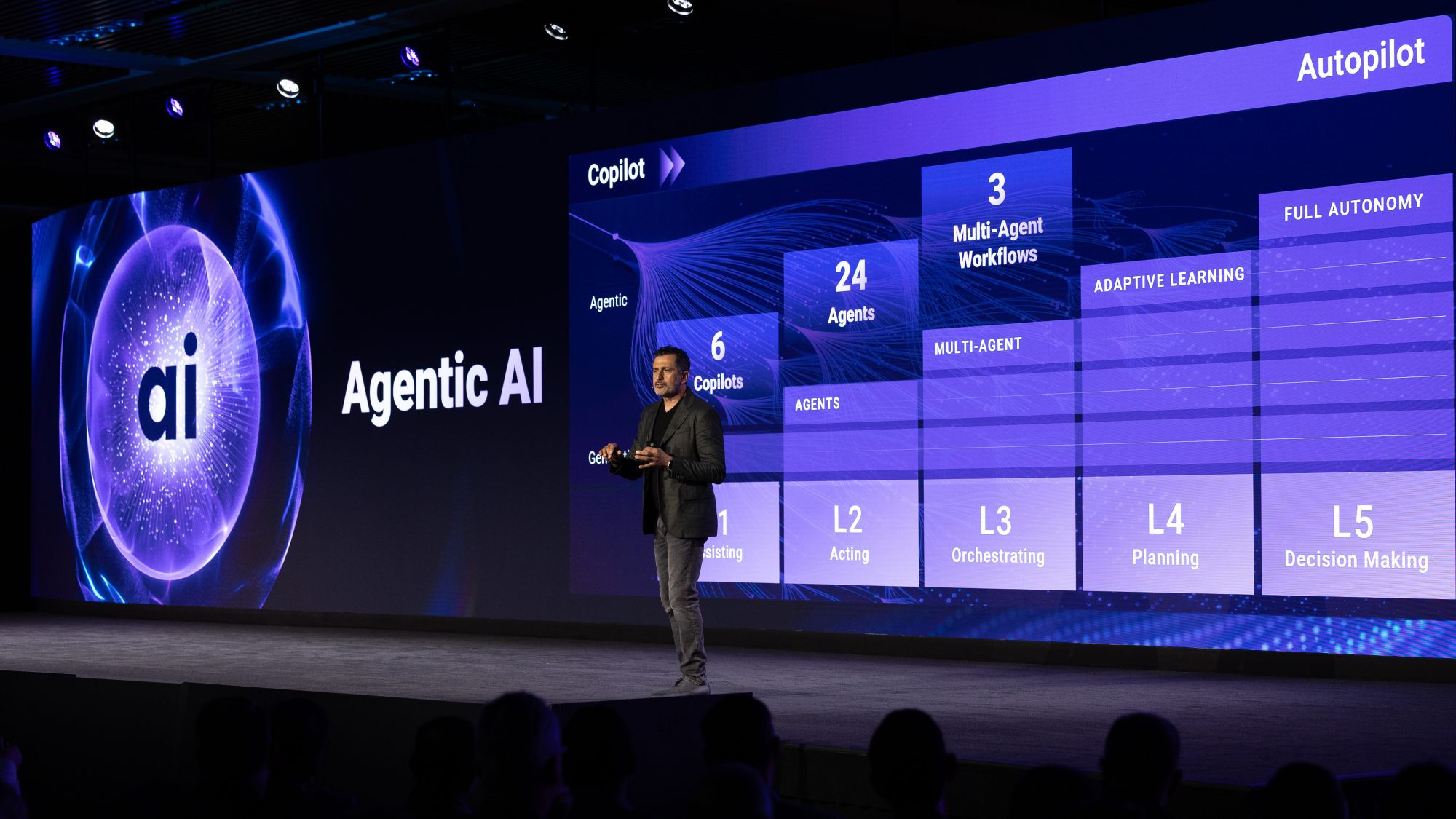
At Converge, President and CEO Sassine Ghazi shared his vision for an engineering future that is more silicon-powered, AI-enabled, and software-defined. Highlights of the company’s expanded portfolio are a new Multiphysics Fusion integrated Synopsys/Ansys technology for chip design; the “industry’s first” L4 agentic workflow for design and verification built with AgentEngineer; the first major Ansys product release following the acquisition called GeomAI; and a new eDT (Electronics Digital Twin) platform to accelerate physical AI system development
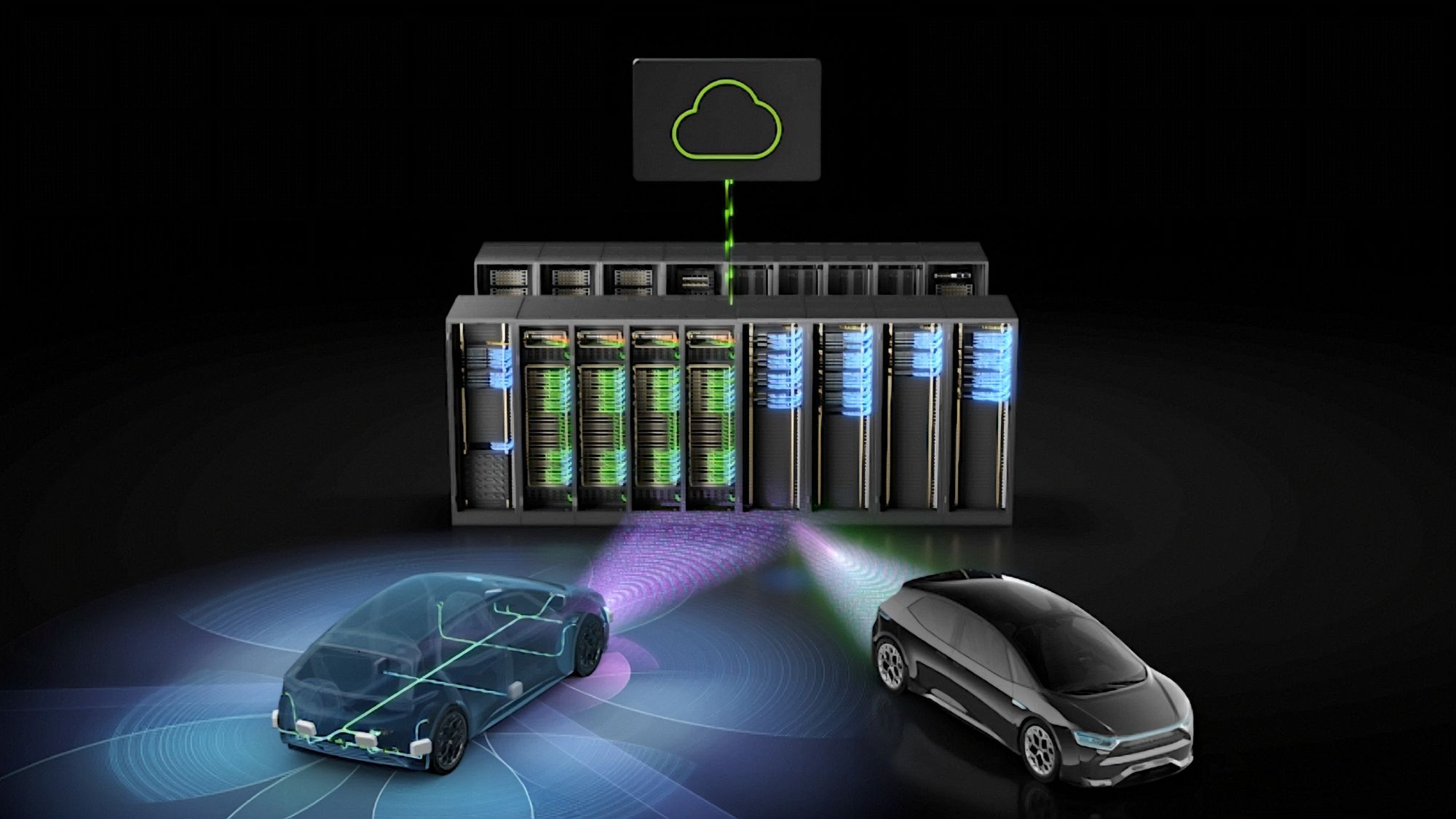
For that last one, the leading EDA (electronic design automation) solution provider says it is a first-of-its-kind, open solution to accelerate the creation, management, deployment, and use of eDTs critical for today’s software-defined product development that enables physical AI systems.
“Automotive engineering teams are at their breaking point with more than 600 million lines of software, hundreds of software suppliers, rapidly shrinking development cycles, and mounting cost pressures,” said Ravi Subramanian, Chief Product Management Officer at Synopsys. “Intelligent system development from vehicles to AI factories, requires a fundamentally different approach — one that connects silicon designs to software behavior and full‑system validation from the earliest stages of development.”
Initially focused on high-value automotive use cases, the platform enables OEMs to achieve up to 90% of software validation prior to hardware availability by shifting software development and system integration earlier, reducing vehicle development cost and time-to-market.
“With the new eDT Platform, Synopsys is transforming engineering with an end‑to‑end digital twin foundation, bringing together our product and market leadership, supplying virtual SoC models and large‑scale system simulations, along with our extensive partner ecosystem, to simplify, accelerate, and scale the development of next‑generation vehicles,” added Subramanian.
Volvo Cars is rapidly adopting holistic, whole‑vehicle validation, bringing that rigor into the earliest stages of design and development, said Johannes Foufas, Technical Manager, Software Factory, Volvo Cars.
“Core to this transformation is our pioneering use of electronics digital twins working with Synopsys,” Foufas elaborated. “With virtualized ECUs, our teams can ‘shift left’ test and validation before hardware exists, enabling us to reduce development cost, increase software quality, and accelerate innovation throughout the lifecycle of our vehicles.”
In January, Volvo Cars gave some insight into the shift left when it introduced its fully electric Volvo EX60, its most technologically advanced car to date, by way of this YouTube video with Alwin Bakkenes, Head of Software Engineering, and Kristina Elowson, Program Manager, AD/ADAS, Vehicle Energy and Motion Control, Protective Safety. It is underpinned by its new, next-generation electric architecture to deliver exceptional range, fast charging, and a more human driving experience powered by AI-driven computing. See Futurride‘s coverage here.
The new Synopsys platform enables users to configure cloud-based eDT Labs, a collection of pre-integrated assets including its own technologies, open‑ecosystem tools, models, software, and scalable compute. High-value automotive use cases include early customer evaluation of new system-on-chip or microcontrollers to reduce time-to-selection decisions; early customer start-of-software development by starting software development well before hardware availability; collaborative software development between teams to accelerate time to market; and system validation with rapid provisioning of eDTs to reduce effort while improving software quality.
The platform can be used to establish labs such as Synopsys’ virtualization and AI technologies, along with advanced debug, test tools, ecosystem integration, and blueprints to rapidly build and validate eDTs. System composition using the open-source SIL (software-in-the-loop) Kit by Vector and Synopsys can enable teams to rapidly assemble and connect virtual ECUs, models, and software components. A broad set of pre-integrated ecosystem partner technologies includes silicon models; simulation, debug, and analysis tools; and software IP.
“Software-defined vehicles are reshaping how automotive systems are designed, validated, and operated,” said Gavin C. Rogers, Senior Vice President at Vector. “As software and AI become the dominant value drivers, the industry must move toward scalable, platform-based development approaches. By combining Synopsys’ electronics digital twin platform with Vector’s automotive-proven software platforms and software factory, we are jointly enabling a seamless, software-first development workflow across the entire vehicle lifecycle.”
The new Synopsys offering provides a set of features such as role-based user management, secure access and encryption, administrative analytics, global license provisioning, and a workflow editor. User interfaces, applications, and APIs can integrate with commercial and customer software factory solutions.
With SaaS (software-as-a-service) or BYOC (bring-your-own-cloud) deployment options, the eDT Platform leverages flexible compute in the cloud. For example, it can be powered by AWS cloud infrastructure and AWS Graviton4 processors, delivering the computational performance and flexibility required for modern automotive development.
“Validating complex automotive software traditionally required expensive physical prototypes and took years,” said Ozgur Tohumcu, General Manager of Automotive and Manufacturing at AWS. “AWS and Synopsys have fundamentally changed that equation. Together, we’re helping customers compress 3-4 year development cycles into a fraction of that—a game-changer for the industry.”
Later in March, Synopsys showcased at Nvidia‘s GTC user conference some interesting accelerated and agentic AI solutions enabling R&D teams to design, simulate, and verify intelligent products at lower cost with greater precision and speed.
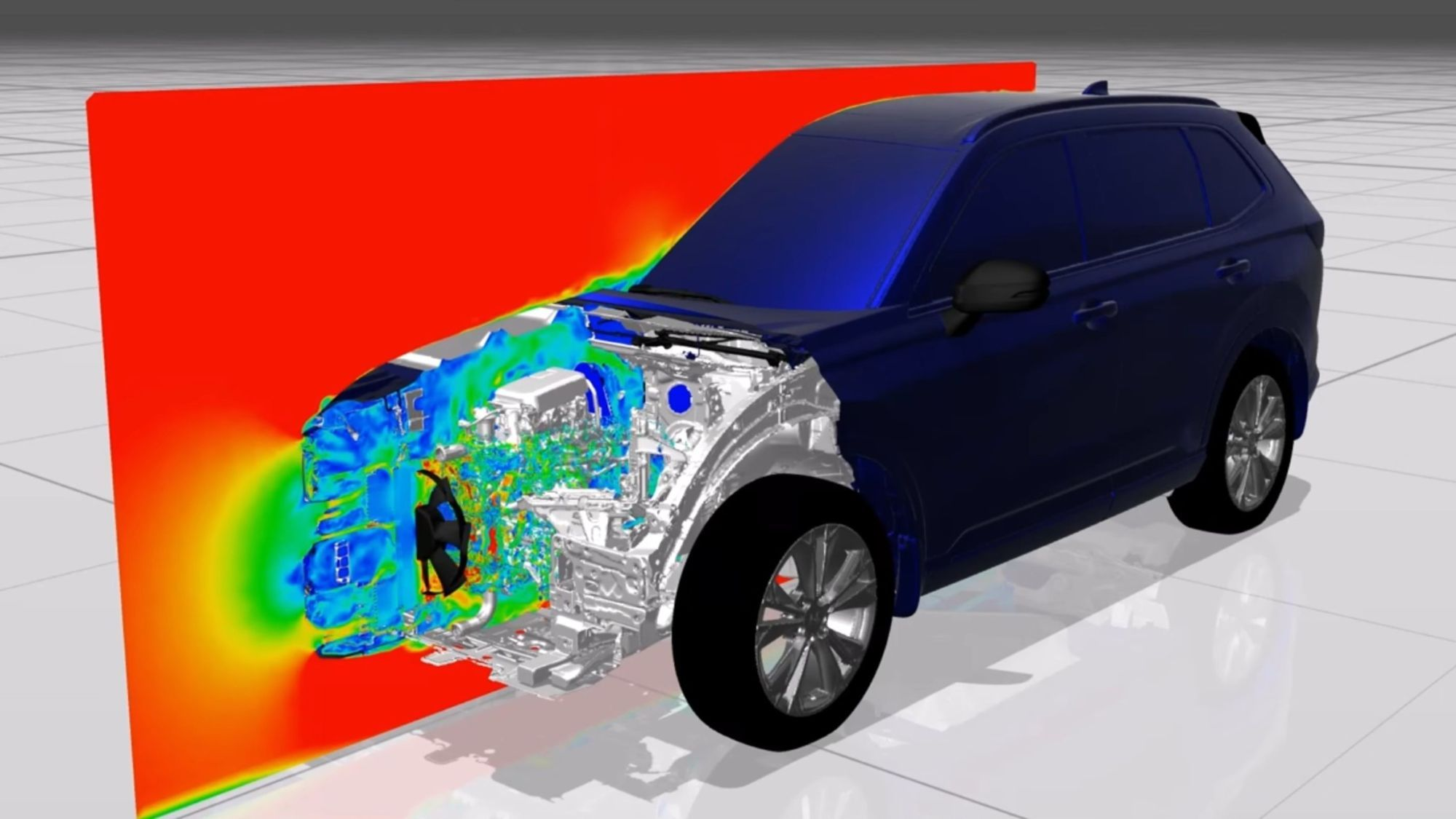
Among its automotive customers using Nvidia GPU-accelerated applications from Synopsys is Honda. The OEM has realized unsteady, large‑scale, high‑fidelity CFD that was previously impractical on CPUs through GPU acceleration on Ansys Fluent fluid simulation software.
“We achieved 34x faster computation and 38x cost reduction using four GB200 GPUs compared to 1,920 cloud-based CPU cores,” said Yusuke Uda, Assistant Chief Engineer at Honda. “Through close collaboration with Synopsys, Honda is accelerating the migration of its CFD simulations from CPUs to GPUs. This advancement enables us to continue delivering safer, higher‑quality products to our customers at appropriate cost, with consideration for the environment.”
Synopsys is building an open, secure, hardware-accelerated agentic AI stack in collaboration with Nvidia. Demonstrations included the Synopsys industry-first L4 agentic workflow for design and verification.
Powered by AgentEngineer technology, the workflow can orchestrate complex chip design tasks, scale across high-performance environments, and keep engineers in control to accelerate productivity, manage growing design complexity, and redefine how silicon is built in the AI era. The multi-agent workflows leverage Nvidia’s Agent Toolkit, NIM inference services, and Nemotron models to provide options to customers.
-

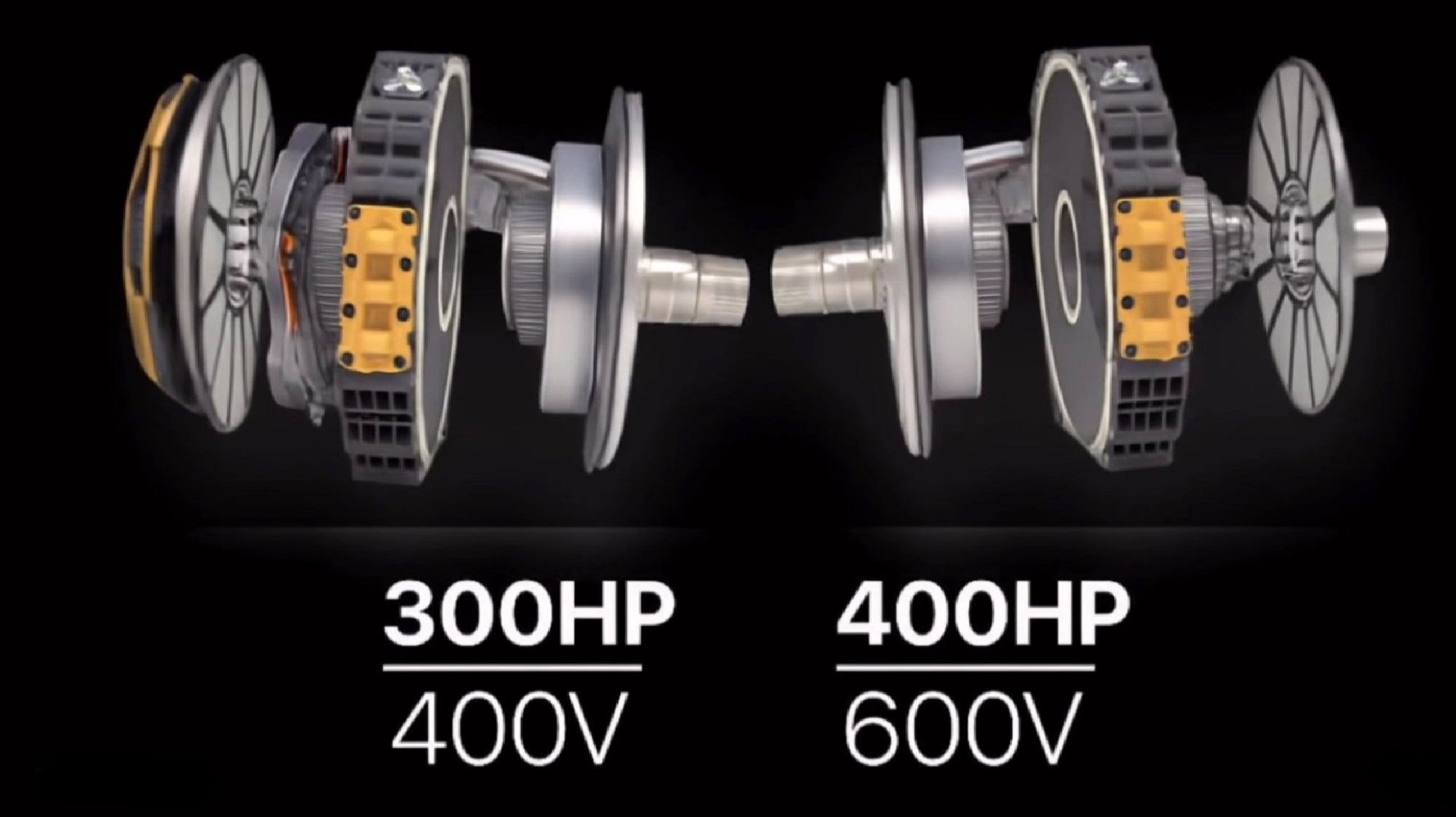
- Synopsys says its new eDT platform can aid software-defined product development that enables physical AI systems.
-

- CEO Ghazi announces agentic AI capabilities during Synopsys Converge 2026.
-

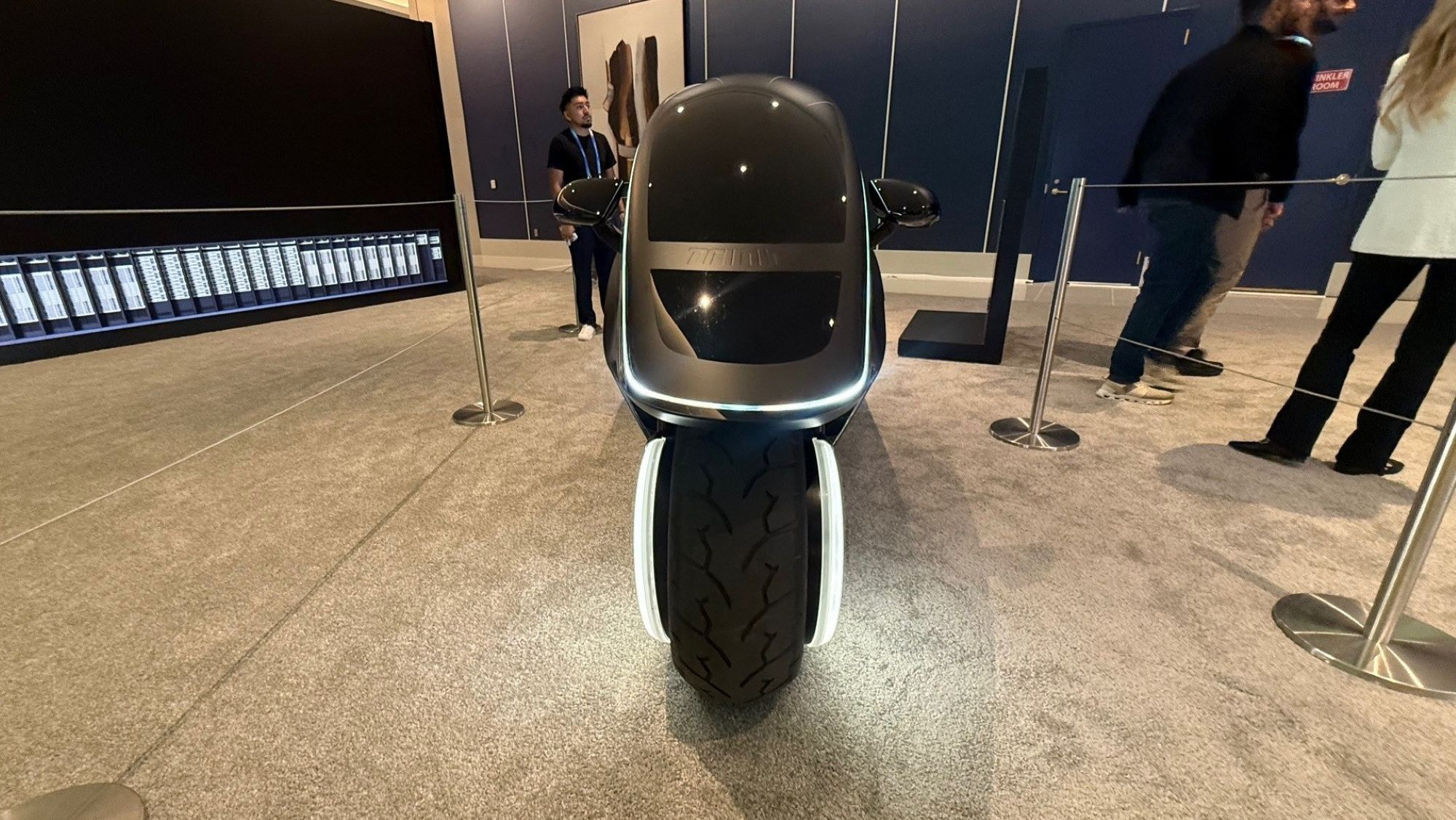
- Volvo is accelerating innovation with vehicles like the electric EX60.
-

- With Synopsys, Honda is accelerating the migration of its CFD simulations from CPUs to GPUs.