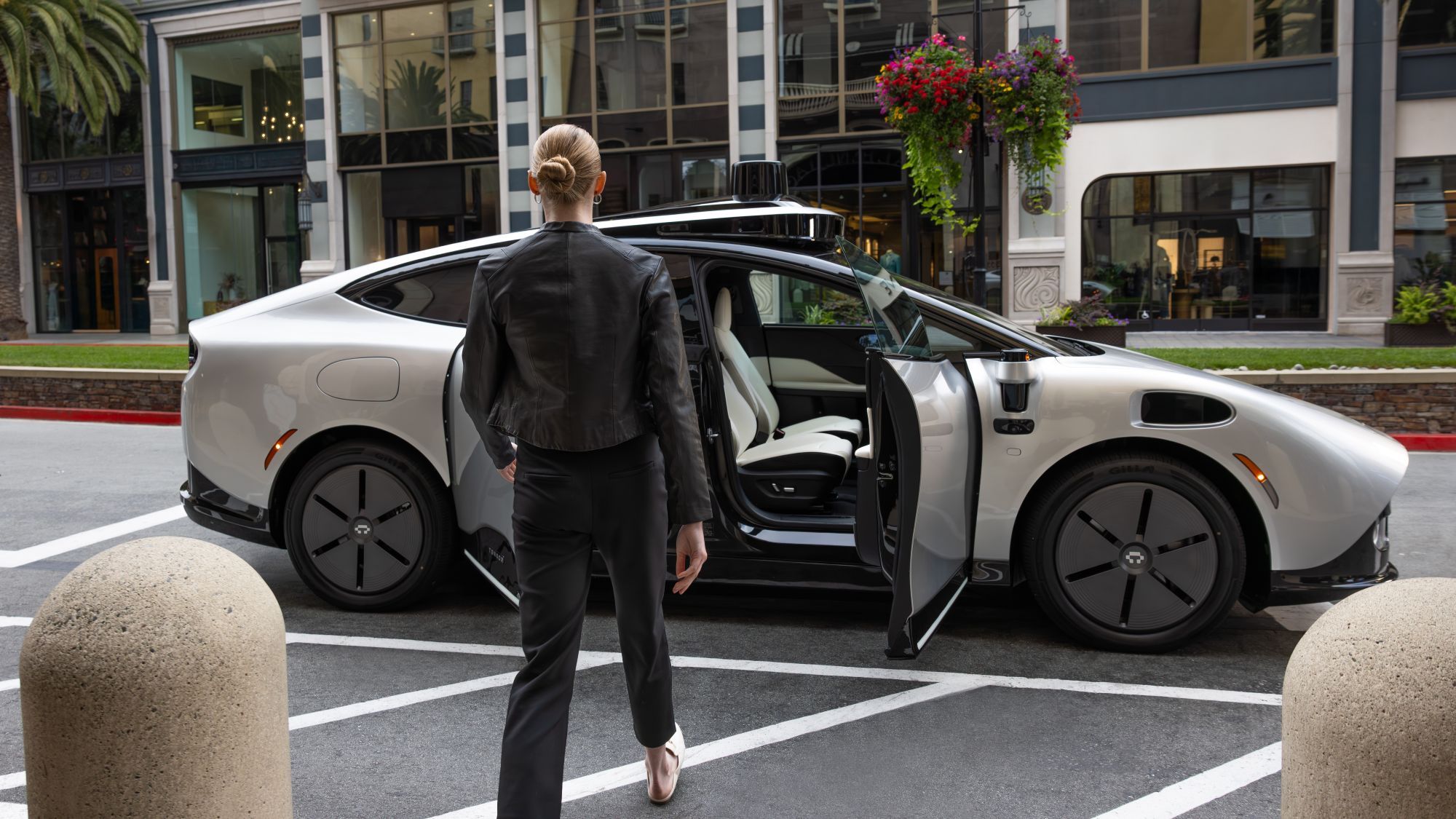
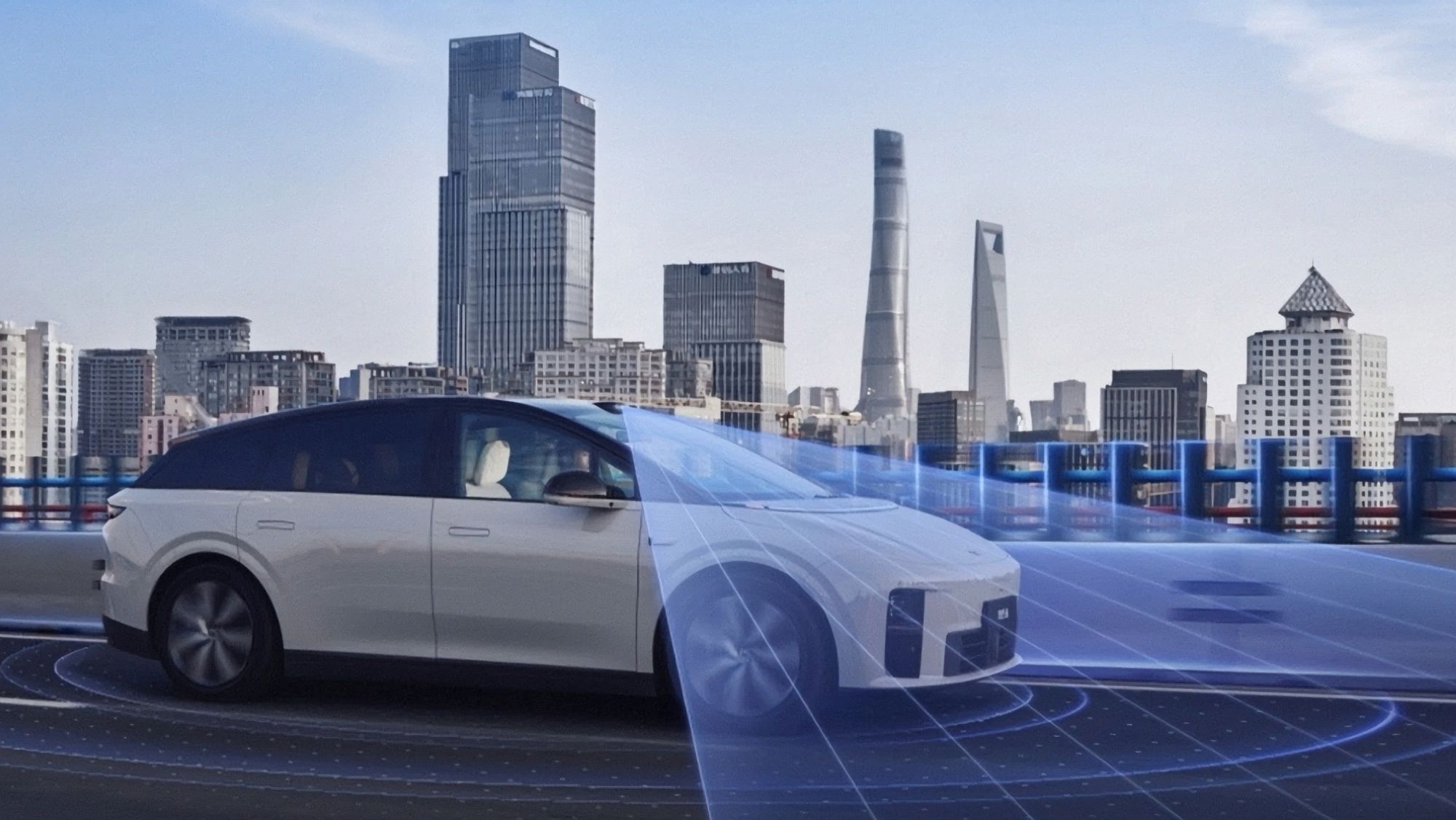
Helm.ai announced last week a major capability expansion of its AI driver. The production-ready, vision-only software stack, from one of the leading providers of advanced AI software for autonomous driving and robotics automation, is designed to scale from SAE Level 2+ ADAS (advanced driving assistance systems) through Level 4 urban autonomy.
Built on Helm.ai’s proprietary Factored Embodied AI architecture, the system is said to deliver human-like driving in complex city traffic without reliance on HD (high-definition) maps or lidar sensors. Because the core foundation model is level-agnostic, it enables automotive OEMs to deploy high-end Level 2+ systems immediately, while using the same software architecture to unlock certified Level 3 “eyes-off” and Level 4 fully autonomous capabilities as their hardware and regulatory roadmaps evolve.
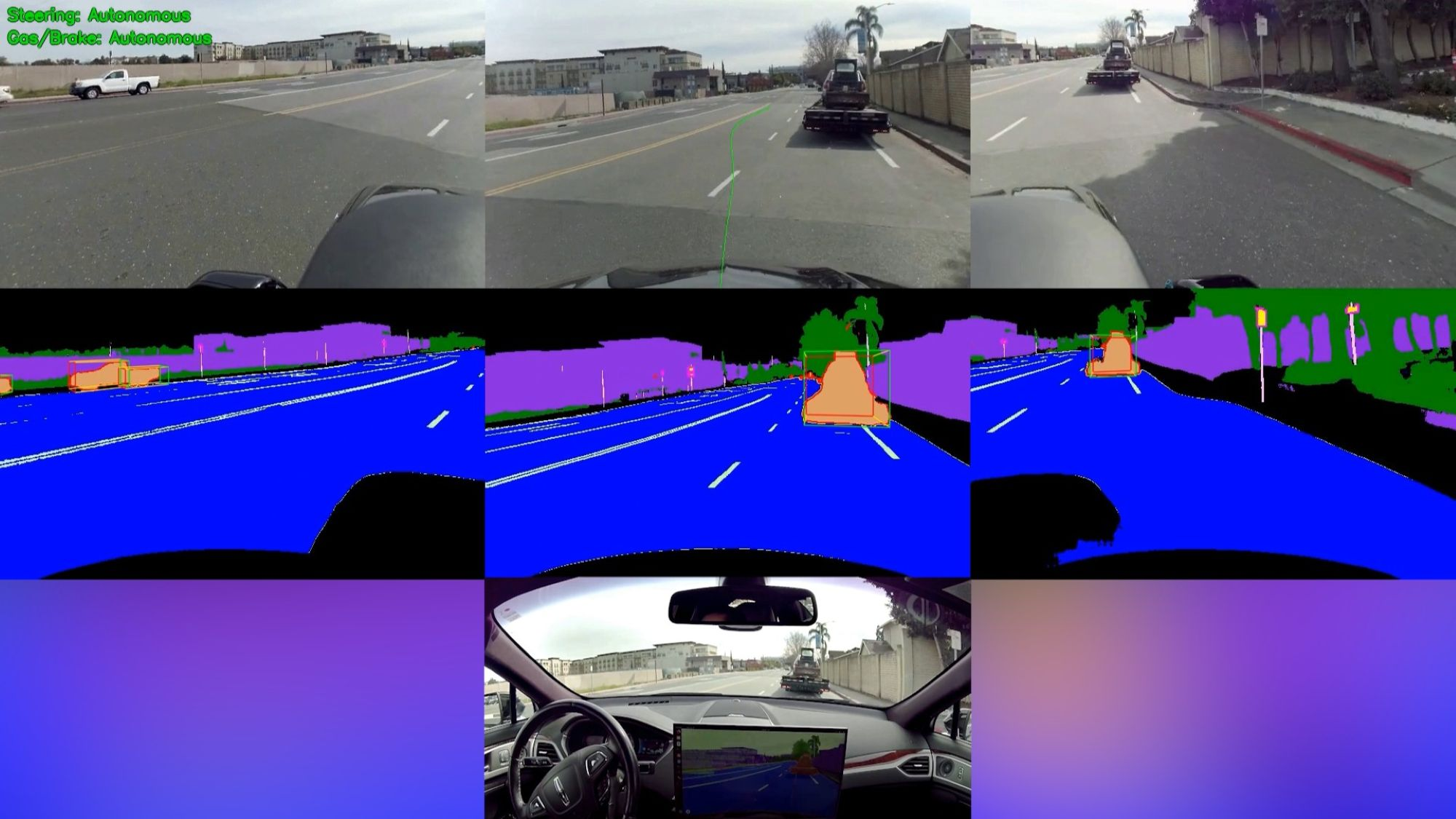
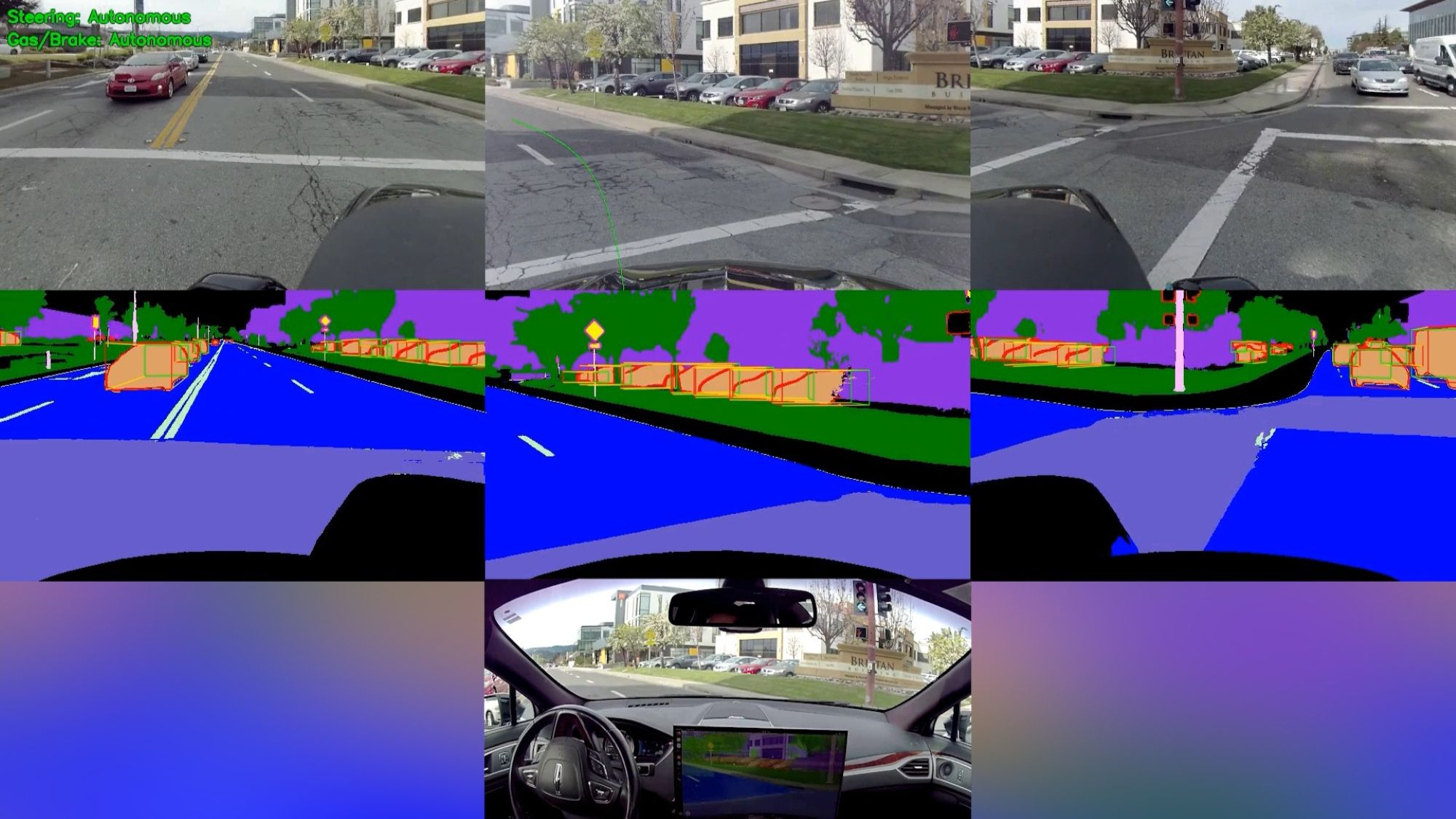
To mark the announcement, the AI software startup established in 2016, released a demonstration video of its driver navigating the urban environment near its Redwood City, CA, headquarters. It shows the system autonomously handling left and right turns at intersections, complex traffic light compliance, and dynamic interactions with other road users—all supervised by a safety driver in accordance with standard testing and validation protocols for production-intent autonomous systems.
“The industry has reached a tipping point where brute-force data collection is no longer commercially viable for high-end autonomy,” said Vladislav Voroninski, CEO and Founder of Helm.ai. “With Helm.ai Driver, we have fundamentally changed the unit economics of scalable autonomy. By delivering a vision-first system that powers advanced Level 2+ today and serves as the software brain for the transition to Level 3 and Level 4 autonomy, we are providing OEMs with the only realistic path to deploying next-generation autonomy on mass-market compute platforms.”
According to the company, the automotive industry is currently hitting a “data wall,” the point where autonomous driving approaches require exponentially more rare and expensive real-world data to improve performance in edge-case scenarios. Even if such data were available, monolithic, pixel-to-control “end-to-end” models function as “black boxes” that lack the interpretability required for rigorous safety certification at Level 3 and beyond.
Instead, the Helm.ai Driver uses a Factored Embodied AI architecture that addresses data scarcity and interpretability simultaneously. This approach splits the autonomy problem into two distinct, interpretable layers: perception and policy.
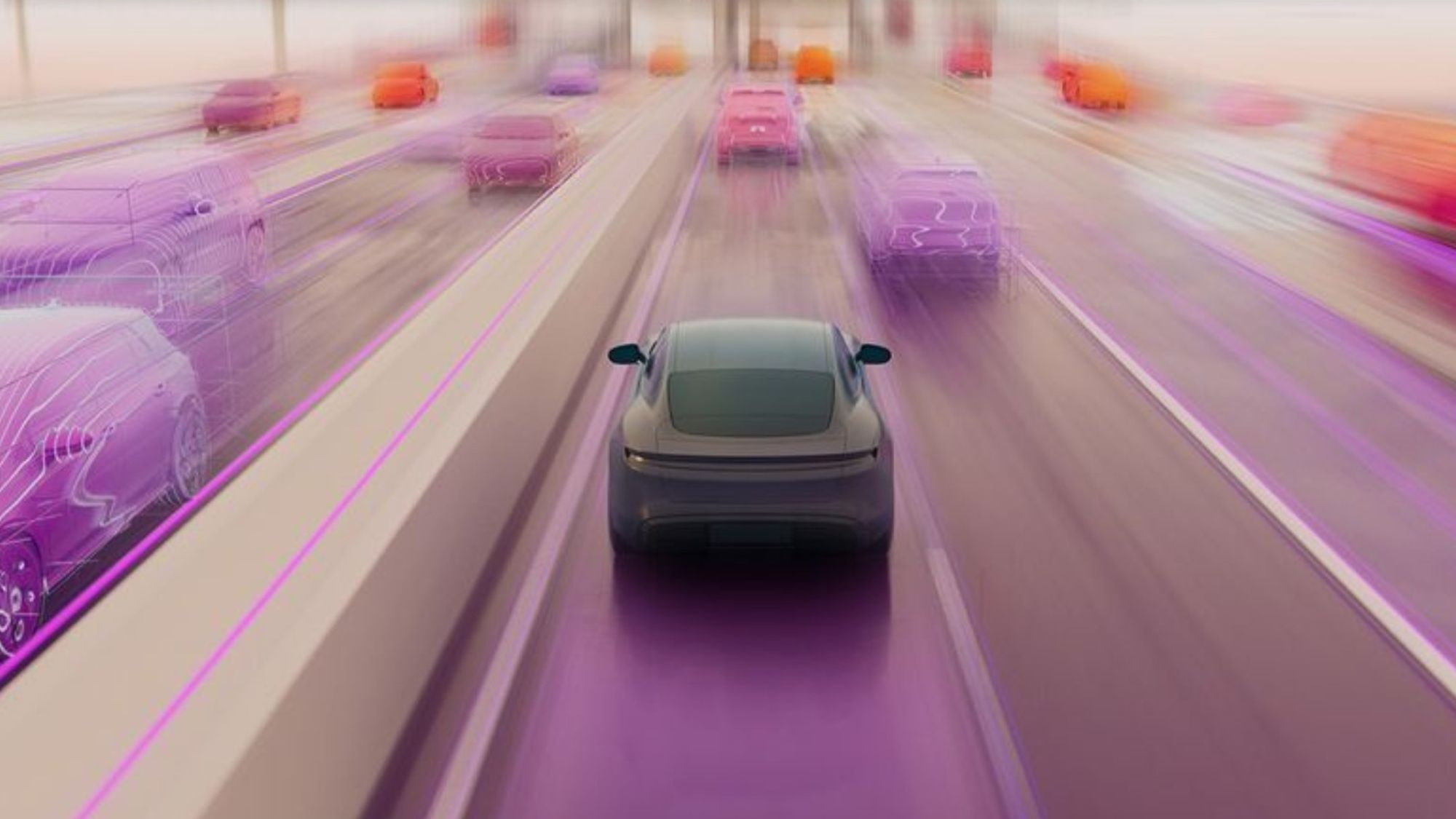
By solving perception separately, the system converts raw sensor data into information-rich and highly structured semantic segmentation and 3D information. The end-to-end policy model then takes this interpretable semantic geometry as its input—rather than raw pixels—to “reason” about road structure and traffic rules.
This factored approach is said to unlock massive training on Internet-scale datasets and enables highly data-efficient training of the end-to-end policy model to help break the “data wall.” Crucially, this structure provides the transparency critical for automotive OEMs, offering a clear, auditable software foundation capable of scaling from supervised Level 2+ to ISO 26262-certifiable Level 3 and Level 4 deployments.
Deep teaching and zero-shot advantage
For Voroninski, solving autonomy isn’t about throwing more data at the problem; it’s about understanding its structure. That mindset underpins Helm.ai’s Factored Embodied AI, which decouples perception from decision-making to overcome key ADAS limitations in urban environments. The result is scalable, production-grade autonomy that generalizes from dramatically less data.
“This approach powered a vision-only benchmark where our AI driver achieved zero-shot autonomous steering through complex city streets in LA suburbs,” he said. “Trained on just 1000 hours of data, the system successfully steered through complex lane changes and urban intersections in environments it had never previously encountered. Autonomy works when systems truly understand the world around them.”
While traditional approaches typically require billions of dollars in capital expenditure and millions of miles of training data to achieve urban capability, according to Helm.ai, its Driver’s planner reached this level of maturity using only 1000 h of real-world driving data. The breakthrough is powered by Deep Teaching, the company’s proprietary unsupervised learning technique that enables neural networks to learn directly from massive amounts of easily available non-driving data, bypassing the need for costly human annotation on Internet-scale vision datasets.
Paired with semantic simulation, the system can train on practically infinite geometric scenarios without the computational overhead of rendering photorealistic pixels. By training the system on the semantic geometry of the world rather than raw pixels, Helm.ai bypasses the traditional cost and time barriers of autonomous development.
The true test of an autonomous system for mass-production vehicles is its ability to handle edge-case environments without manual tuning or HD maps, according to Helm.ai. To validate this, the company recently demonstrated the system’s generalization capability by deploying the software in Torrance, CA.
Without any prior training on the area’s specific streets, Helm.ai Driver was able to perform “zero-shot” autonomous steering. The company says that this ability to generalize across geographies ensures that its OEM partners can scale Level 2+ through Level 4 features globally without the prohibitive cost of city-by-city data collection or geofencing.
Honda is an early supporter
In October, Honda Motor Co., Ltd. announced that it had made its latest investment in Helm.ai because of its key strengths in AI technologies advanced through unsupervised learning, which lets AI learn without being provided with the correct answers and derive the patterns and unique characteristics of the unlabeled data on its own. The investment is aimed at boosting the enhance the development of next-generation E2E (end-to-end) AD (autonomous driving) and ADAS.
Helm.ai have been working with the OEM since 2019 through what is now called Honda Xcelerator Ventures, the global open innovation program designed to facilitate collaboration between startups led by Honda Innovations Co., Ltd. After Honda’s initial investment in 2022, the two companies signed a multi-year joint development agreement in 2025 to enhance the development of next-generation AD/ADAS based on the E2E AI architecture.
“Through collaboration with Helm.ai, we will accelerate the development of AI technologies that enhance the practicality of our next-generation AD/ADAS, delivering mobility experiences that will offer surprise and inspiration to our customers,” said Mahito Shikama, Operating Executive of Honda Motor Co., Ltd. and Head of SDV Business Development Unit, Automobile Operations. “At the same time, we will further strengthen our initiatives toward our ambitious goal of achieving ‘zero fatalities from traffic collisions involving Honda motorcycles and automobiles globally by 2050’.”
By leveraging the Deep Teaching technology and generative AI of Helm.ai, Honda aims to accelerate its development of next-generation ADAS, including vehicle acceleration and steering, throughout the entire route to the destination, whether on expressways or surface roads. Honda is aiming to apply the resulting next-generation ADAS to a range of key EV and HEV models it will launch in North America and Japan around 2027.
-

- Helm.ai Vision software delivers urban perception for Level 2+ to Level 4 driving.
-

- Helm.ai Driver left-turn vision-only urban autonomy demo.
-

- Helm.ai Driver lane-change vision-only urban autonomy demo.