At CES 2026, Qualcomm Technologies is rolling out a number of significant new advancements for its automotive business. They revolved primarily around the company’s Snapdragon Cockpit Elite and Ride Elite automotive platforms, the flagship solutions within the Snapdragon Digital Chassis portfolio. Built on a flexible hardware architecture with software virtualization, they are designed to enable the efficient operation of multiple applications and help automakers develop configurable, scalable SDVs (software-defined vehicles) across various segments, while simplifying the overall vehicle architecture.
The show is “a moment of celebration for our automotive business overall,” said Ignacio Contreras, Vice President of Product Marketing for Automotive at Qualcomm. In the lead-up to the event, he briefed the media on many of the developments, and the company took Futurride along for the ride to CES to learn more.
“We are celebrating now more than 400 million vehicles already on the road using solutions from our Snapdragon Digital Chassis, whether that’s cockpit, telematics, ADAS, or cloud services overall, or a combination of all of those,” said Contreras. “Even beyond that, we are now the number one silicon provider for in-vehicle infotainment and cockpit systems overall.”
This took less than a decade after the launch of the first Snapdragon platform, he said. Now, the company is using CES to announce the first start of production and commercial deployment of the Snapdragon Ride Flex platform.
“This is the only solution, at least we’re aware of, that is able to combine infotainment support and systems and advanced driver assistance systems (ADAS), all combined and managed from a single chip,” said Contreras. “This is very important to bring more cost effectiveness in terms of technology for the vehicles and allows us to bring both advanced ADAS and digital cockpit functions in a very cost-effective manner to entry and mid-tiers of vehicles.”
Momentum is accelerating for the company’s latest flagship offering.
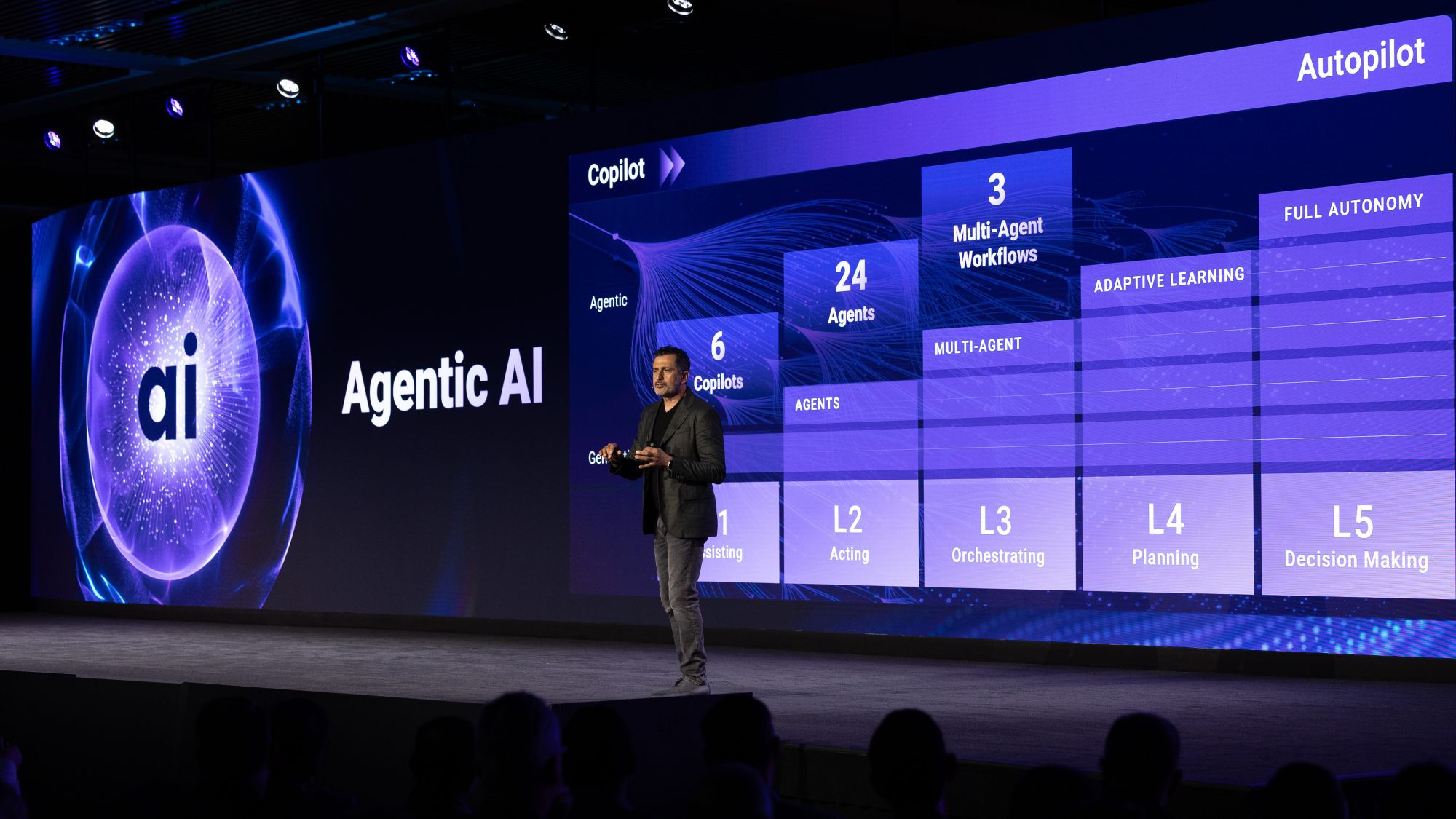
“We’re also celebrating 10 design wins with our flagship Snapdragon Ride and Snapdragon Cockpit Elite platforms overall,” he said. “With this, we’re bringing a new generation of embodied and agentic AI into vehicles that will very soon come into commercialization. At CES, we also will be announcing a significant number of collaborations with automakers, with tier one suppliers, and other members of the ecosystem.”
The most significant collaboration examples involve Leapmotor, ZF, and LG Electronics.
World-first automotive central computer with Leapmotor
At CES 2026, Leapmotor and Qualcomm introduced the world’s first cross‑domain integrated solution powered by Snapdragon Cockpit Elite and Snapdragon Ride Elite automotive platforms. At the Qualcomm booth, the cross‑domain controller demonstrated how a dual‑chipset architecture delivers compute performance to streamline vehicle electronics, reduce system complexity, and enable more advanced AI (artificial intelligence) capabilities across an entire vehicle.
“Intelligence is profoundly reshaping the automotive industry, and technological innovation remains at the core of Leapmotor’s development,” said Zhu Jiangming, Founder, Chairman and CEO of Leapmotor. “The mass production of our central domain controller based on dual Snapdragon Elite automotive platforms will further support Leapmotor’s intelligent vehicle architecture evolution and enable us to deliver industry-leading driving experiences.”
The collaboration is said to highlight the growing value of deep chipmaker-automaker integration at the vehicle‑architecture level and provide a scalable blueprint as the industry accelerates toward centralized computing and fully software‑defined vehicles.
“Our collaboration with Leapmotor has consistently pushed the boundaries of automotive innovation through our Snapdragon Digital Chassis solutions,” said Nakul Duggal, Executive Vice President and Group General Manager of Automotive, Industrial and Embedded IoT, and Robotics at Qualcomm Technologies, Inc. “We are proud to help deliver the world’s first mass-produced multidomain integrated solution and to see our Snapdragon Elite automotive platforms driving the industry toward central computing and SDVs—bringing advanced automotive technologies to more automakers and consumers.”
Leapmotor’s flagship D19 entering mass production is the first vehicle globally to launch with this high-performance central controller based on dual Qualcomm SA8797P chips. Leveraging the two Snapdragon Elite platforms, the central domain controller unifies key vehicle domains—such as intelligent cockpit, driver assistance, body control (lighting, climate, doors, windows), and the vehicle gateway—into a single high‑performance system.
The dual‑chipset setup provides the compute headroom needed for real‑time coordination and advanced AI, including emerging agentic AI workloads. With Qualcomm’s Oryon CPU, Adreno GPU, and Hexagon NPU working in parallel, the platform can run both a full‑modality large AI model for the cockpit and a VLA multimodal model for driver assistance.
Key system capabilities include support of up to eight displays, including multiple 3K and 4K screens, and up to 18‑channel audio for immersive in‑car entertainment. The system also enables seamless OTA (over-the-air) updates, remote diagnostics, and remote vehicle control with its SOA (service‑oriented architecture—offering more than 200 modular capabilities for flexible, user‑defined experiences.
The system is designed to support up to 13 cameras and multiple sensors, including lidar, vehicle-millimeter‑wave radar, ultrasonic sensors, and a high‑precision IMU (inertial measurement unit) to deliver reliable SAE Level 2 driver‑assistance. With more than 30 advanced features such as P2P (parking‑to‑parking) functionality, the controller is engineered to help vehicles handle complex daily and urban scenarios. The system also provides a scalable way to enhance safety features across models, while drivers benefit from smoother, more intuitive assistance.
Its in-vehicle connectivity is engineered to support fast, reliable communication among all vehicle systems while also supporting voice calling, emergency services, Bluetooth, Wi‑Fi, and precise location services. The level of connectivity gives automakers a strong foundation for safety features and lets users enjoy a more connected road experience.
Showcasing generative with LG
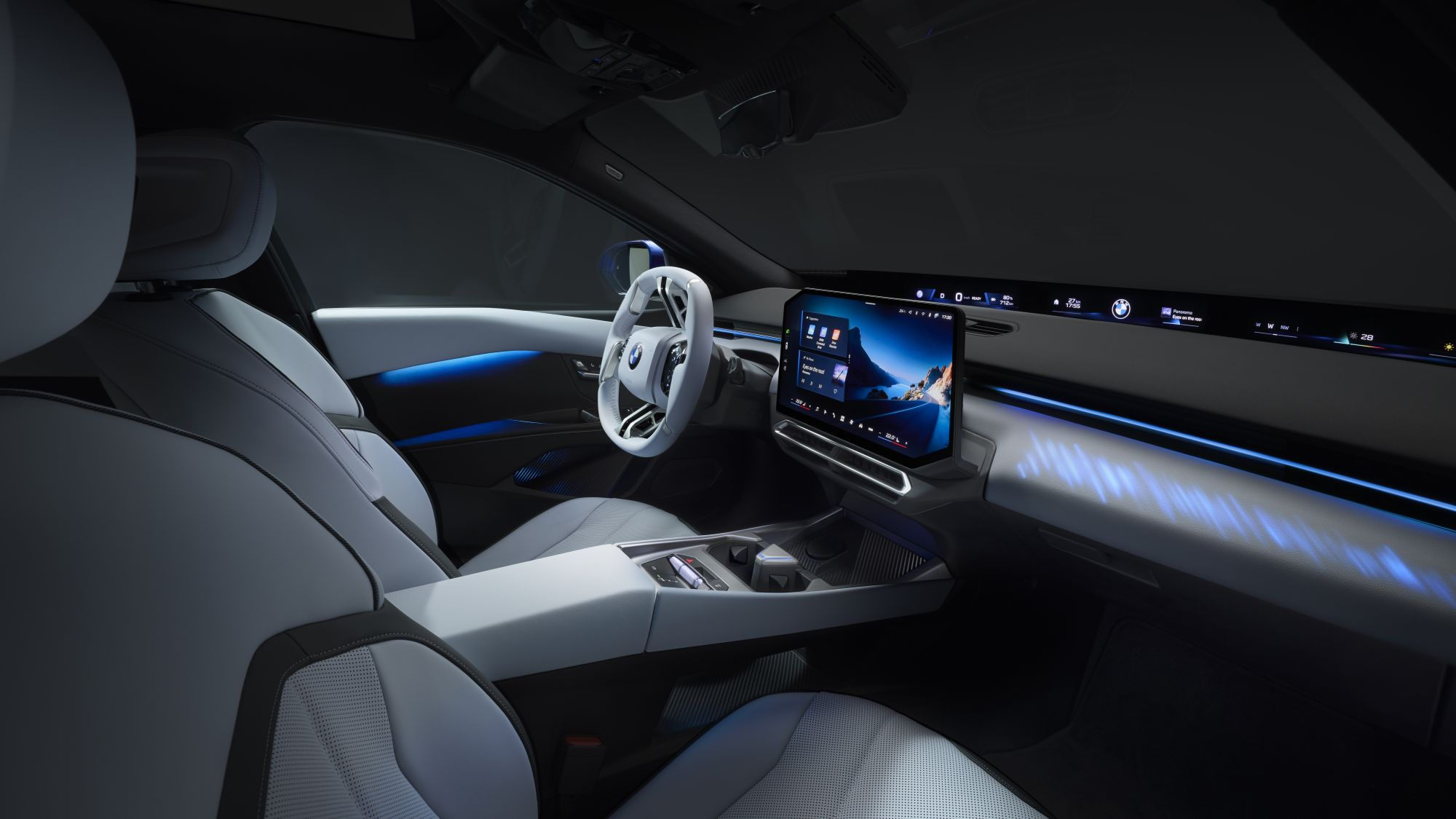
LG Electronics is unveiling its new AI Cabin Platform at CES 2026 in Las Vegas this week. Designed to run on automotive high-performance computing (HPC) systems, the solution leverages generative AI and is powered by Qualcomm’s Snapdragon Cockpit Elite silicon.
At its private showcase during the show, guests can experience a digital cockpit featuring the AI Cabin Platform and preview the AIDV (AI-defined vehicle) solution. The platform applies generative AI models—such as vision language models (VLMs), large language models (LLMs), and image generation models—to LG’s in-vehicle infotainment (IVI) system for what it says is a new era of intelligent, context-aware driving experiences.
“Based on our proven technology and global trust, we will continue expanding partnerships with innovators like Qualcomm Technologies to drive future mobility beyond the SDV to the AIDV,” said Eun Seok-hyun, President of the LG Vehicle Solution Company. “With the AI Cabin Platform, we are creating mobility that not only understands drivers, but responds proactively to their needs and preferences, making every journey uniquely personal.”
At CES 2025, LG and Qualcomm Technologies highlighted their ongoing collaboration by unveiling the HPC solution that integrates IVI and ADAS into a single control unit. Based on Qualcomm Technologies’ Snapdragon Ride Flex SoC (system-on-chip), the platform consolidates various vehicle functions, achieving both cost efficiency and performance benefits.
The high-performance compute capabilities provided by the Snapdragon Cockpit Elite enable all AI calculations to be processed within a vehicle, eliminating the need to communicate with external servers. This enables real-time, more stable operation while enhancing privacy and data security by removing cloud-related vulnerabilities.
The AI Cabin Platform analyzes the driving environment and the driver’s condition using data from internal and external vehicle cameras for real-time personalized assistance. For example, if a nearby vehicle begins merging and the system detects that the driver has not yet noticed it, the platform can proactively issue a tailored alert: “A car is merging ahead. Please keep your eyes on the road and drive safely.”
The platform supports the generation of customized infotainment user interfaces that adapt to external conditions. If the driver is listening to music on a snowy evening, the system can generate a matching background for the music playback screen and offer context-aware suggestions like: “It’s a beautiful snowy night. Shall I recommend some winter-themed songs?”
ZF scalable ADAS powered by Snapdragon Ride
At CES 2026, ZF and Qualcomm announced a technology collaboration to provide a cutting-edge and scalable ADAS solution that combines advanced AI compute and perception capabilities. Powered by Qualcomm’s Snapdragon Ride SOCs (system-on-chips), the solution delivers a powerful and flexible platform for automated driving.
“We are pleased to deepen our longstanding collaboration in advancing ADAS innovation with ZF,” said Anshuman Saxena, VP and General Manager, ADAS & Robotics, Qualcomm Technologies, Inc. “By combining our strengths in high-performance automotive computing, perception, and computer vision, we’re enabling automakers to deliver intelligent, safer, and more cost-effective driver assistance systems across their vehicle portfolios.”
The collaboration brings together state-of-the-art automotive computing and real-time perception, enabling automakers to deploy scalable ADAS solutions across a wide range of vehicle types and automation levels—from regulatory functions up to Level 3. The ZF ProAI supercomputer, soon to be coming from Harman after it acquires ZF’s ADAS business, integrates a Snapdragon Ride Pilot and Vision stack for a faster time-to-market turn-key system to automotive manufacturers.
“We are proud to further expand our collaboration with Qualcomm Technologies in the field of market-leading driver-assistance systems for software-defined vehicles and new E/E architectures,” said Dr. Christian Brenneke, Head of ZF’s Electronics & ADAS Division. “The combination of ZF’s scalable, cross-domain ProAI computing platform with the Snapdragon Ride platform from Qualcomm Technologies offers our customers additional design options for ADAS and infotainment systems in vehicles.”
With Snapdragon Ride, the ZF ProAI supercomputer is capable of serving as a domain, zone, or central controller, while supporting enhanced computer vision, sensor fusion, and decision-making control logic—or all of these functions in a single E2E (end-to-end) AI model. The result is an open architecture that allows for easy integration of third-party software features, giving automakers the flexibility to tailor solutions. Key components of the collaboration include:
The ZF ProAI family of central computers is suitable for all vehicle platforms, software applications, and E2E architectures, but in its highest configuration level is a multi-domain-capable edition with multiple performance boards and a computing power of more than 1500 TOPS (tera operations per second).
The ZF solution offers ADAS functions encompassing about 25 safety, comfort, and parking features, including hands-off NOA (navigate on autopilot) as the most advanced feature. Vehicle manufacturers can select the functions they want to use for a particular vehicle series in an individual, modular, and scalable manner that are also available as stand-alone software.
The Snapdragon Ride Pilot system uses camera-based AI perception for detecting objects, recognizing lanes and signs, parking assistance, driver monitoring, and real-time mapping. System configurations scale from a single forward-facing camera to multi-camera perception.
Surround-sensing performance is improved through a high-fidelity bird’s-eye-view architecture, advanced fisheye camera processing, and integration with radar to help minimize latency and enhance safety in complex scenarios. Hardware-software co-design and network optimization help manage computational resources efficiently.
The system can enable advanced hands-free highway cruising with automated lane changes and urban-assisted driving. Ride Pilot is a safety stack for regulatory functions proven and deployed in over 60 countries globally.
Qualcomm’s open integration platform is engineered with a modular system architecture, supporting dynamic allocation of compute resources and facilitating interoperability across heterogeneous vehicle electronic control units. Its sophisticated abstraction layers and standardized interfaces enable easy deployment of advanced ADAS and infotainment functionalities, with provisions for over-the-air software updates and multiple vehicle feature enhancements over time.
A central pillar of the platform is enabling seamless integration of ADAS features. It comprises a robust set of software resources, simulation environments, and APIs designed to accelerate the development, testing, and deployment of perception and compute capabilities on the Snapdragon Ride platform.
This toolchain is meant to empower automakers and their engineering teams to rapidly prototype, validate, and customize ADAS and infotainment functions, offering flexibility for tailoring solutions to diverse vehicle requirements. By streamlining workflows and supporting collaboration across hardware and software layers, the development tool chain is said to make innovation more efficient and scalable as systems and vehicle fleets evolve.
-

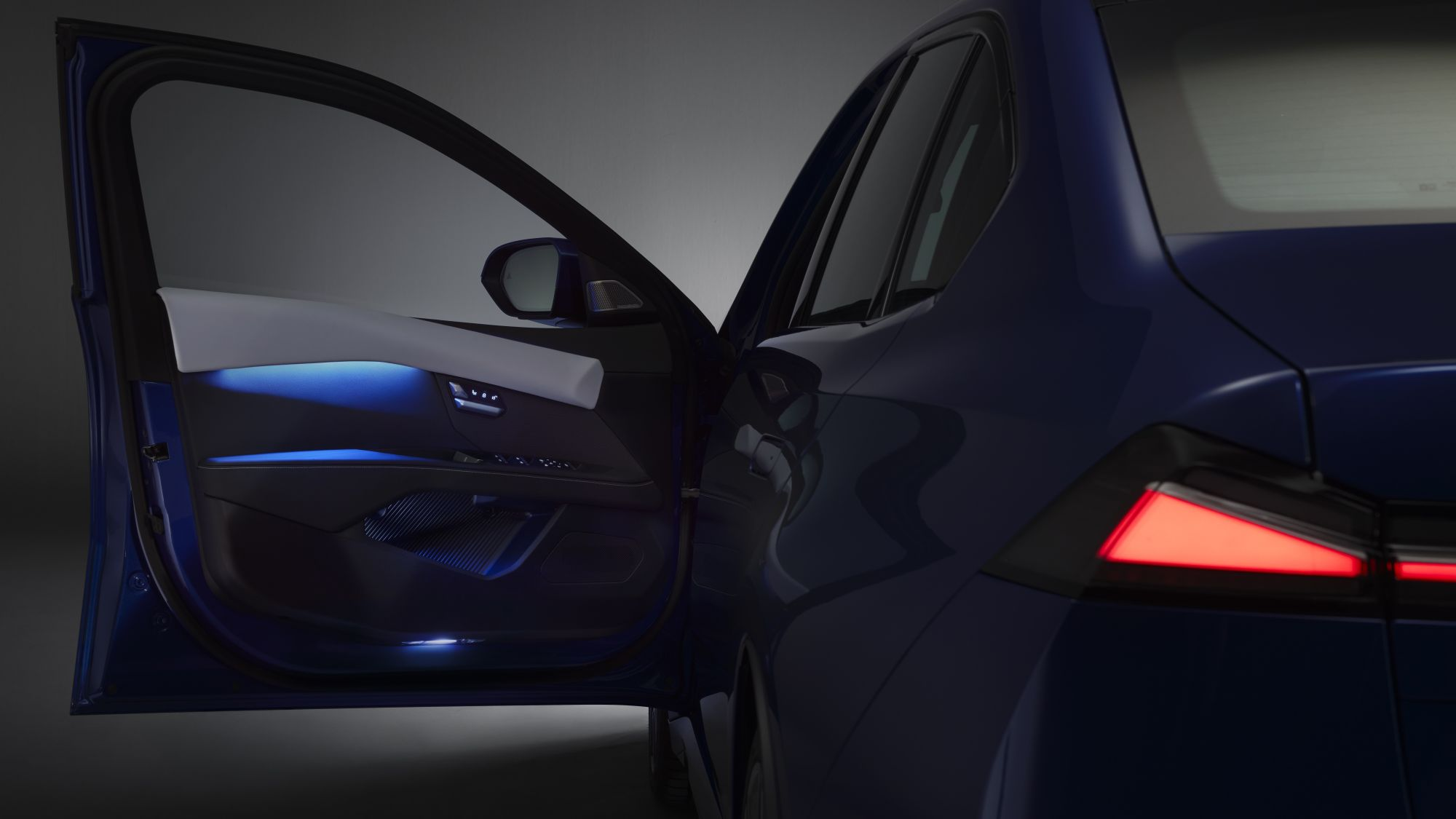
- Leapmotor D19.
-

- LG next-gen tech powered by generative AI via Qualcomm.
-

- Qualcomm helps power the ZF ProAI.