Encor Design, a UK-based startup focused on remastering iconic automotive designs, today unveiled its Series 1, an update of the original Lotus Esprit 50 years after its concept dazzled the 1975 Paris Motor Show. As the company’s leaders see it, Lotus turned the engineering and manufacturing limitations of its time into brilliance, creating lightness and innovation from the materials at hand. Free of those constraints, they believe they can now shape 50 “perfect” Esprits—realized with technologies engineers in the 1970s could scarcely have dreamed of.
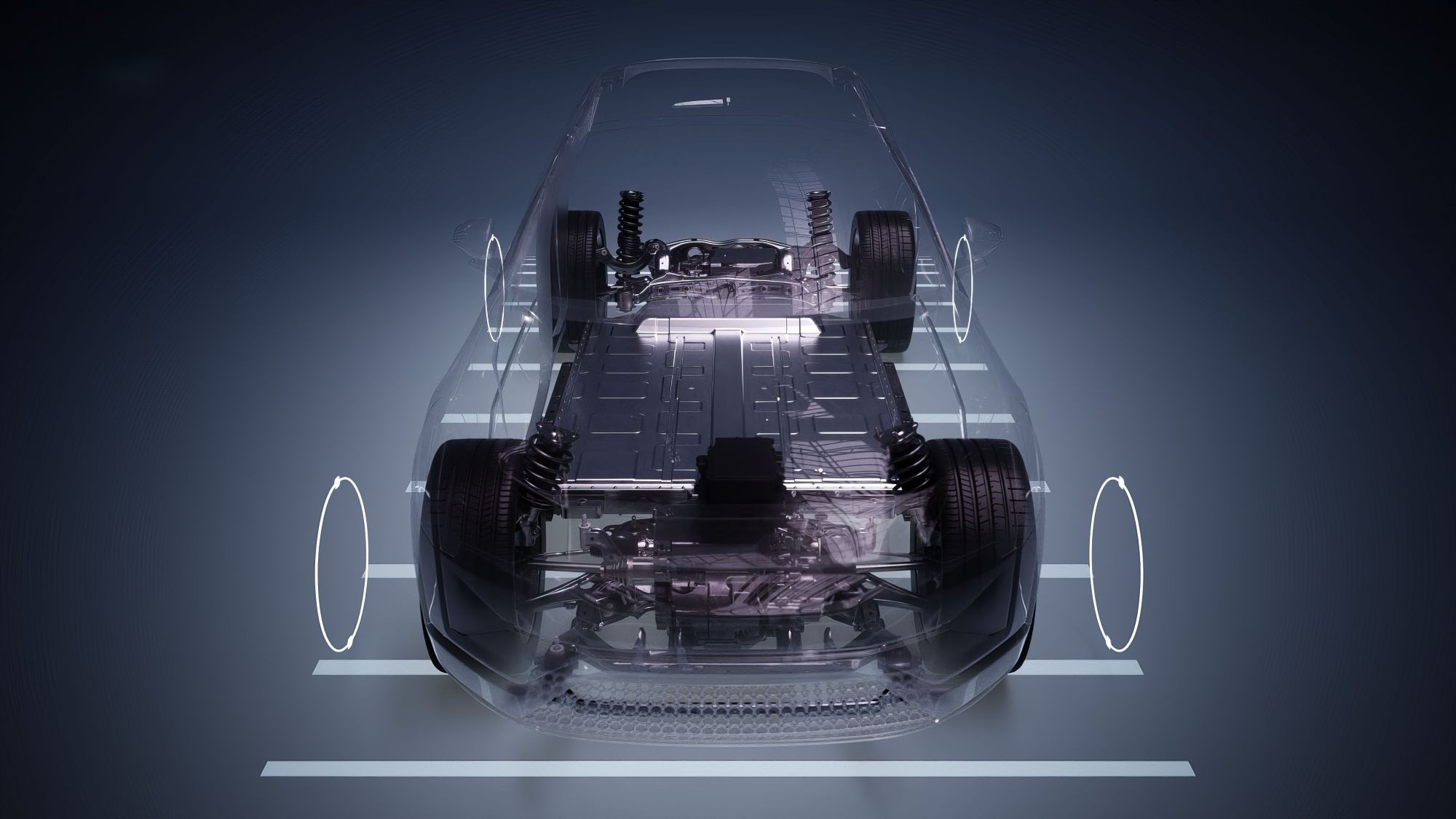
A donor Esprit V8 chassis is the foundation for Encor’s update. It adds an advanced carbon-fiber monocoque to increase rigidity and sharpened responses—while staying true to its original intent. The resulting car is said to have the razor-edged purity and sense of motion at rest that defined the design created by Giorgetto Giugiaro with Italdesign, based on a concept shown in 1972, and with production starting in 1976 under Lotus founder Colin Chapman. However, the stance is more purposeful, the surfaces cleaner, the proportions subtly honed.
The result of a philosophy the company describes as “respectful enhancement,” the design and engineering team members behind the project says it approached the new car not as a blank canvas but as a piece of cultural heritage. The goal was to remaster it with the sensitivity, craftsmanship, and capability of the present day, without disturbing the purity that made it extraordinary in the first place.
For Encor Managing Director William Ives, the Series 1 is personal. He is co-founded Skyships Automotive, the British company that evolved from conceptual airships in the 1990s to supplying cockpit electronics to global sports-car manufacturers, after studying Aeronautical Engineering at Imperial University, pioneered in-vehicle infotainment systems for companies including Lotus. Skyships is supplying the advanced electrical architecture for the new car.
“The Esprit has been part of our story for nearly three decades,” he explained. “We built systems for its owners, we lived with these cars, and now we have the chance to bring all that experience together in a single, deeply considered package. This project has always been about respect.”
Like Ives, Encor Operations Director Michael Perkins is also a Co-founder of Skyships, has roots in process optimization and airship innovation, he has spent decades delivering cockpit and driver information systems to leading manufacturers.
Ives and Perkins are part of the Encor leadership team that includes Design Director Daniel Durrant, an alumni from Lotus, where he led projects including the Emira, as well as Koenigsegg and AMG; Technical Director Mike Dickison, who had leading engineering roles at MIRA, Tickford, and C2P, and Commercial Director Simon Lane, who is known for his previous work in bespoke vehicle operations, notably with “Q by Aston Martin” and Lotus Advanced Performance.
“The S1 Esprit was forward-thinking, pure, and utterly uncompromised,” said Durrant. “To touch a shape like this is a huge responsibility. Every line we’ve refined, every decision we’ve made, is about honoring the original’s intent while letting the car perform, feel, and function the way its silhouette always promised.”
Durrant’s team began by digitally scanning the original Esprit, resurfacing and refining its geometry using modern design tools. The objective was to perfect the design, with tighter highlights, cleaner transitions, greater precision, and “material honesty.”
The distinctive two-piece mold line of the 1970s fiberglass body was replaced by an uninterrupted autoclaved carbon-fiber shell that captures the purity of early sketches. Encor worked with KS Composites on the material switch. The result is a form that looks like the original, with the tautness of the wheelarch surfaces, the crispness of the shoulder line, the sharpness of the front volume.
The stance is subtly broadened to accommodate modern tires and brake cooling. The lighting, now ultra-compact LED projectors integrated into low-profile pop-up housings, retains the wedge-like front end, but with contemporary performance and a cleaner, aerodynamic face. The forged and billet-machined wheels are inspired by the original slot-mag design and the later Sport 350 five-spokes, re-interpreting familiar cues with modern structural clarity and proportion.
The car is 4190 mm (164.9 in) long, 1860 mm (73.2 in) wide (including mirrors), and 1110 mm (43.7 in) tall, on a 2420-mm (95.2-in) wheelbase.
Beneath the body, the donor chassis is stripped, blast-cleaned, and refinished before being paired with an entirely reconstructed powertrain. A Lotus Esprit V8 is retained for continuity of identity and registration. The mid-mounted 3.5-L twin-turbo Type 918 V8, with 32 valves and flat-plane crankshaft, receives forged pistons, upgraded injectors, remanufactured turbochargers, a new electronic throttle body, modern fuel and cooling systems, and a new stainless exhaust, transforming its character while preserving its unmistakable soul.
Performance targets reflect this upgraded philosophy, with the engine now producing about 400 bhp (298 kW) at 6200 rpm and 350 lb·ft (475 N·m) at 5000 rpm. With a targeted vehicle curb weight of under 1200 kg (2645 lb), and a power/weight ratio of 333 hp/ton, 0-62 mph (0-100 km/h) acceleration is expected to take 4 s, with a top speed close to 175 mph (282 km/h). Two new fuel tanks have a combined capacity of 70 L (18.5 gal).
Working with Quaife, Encor re-engineered the original five-speed manual with a stronger input shaft, revised ratios, a helical limited-slip differential, and a custom twin-plate clutch, giving the shift quality a precision and durability “the original never possessed.”
Suspension components are upgraded to Sport 350 specification with help from Bilstein and Eibach. Braking is delivered by AP Racing. Steering remains hydraulically (rather than electrically) assisted to preserve the tactile, driver-focused character fundamental to the original Esprit.
“Lightness and tactility guide every decision,” explained Dickison. “The Series 1 drives with the purity you imagine from an analog supercar, yet with a depth of capability the original platform could only dream of. It’s a transformation carried out with complete respect for its DNA.”
Inside, the new car preserves the Esprit’s most memorable elements, the company emphasizing the dramatically sloped dashboard, the cockpit-like wraparound instrument binnacle, the tartan accents, and the sense of sitting deep within a purposeful, driver-centric machine. Yet each element has been rebuilt from the frame outward.
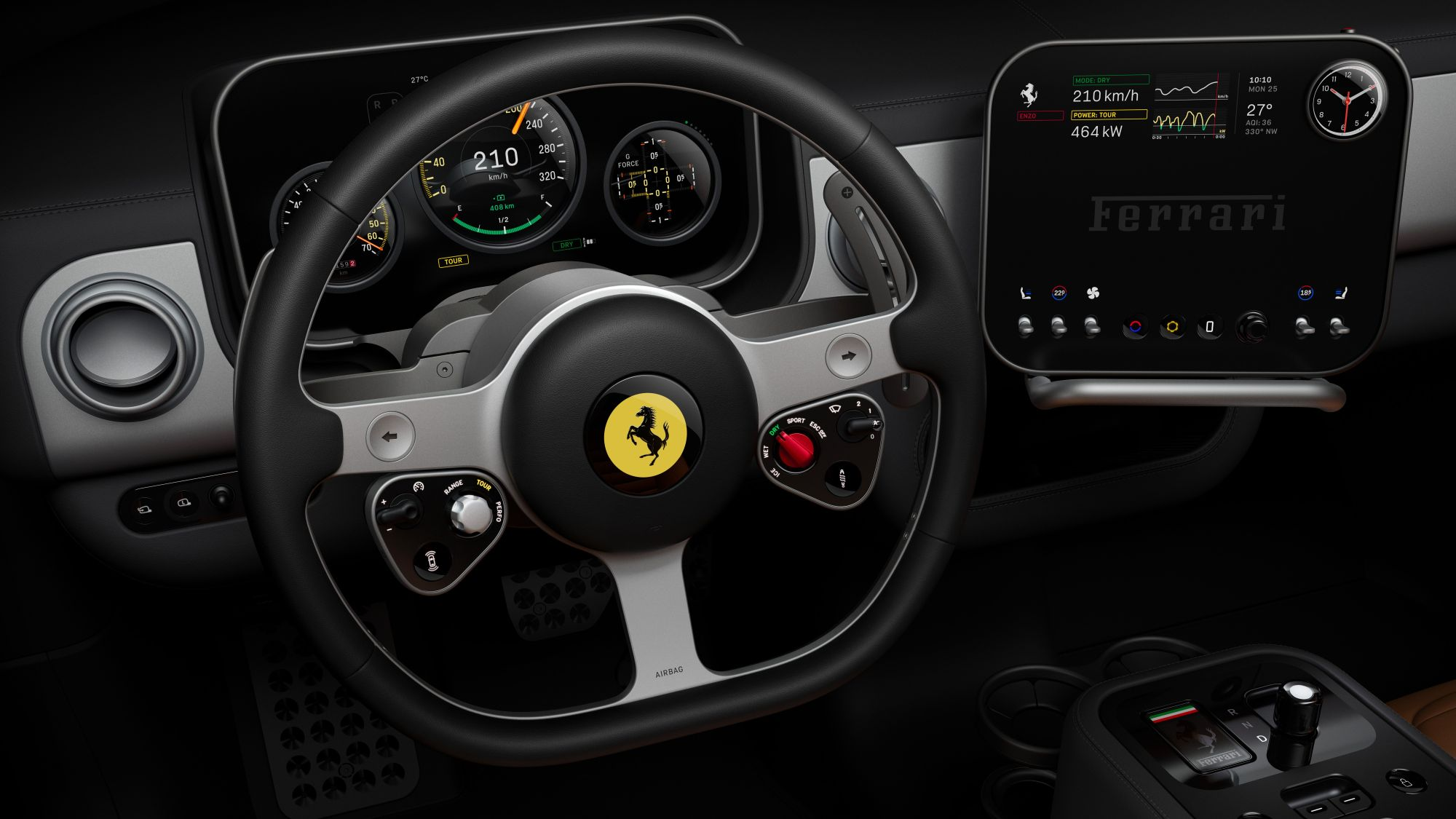
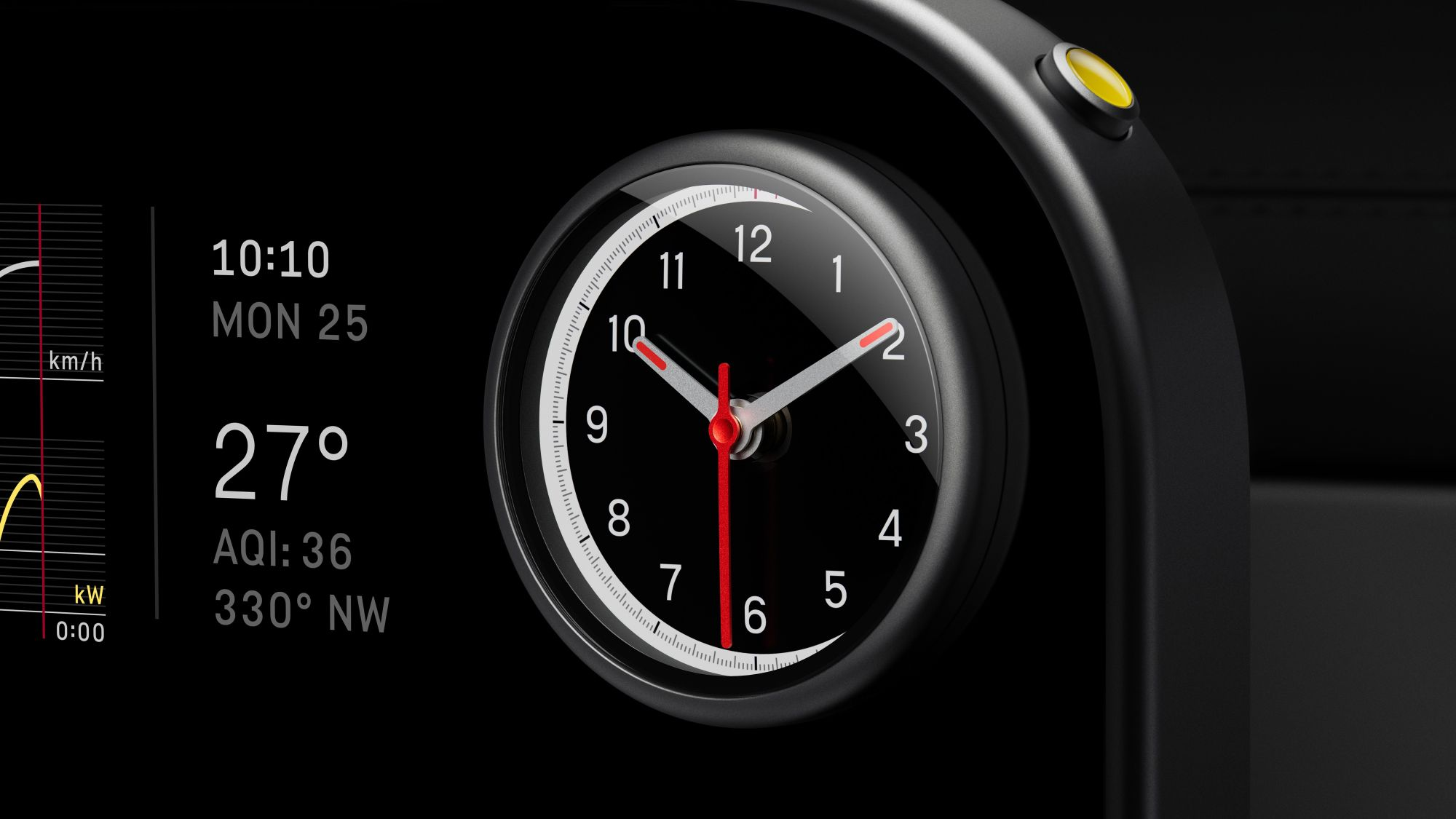
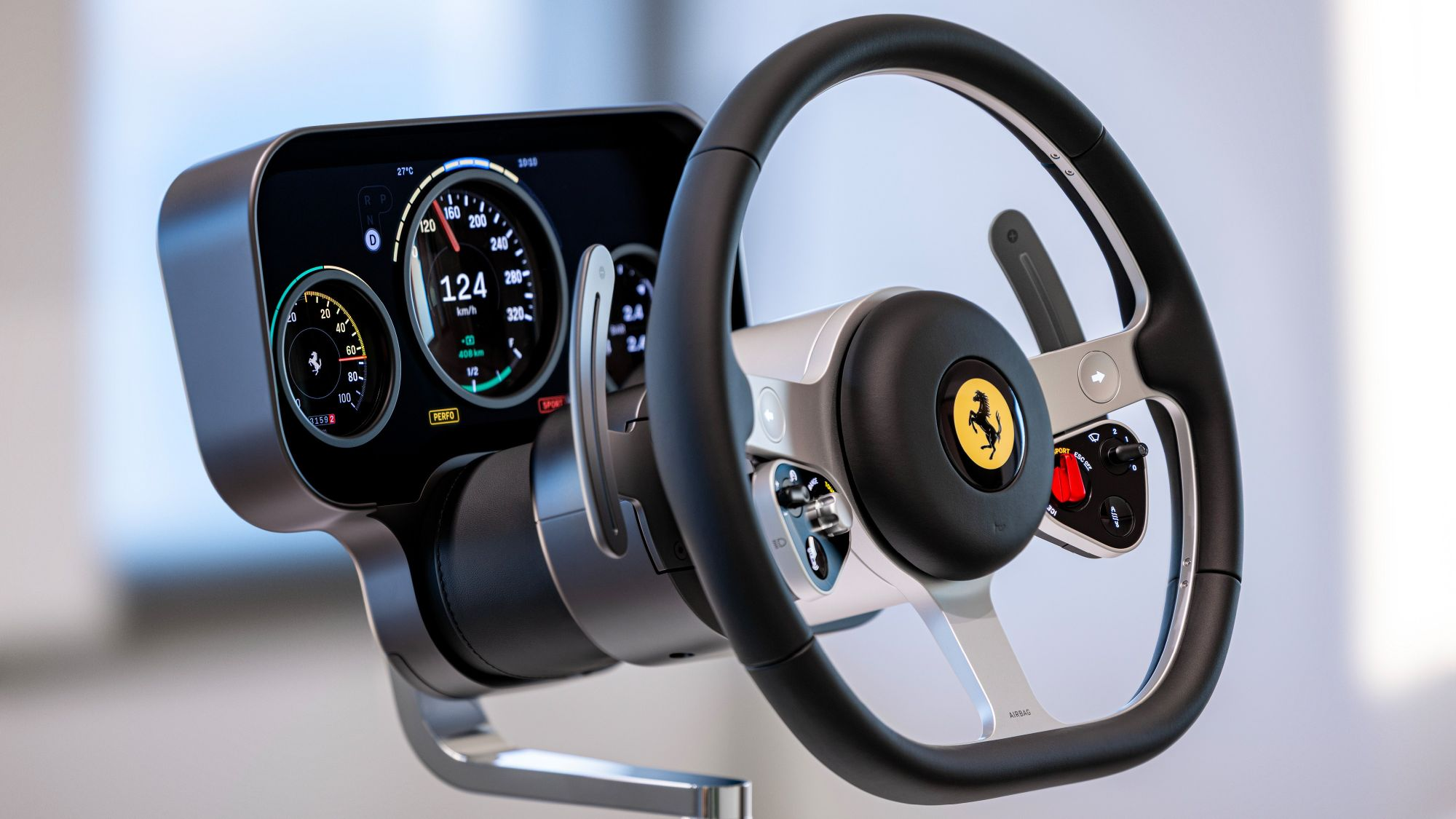
Perhaps the most striking reinterpretation is the floating instrument cluster, which is machined from a single billet of aluminum and wrapped around a modern digital display. The carbon-fiber dashboard “T” houses other controls.
Modern usability is enabled by connectivity through Apple CarPlay, maneuvering is eased with discreet 360-degree cameras, and the everyday comfort of heated seats and refined climate control. Infotainment, climate, and camera systems designed by Skyships are integrated discreetly without disturbing the analog intent.
“This car is analog at heart,” said Lane. “We wanted to avoid the modern tendency toward gadgetry; therefore the technology exists to enhance the experience, not to dominate it.”
Machined aluminum, leather, and Alcantara frame the digital interfaces. Seats are restored, re-foamed, and re-trimmed to maintain their original ergonomics while elevating support and finish. The luggage compartment can hold 200 L (7.0 ft³).
Production will be limited to 50 individually commissioned cars worldwide. Prices begin at £430,000, excluding taxes, options, and the required donor Esprit V8.
Encor promises an invitation to curate a customer’s vision, with an array of colors, tailored specifications, and “almost limitless” personalization. Commissioning will take place either at Encor’s Chelmsford, UK, HQ or via private consultation for international clients.
Deliveries will begin in Q2 2026 and continue through 2027.
-

- Encor Series 1 front side.
-

- Encor Series 1 rear side.
-

- Encor Series 1 front top.
-

- Encor Series 1 rear top.
-

- Encor Series 1 rear.
-

- Encor Series 1 front top with lighting.
-

- Encor Series 1 interior.
-

- Encor Series 1 driver-side interior.
-

- Encor Series 1 instruments.
-

- Encore Series 1 body carbon forming.