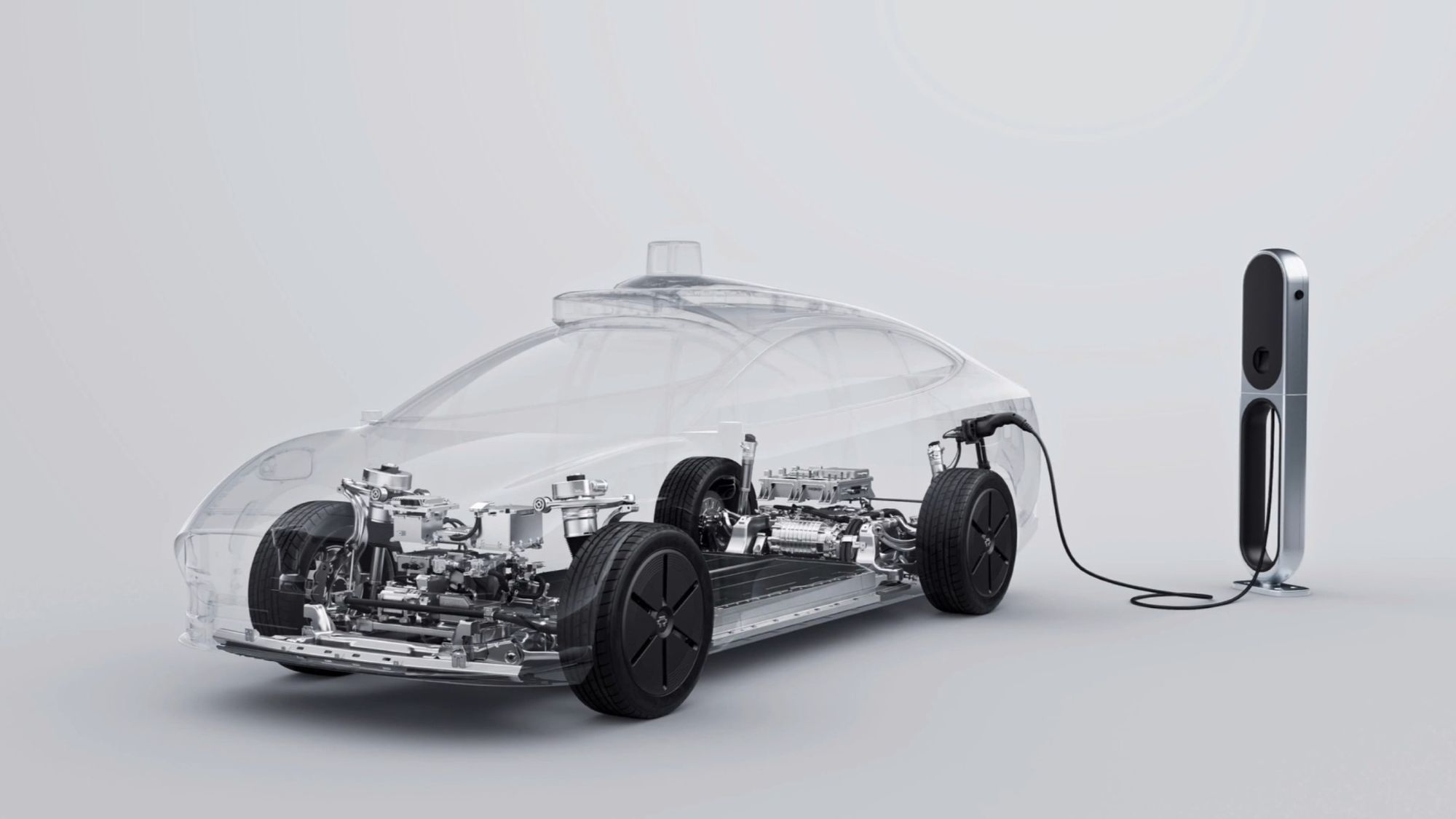
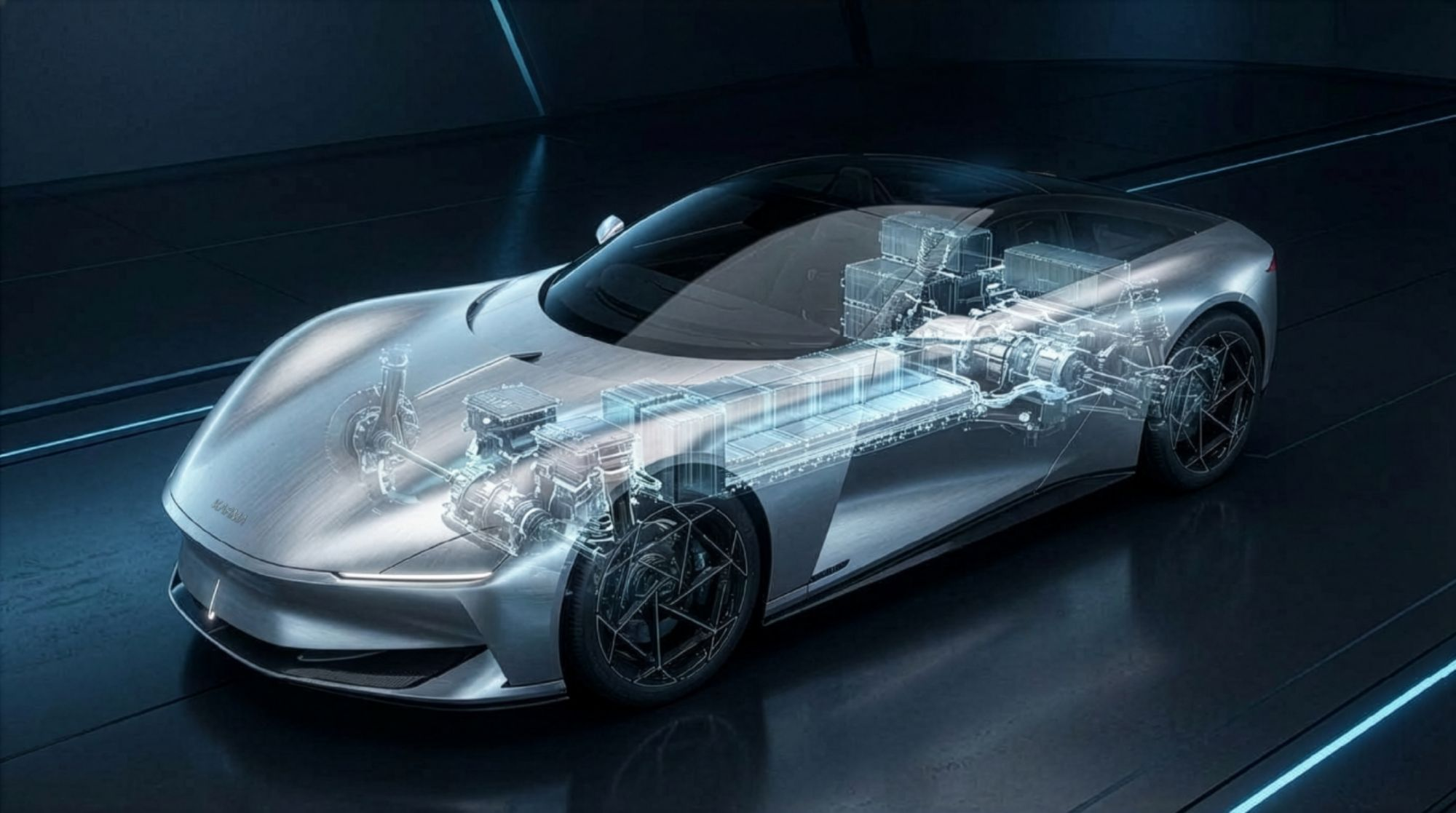
Ahead of the 2025 Los Angeles Auto Show, the Jeep brand revealed the 2026 Recon, which it calls the first, fully electric, “Trail Rated” SUV in the industry with “legendary Jeep 4×4 capability,” so an electric alternative of sorts to the Wrangler. Built on the Stellantis STLA-Large unibody platform that also underpins the new electric Wagoneer S, it will launch next year with top-level Moab trim, blending performance with 4xe all-wheel-drive capability.
“The 2026 Jeep Recon is a bold step forward for the brand, an all-electric SUV that stays true to our core values of freedom, adventure, and capability,” said Bob Broderdorf, CEO of the Jeep Brand. “We’re proving that electrification isn’t just compatible with off-road excellence, it can elevate it, delivering instant torque, precision control, and a quieter, more connected driving experience that’s uniquely Jeep.”
The Recon is 193.3 in (4911 mm) long, 73.8 in (1875 mm) tall at the roof rail, and 74.8 in (1900 mm) wide (without mirrors), on a 112.9-in (2868-mm) wheelbase. The dimensions are similar to the Wagoneer S, except the Recon is about 9 in (228 mm) taller. With a starting MSRP of $65,000, excluding a $1995 destination fee, production will begin early next year at the Toluca Assembly Plant in Mexico, with initial launches in the U.S. and Canada, followed by global expansion in Q4 of 2026.
“The Recon is a great complement to the Wrangler, as the Recon offers a little bit more luxury, as well as some technology, like our Level 2 ADAS system,” said Kandice Keen, Jeep Recon Brand Manager. “Additionally, it offers an alternate propulsion system, being a fully electric vehicle, but also offering the capability to a different extent.”
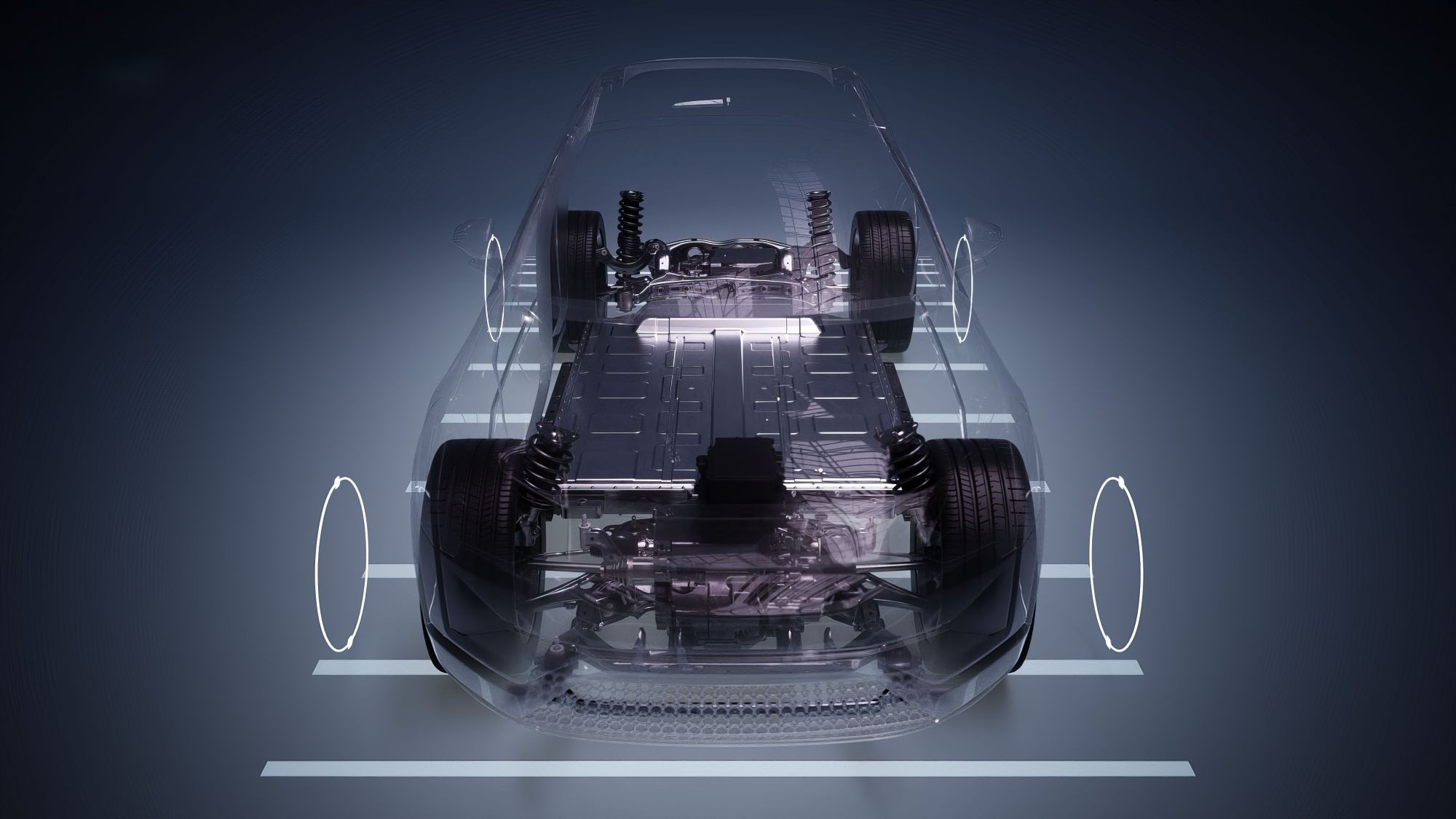
Electrified STLA-Large architecture
With 500 kW and 620 lb·ft (840 N·m) of “instant torque,” the Moab Recon can accelerate from 0 to 60 mph (0 to 97 km/h) in as little as 3.6 s in Sport (vs. Auto) mode, with a top speed of 112 mph (180 km/h). Standard four-wheel drive from a Selec-Terrain system provides multiple drive modes tailored for conditions. The Moab trim is rated at 7000 lb (3175 kg) GVWR, with a curb weight of 6112 lb (2772 kg) and a payload of 850 lb (385 kg). Maximum trailer weight is 3300 lb (1496 kg).
The Recon’s propulsion system has front and rear Stellantis-designed electric drive modules (EDMs), each rated at 250 kW. Each EDM combines an electric motor, gearing, and power electronics into a compact unit for enhanced efficiency.
The Moab’s front EDM uses an 11:1 final-drive ratio in an open differential design to balance performance with comfort. The front axle includes automatic disconnects at each wheel end to help optimize energy use and range during typical on-road driving conditions when rear-drive propulsion is more efficient. To increase capability, the Moab trim’s rear EDM uses a 15:1 final-drive ratio to deliver a high level of torque multiplication to help power through challenging conditions.
The Recon’s 400-V, 100.5-kW·h battery pack has 131-A·h-cell lithium-ion, nickel manganese cobalt chemistry. It is protected with a full suite of sturdy, high-strength steel underbody shields. All low- and high-voltage electronics, including the wiring between the battery pack and the electric motors, are sealed and waterproof.
With estimated MPGe up to 80 (combined) compared to the Wagoneer S’ 93, the estimated range is just 230 mi (370 km) at launch on the Moab trim. Late availability trims are expected to come in at up to 250 mi (402 km).
Jeep engineers tailored the Recon’s throttle pedal to deliver controlled torque for a satisfying off-road driving experience. They prepped the Recon for trail duty with large-diameter half shafts and stout constant velocity joints.
Off-road performance is enhanced via an electronic locking differential to ensure torque flows to both rear wheels when engaged. The driver can flip a switch to go from open differential to fully locked.
“The Jeep Recon is equipped with 33-in off-road tires, a rear locker, off-road front suspension, and Selec-Speed Control, which regulates speed over tough terrain,” said Brian Del Pup, Director of Vehicle Development, Jeep Engineering. “It’s also got integrated off-road cameras, front and rear tow recovery hooks, high-strength steel underbody skid plates, and an available rock rail.”
The Recon’s suspension, with short/long arms up front and integral links in the rear, is meant to help maximize the tire contact patch to deliver a blend of on-road ride comfort with off-road capability. On the Moab’s standard 33-in tires with 265/70/R18 Nexen Roadian ATX, the Recon has 9.1 in (231 mm) of ground clearance and 33.8° approach, 33.1° departure, and 23.3° breakover angles.
The Selec-Terrain traction management system for the Moab trim adds Rock mode to Auto, Sport, Snow, and Sand modes, providing software calibration to help the driver make the best use of the EV powertrain’s capabilities. Rock mode tailors throttle response to help manage progress over uneven terrain, enabling a two-pedal driving technique for vehicle control. It includes a hill-hold feature that lets the driver’s foot move from the brake to the throttle pedal without the vehicle moving.
When engaged, low-speed Selec-Speed Control, for challenging inclines and declines, maintains the set speed, freeing the driver to concentrate on steering.
Blending heritage and future exterior design
The Recon’s exterior design unites Jeep DNA heritage with future-focused elements.
The design brief included removable doors and a boxy, square profile, so people would “know from a quarter-mile away that that’s a Jeep vehicle,” according to Vince Galante, Vice President of Exterior Design for Jeep.
Initial sketches by Joshua Holly, Lead Technical Designer at Jeep, previewed the final design. The overall shape of the vehicle had to enable and identify its off-road capabilities, so the Recon in top trim has “gigantic” for its segment tires, at 33 inches, and trapezoidal wheel openings that “really help those tires to live at home on this vehicle.”
“Turns out when you’re off-road, you want to be able to see,” added Galante. “So, we lowered the belt line, which is opposite of our usual design direction, [to] as low as we could possibly get it before you’d have glass sticking up when the windows rolled all the way down.”
In addition to expansive glass to maximize visibility, the upright front face features illuminated seven-slot grille rings, U-shaped daytime running lights, and a suite of standard premium LED lighting.
Jeep says that the Recon is the only fully electric vehicle with removable doors, rear quarter glass, and swing gate glass—with no tools required. It offers a standard dual-pane sunroof or an available, class-exclusive Sky One-Touch power top.
The boxy design results in less slippery aerodynamics, with key numbers being a drag coefficient of 0.404 and a frontal area of 32.74 ft² (3.042 m²) for a CdA of 13.227 ft² (1.229 m²).
The Recon celebrates Jeep individuality with a range of exterior colors, including special-edition, vibrant hues and rugged, utility-inspired tones, and refined neutrals. Gloss Black accents the grille, pillars, and window trim, and is available for the roof. The Moab trim adds more Gloss Black on the fascias, wheel flares, and available side rock rails; exclusive Jeep badging featuring topographical etching; and an anti-glare hood graphic.
At the rear are Wrangler-inspired LED taillamps and a swing gate, which holds the full-size, rear-mounted spare tire, a segment-exclusive feature.
Rugged but refined interior
The Recon interior draws inspiration from the Jeep brand’s off-road heritage, combining durable materials with customizable storage, adaptable functionality, and cutting-edge technology.
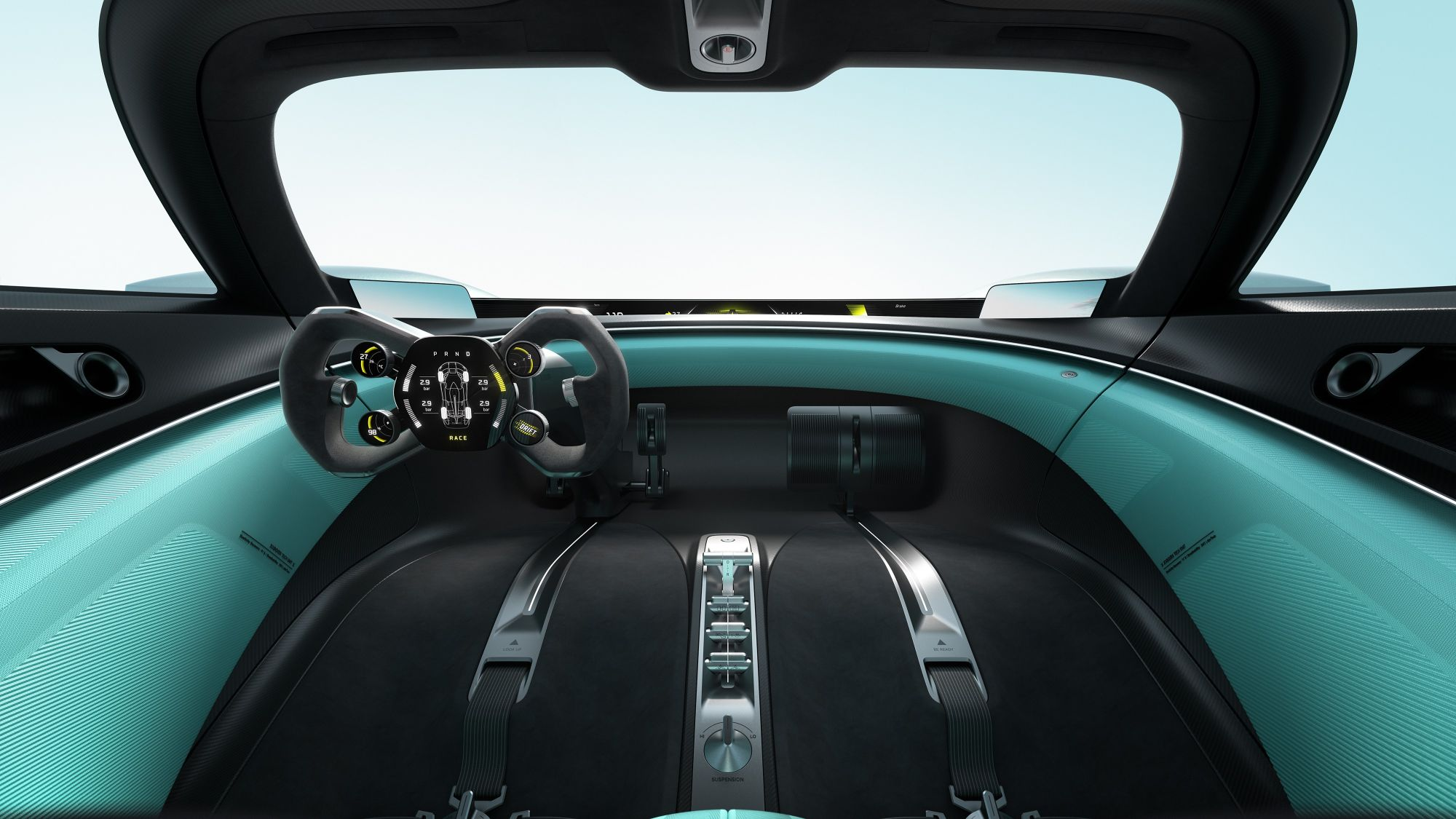
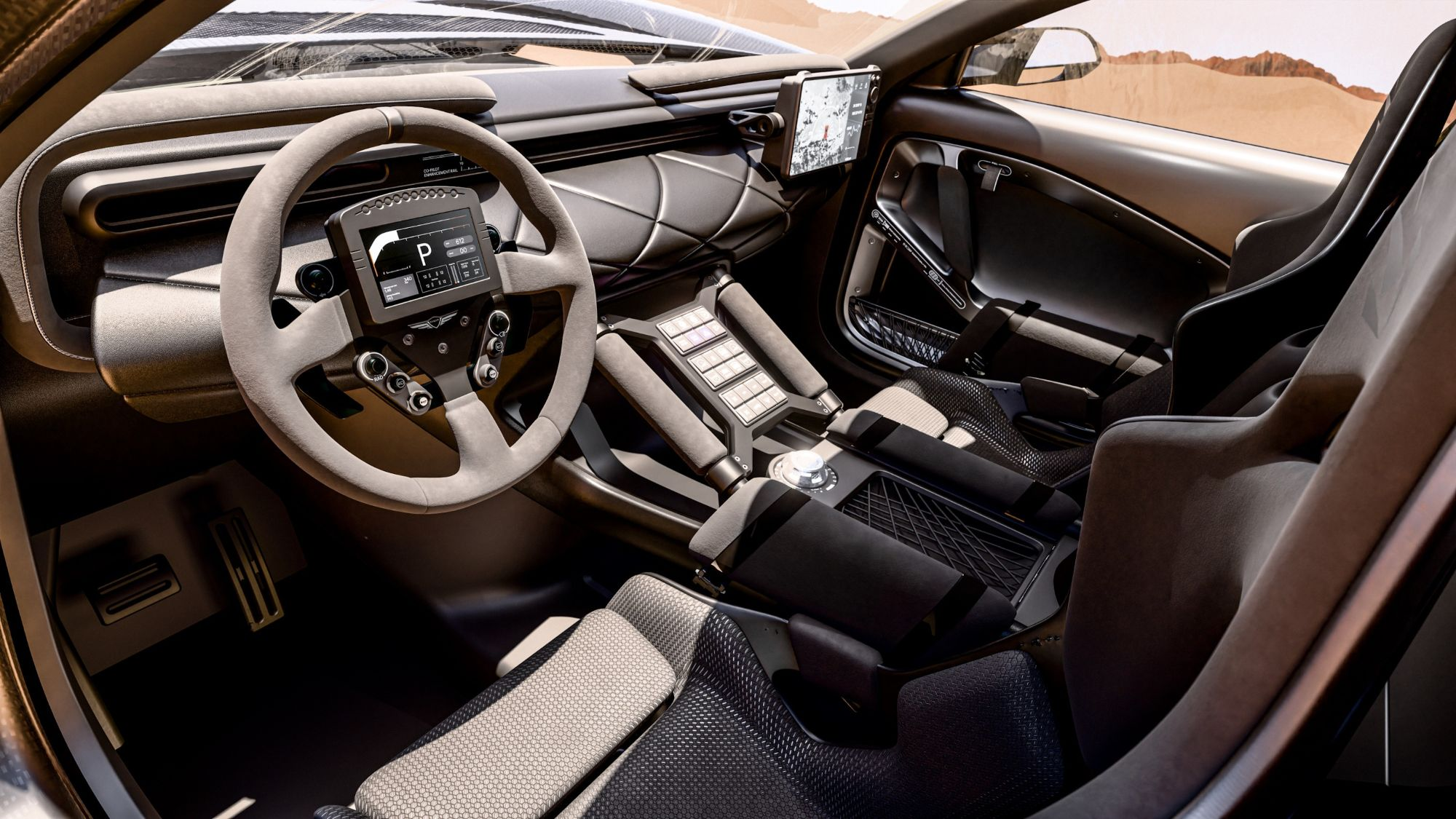
The instrument panel’s horizontal layout features a large passenger-side grab handle, a modular rail on top for mounting accessories like cameras and navigation devices, and scuff-resistant, textured surfaces. A two-tiered pass-through center console offers room for gear, an available wireless charger on the upper level, and a cord pass-through to a lower compartment for larger items like tablets and purses.
The modular door panels have removable elastic straps and interchangeable cargo solutions for flexible organization.
Total Interior SAE passenger volume is 111.3 ft³ (3151 L). The rear cargo space holds 65.9 ft³ (1866 L) with the second row folded, and a front trunk adds 3.0 ft³ (85 L) with enough space for a carry-on suitcase.
The initial Moab trim introduces a Joshua Tree tan interior, the design blending earthy tones with premium materials.
Recycled materials throughout the cabin are aimed at reflecting a commitment to sustainability. Seat, console, door, and instrument panel surfaces are finished in Capri synthetic leather. The headliner and carpets feature recycled content.
Jeep says that the Recon stands alone in its segment as the only EV to offer premium sound as standard equipment. The Alpine audio system features speakers moved from the traditional door panels to beneath the seats, ensuring good sound quality with the doors removed.
Technology for immersion
With the Recon, Jeep aims to redefine the driving experience with a technologically advanced cabin that delivers “more than 26 inches” of high-definition, sculpted screen space. At the heart of this is a standard, 12.3-in driver cluster featuring customizable menu options and modern graphics, paired with a 14.5-in horizontal touchscreen radio/center display—the largest single usable digital screen space ever offered in a Jeep.
“This is the first time for Jeep that we’re going to have a large, 14.5-in screen in the center radio area,” said Ryan Nagode, Head of Interior Design, for Stellantis’ American Brands. “It’s got FALD, which is our full-array local dimming, so strong graphics, especially with the sky-top slider [roof]. Natural light is going to be coming into this interior, and we wanted to make sure there was a screen bright enough to push past the sun.”
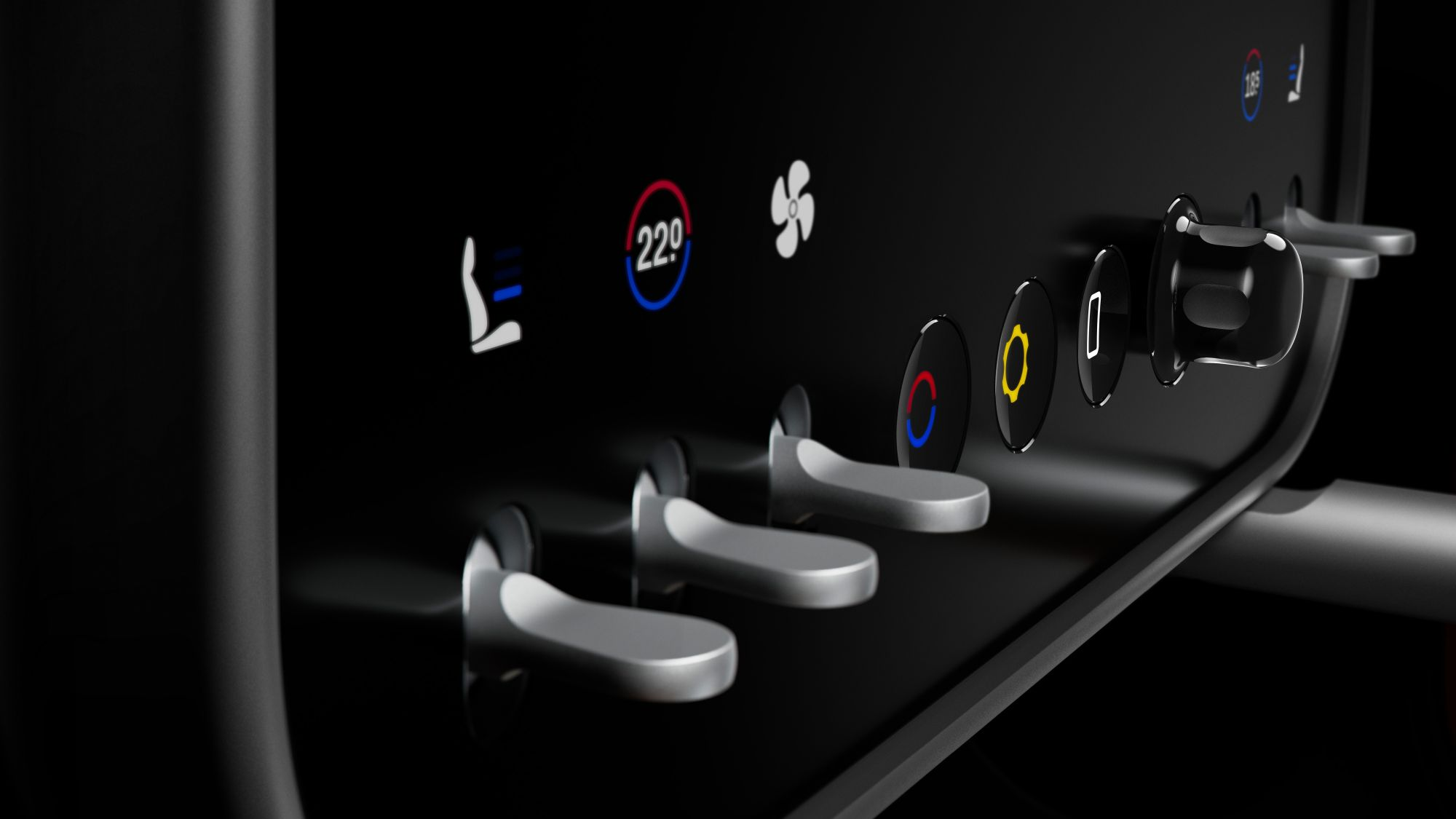
HVAC controls are digital, with physical knobs for audio volume and tuning and physical controls for off-roading.
“You’re going to see your traditional elements above—navigation, vehicle controls—but below that, on the screen all the time, is going to be HVAC controls,” said Nagode. “Nice, easy-to-touch controls in terms of heated seats, ventilated optional seats, heated steering wheel, also the rest of the other cabin controls are all right there. We decided to go digital with those controls because we really wanted to maximize the physical controls for Jeep, like our electronic lockers, our ADAS controls.”
The experience is powered by Uconnect 5, the Jeep brand’s most advanced infotainment system, featuring digital buttons sized for ease of use on rough terrain. Larger dynamic displays are meant to enhance readability for maps and camera views.
A new Jeep-exclusive Trails Offroad app offers a guide to trails across the U.S. and Canada with pitch and roll mapping. Optimized BEV pages provide real-time insights into vehicle state-of-charge, while Dynamic Range Mapping powered by TomTom helps plan long trips, indicating when and where to charge.
Additional enhancements include Amazon Alexa functionality and an updated Jeep mobile app that supports scheduled maintenance, roadside assistance, accident support, and real-time safety and recall notifications.
-

- Jeep Recon front side on the trail.
-

- Jeep Recon front side in water.
-

- Jeep Recon front side in the snow.
-

- Jeep Recon rear side with bikes.
-

- Jeep Recon sketch by Josh Holly.
-

- Jeep Recon dashboard.
-

- Jeep Recon openings.
-

- Jeep Recon maximized cargo space.
-

- Jeep Recon door panel detail.
-

- Jeep Recon is based on the STLA-Large platform.