After twelve years of the power unit (PU) regulations, the FIA Formula 1 World Championship has new rules for 2026. The PU architecture is changing, making it simpler and more road-relevant and attractive to new and returning entrants, while also significantly boosting the electric contribution to total power.
In 2026, Formula 1 will have five power unit manufacturers, with the incumbents Mercedes-Benz and Ferrari powering the bulk of the field. The new Audi team (covered by Futurride earlier this month) has its own power unit. In this article, we focus on Honda, which returns to power the Aston Martin F1 team, and a new collaboration between Red Bull Powertrains and Ford to power the Red Bull Racing and Racing Bulls teams.
Power units see a greater share of electrified tractive power, with about 50% ICE (internal combustion engine) and 50% electric power. The previous units got around 20% of their power from electricity.
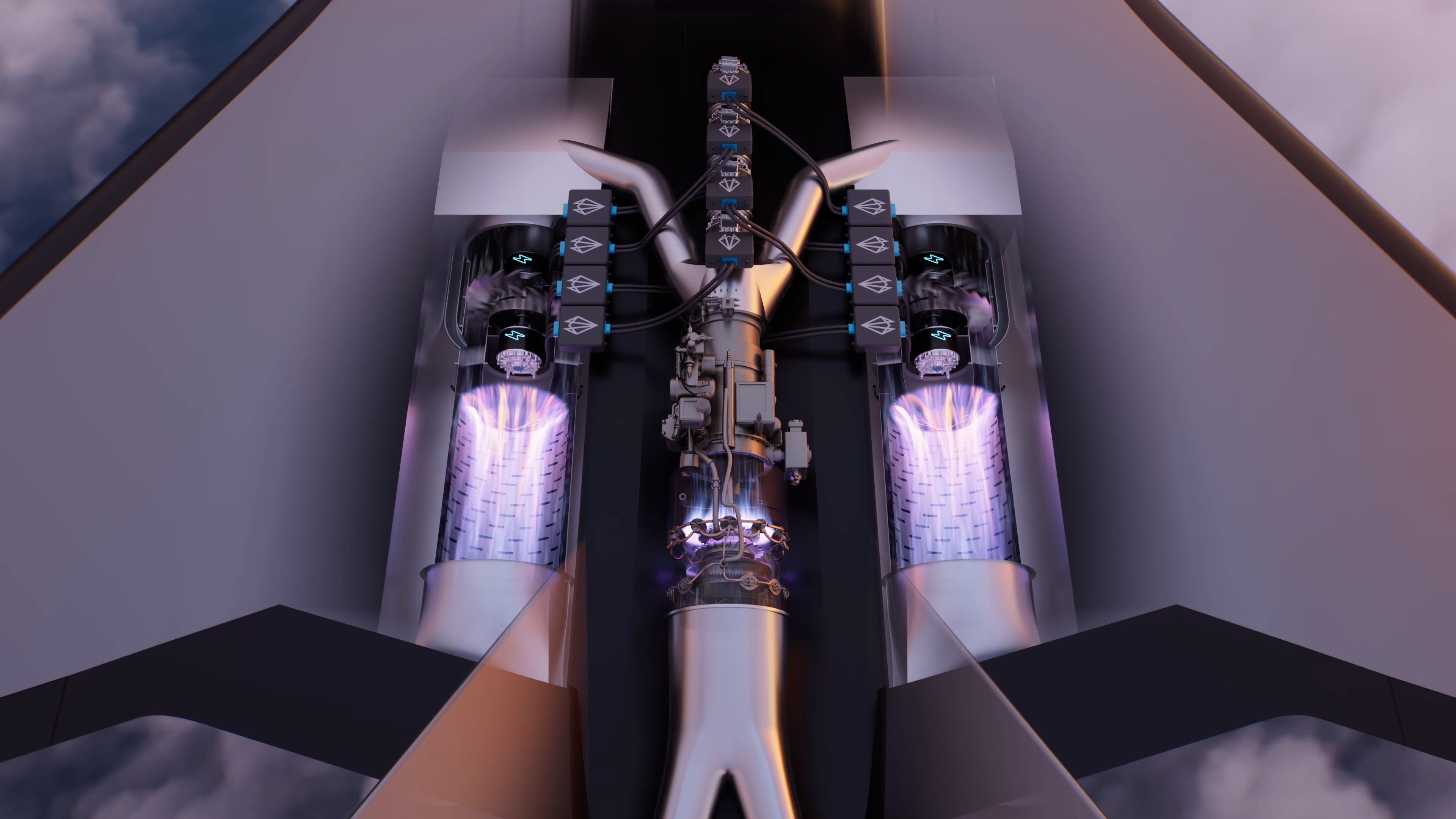
The ICE remains a 1.6-L turbocharged V6, but with updates. A simplified hybrid setup removes the complicated MGU-H (motor-generator unit-heat), which harnessed the flow of exhaust gases, and significantly increases the power of the MGU-K (motor-generator unit-kinetic), which recovers energy from braking.
The new MGU-K is nearly three times as powerful as its predecessor, getting a boost from 120 to 350 kW delivered to the rear wheels for enhanced overtaking and straight-line speed. It also recovers energy at a greatly increased rate to charge the battery, and when the driver is braking, on part throttle, lifting off, and when “super clipping” at the end of the straight, when a car is still at full throttle. For the most part, this will be automated, handled by engine maps prepared in advance, but the drivers have the ability to override.
In 2026, all teams will use Advanced Sustainable Fuels, which were successfully trialed by the lower-level F2 and F3 racing series in 2025. This is part of F1’s commitment to reaching net zero by 2030. The fuel is made from cutting-edge sources like carbon capture, municipal waste, and non-food biomass, and it is independently certified to meet strict sustainability standards.
Honda powers Aston Martin
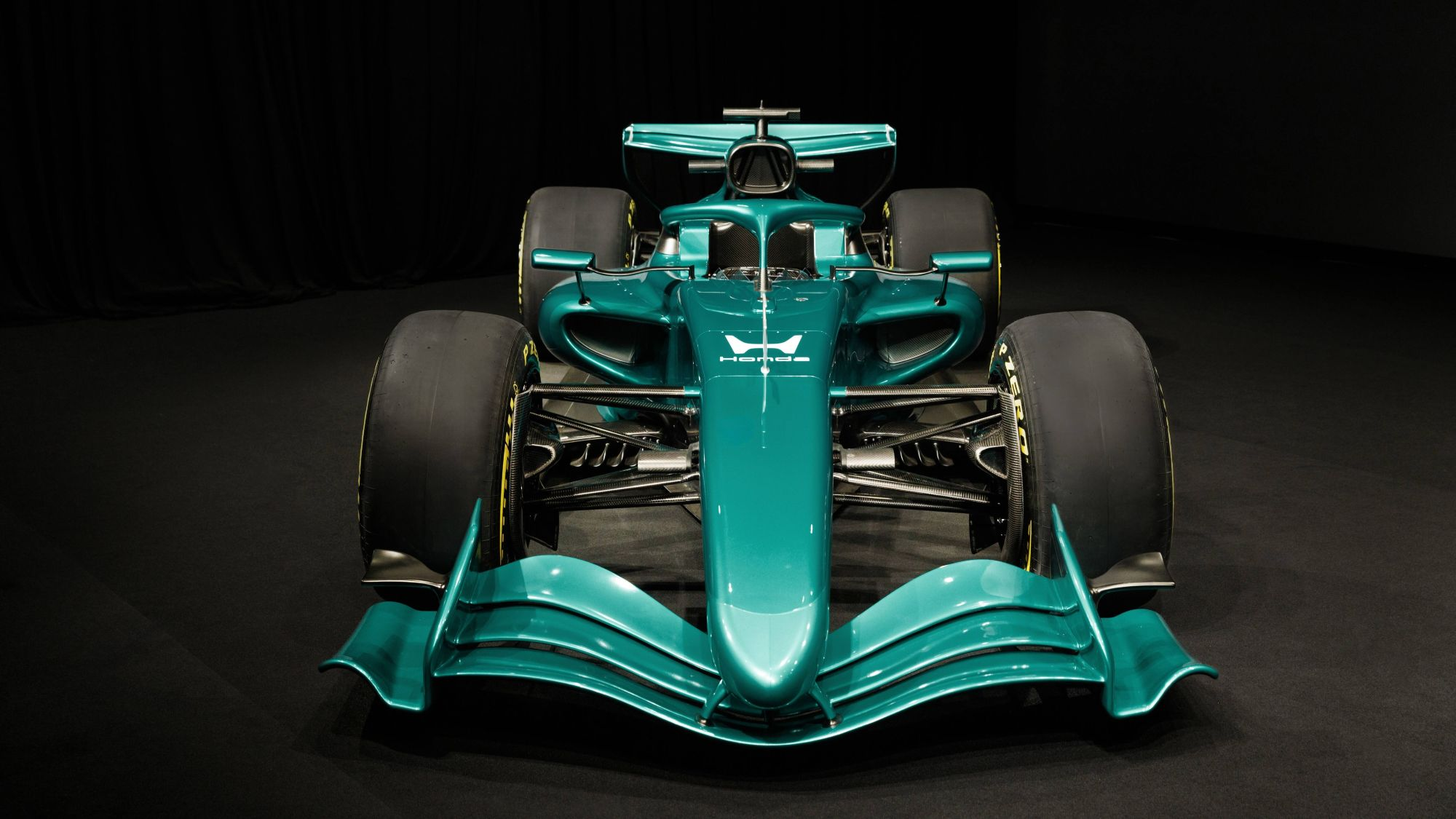
Honda held an event in Tokyo earlier this week to mark the official launch of its PU partnership with the Aston Martin team as part of a works agreement starting with the 2026 season. Leading the event were Toshihiro Mibe, Global CEO of Honda; Stefano Domenicali, President & CEO of Formula 1; and Lawrence Stroll, Executive Chairman of the Aston Martin Aramco Formula One Team.
In 1964, when Honda had only just begun selling automobiles, the company took on the challenge of participating in F1. The company claimed its first F1 victory at the 1965 Mexican Grand Prix and has had a lot of success since then with Williams, McLaren, and, most recently, Red Bull Racing.
What enticed Honda back to Formula 1 were the major changes in regulations, specifically for the power unit. Balancing the challenges of electrification and decarbonization is a cost-cap system that requires each PU manufacturer to pursue development efficiency to achieve the maximum results within limited development resources.
“In this new era, Honda is positioning F1 as a symbol of challenge and innovation, and Honda Racing Corporation (HRC), the manufacturer’s global racing arm, developed the RA626H PU for the 2026 season,” said Mibe. “Striving to become No. 1 in the world, the manufacturer will continue to take on challenges together with the Aston Martin Aramco Formula One Team.”
Machines powered by the RA626H will bear a new H mark with a refreshed design. Symbolizing the transformation of Honda’s automobile business, it will be used for F1 and other motorsport series such as IndyCar, Super GT, Super Formula Championship, and Super Taikyu Series.
Growing popularity and sustainability
Thanks to broadcast partners, social media content, global streaming services, and movies, the fan base for F1 racing has been growing rapidly around the world, with 827 million global fans in 2025. Last year’s Japanese Grand Prix at Suzuka Circuit saw an all-time high in the number of spectators since the circuit’s major renovation in 2009, indicating a surge of excitement and popularity.
“The Japanese Grand Prix at Suzuka last year welcomed 266,000 weekend attendees and saw a 26% year-over-year increase in TV viewership in Japan,” said Domenicali. “The return of Honda to F1 this year will further boost the potential for the sport here in the Japanese market.”
The strategy of F1 is to engage with fans in spaces where people may not expect to find it, such as culture, entertainment, music, TV, and film.
“The F1 teams are thriving and in robust financial health, attracting prestigious blue-chip sponsors and demonstrating the unparalleled attractiveness of the F1 ecosystem to global brands,” added Domenicali.
Honda’s return to F1 has bolstered the efforts of the Aston Martin team more broadly. Entering into a true works partnership with Honda, meaning the chassis and PU are designed as one integrated package, is a move said to be crucial to the team’s aspiration to win championships.
“The close collaboration between the UK base of Aston Martin Aramco Formula One Team and HRC Sakura in Japan has already grown into a very close partnership, now with everything needed to achieve success,” said Stroll. “The team’s drivers also have tremendous trust in the Honda PU and its engineers. Andy Cowell‘s new role as the Chief Strategy Officer within the team is reflective of just how closely everyone is working together. His huge expertise is helping the team move forward side by side.”
The team is also working with Aramco on sustainable fuels and Valvoline on lubricants for the first time.
“These strong technical partnerships are absolutely vital to success, and thanks go out to Honda, Aramco, and Valvoline for sharing the same vision and working tirelessly side-by-side,” said Stroll.
The team has also strengthened its vehicle development process.
“The new Aston Martin Technology Centre at Silverstone, UK, has been completed, further strengthening the organization like never before,” said Stroll. “The new wind tunnel is proving to be a vital asset for development, in addition to a new data center now being built to further strengthen the team’s capabilities. The team is pushing boundaries and working tirelessly with future success at the forefront.”
Formula 1, echoing the commitment of Honda and Aston Martin Aramco Formula One Team to sustainability, is on target to achieve the goal of Net Zero by 2030, having already delivered a 26% reduction in carbon emissions from 2024 to 2018.
Ford partners with Red Bull Powertrains
Another notable Formula 1 update happened last week when Oracle Red Bull Racing launched its 2026 campaign, and the new Red Bull Ford Powertrains (RBFPT) officially launched its inaugural power unit in Detroit. It was a significant moment for Red Bull, going from deciding to build its own power unit in 2021 to being weeks away from running on track in the 2026 World Championship with RBFPT.
The launch was hosted at the refurbished Michigan Central Station, which was extensively renovated by Ford over six years.
“When we first crossed paths with Oracle Red Bull Racing four years ago, we felt that the Red Bull swagger matched our spirit,” said Jim Farley, CEO of Ford Motor Co. “Four years later, tonight marked a checkpoint where we can celebrate the work put into this incredible project. An energy drinks company building their own Formula 1 power unit is a remarkable story, and Ford is privileged to have been on this journey with them.”
Ford joined the effort in 2023 as a Technical Partner to create Red Bull Ford Powertrains, bringing over 120 years of technical expertise and motorsports history. Now a Team Partner, Ford will provide technologies and support manufacturing, development, and engineering, and re-enter Formula 1 after 22 years away from the sport.
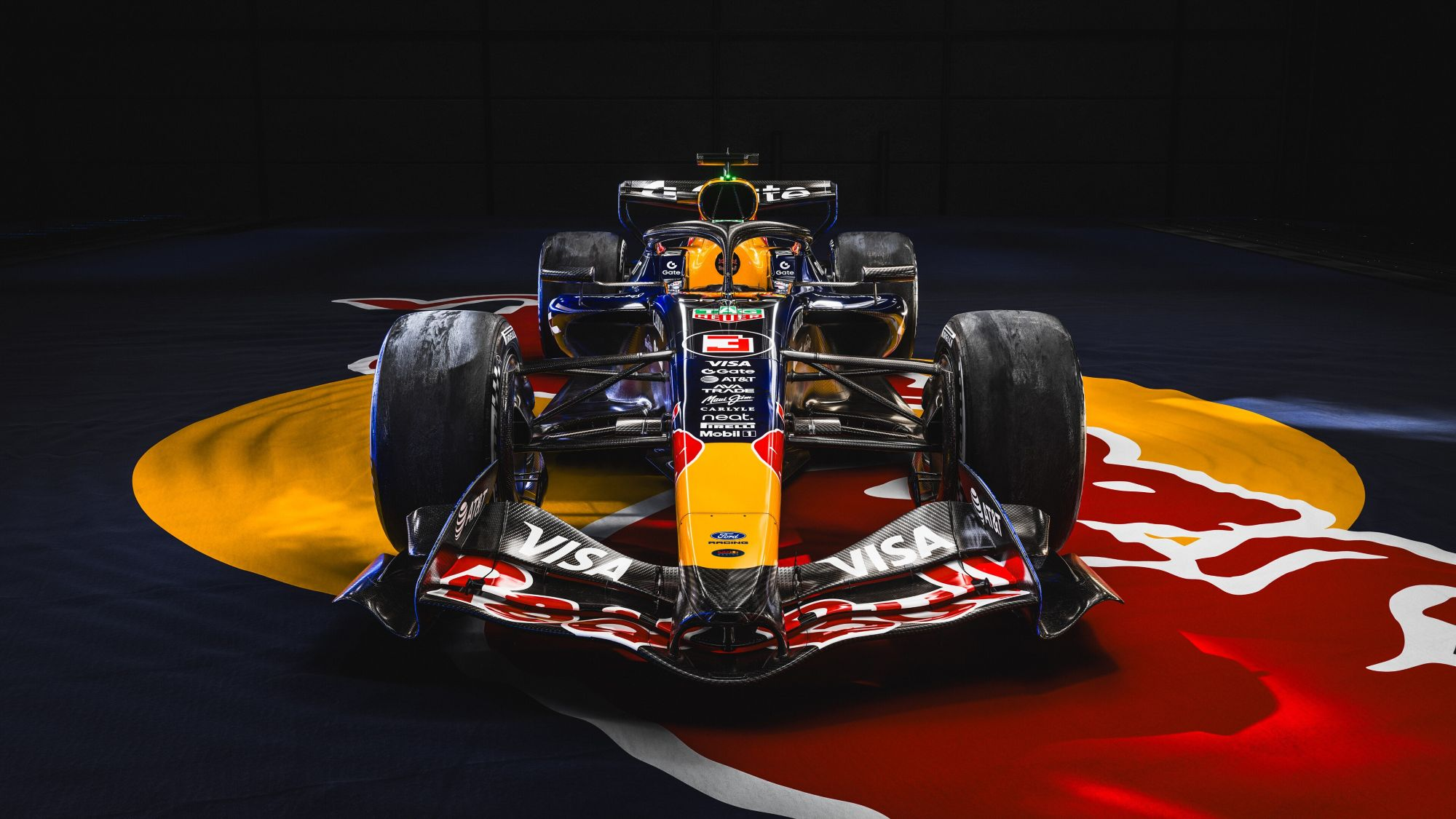
“It was incredible to reveal the livery here in Detroit, in Ford’s home,” said Laurent Mekies, CEO and Team Principal of Red Bull Racing. “We wanted to give it a special touch with the gloss [vs. recent matte finish] for this new chapter.”
RBFPT Technical Director Ben Hodgkinson announced that the power unit would be named DM01 after the late Dietrich Mateschitz, who spearheaded Red Bull’s decision to become an engine manufacturer. The Red Bull founder was the driving force behind the decision to enter Formula One in 2005 and to take full control of the team’s power unit when Red Bull Powertrains was established.
“To get to this moment, where we can finally launch the first-ever Red Bull Ford Powertrain, means a lot to me and the several hundred people that have poured their passion into this project with hours and hours of hard graft,” said Hodgkinson. “Right from the very start, every element of this project has started from scratch; the facilities, the people, the designing, the building, and finally the assembling.”
During the launch at Michigan Central Station, Christian Hertrich, Powertrains Chief Engineer at Ford Racing, along with Red Bull Racing’s Calum Nicholas, Senior Engine Technician, and Philip Prew, Technical Operations Director, talked about the new PU while using VR headsets.
For the Formula 1 effort, Ford’s most immediate contribution to the partnership with Red Bull has been in the world of advanced manufacturing, said Hertrich. By leveraging its state-of-the-art 3D printing technology, his team slashed a part’s 16-day manufacturing window down to just five.
“We are currently fabricating unique, highly complex components for the combustion engine, charge air system, and energy recovery systems—parts that are being refined in real time between our teams in Michigan and Milton Keynes,” said Hertrich. “But hardware is only half the battle. As newcomers to the 2026 regulations, we are fighting a decades-long experience gap against established manufacturers. We cannot afford to wait for traditional simulations to crunch numbers.”
To bridge the gap, Ford Racing simulation engineer Kevin Ruybal developed a unique controls model working in partnership with the Red Bull team in Milton Keynes. It runs 1000 times faster than real time and has become a primary tool for controls and calibration, allowing drivers to feel the engine’s behavior in the simulator and provide feedback before the physical hardware exists.
The digital intelligence extends deep into battery energy usage. Engineers like Sam Angeli and Mike Huang are working with Red Bull engineers at Red Bull Ford Powertrains to solve the puzzle of how to deploy electric power with combustion power. Huang has developed a sophisticated tool using dynamic programming that acts as a real-time strategist, advising the system on exactly when to dump or save energy to find the fastest way around the track, including energy calibration and drivability.
Enhancing the automotive business
A main objective for both Honda and Ford with their Formula 1 involvement is to boost their respective passenger car businesses.
Honda plans to leverage the technologies and expertise amassed through F1 and other motorsports activities to introduce HRC-spec production performance models aimed at enhancing its automobile business. An example of this will be a production model based on the Civic Type R HRC Concept to offer a broader range of customers with more “joy of driving” opportunities.
“Honda views F1 not only as the pinnacle of automotive technology but as a place to develop its human resources,” said Mibe. “Honda engineers, rigorously trained in world-class competition, will return to the development of production models and create products that offer even greater joy and inspiration to its customers.”
The technologies refined in F1 will be applied not only to Honda’s next-generation HEV and EV models but also to mobility products such as eVTOLs (electric vertical take-off and landing) vehicles and aircraft engines.
For example, the company aims to learn more about high-efficiency combustion and thermal management. The expertise on sustainable fuels has already been applied to sustainable aviation fuels, as well as those to power eVTOLs currently under study. Technologies for high-speed rotating components, such as turbos and motors, have been leveraged for aircraft engines and Formula 1 Pus.
Over at Ford Racing, General Manager Will Ford, son of Ford Executive Chair Bill Ford and a fifth-generation member of the founding Ford family, says that Ford isn’t only in Formula 1 to collect trophies but to engineer more capable Ford production vehicles.
“The spirit of innovation we are pushing in F1 is the same one you see across our entire portfolio,” he said. “Whether it’s the Ford Raptor T1+ in the sand dunes of Dakar, our Mustangs at Le Mans, or a Raptor in the ruts of Baja, every mile we lap is an investment in our customers.
“Let’s be clear: the high-voltage systems and battery software we are refining for 2026 are the literal blueprints for the trucks and cars our customers will drive every day,” Ford continued. “When you buy a Ranger Raptor or an F-150, you are buying the data and the grit earned during races.”
The same applies to electric Fords.
“The heat management strategies and state-of-charge calculations we are refining for the 2026 grid are the same building blocks that will eventually allow a future electric Ford truck to tow further and charge faster,” concluded Hertrich.
-

- Aston Martin AMR26 powered by Honda front.
-

- Aston Martin AMR26 powered by Honda front side.
-

- Honda’s RA626H F1 PU.
-

- Honda’s RA626H F1 PU up close.
-

- Honda Civic Type-R HRC Concept.
-

- Red Bull Racing RB22 front.
-

- Red Bull Racing RB22 from above.
-

- The 2026 Red Bull Ford party at Ford’s Michigan Central Station.
-

- Red Bull Racing RB22 X-ray.
-

- Nicholas, Prew, and Hertrich discuss new RBFPT PU using VR headsets.