The two new kids on the Formula 1 block—Cadillac and Audi—have just released more details on their inaugural campaigns for the 2026 FIA Formula One World Championship, which runs from March to December and spans 24 races in 21 countries across five continents.
This year is a huge moment for the racing series, which began in 1950 and is the world’s most prestigious motor racing competition. Both chassis and power units are being updated, in the biggest overhaul of regulations in the sport’s history. These changes are intended to shake up the order and create new excitement while delivering incredible racing.
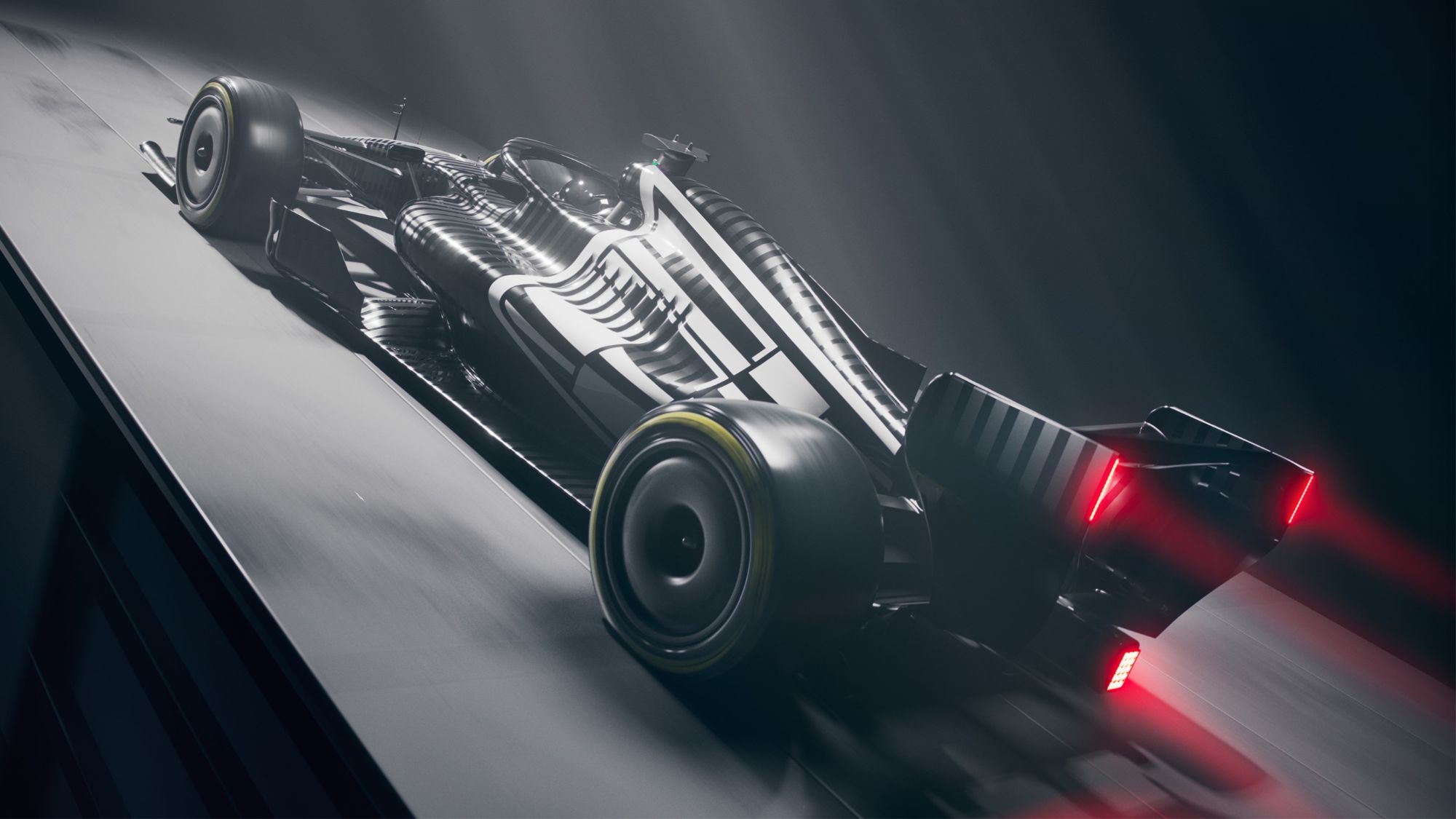
Cadillac test livery
Today, General Motors’ President Mark Reuss presented the Cadillac Formula 1 Team’s Special Edition testing livery. The unveiling was part of GM’s opening-week celebrations at its new global headquarters in the Hudson’s Detroit building. The car will be on display at the Detroit Auto Show this week and next for enthusiasts to see in person.
Marking a major milestone on Cadillac’s journey to the grid, the livery will be used at the all-team Shakedown Week in Barcelona, Spain, at the end of this month. The unveiling of the final livery will be on February 8th.
The testing livery was developed through a cross-continental collaboration between the GM’s Global Design team and the Cadillac Formula 1 Team, which is said to underscore the global reach of the Cadillac Formula 1 Team program and the “deep” creative and technical talent driving the brand’s debut in F1.
“Our new testing livery celebrates Detroit’s design heritage and the power of the global Cadillac Formula 1 team, while keeping our design secrets under wraps,” Reuss said.
In Formula 1, testing liveries traditionally help mask aerodynamic details ahead of competition, much like camouflaged prototypes in the automotive world.
“Cadillac Formula 1 is committed to innovation on and off the track,” said Dan Towriss, CEO of Cadillac Formula 1 Team Holdings. “TWG [(The Walter Group), which is bringing the Cadillac Formula 1 Team to the grid], combined with General Motors allows us to rethink the norm and introduce the team in bold new ways. Debuting our race livery during a globally televised championship broadcast challenges convention and brings Cadillac Formula 1 to a global audience.”
The monochrome concept features a modern interpretation of the iconic Cadillac crest and shield. The large crest is draped over the rear to disguise the aerodynamic surfaces. Clean line work and restrained color blocking reinforce a technical, future-forward aesthetic aligned with Cadillac’s performance ambitions “at the pinnacle of global motorsport.”
As a nod to the expertise from both sides of the Atlantic bringing the team to the grid, the names of the founding members of the team from both the U.S. and the UK are incorporated into the design.
Audi Revolut F1 first fire-up
Last week, the Audi Revolut F1 Team announced that it had successfully completed the inaugural fire-up of its power unit for the 2026 season, a significant milestone in its journey to the FIA Formula 1 World Championship. Held at the team’s Hinwil facility in December, the event marked the first time the Audi power unit had been run while installed in the chassis. It followed the reveal of the Audi R26 Concept in November.
The fire-up is a fundamental checkpoint in any Formula 1 program, validating years of development and confirming the successful integration of the core components. For the Audi F1 project, it is the tangible result of cross-functional collaboration of the team’s powertrain division in Neuburg, Germany, and the chassis team in Hinwil, Switzerland, as well as the new Technical Centre in Bicester, UK.
“For Audi, entering Formula 1 is a key part of our brand’s ongoing renewal,” said Gernot Döllner, CEO of Audi AG and Chairman of the Board of Audi Motorsport AG. “This milestone is a clear demonstration of our ‘Vorsprung durch Technik’ ambition. This project is a catalyst for change, fostering pride, identity, and enthusiasm.”
In December, the Audi Revolut F1 Team unveiled its official name and logo that unite Audi F1 and global fintech Revolut, following the confirmation of the title partnership in July 2025. The partnership is said to go beyond traditional sponsorship, creating an alliance aimed at challenging conventions and shaping new forms of fan engagement through activations, race access, and exclusive app-based benefits for Revolut users.
“Revolut and Audi are uniting in Formula 1 with a global ambition to challenge the status quo and a shared obsession with engineering excellence,” said Nikolay Storonsky, CEO and Co-Founder of Revolut. “The Audi Revolut F1 Team name and logo are the first symbols of this powerful alliance that will accelerate Revolut’s global growth.”
The alliance also extends to key areas of the Audi Revolut F1 Team’s operations, integrating Revolut Business into its financial operations and Revolut Pay into its online store for a “seamless” checkout experience.
As part of the formation of the Audi Revolut F1 Team, Sauber Motorsport AG will be renamed Audi Motorsport AG. The team’s Technology Centre in Bicester, UK will also be renamed Audi Motorsport Technology Centre UK.
“The Audi Revolut F1 Team name is a symbol of the combined strength of our teams in Germany, UK and Switzerland, together with our partners,” said Jonathan Wheatley, Team Principal of the Audi Revolut F1 Team. “It provides a banner under which we all unite as we build towards 2026.”
The team’s next major milestone will be the global launch event in Berlin on January 20th, a centerpiece of which is the official unveiling of the car’s full 2026 race livery.
F1 rules and terminology update
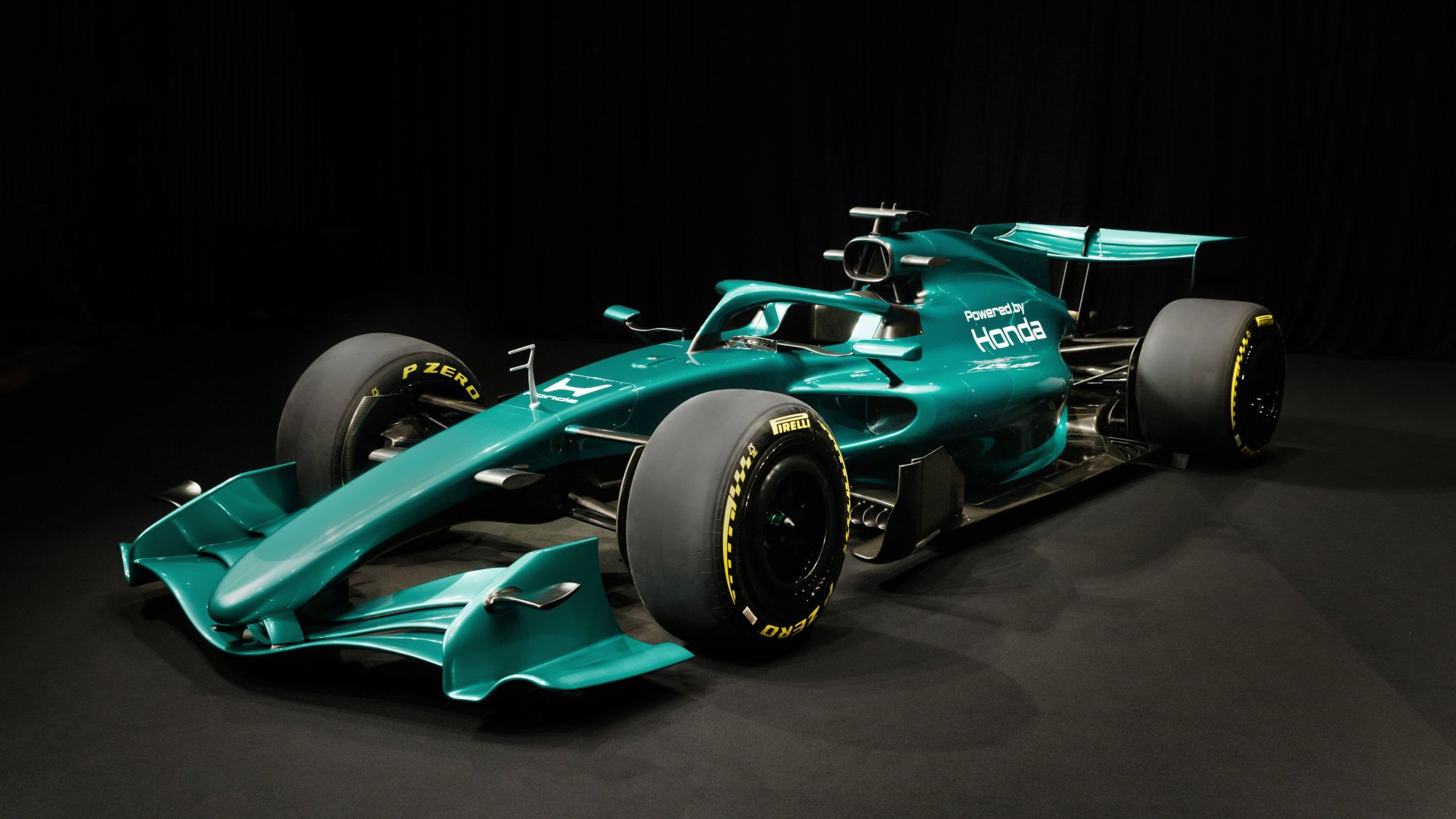
For those not following Formula 1 closely, this year is a huge moment for the series, with both the chassis and power units being updated. The changes are aimed at shaking up the order and creating new excitement while delivering “incredible” racing.
The chassis will be smaller and lighter, designed to make the cars more agile and responsive. Wheelbase is reduced by 200 mm (7.9 in) to 3400 mm (133.9 in), width by 100 mm (3.9 in) to 1900 mm (74.8 in), floor width cut by 150 mm (5.9 in), and minimum weight is down 30 kg (66 lb) to 770 kg (1698 lb).
The 18-in wheels remain, but front tires are 25 mm (1.0 in) narrower with rears 30 mm (1.2 in) narrower to minimize weight and cut aerodynamic drag.
For the latter, overall downforce is reduced by about 15-30% from the removed ground-effect floor tunnels. Overall drag is reduced by up to 40%. Active aerodynamics, in the form of movable front and rear wings, replaces the DRS (drag reduction system) for high- and low-downforce configurations, enabling extra grip and speed when the drivers need it most.
Power units see an electrified shift to about 50% ICE (internal combustion engine) and 50% electric power. A simplified hybrid setup sees the MGU-H removed and MGU-K power increased significantly—from 120 to 350 kW—for enhanced overtaking and straight-line speed. Cars will run on advanced sustainable fuel said to not impact performance.
For the new racecar generation, drivers have more control. Critical decision-making over energy deployment, regeneration, and conservation puts greater responsibility on them. Understanding how they will deploy and use these new tactical elements will be vital in ensuring the greatest appreciation of their skill and racecraft.
To go along with the technical changes, Formula 1 series leaders collaborated with the FIA, teams, and engineers to come up with new terminology, testing it on a group of new and traditional fans to understand and hear their views and to avoid gimmicks and jargon. The administrators believe it is important that the new technical nature of the regulations is respected and articulated correctly, so that new terms are useful and accurate in providing analysis and on-track commentary.
Overtake Mode is for drivers within one second of a car in front to deploy extra power to instigate an overtake. It replaces DRS and aids on track passing, being a strategic tool to be used all in one go or spread over a lap.
Boost Mode is the driver-operated energy deployment tool from the ERS (Energy Recovery System) to be used offensively or defensively depending on track position. It gives the driver maximum power from the engine and battery, at the push of a button, no matter where they are on track.
Active Aero dynamically adjustable angles of the front and rear wing elements in specific high-speed sections are designed for Corner and Straight modes. It enables strategic adaptability and maximizes full usage of the car’s power through greater on track grip.
With Recharge, drivers can recharge their battery with recovered energy from braking, on throttle lift at the end of straights, and corners where only part power is applied.
Pre-season Formula 1 testing will commence with a private event at the Circuit de Barcelona-Catalunya on January 26-30, while test two will be held at the Bahrain International Circuit during February 11-13. The Bahrain International Circuit also hosts test three on February 18-20, before the season begins in Australia on March 6-8.
-

- Cadillac F1 test livery rear side view.
-

- Cadillac F1 test livery side view.
-

- Cadillac F1 test livery front side view.
-

- GM’s Mark Reuss with Cadillac Formula 1 test livery.
-

- Cadillac Formula 1 test livery nose showing team member names.
-

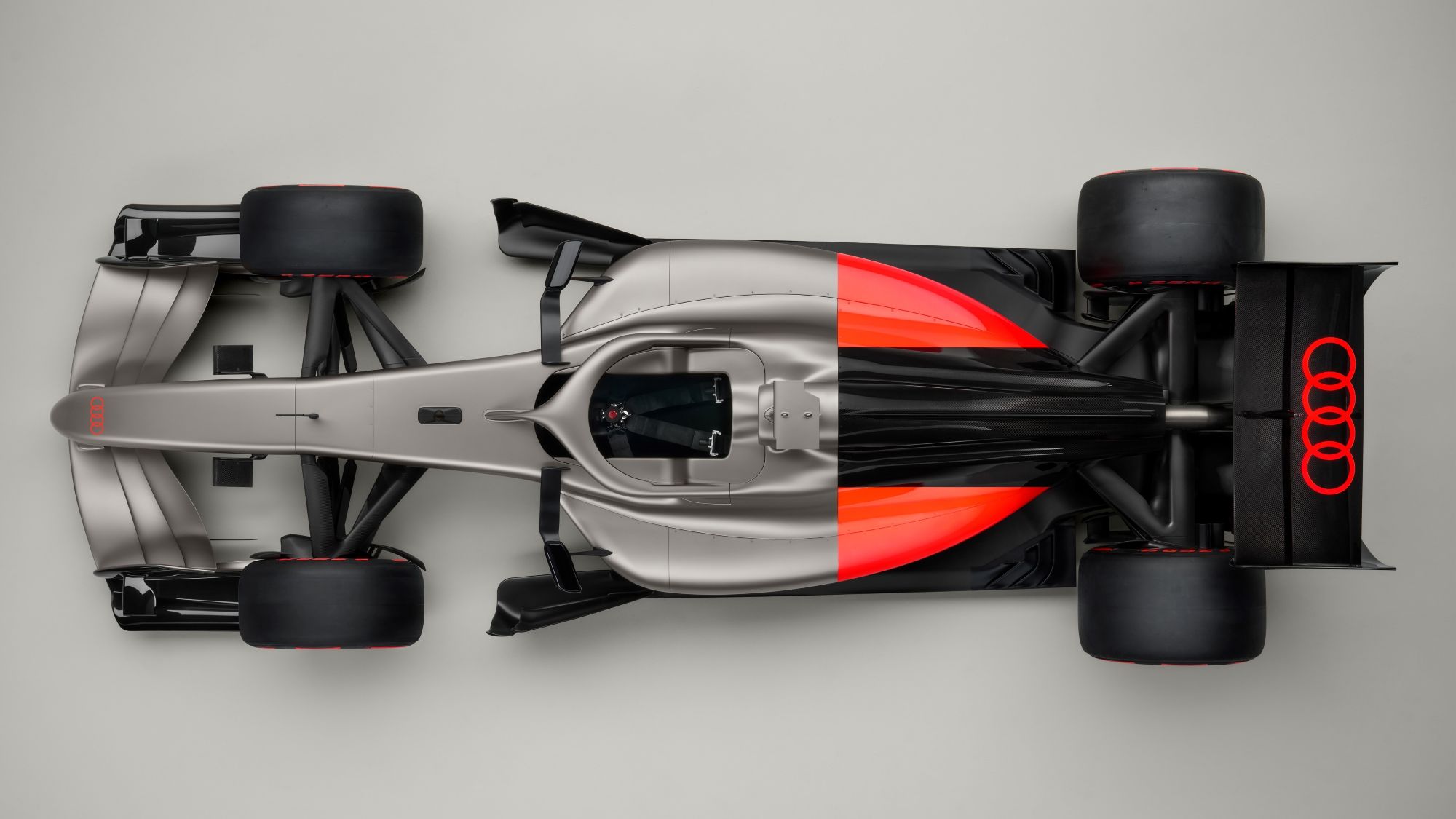
- Audi Formula 1 design front.
-

- Audi Formula 1 design top.
-

- Audi Formula 1 design side.
-

- Audi Formula 1 design rear.
-

- Audi F1 power unit details.
-

- Formula 1 racecar updates.
-

- Formula 1 2026 power unit.