Hesai Technology announced at CES 2026 that it will more than double its annual production capacity in 2026 to over 4 million units, driven by accelerating demand for automotive ADASs (advanced driving assistance systems) and robotics. This follows news that, in 2025, it became the world’s first automotive lidar company to surpass 2 million cumulative deliveries.
The company says that the expansion is enabled by its robust in-house manufacturing capabilities. By building an integrated R&D and production center from the ground up, it says it has established a solid foundation for mass production while maintaining consistent quality, at scale. The company’s fully automated production lines now feature a 10-second cycle time for the average new lidar unit to roll off the line.
Hesai’s scalability will be further enhanced by its newly announced factory in Bangkok, Thailand, currently under development. Operations are expected to begin there in early 2027.
“Our customers are scaling faster than ever, and we are scaling with them,” said David Li, Co-founder and CEO of Hesai. “By expanding our annual capacity to over 4 million units and adding our new Thailand facility, we’re building a global manufacturing footprint that can reliably support mass production. Our commitment is simple—deliver world-class lidar, at scale, with the consistency and trust that the automotive industry demands.”
To support that commitment, Nvidia announced at CES that Hesai was also among the latest partners to qualify their sensor suites on its open, production‑ready Drive Hyperion architecture. The growing sensor ecosystem spans the camera, radar, lidar, and ultrasonic technologies that enable automakers and developers to build and validate perception systems optimized for SAE Level 4 autonomy.
Enabling the next wave of physical AI
To date, Hesai has secured design wins from 24 automotive OEMs for mass-production programs. Key partners include a top European OEM and China’s Li Auto, Xiaomi, Changan, Geely, Great Wall Motor, Chery, Zeekr, Leapmotor, SAIC Audi, and SAIC-GM.
Lidar-equipped vehicles reduce fatal highway accidents by 90% and lower regular traffic accidents by 30% compared with camera-only systems, according to Li Auto’s official data. The market impact is now more significant, with China’s EV market lidar adoption rate reaching 25%, according to Gasgoo data from October 2025.
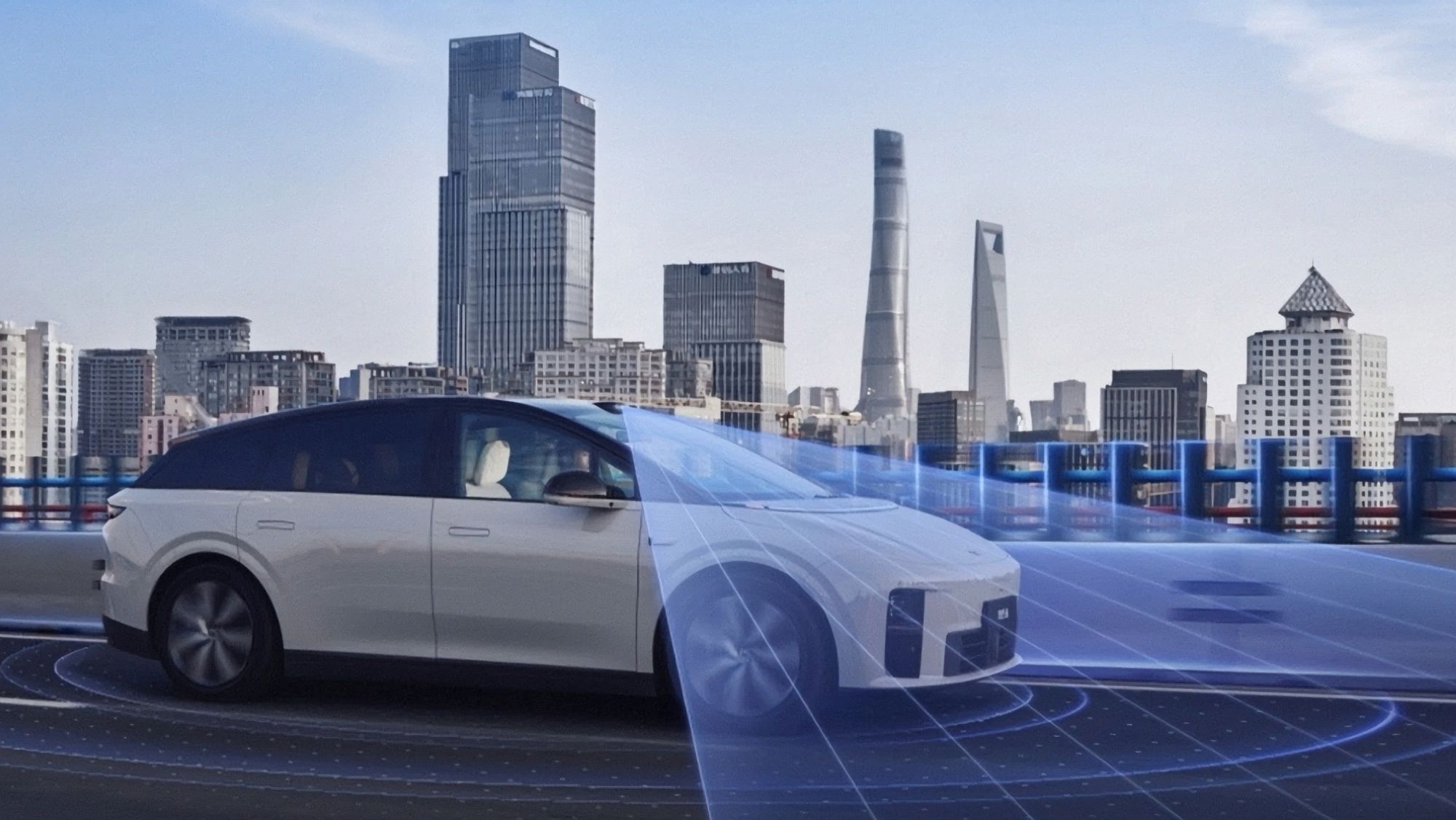
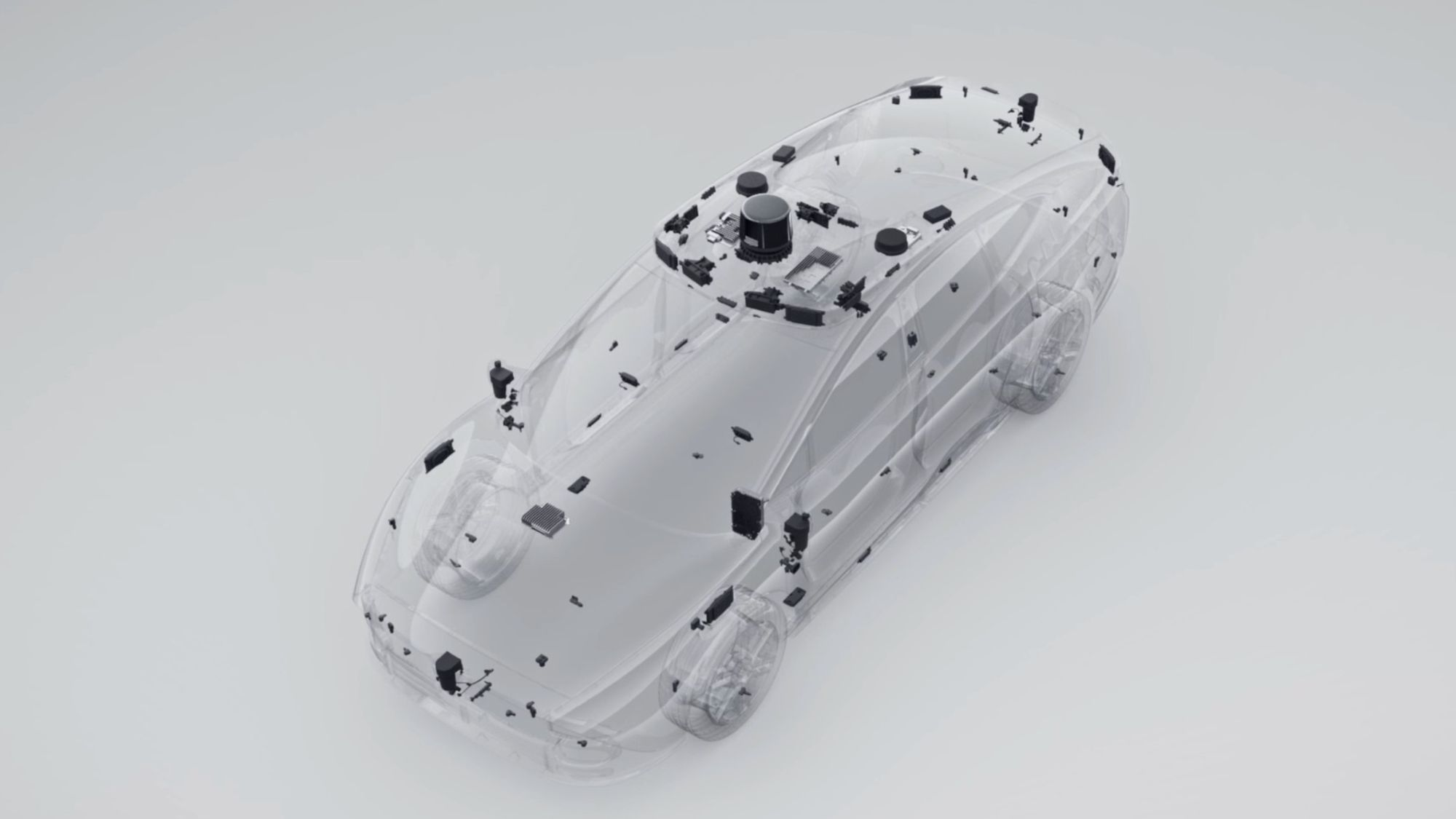
The ADAS market is experiencing rapid growth, and lidar has become a standard safety feature—at least in China. Lidar plays a critical role in preventing accidents before they occur, acting as an “invisible seatbelt,” according to the company.
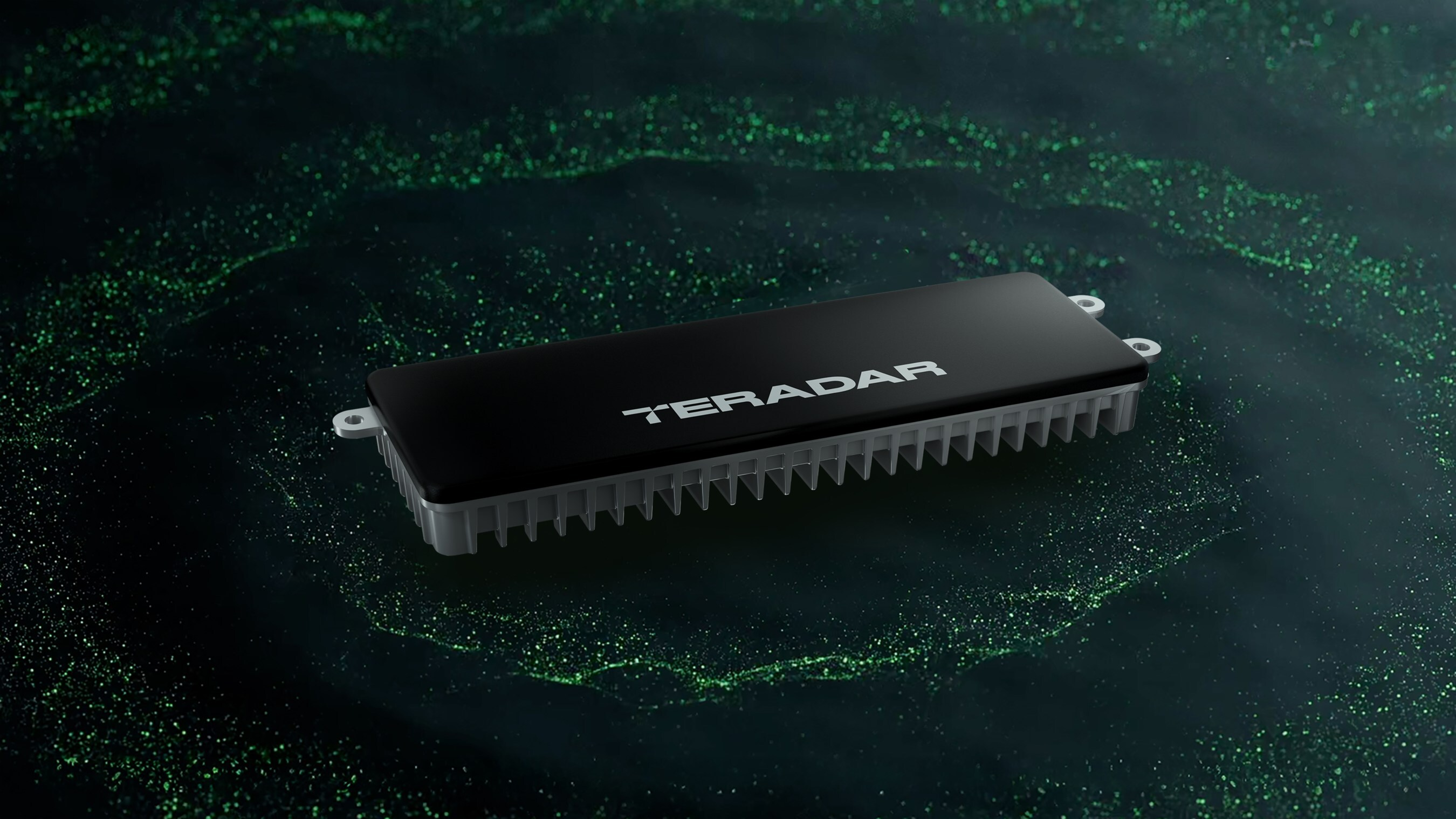
At CES, the company showcased its new ATX, its best-selling lidar for SAE Level 2 assisted driving. It has already secured orders exceeding 4 million units from multiple OEMs, with mass production and delivery starting in April 2026.
Driven by new safety regulations and redundancy requirements, Hesai projects that each SAE Level 3 vehicle is now expected to adopt up to 3-6 lidars, significantly expanding its addressable market.
At the show, Hesai presented its next-generation Level 3 and 4 automotive lidar suite, featuring the long-range ETX and short-range FTX lidars. With compact form factors designed to simplify vehicle integration, ETX is optimized for behind-the-windshield, in-cabin installation, while FTX enables short-range blind-spot detection.
The company says its ETX is setting a new industry benchmark with the world’s highest channel count and ranging capability for lidars at the mass- or near-mass production stage. It stands out with its 800-channel count, 400-m (1310-ft) ranging capability at 10% reflectivity, and fine 0.05×0.025-degree resolution.
The ETX is built on what is said to be the world’s first fully developed in-house digital single-photon platform, which integrates three core modules: laser emission, single-photon detection, and signal processing. Despite its industry-leading performance, ETX has a compact 32 mm (1.3 in) height that is 35% smaller than comparable high-performance lidars with over 500 channels, making it ideal for seamless behind-the-windshield integration.
At the IAA Mobility event in Munich last fall, Hesai showed an ETX behind-the-windshield solution and live point cloud demonstration made possible through collaborations with leading windshield manufacturers AGC, via its Wideye scaleup specializing in self-driving vehicle ecosystem solutions, and Saint-Gobain Sekurit.
Hesai has developed four generations of proprietary ASICs, enabling rapid product iteration, high reliability, and globally replicable production. ETX’s performance breakthroughs are powered by Hesai’s fourth-generation technology platform, featuring three core modules: Photon Vector Technology (PVT), Addressable Photon Isolation (API), and Intelligent Point Cloud Engine (IPE).
With PVT, Hesai customizes high-power VCSEL laser arrays to dramatically improve photon transmission and reception efficiency, boosting ranging capability by 30% while reducing its size and power consumption.
The API, built on independently addressable transceiver components, enables independent driving of laser transmit and receive channels. At the hardware level, this mitigates channel blooming found in traditional SPAD (single photon avalanche diode) lidars, ensuring high-precision point clouds. In challenging scenarios such as highly reflective objects or rain and fog, ETX achieves a breakthrough with a 95% reduction in false positive rate.
Built on the principles of quantum optics, the IPE leverages 24.6 billion samples/sec ultra-fast sampling to remove over 99.9% of environmental noise in challenging conditions such as rain, fog, dust, or vehicle exhaust.
The ETX has been selected by a global OEM for multiple vehicle models, with mass production expected in 2026.
Leveraging solid-state electronic scanning, the FTX delivers up to a 180×140-degree field of view and, compared with the company’s previous-generation solid-state lidar FT120, has more than double the resolution and is 66% lighter. An exposed optical window of just 50 × 30 mm enables flexible integration for precise detection of low obstacles, such as road posts, while supporting autonomous parking and safe lane changes.
The FTX is slated for mass production in 2026.
Broadening the addressable market
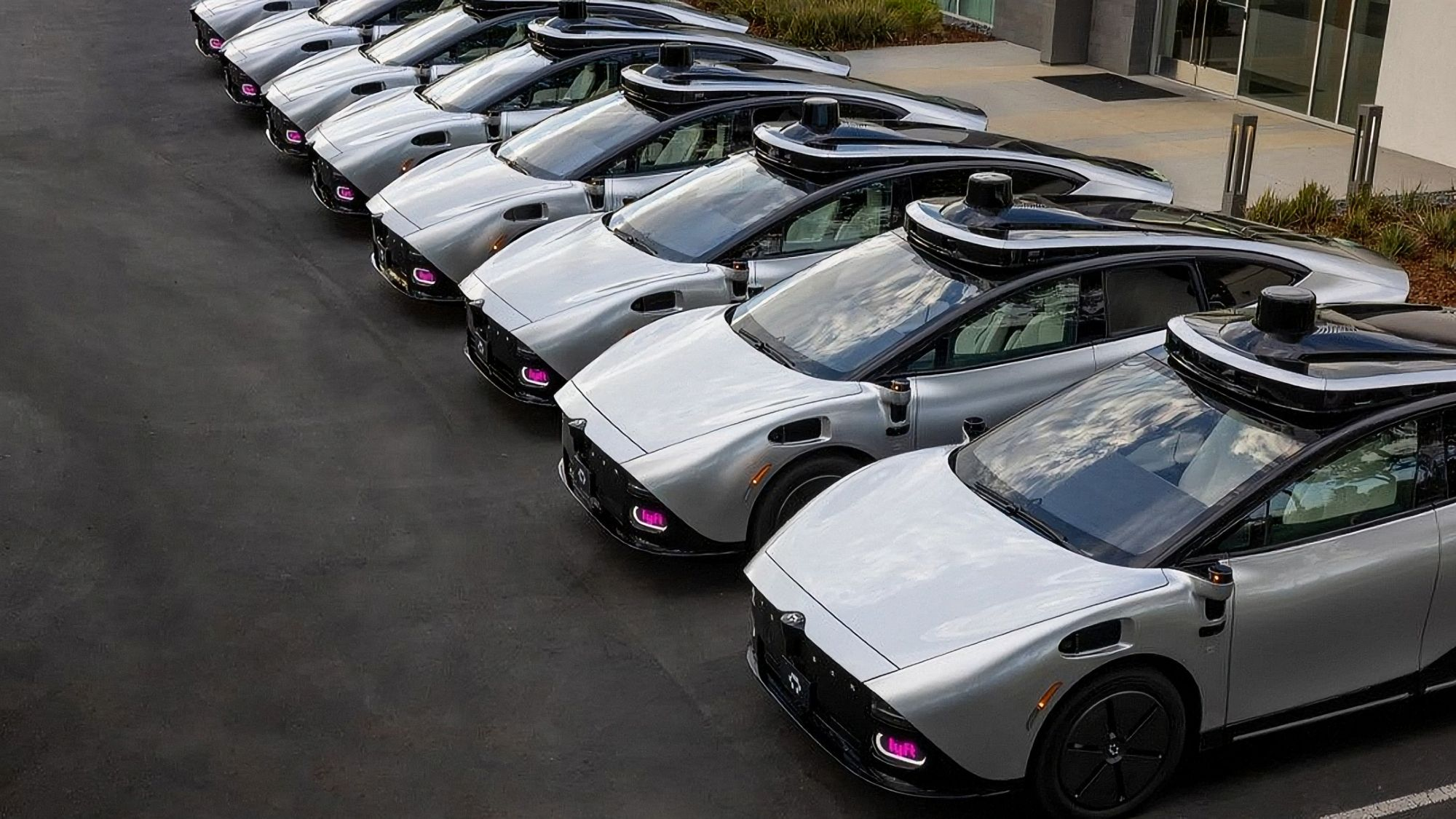
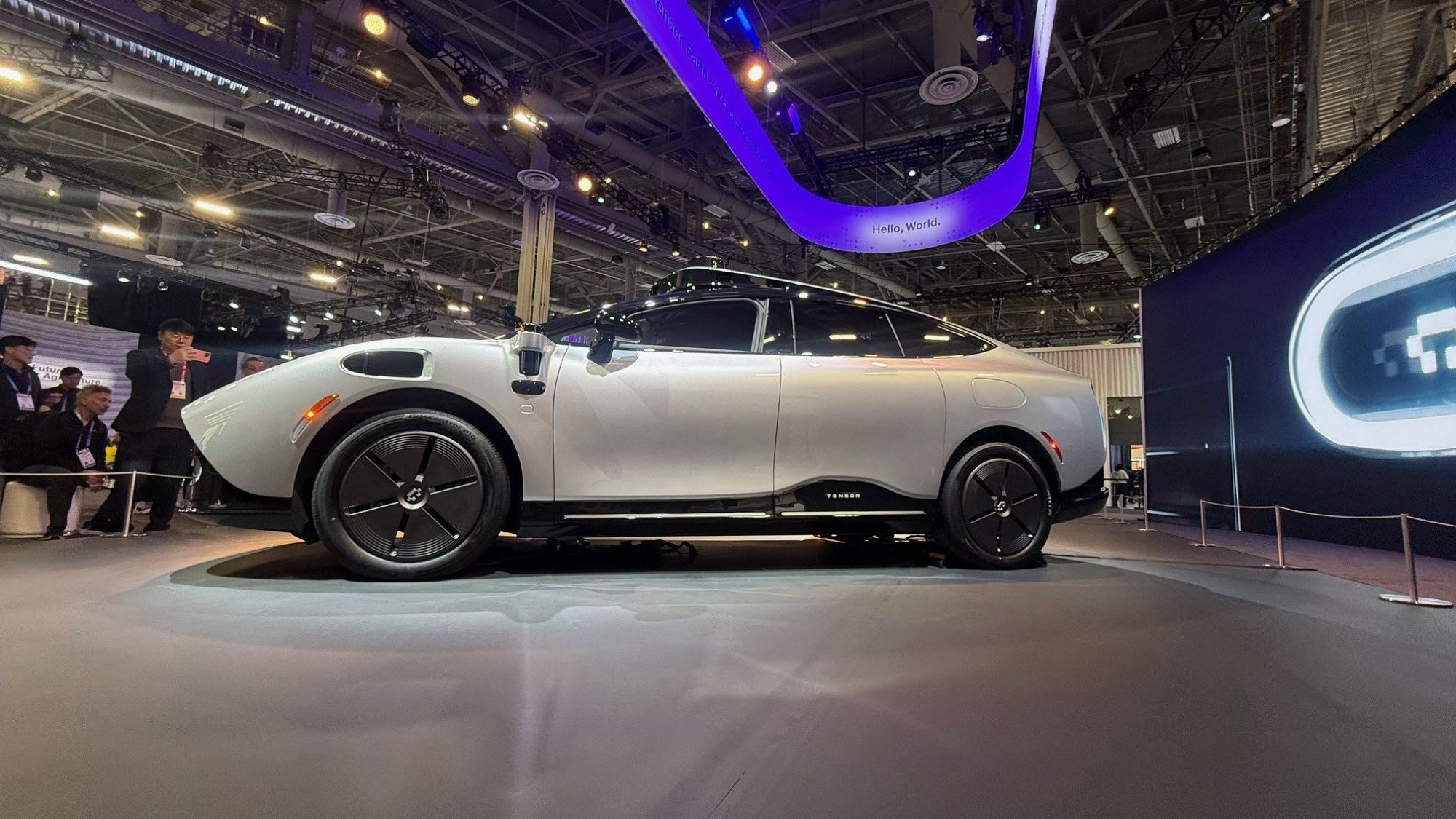
Beyond the ADAS market, Hesai says that robotaxi and robotruck companies worldwide are rapidly scaling autonomous fleets, with customers requiring the highest-performing, highest-quality lidars. At CES, visitors could see live point-cloud demonstrations from the 360° long-range OT128 lidar and learn how it is powering large-scale SAE Level 4 robotaxi deployments at Baidu, Pony.ai, Motional, and WeRide, with some vehicles integrating up to eight of the company’s lidars each.
The robotics industry is entering a hyper-growth phase powered by breakthroughs in AI, according to Hesai. As robots move from controlled environments into a range of real-world applications, reliable, high-precision perception has become essential, says the company, as it plans for its lidar to serve as the “eyes” of physical AI.
For the robotics and industrial markets, Hesai offers JT series mini 360° hyper-hemispherical 3D lidars. Featuring a compact form factor, low power consumption, and a wide field of view, the series enables integration across a range of mobile robots and industrial platforms.
Since its launch at CES 2025, the JT series has surpassed 200,000 cumulative deliveries. At Hesai’s CES 2026 booth, it featured an expanding range of robotics applications—including lawn-mowing, intelligent-companion, and humanoid robots; AGVs (automated guided vehicles) and AMRs (autonomous mobile robots); and 3D digitalization devices—from leading innovators such as Dreame, Vbot, Movin, and Realsee now use the JT series.
-

- Hesai pitches its lidar as an “invisible seatbelt.”
-

- Hesai’s Galileo Factory in Thailand.
-

- Hesai ETX automotive long-range lidar.
-

- Hesai’s ATX lidar.
-

- Hesai’s FTX 2nd-gen fully solid-state lidar.
-

- Hesai’s JT 3D lidars for robotics.